Side-by-Side IQ Profile: Understanding the 3/5 Score
On paper, both the Portuguese Water Dog and the Wirehaired Pointing Griffon register a consistent 3/5 across all five cognitive dimensions in The Cosmic Pet Pet IQ Lab. This doesn't imply identical mental processes, but rather that their cognitive strengths manifest in ways unique to their breed purposes. A '3/5' score indicates a moderate capacity in each area, suggesting neither extreme brilliance nor significant challenge, but rather a balanced and functional intelligence.
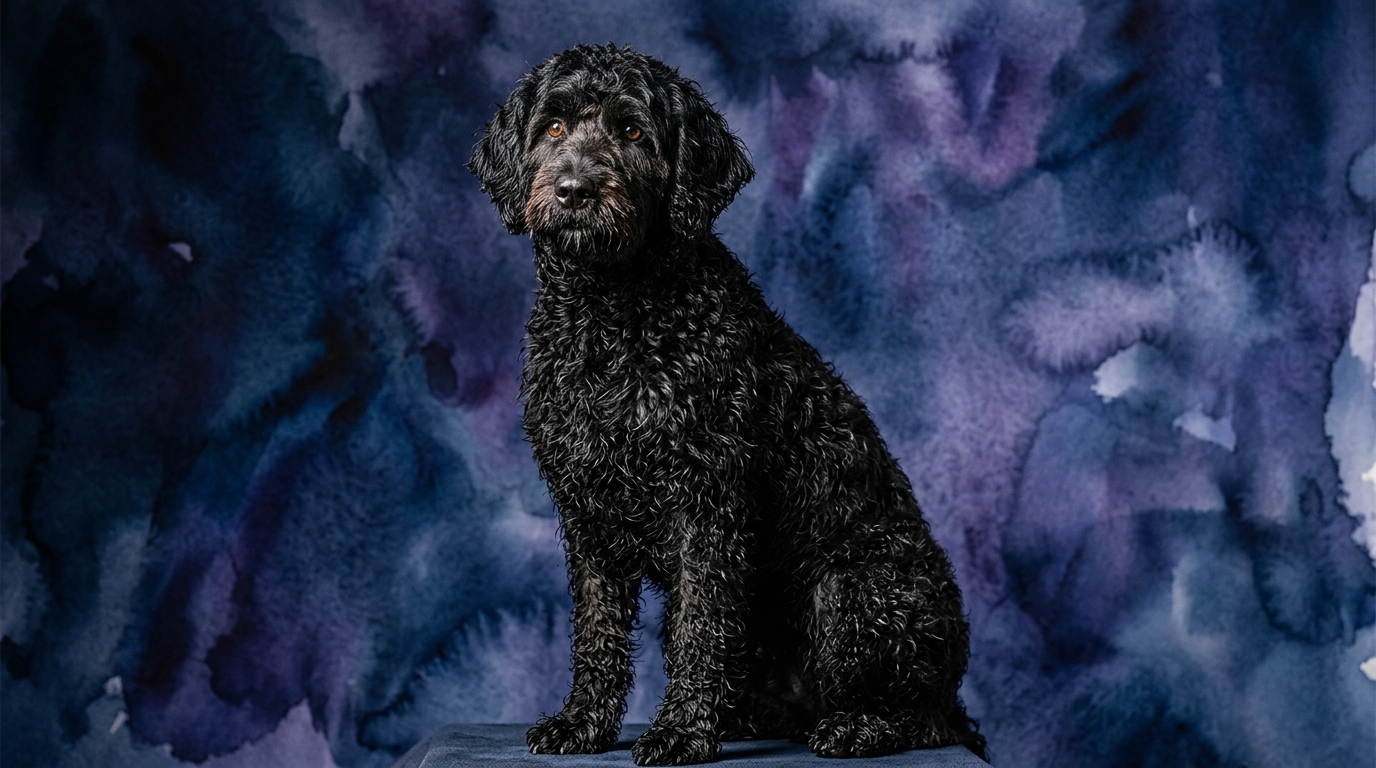
For the **Portuguese Water Dog (Working Group)**, their problem solving (3/5) manifests as practical adaptability in aquatic environments, like figuring out how to retrieve items from various water depths or navigate complex currents. Their training speed (3/5) reflects a moderate learning pace, often aided by their desire for human engagement, though their independent streak requires consistent, positive reinforcement. Social intelligence (3/5) means they are generally attuned to human cues, forming strong bonds and being collaborative partners. Their instinctive drive (3/5) is strongly tied to water work, retrieving, and a general eagerness to be involved in tasks alongside their human. Memory (3/5) allows them to retain complex commands and spatial information relevant to their varied working roles.
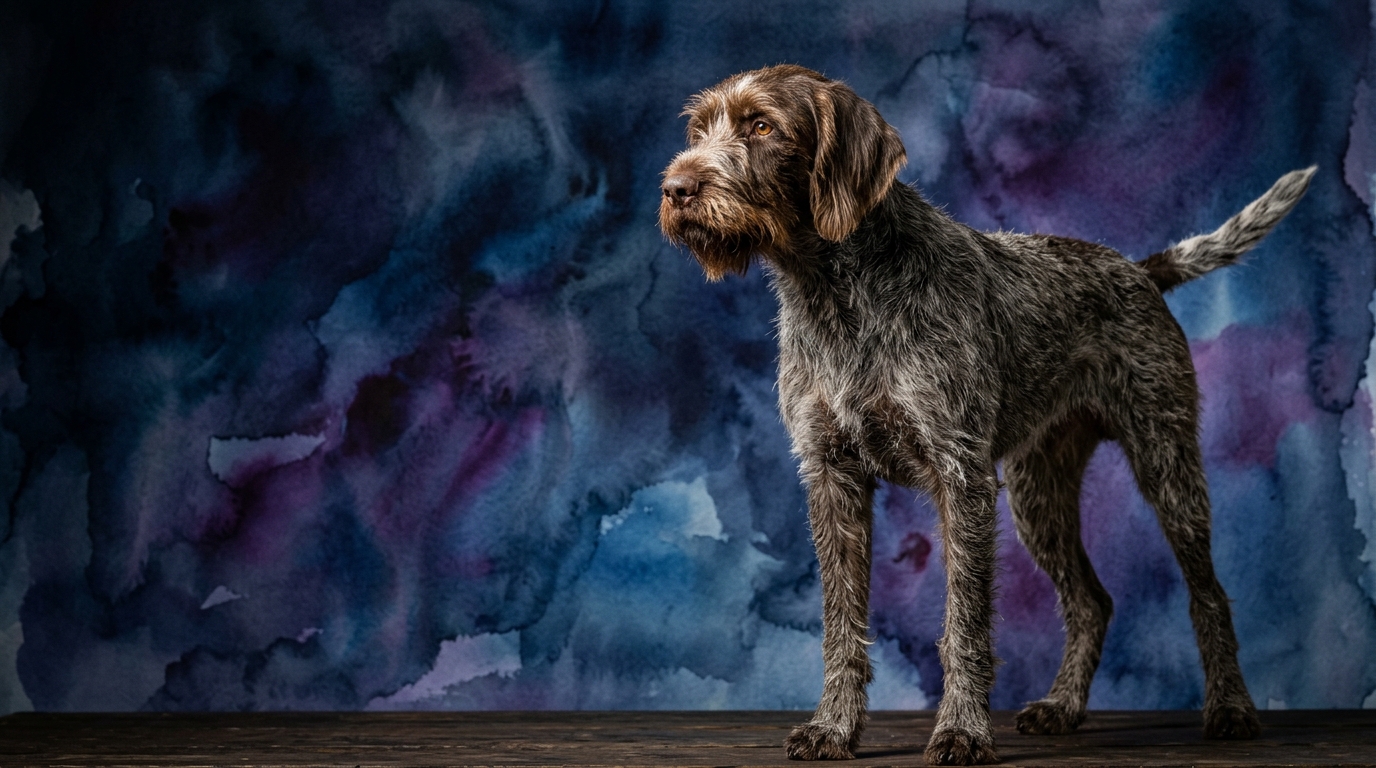
The **Wirehaired Pointing Griffon (Sporting Group)** also shows a problem solving score of 3/5, typically expressed through their ability to independently track game, navigate dense cover, and retrieve from challenging terrains. Their training speed (3/5) indicates they learn at a moderate rate, but their powerful hunting instincts mean training must effectively channel these inherent drives. Social intelligence (3/5) makes them companionable and responsive to their handlers, valuing the partnership in the field while maintaining a degree of self-reliance. Their instinctive drive (3/5) is intensely focused on pointing, flushing, and retrieving upland game and waterfowl, compelling them to explore scents with unwavering determination. Memory (3/5) is often specialized for recalling scent patterns, game locations, and field experiences, crucial for effective and consistent hunting performance.
Where the Portuguese Water Dog Wins Cognitively
While both breeds register a 3/5 across all cognitive dimensions, the Portuguese Water Dog demonstrates a nuanced advantage in certain areas, particularly regarding collaborative task execution and intricate human-dog communication. Their problem-solving, rated at 3/5, often involves deciphering human intent in complex, fluid situations. For instance, a PWD would excel at understanding subtle hand signals or vocal cues to retrieve a specific item from water, adapting their approach based on the challenge. This reflects their history as a fisherman's aide, where anticipating human needs and working in tandem was paramount.
Their social intelligence, also 3/5, often translates into a keen sensitivity to their owner's emotional state and a desire to maintain close proximity during tasks. This can make them particularly intuitive partners in activities requiring synchronized effort, such as advanced obedience or agility, where reading their handler's body language is critical for seamless performance. Their memory, while rated 3/5, is often geared towards retaining sequences of actions and locations relevant to their human-centric working roles, allowing them to consistently perform multi-step commands in a structured environment.
Where the Wirehaired Pointing Griffon Wins Cognitively
Conversely, the Wirehaired Pointing Griffon exhibits a cognitive edge in scenarios demanding independent initiative and specialized sensory processing. Their problem-solving capacity, also at 3/5, is predominantly expressed in their ability to autonomously navigate diverse terrain and interpret complex scent information to locate game. A Griffon skillfully 'solves' the puzzle of where game birds are hiding by systematically working cover, demonstrating a practical ingenuity driven by their strong instinctive drive.
This drive, also 3/5, is laser-focused on the hunt; they possess an unwavering determination to track and retrieve, often requiring minimal direct human intervention once they are on a scent. Their memory, rated 3/5, is particularly adept at recalling the nuances of specific hunting grounds, scent patterns, and the locations of previous finds, enabling them to refine their search strategies over time. This combination of independent problem-solving, focused instinctive drive, and specialized memory makes them highly effective and self-reliant partners in field work, where the dog often needs to make decisions away from the handler.
Which is Easier to Train and Why
Both the Portuguese Water Dog and the Wirehaired Pointing Griffon have a training speed rating of 3/5, indicating they learn at a moderate pace. However, the *nature* of their drives and social intelligence influences the training experience. A PWD's moderate social intelligence and desire for close partnership can make them generally more eager to please their human. They often thrive on positive reinforcement that emphasizes collaboration and shared activity. While they possess an independent streak, their working drive is intrinsically linked to interacting with and assisting their owner.
This means foundational obedience, such as recall and heeling, might feel slightly more intuitive for a PWD, as they are often looking to their handler for direction and approval. The WPG, while equally capable of learning at a 3/5 speed, presents a different training dynamic due to their strong, independently-focused instinctive drive. Their primary motivation is often the pursuit of game, and while they value their human companion, their nose can lead them far afield.
Training a WPG requires channeling this powerful hunting instinct into desired behaviors. For instance, achieving reliable recall in a high-distraction environment with strong scents demands exceptional consistency and engagement, as the dog's focus might naturally shift to the environment. Therefore, while both learn commands at a similar rate, a PWD might be perceived as 'easier' for general obedience in a family setting due to their inherent people-centric motivation, whereas a WPG requires a trainer who understands and can effectively integrate their strong, independent hunting drive into the training regimen.
Which Suits Active Owners vs. Relaxed Owners
The cognitive profiles and inherent drives of both breeds clearly point towards owners who embrace an active lifestyle, though the *type* of activity differs significantly. The Portuguese Water Dog, with its 3/5 instinctive drive rooted in water work and retrieving, coupled with a 3/5 social intelligence that thrives on interaction, is an ideal match for highly active owners who enjoy engaging their dog in collaborative sports. They excel in activities like dock diving, agility, advanced obedience, and long hikes, especially if water is involved. Their moderate memory and problem-solving skills mean they relish learning new tricks and complex routines, making them excellent partners for competitive dog sports. A PWD needs consistent mental and physical stimulation to prevent boredom and channel their energy constructively; a relaxed owner who offers only minimal engagement would likely find their PWD restless and potentially destructive.
The Wirehaired Pointing Griffon, with its 3/5 instinctive drive specifically for hunting, pointing, and retrieving, also demands an extremely active owner. However, their ideal activities are often centered around their natural aptitudes: field trials, hunting, extensive off-leash exploration in varied terrain, and long, scent-driven walks. Their problem-solving and memory, while 3/5, are finely tuned for these independent, exploratory tasks. A WPG needs opportunities to use its nose and cover ground, fulfilling its deep-seated desire to hunt. While they are affectionate companions at home, a WPG will not thrive with a relaxed owner who cannot provide outlets for their powerful hunting instincts. Both breeds are ill-suited for a truly relaxed, sedentary lifestyle, but the PWD leans towards human-directed activities, while the WPG thrives on more independent, scent-driven exploration.
The Verdict
Choose the Portuguese Water Dog if you seek a highly interactive canine partner for collaborative activities like dog sports, where joint problem-solving and a strong bond are paramount. They thrive with owners who enjoy structured training and water-based adventures.
Opt for the Wirehaired Pointing Griffon if you are an avid outdoors enthusiast or hunter, valuing a dog with independent drive for scent work and field exploration. They are best suited for owners who can provide ample opportunities for their natural hunting instincts to flourish.
🧠 Find Your Pet's IQ Score
Our Pet IQ Lab assessment covers 25+ tests across 5 cognitive dimensions — personalized to your breed.
Take the Full IQ Test →Frequently Asked Questions
Do Portuguese Water Dogs and Wirehaired Pointing Griffons have similar energy levels?
Yes, both breeds possess high energy levels, requiring significant daily exercise and mental stimulation. Their 3/5 instinctive drive means they are not content with a sedentary lifestyle; they need outlets for their respective working or hunting energies.
Which breed is better for a first-time dog owner?
Neither breed is typically recommended for a truly novice owner due to their moderate training speed (3/5) and strong drives. Both require consistent, knowledgeable training and an understanding of their specific working instincts to thrive.
How do their social intelligence scores (3/5) translate to family life?
A 3/5 social intelligence score means both breeds are generally good family companions, forming strong bonds with their human 'pack'. They are responsive to family dynamics but will benefit from early socialization to ensure they interact appropriately with all members and visitors.