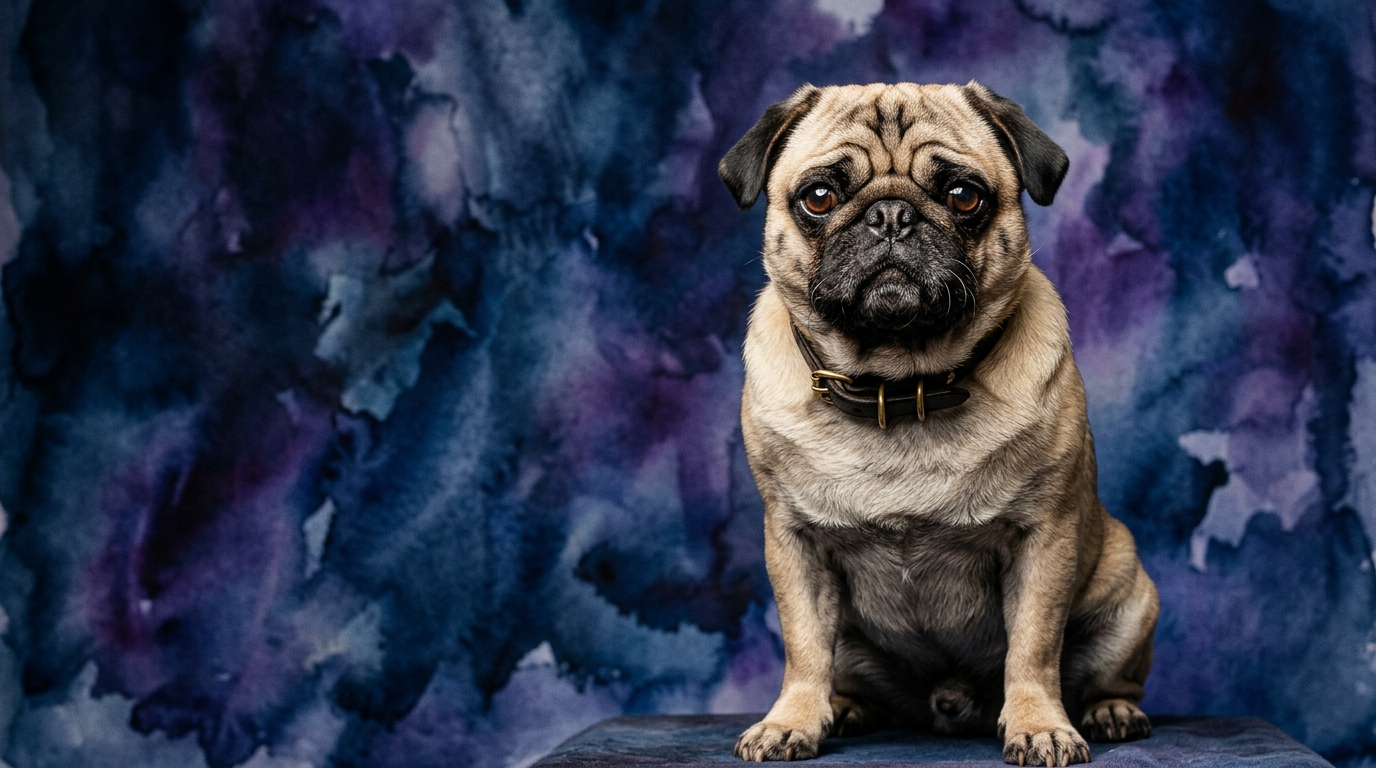
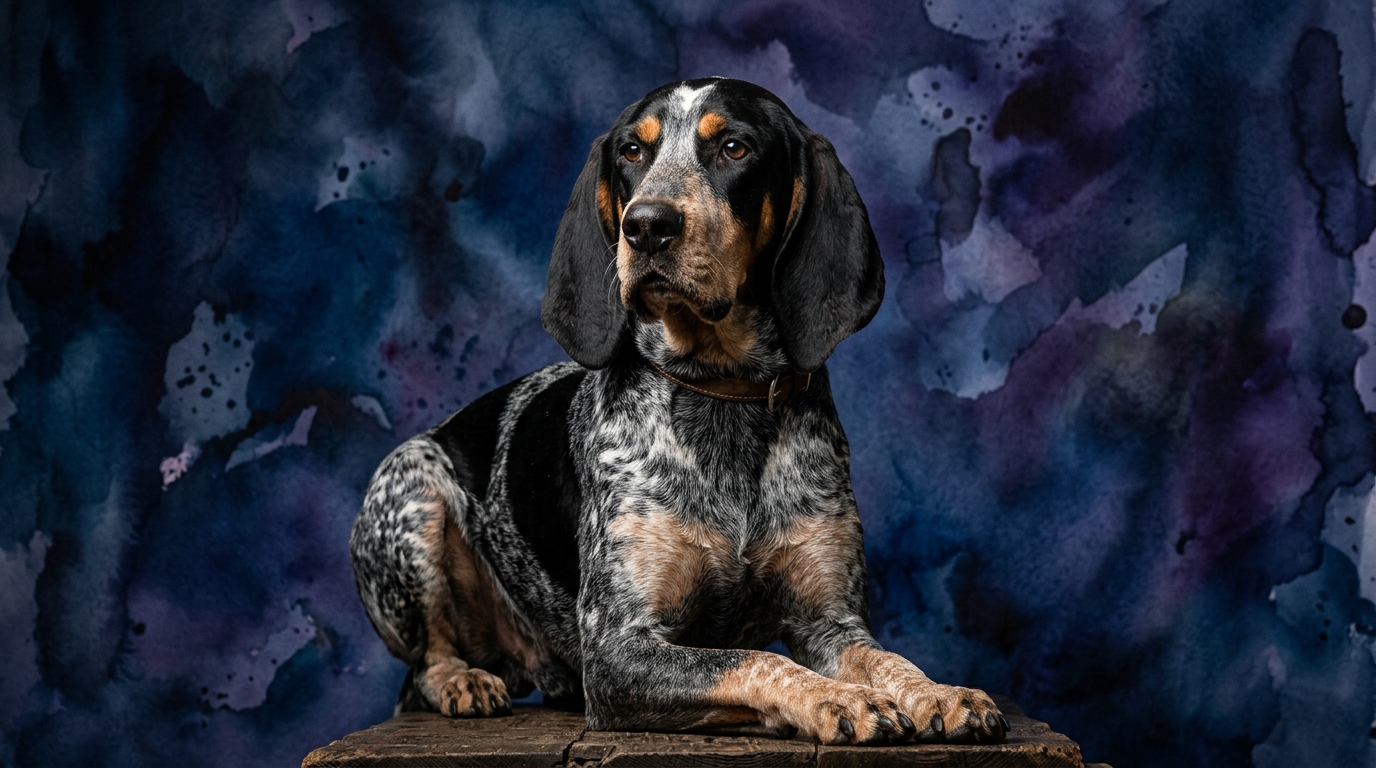
Side-by-Side IQ Profile: Pug vs. Bluetick Coonhound
**Pug Intelligence Profile (Coren rank #57):** The Pug's cognitive landscape is heavily influenced by its role as a companion, emphasizing social interaction over independent work. Its specific IQ dimensions reveal a unique set of strengths and areas where it relies more on human guidance. * **Problem Solving (2/5):** Pugs generally approach novel situations seeking human assistance rather than independent strategic thought. They might struggle with complex puzzle toys or multi-step tasks requiring abstract reasoning, preferring simpler interactions. * **Training Speed (2/5):** While capable, Pugs often require more repetitions to solidify new behaviors. Their attention span can be fleeting, necessitating patient, short, and engaging sessions with consistent motivation, often food-driven, to overcome occasional stubbornness. * **Social Intelligence (5/5):** Pugs truly excel here, possessing an exceptional ability to read human emotions and social cues. They thrive on companionship, forming strong, intuitive bonds and often anticipating their owner's moods. This high social acumen makes them incredibly responsive to human interaction. * **Instinctive Drive (2/5):** Pugs exhibit low instinctive drive for hunting, herding, or guarding. Their primary instinct is companionship and comfort-seeking, lacking the sustained, goal-oriented drive of working breeds and thus less prone to independent pursuits like digging or roaming. * **Memory (3/5):** Pugs show average memory. They recall learned commands and routines, especially those associated with positive reinforcement and strong emotional connections. Basic training and familiar people are retained, though intricate sequences might not be as sharp.
**Bluetick Coonhound Intelligence Profile (Not Coren-ranked):** The Bluetick Coonhound's intelligence is deeply tied to its heritage as a scent hound, showcasing impressive capabilities in areas crucial for tracking and hunting. Their cognitive profile reflects a balance between working drive and social engagement. * **Problem Solving (3/5):** Blueticks show moderate problem-solving, often geared towards tracking. They excel at deciphering scent trails, navigating complex terrains, and overcoming obstacles to reach a target, but abstract, non-scent-related puzzles might still challenge them. * **Training Speed (3/5):** Blueticks learn at a moderate pace. They are capable of absorbing commands, but their strong scent drive is a significant distraction. They require consistent, firm, and engaging methods to maintain focus, often needing more motivation and redirection. * **Social Intelligence (3/5):** Blueticks possess moderate social intelligence. They are amiable and enjoy family company, but their primary focus isn't always human emotional nuance. They bond well but might be more interested in their environment or a potential scent than intuitive empathy. * **Instinctive Drive (3/5):** Their instinctive drive is pronounced, centered on hunting. Blueticks have a powerful urge to follow scents, bay, and track. This drive manifests as persistent sniffing and a strong desire to explore, making off-leash reliability a significant training challenge. * **Memory (3/5):** Blueticks exhibit average memory. They recall scent trails over long periods and remember complex routes. Training is retained well once ingrained, especially with positive reinforcement. Their memory is practical and functional, serving their working capabilities effectively.
Where the Pug Wins Cognitively
The Pug's cognitive strength overwhelmingly lies in its exceptional social intelligence, scoring a perfect 5/5. This breed possesses an innate, almost telepathic ability to connect with humans, reading subtle cues and emotional states with remarkable accuracy. This deep understanding allows Pugs to integrate seamlessly into family life, offering comfort or soliciting play precisely when needed. Their interactions are rich with reciprocal emotional feedback, making them highly attuned companions who often anticipate their owner's desires. While other cognitive areas might be less prominent, this profound social acumen ensures the Pug excels at being a devoted, empathetic, and engaging member of the household, a true master of interpersonal canine dynamics.
Where the Bluetick Coonhound Wins Cognitively
The Bluetick Coonhound's cognitive advantages stem from its working heritage, particularly its problem-solving abilities (3/5) and pronounced instinctive drive (3/5). While not abstract, their problem-solving is highly specialized for deciphering complex scent puzzles and navigating varied terrain. A Bluetick thrives on following intricate trails, demonstrating sustained focus and strategic thinking to overcome environmental obstacles. This instinctive drive, centered on tracking and baying, provides internal motivation for persistent exploration and task completion in their domain, far surpassing the Pug's capacity.
Which is Easier to Train, and Why
Generally, the Pug presents fewer inherent challenges for a typical pet owner, despite its 2/5 Training Speed. Pugs have low instinctive drive (2/5) and very high social intelligence (5/5), meaning they are primarily motivated by human interaction and approval. Their desire to please, coupled with a lack of strong independent urges, makes them more inclined to focus on their handler. While they may require more repetitions, their willingness to engage and lower distraction threshold often yield reliable results with consistent positive reinforcement in a home environment.
The Bluetick Coonhound, with its 3/5 Training Speed, is capable of learning, but its formidable instinctive drive (3/5) presents a significant hurdle. Once a Bluetick catches a scent, its world narrows to that singular pursuit, making it incredibly difficult to regain attention. This powerful, innate urge to track means they are easily distracted by environmental stimuli, demanding an exceptionally dedicated and patient trainer. Achieving off-leash reliability or precise obedience in distracting environments is a far greater undertaking due to their hardwired hunting instincts, which often override human commands.
Which Suits Active Owners vs. Relaxed Owners
For the relaxed owner seeking a calm, affectionate presence, the Pug is an undeniable fit. Its low instinctive drive and moderate energy levels mean it's content with short, leisurely walks and ample cuddle time. Pugs thrive where their primary role is companion, offering quiet comfort and engaging in gentle play. Their exceptional social intelligence makes them ideal for owners who cherish close emotional bonds and appreciate a dog always tuned into their mood, without demanding extensive physical exertion or complex mental tasks beyond social interaction.
Conversely, the Bluetick Coonhound is tailor-made for active, outdoor-oriented owners. Its strong instinctive drive for tracking and moderate energy levels demand daily opportunities for vigorous exercise, long walks, or dedicated scent work. Owners enjoying hiking, running, or canine sports like tracking will find a willing and capable partner. This breed thrives when given a job to do, ideally one engaging its powerful nose and stamina, making it less suitable for a sedentary lifestyle where pent-up energy could lead to restlessness.
The Verdict
Opt for a Pug if your lifestyle is relaxed, you value a profoundly socially intelligent companion who thrives on close emotional connection, and you prefer a dog with low physical demands and minimal independent drives.
Select a Bluetick Coonhound if you lead an active, outdoor-oriented life, are prepared to engage a powerful scent drive with consistent exercise and mental challenges, and appreciate a robust, independent spirit.
🧠 Find Your Pet's IQ Score
Our Pet IQ Lab assessment covers 25+ tests across 5 cognitive dimensions — personalized to your breed.
Take the Full IQ Test →Frequently Asked Questions
Do Pugs typically enjoy learning tricks?
Pugs can certainly learn tricks, especially those involving food rewards and short, fun sessions. Their social intelligence means they often enjoy the attention and interaction that trick training provides, even if their training speed is moderate.
Can a Bluetick Coonhound live happily in an apartment?
While a Bluetick Coonhound can adapt to apartment living, it requires a highly dedicated owner to provide extensive daily exercise and mental stimulation outside the home. Without sufficient outlets for its energy and scent drive, an apartment can quickly become too confining.
Which breed is generally more vocal?
The Bluetick Coonhound is typically much more vocal, known for its characteristic "baying" howl, especially when on a scent or excited. Pugs are generally quieter, though they can snort, snore, and occasionally bark.