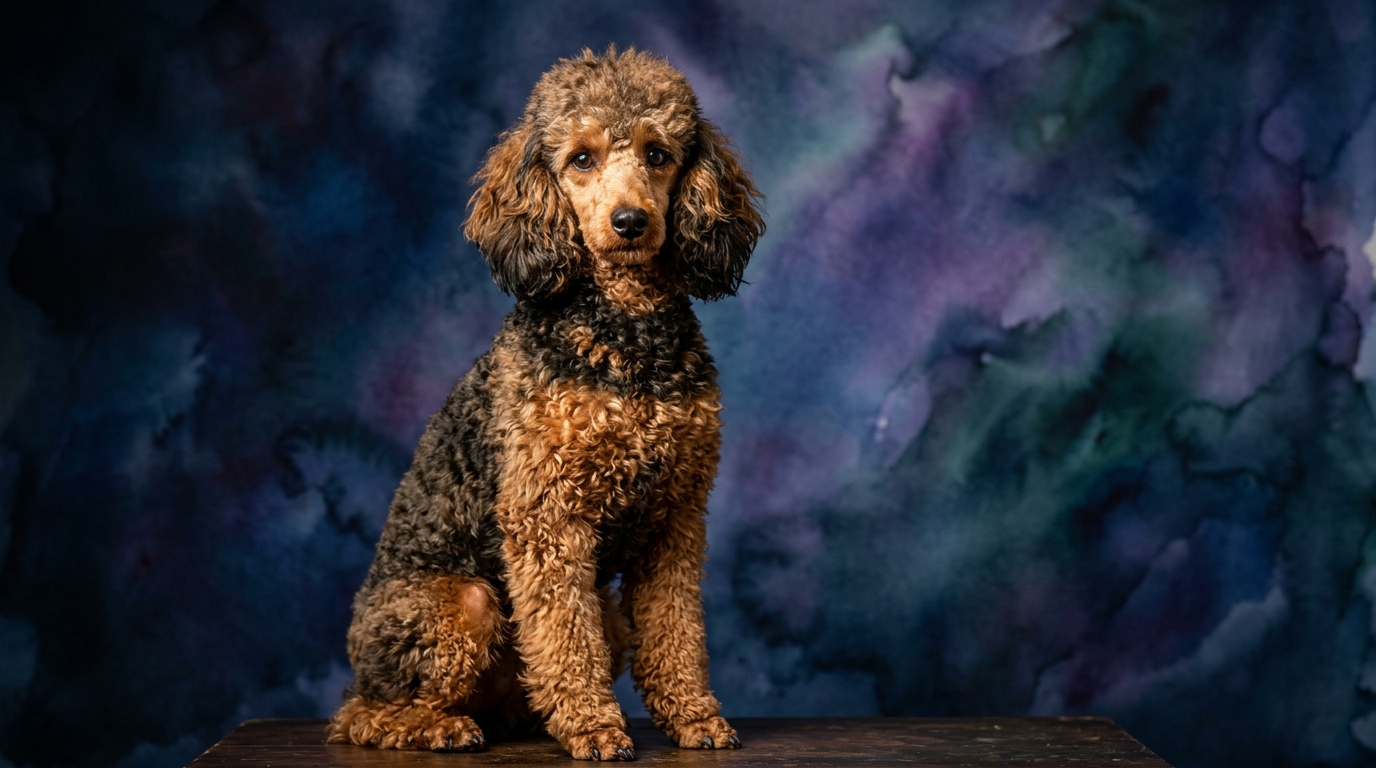
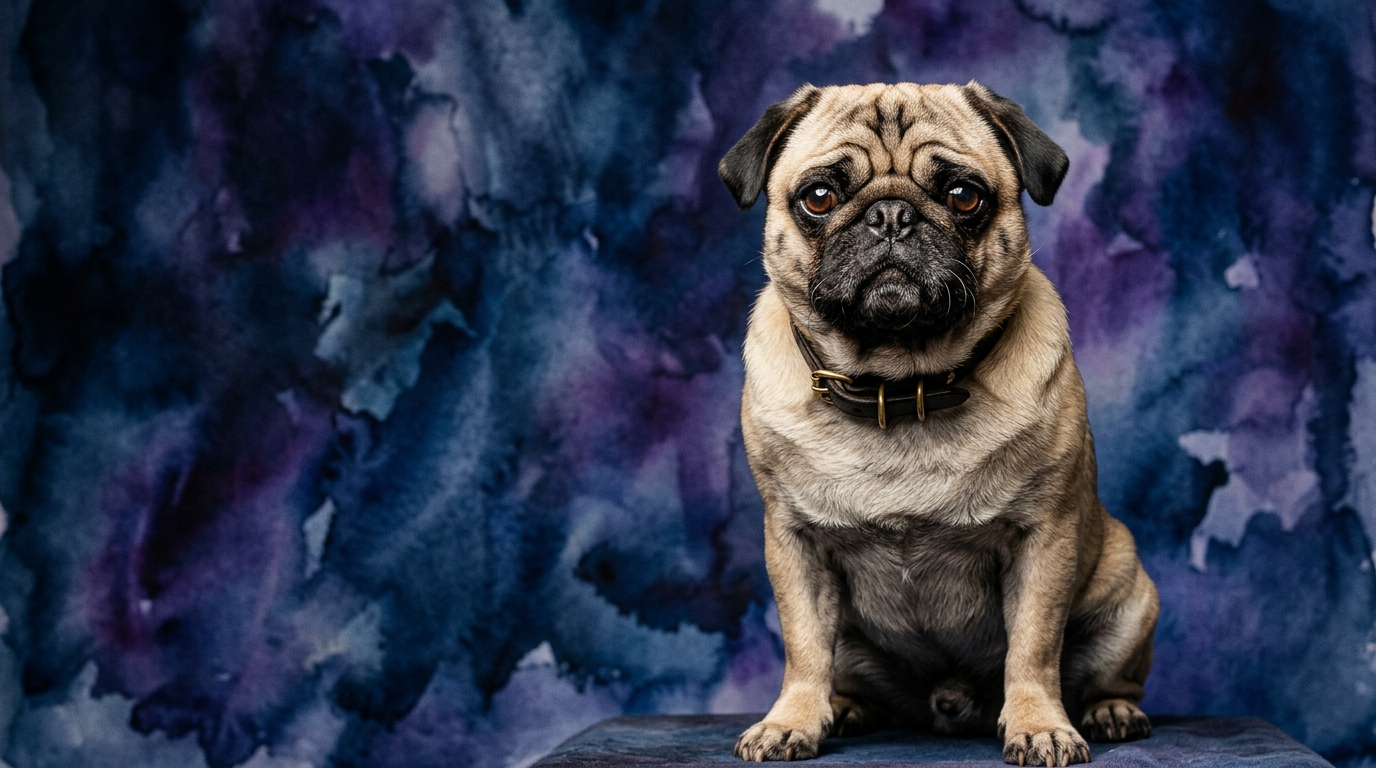
Side-by-Side IQ Profile: Standard Poodle vs Pug
**Standard Poodle (Non-Sporting Group, Coren Rank #2)**: This breed showcases exceptional analytical capabilities. Their Problem Solving (5/5) means they readily dissect new challenges, decipher complex puzzle toys, and navigate novel environments thoughtfully. Training Speed (5/5) is impressive; they absorb new information with minimal repetition, mastering complex commands quickly. Possessing profound Social Intelligence (5/5), they are acutely sensitive to human emotions and adapt their behavior to social contexts. An Instinctive Drive (4/5) rooted in their retrieving heritage provides a robust inclination for focused activity and purposeful play. Their Memory (5/5) is outstanding, retaining complex sequences and associations over long periods, making advanced training enduring.
**Pug (Toy Group, Coren Rank #57)**: Pugs approach new problems with less analytical intensity. Their Problem Solving (2/5) indicates a reliance on established routines or immediate gratification over strategic planning, making complex puzzle toys less engaging. Training Speed (2/5) is deliberate, requiring significant repetition and patience to acquire new commands. Despite this, Pugs boast exceptional Social Intelligence (5/5), mastering the art of reading human body language and understanding emotional states to elicit attention or comfort. Their Instinctive Drive (2/5) is low; their historical role means minimal inherent inclination for tasks like retrieving or guarding, with motivation primarily social. Pugs have a moderate Memory (3/5), retaining basic commands and routines but potentially struggling with complex sequences without consistent reinforcement.
Where the Standard Poodle Wins Cognitively
The Standard Poodle's cognitive strengths are evident in their capacity for complex learning and adaptive behavior. Their exceptional Problem Solving score of 5/5 means they are naturally inclined to analyze and understand new situations, rather than simply reacting. This translates into quickly grasping advanced puzzle toys, figuring out childproof latches, or generalizing learned behaviors like "sit" across different locations. Coupled with a 5/5 Training Speed, they don't just solve problems; they learn the *process* of solving them rapidly, making them adept at mastering intricate agility courses, performing multi-step service tasks, or excelling in competitive obedience with precision. Furthermore, their perfect 5/5 Memory ensures these complex lessons are not fleeting. A Standard Poodle can retain a vast repertoire of commands and routines over extensive periods, allowing for continuous skill building and the development of truly sophisticated behavioral repertoires without constant re-teaching. This holistic cognitive strength empowers them to excel in environments demanding mental agility and consistent, high-level performance.
Where the Pug Wins Cognitively
While the Pug's cognitive profile differs significantly, they exhibit a distinct strength perfectly aligning with their purpose as dedicated companions. Their perfect 5/5 Social Intelligence is where the Pug truly shines. This isn't merely about affection; it's a profound ability to read the emotional landscape of their human family. Pugs are experts at detecting subtle shifts in mood, understanding unspoken desires for comfort or play, and adapting their own behavior to provide what's needed. They intuitively know when to offer a quiet presence during a stressful moment or initiate playful interaction to lighten the mood. This acute social awareness, combined with their low Instinctive Drive (2/5), means they are not distracted by external stimuli or a strong urge to perform tasks. Instead, their cognitive focus is almost entirely directed towards interpersonal connection, making them unparalleled as empathetic, present companions. Their moderate Memory (3/5) ensures they recall household routines and preferences, contributing to a sense of predictability and comfort that many owners deeply value. The Pug's cognitive "win" lies in their specialized ability to foster deep, uncomplicated emotional bonds through intuitive social understanding and unwavering presence.
Training Ease: Standard Poodle vs Pug
When it comes to ease of training, the cognitive differences between the Standard Poodle and the Pug create a clear distinction. The Standard Poodle is unequivocally easier to train, primarily due to their stellar 5/5 Training Speed, 5/5 Problem Solving, and 5/5 Memory. These attributes mean they grasp new concepts quickly, require fewer repetitions to solidify behaviors, and retain what they’ve learned over long periods. For instance, a Standard Poodle can master a complex chain of commands for an agility course within a few focused sessions, executing it accurately weeks later. They enjoy the mental challenge of learning and are often eager to please, translating into a dog that actively seeks to understand and perform. Their moderate Instinctive Drive (4/5) also provides inherent motivation for purposeful activities, which can be channeled into various training endeavors.
Conversely, the Pug presents a more significant training challenge. Their 2/5 Training Speed means new commands demand considerable patience and numerous repetitions. A Pug might take dozens of sessions to consistently perform a simple "stay" command. Their 2/5 Problem Solving score suggests they are less inclined to generalize learning or figure out solutions independently, requiring more explicit instruction. While their 5/5 Social Intelligence makes them keen observers, it doesn't necessarily translate into a desire for formal obedience work; they are more motivated by close companionship. Their low 2/5 Instinctive Drive means they lack the inherent "work ethic" that often drives other breeds. Training a Pug often involves shorter, highly positive sessions, leveraging their desire for treats or attention rather than an innate drive for complex tasks. Real behavioral differences include the Poodle's active engagement in learning versus the Pug's tendency towards delightful but often stubborn indifference if not properly motivated.
Suitability for Active vs. Relaxed Owners
The distinct cognitive profiles of the Standard Poodle and the Pug naturally align them with different owner lifestyles. For active owners who thrive on engagement and mental stimulation, the Standard Poodle is an ideal match. Their exceptional Problem Solving (5/5), Training Speed (5/5), and Memory (5/5) mean they require and genuinely enjoy consistent mental challenges. These dogs flourish when participating in activities like advanced obedience, agility, rally, or even scent work, where their cognitive abilities are put to good use. Their 4/5 Instinctive Drive fuels a desire for purposeful activity, making them excellent partners for long hikes, retrieving games, or complex training sessions that demand sustained focus. An owner who can provide daily opportunities for intellectual engagement and physical exercise will find the Standard Poodle to be an incredibly rewarding and responsive companion.
Conversely, relaxed owners seeking a more laid-back, yet deeply connected companion will find the Pug to be an excellent fit. Their lower scores in Problem Solving (2/5), Training Speed (2/5), and Instinctive Drive (2/5) indicate a breed content with a less demanding routine. Pugs don't crave complex mental puzzles or extensive physical exertion; their primary cognitive focus is on social interaction and comfort. Their perfect 5/5 Social Intelligence ensures they are highly attuned to their owner's presence and emotional state, making them superb lap dogs and empathetic companions for quiet evenings at home. They are perfectly happy with short, leisurely walks and ample cuddle time. An owner who values a devoted, easygoing presence and isn't seeking a dog for competitive sports or demanding intellectual tasks will appreciate the Pug's unique cognitive makeup, which prioritizes companionship above all else.
The Verdict
If you seek a cognitively vibrant companion eager for complex training, dog sports, or service work, thriving on mental challenges and consistent engagement, the Standard Poodle's exceptional learning capacity and drive make them an unparalleled choice.
If your primary desire is a devoted, empathetic companion who excels at social connection and comfort, content with a relaxed lifestyle and less demand for intense mental or physical exertion, the Pug offers unwavering presence and affectionate companionship.
🧠 Find Your Pet's IQ Score
Our Pet IQ Lab assessment covers 25+ tests across 5 cognitive dimensions — personalized to your breed.
Take the Full IQ Test →Frequently Asked Questions
Are Pugs untrainable due to their lower IQ scores?
No, Pugs are not untrainable, but their training approach differs significantly. They require more patience, shorter sessions, and consistent positive reinforcement, often motivated by treats or social praise, rather than complex task-oriented learning.
Do Standard Poodles truly need a lot of mental stimulation, or is physical exercise enough?
Standard Poodles absolutely thrive on mental stimulation, given their 5/5 scores in problem-solving, training speed, and memory. While physical exercise is important, engaging their minds with puzzle toys, learning new tricks, or participating in dog sports is crucial for their well-being and to prevent boredom-related behaviors.
How does social intelligence manifest differently in Poodles and Pugs, even though both score 5/5?
Both breeds possess excellent social intelligence, but its expression is shaped by their other cognitive traits. A Standard Poodle might use their social intelligence to understand complex commands and cooperate in tasks, while a Pug often channels theirs into nuanced emotional support and seeking affectionate physical closeness, being highly attuned to human comfort needs.