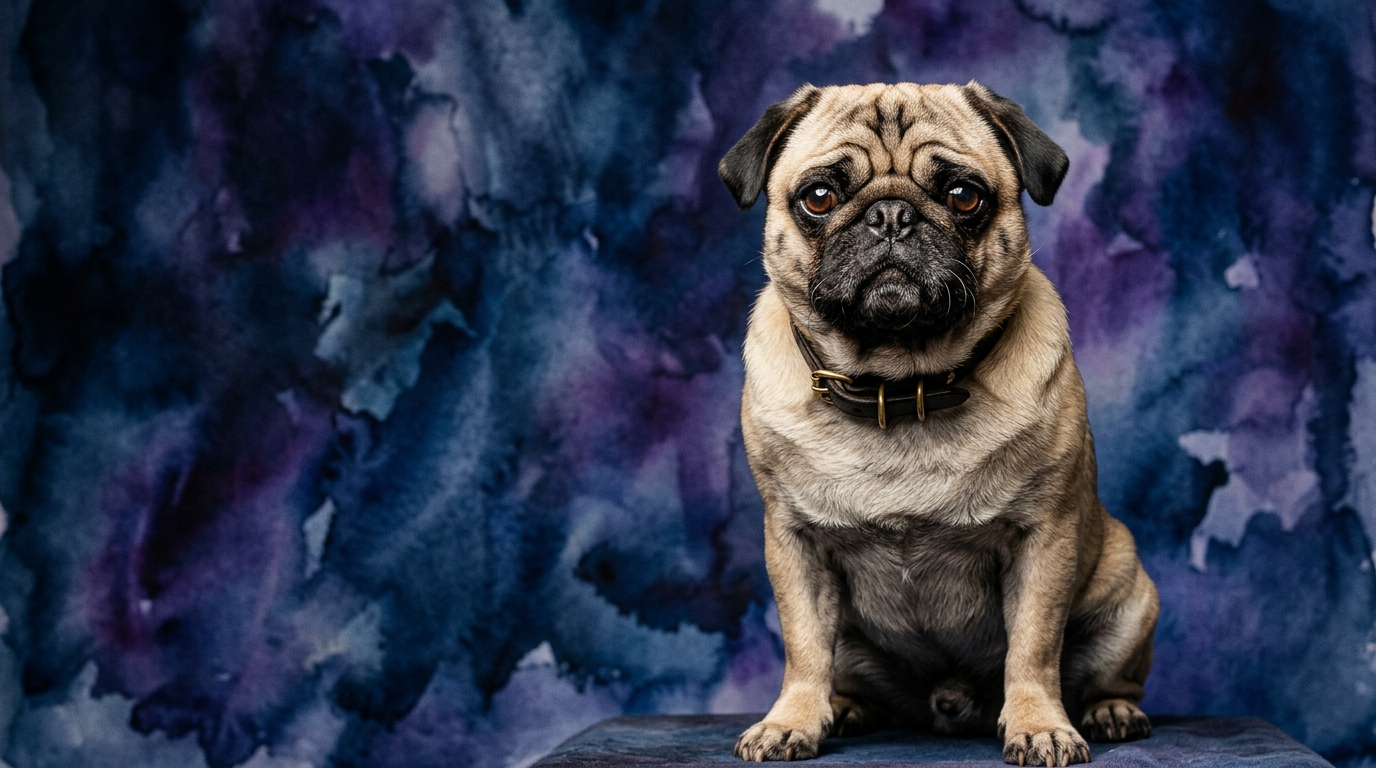
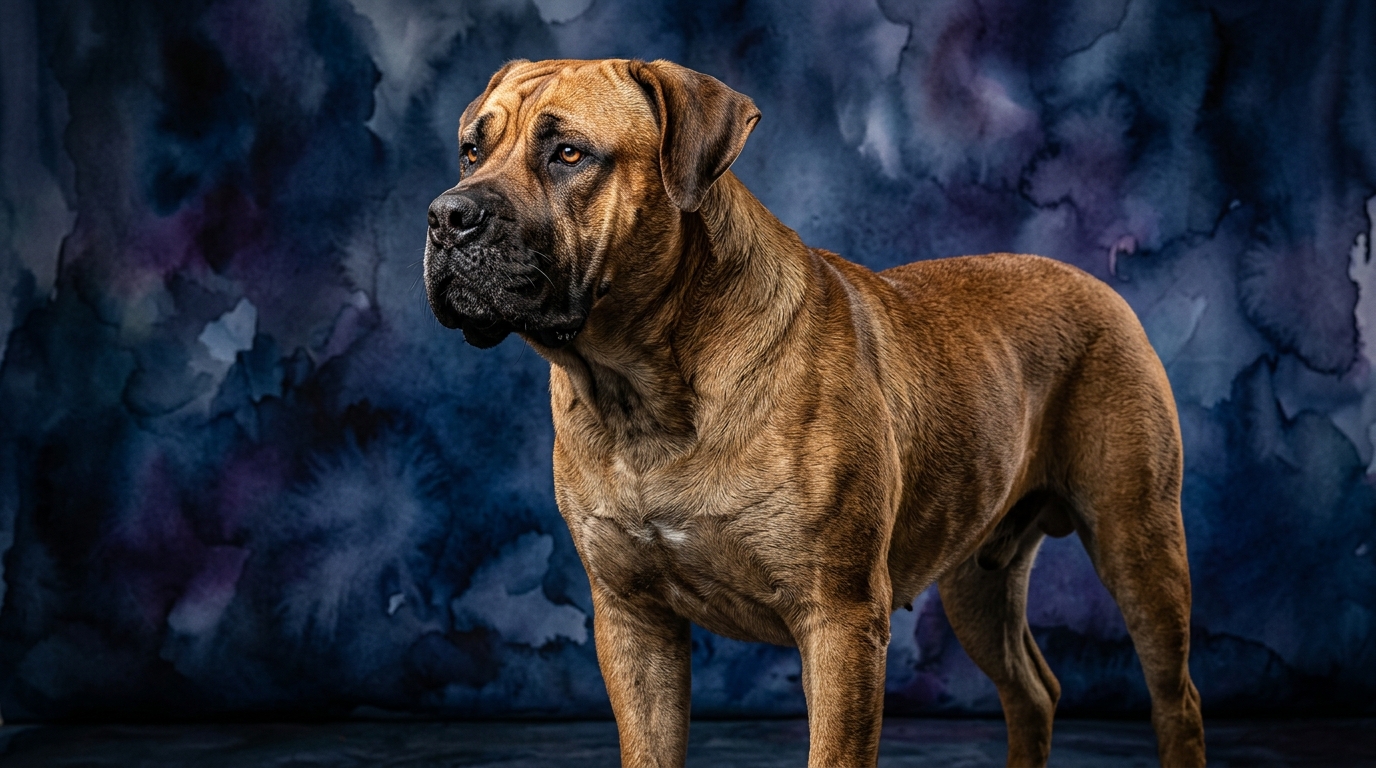
Side-by-Side IQ Profile: Pug vs. Boerboel
The Cosmic Pet Pet IQ Lab employs five key dimensions to evaluate canine intelligence, offering a nuanced perspective beyond traditional metrics. For the Pug, classified in the Toy group and ranking #57 on the Coren scale, and the Boerboel, a Working group breed without a Coren rank, these dimensions reveal their distinct mental blueprints.
Problem Solving: The Pug scores 2/5 in problem-solving, indicating they may find complex puzzles or novel environmental challenges perplexing, often preferring to rely on familiar routines rather than innovative solutions. In contrast, the Boerboel registers 3/5, demonstrating a moderate capacity to strategize and adapt to new situations, such as figuring out how to bypass an obstacle or achieve a desired outcome through observation.
Training Speed: With a training speed of 2/5, the Pug typically requires consistent, patient instruction and numerous repetitions to solidify commands, emphasizing the need for positive reinforcement. The Boerboel, at 3/5, learns at an average pace, capable of acquiring new commands with regular practice, though a clear motivational incentive can enhance their responsiveness.
Social Intelligence: Here, the Pug truly shines with a perfect 5/5. They exhibit a profound ability to interpret human emotions, body language, and vocal tones, making them exceptionally empathetic and attuned companions. The Boerboel holds a 3/5 in social intelligence, possessing a functional understanding of basic human cues but generally without the Pug's innate sensitivity to nuanced emotional states.
Instinctive Drive: The Pug's instinctive drive is 2/5, indicating a low inclination for tasks rooted in ancestral hunting, herding, or guarding, preferring comfort and companionship over active 'work.' The Boerboel, with a 3/5, carries a moderate instinctive drive, often manifesting as protective tendencies or an inclination towards purposeful activity, reflecting its heritage as a farm guardian.
Memory: Both the Pug and the Boerboel score 3/5 in memory, suggesting an average capacity for retaining learned information and past experiences. For both breeds, consistent reinforcement is beneficial to ensure commands and routines remain well-ingrained over time.
Where the Pug Excels Cognitively
The Pug's undisputed cognitive strength lies in its exceptional social intelligence, rated 5/5. This breed is a master of reading human emotional states, often anticipating needs or moods without requiring explicit commands. Their ability to connect on a deeply empathetic level allows them to integrate seamlessly into a family's emotional landscape, offering comfort or soliciting attention at precisely the right moments, making them unparalleled emotional support animals.
Furthermore, their low instinctive drive (2/5) means Pugs are less prone to independent ventures driven by primal urges like chasing prey or patrolling territory. Instead, their mental energy is predominantly directed towards fostering social bonds and engaging in companionship, resulting in a dog whose cognitive focus is almost entirely human-centric. This mental disposition makes them inherently less demanding in terms of managing complex behavioral drives, allowing owners to focus purely on their role as affectionate companions.
Where the Boerboel Shines Cognitively
The Boerboel's cognitive advantages are rooted in its working dog heritage, particularly evident in its problem-solving abilities (3/5) and instinctive drive (3/5). While not a genius, their moderate problem-solving aptitude allows them to navigate environmental challenges with a degree of ingenuity, figuring out how to achieve a desired outcome, such as bypassing a simple barrier to reach a specific area or toy. This capacity for independent thought gives them an edge in situations requiring a degree of self-reliance.
Their moderate instinctive drive, often channeled into guarding and protection, means Boerboels possess an inherent mental framework for assessing perceived threats and acting decisively. This cognitive function, which involves evaluating situations and making quick judgments, is a specialized strength not commonly found in companion breeds. Coupled with their moderate training speed, this drive suggests a mind capable of purposeful learning for specific tasks, allowing them to excel in roles requiring vigilance and a clear sense of duty, unlike the Pug who primarily prioritizes social connection.
Training Dynamics: Pug vs. Boerboel
Determining which breed is 'easier' to train is nuanced, as it depends heavily on the trainer's experience, desired outcomes, and approach. The Boerboel, with a training speed of 3/5, can acquire new commands at an average pace, and their moderate instinctive drive means they are often receptive to task-oriented learning. However, their independence and protective instincts necessitate a confident, experienced trainer who can establish clear boundaries and consistent expectations, preventing their moderate problem-solving skills from being applied to undesirable behaviors or stubbornness.
Conversely, the Pug, despite a slower training speed of 2/5, benefits immensely from its unparalleled social intelligence (5/5). They are highly attuned to human feedback, making them eager to please and exceptionally responsive to positive reinforcement rooted in affection and praise. While they may require more repetitions to master a command, their motivation is often intrinsic – to maintain harmony and connection with their human. This makes them highly trainable for companionship roles, though less so for complex working tasks requiring sustained independence or intense focus away from their owner.
For basic obedience in a loving home environment, the Pug's social connection often makes the process feel more intuitive and rewarding, despite the slower learning curve for specific commands. For advanced obedience, protection work, or roles requiring independent judgment, the Boerboel's mental architecture is better suited, provided the handler is skilled and committed to consistent, firm guidance.
Lifestyle Match: Active vs. Relaxed Owners
The choice between a Pug and a Boerboel also significantly hinges on an owner's lifestyle and energy levels. A Pug, with its low instinctive drive (2/5) and inherent preference for comfort and companionship, is ideally suited for relaxed owners. Their cognitive focus on social interaction means they thrive in environments where affection, gentle play, and cozy naps are prioritized over strenuous physical or mental challenges. They are content with moderate daily walks and ample lap time, requiring minimal structured 'work' to feel fulfilled. Their high social intelligence allows them to be constant, undemanding presences, perfectly complementing a quieter, less active household.
The Boerboel, on the other hand, with its moderate instinctive drive (3/5) and problem-solving capacity (3/5), necessitates a more active and engaged owner. These dogs require consistent mental stimulation and physical exercise to channel their natural drives constructively. Owners who enjoy structured training, have a secure property for their dog to patrol (mentally or physically), or engage in activities like obedience, tracking, or even protection sports, will find the Boerboel's cognitive makeup more aligned with their lifestyle. Their moderate social intelligence means they appreciate companionship but also value having a 'job' or a clear role, making them a better fit for owners who embrace a more hands-on, purpose-driven approach to dog ownership and can provide ample space and mental outlets.
The Verdict
Choose a Pug if your primary desire is an emotionally intelligent, affectionate companion who thrives on social connection and requires minimal structured activity, bringing joy through their empathetic presence.
Opt for a Boerboel if you are an experienced, active owner seeking a capable, protective guardian who benefits from consistent training, a clear role, and mental engagement within a structured environment.
🧠 Find Your Pet's IQ Score
Our Pet IQ Lab assessment covers 25+ tests across 5 cognitive dimensions — personalized to your breed.
Take the Full IQ Test →Frequently Asked Questions
Is a Pug difficult to train due to its lower training speed?
While a Pug's training speed is rated 2/5, meaning they may take more repetitions to learn new commands, their high social intelligence and desire to please their owners often make them enjoyable to train. Positive reinforcement and patience are key, as they are highly attuned to human emotions and respond well to affectionate guidance.
How does the Boerboel's instinctive drive impact its behavior?
The Boerboel's moderate instinctive drive (3/5) often manifests as protective tendencies and a desire for purpose. This means they are naturally inclined to guard their family and territory, requiring clear boundaries and consistent socialization from a young age to ensure their protective instincts are channeled appropriately and not misdirected.
Can a Pug and a Boerboel live together peacefully, considering their IQ differences?
Yes, a Pug and a Boerboel can coexist peacefully, but it depends on careful introductions, early socialization, and consistent management. The Pug's high social intelligence can help it navigate the Boerboel's presence, while the Boerboel's protective nature, when well-managed, can extend to its smaller housemate. Supervision is always crucial, especially given the significant size difference.