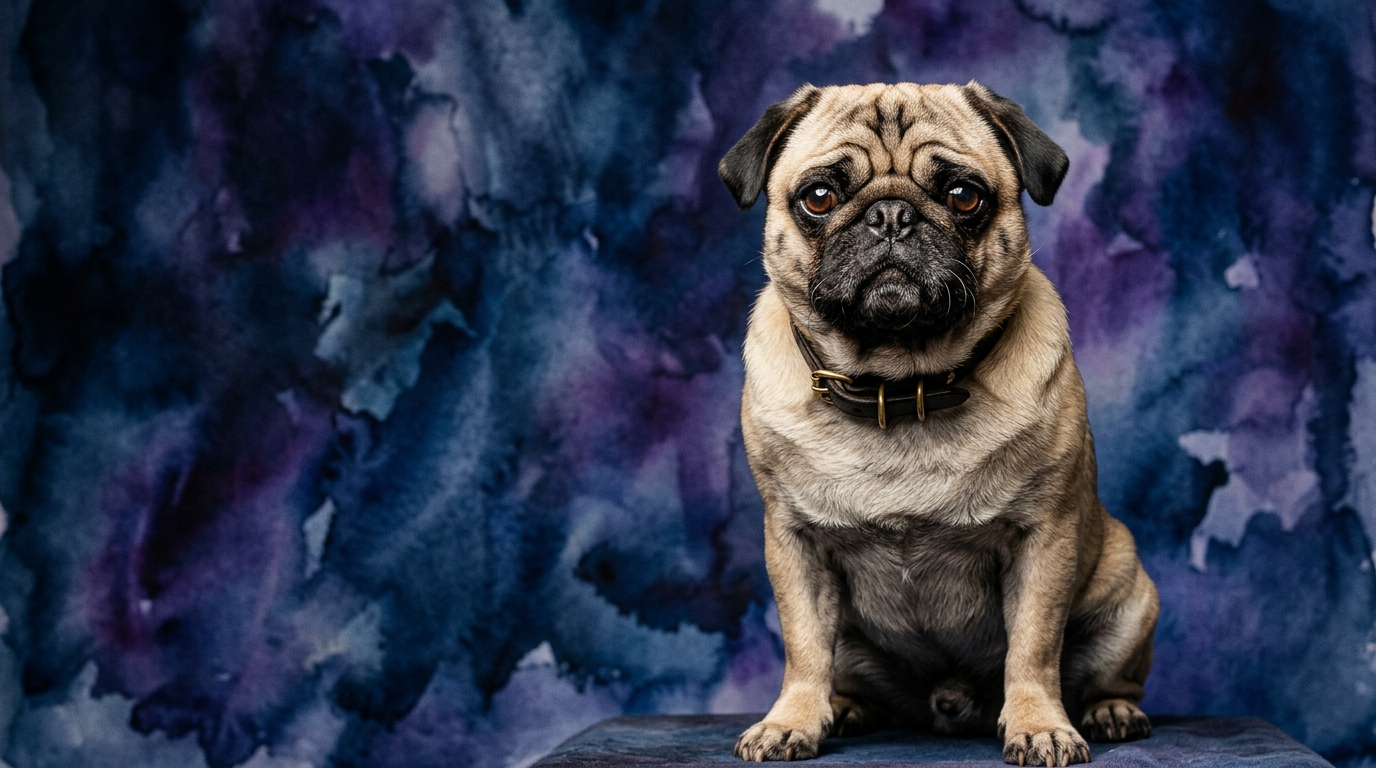
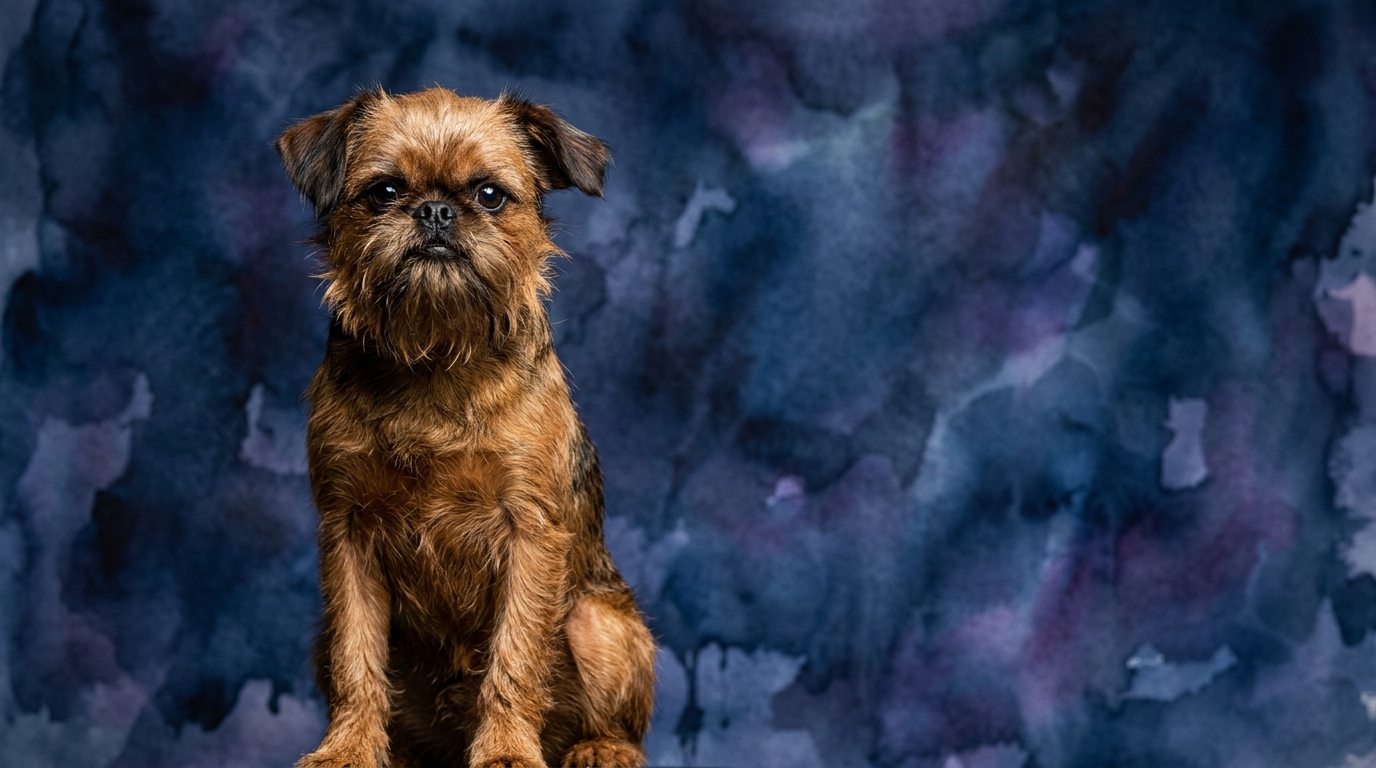
Side-by-Side Pet IQ Profile
At The Cosmic Pet Pet IQ Lab, we evaluate canine intelligence across five key dimensions, offering a nuanced look at each breed's cognitive architecture. For the Pug, our data paints a picture of a deeply social creature with specific learning patterns.
**Pug IQ Profile:**
**Problem Solving (2/5):** Pugs typically show a lower aptitude for independently solving novel puzzles or navigating complex environmental changes, preferring familiar routines. They often look to their human companions for guidance rather than attempting self-directed solutions.
**Training Speed (2/5):** Learning new commands progresses at a deliberate pace for Pugs. They require consistent repetition and patience, thriving on positive reinforcement. Their motivation often stems from social interaction and rewards, not intrinsic task mastery.
**Social Intelligence (5/5):** This is the Pug's cognitive pinnacle, demonstrating an exceptional ability to read and respond to human social cues. They are incredibly attuned to emotional shifts, often mirroring their owner's mood and seeking to provide comfort. Their understanding of human communication is remarkably empathetic.
**Instinctive Drive (2/5):** Pugs possess a low instinctive drive, showing minimal natural inclination for tasks like hunting or independent exploration. Their focus is predominantly on companionship, with little interest in sustained, self-directed environmental effort.
**Memory (3/5):** Pugs display an average memory, retaining routines, familiar faces, and learned commands with consistent reinforcement, contributing to their comforting predictability.
The Brussels Griffon, while also a toy breed, presents a different cognitive blueprint, suggesting a slightly more independent and adaptable mindset.
**Brussels Griffon IQ Profile:**
**Problem Solving (3/5):** Brussels Griffons exhibit a moderate capacity for problem-solving, showing a greater willingness than Pugs to tackle simple mental challenges or adapt to new situations. They might attempt to figure out treat-dispensing toys or navigate altered environments with more independent thought.
**Training Speed (3/5):** These companions generally learn new commands at an average rate. They respond well to clear, consistent training methods and can pick up new tricks with regular practice, often fueled by a desire for interaction and mental stimulation.
**Social Intelligence (3/5):** Brussels Griffons possess a solid level of social intelligence, interacting effectively with humans and understanding basic social cues. While attentive, their connection is typically more direct and less overtly empathetic than a Pug's, maintaining a slightly more independent social stance.
**Instinctive Drive (3/5):** With a moderate instinctive drive, Brussels Griffons often display remnants of their terrier heritage, such as curiosity for small movements or an interest in exploring. This drive can manifest as a moderate desire for independent activity.
**Memory (3/5):** Similar to Pugs, Brussels Griffons have an average memory, capable of recalling routines, familiar individuals, and learned commands, establishing strong associations with their environment.
Where the Pug Wins Cognitively
The Pug's preeminent cognitive strength lies in its exceptional Social Intelligence (5/5). This isn't merely about liking people; it's a profound ability to interpret human emotional states and intentions. A Pug often seems to anticipate its owner's needs or moods, offering a comforting nudge during sadness or a playful invitation during joy. They excel at non-verbal communication, picking up on subtle cues in tone of voice, body language, and facial expressions that many other breeds might overlook. This makes them unparalleled emotional companions, forming deeply intuitive bonds. Their cognitive framework is exquisitely tuned to understanding and responding to the intricacies of human interaction.
Where the Brussels Griffon Wins Cognitively
The Brussels Griffon demonstrates cognitive advantages in several key areas. Its Problem Solving (3/5) ability, a step above the Pug's, means it's more inclined to engage with and successfully navigate minor environmental challenges, like retrieving a toy stuck under furniture. Coupled with a slightly higher Training Speed (3/5), the Brussels Griffon often grasps new commands and concepts more readily, showing a greater capacity for varied learning experiences. Furthermore, its moderate Instinctive Drive (3/5) suggests a spark of independent thought and a willingness to explore or engage with its environment on its own terms, rather than solely relying on human direction. This combination makes them more adaptable and perhaps more enthusiastic participants in activities requiring initiative.
Which is Easier to Train and Why
Based on our Pet IQ Lab data, the Brussels Griffon holds a slight edge in trainability, primarily due to its Training Speed (3/5) and higher Problem Solving (3/5) score compared to the Pug's 2/5 in both categories. A Brussels Griffon is generally quicker to connect an action with a command and its subsequent reward, making initial learning phases smoother. Their moderate instinctive drive means they might also find the process of “figuring things out” inherently rewarding. Pugs, while eager to please due to their high social intelligence, often require more repetitions and a slower pace to fully internalize new behaviors. Their lower problem-solving aptitude means they might struggle more with abstract concepts, needing a more structured and patient approach. Therefore, the Brussels Griffon typically offers a more responsive training experience.
Which Suits Active Owners vs. Relaxed Owners
The choice between these two breeds often hinges on an owner's lifestyle. For relaxed owners who prioritize companionship, emotional connection, and a predictable home life, the Pug is an ideal match. Its unparalleled social intelligence means it thrives on close human interaction and is content with a routine that includes ample lap time and gentle walks. Pugs are less demanding of complex mental stimulation or strenuous physical activity, making them perfect for those seeking a devoted, low-key companion. In contrast, the Brussels Griffon, with its higher problem-solving and instinctive drive, is better suited for moderately active owners. These individuals appreciate a dog that enjoys learning new things, participating in varied activities, and engaging in some independent exploration. The Brussels Griffon benefits from owners who can provide consistent mental and physical enrichment.
The Verdict
Choose a Pug if your primary desire is an exceptionally empathetic, devoted companion who thrives on close emotional connection and a calm, predictable environment.
Opt for a Brussels Griffon if you seek a moderately adaptable, curious companion who enjoys engaging in learning activities and possesses a spark of independent spirit.
🧠 Find Your Pet's IQ Score
Our Pet IQ Lab assessment covers 25+ tests across 5 cognitive dimensions — personalized to your breed.
Take the Full IQ Test →Frequently Asked Questions
Do Pugs truly understand human emotions?
Yes, Pugs exhibit a remarkable capacity for understanding human emotions, ranking exceptionally high in social intelligence. They are highly attuned to subtle cues in tone, body language, and facial expressions, often responding with comforting gestures or mirroring their owner's mood. This makes them incredibly empathetic companions, deeply connected to their human family's emotional landscape.
Can a Brussels Griffon be taught complex tricks?
Brussels Griffons generally possess a moderate training speed and problem-solving ability, meaning they can certainly be taught a variety of complex tricks. Success depends on consistent, positive reinforcement training and breaking down complex behaviors into smaller, manageable steps. Their moderate instinctive drive can also make them more engaged in learning tasks that involve a bit of "figuring out."
Which breed is more independent?
The Brussels Griffon tends to be more independent than the Pug. With a higher instinctive drive and problem-solving score, Griffons often show a greater willingness to explore their environment or engage in self-directed activities. Pugs, conversely, are profoundly people-oriented, preferring to be in close proximity to their humans and relying more on them for direction and companionship.