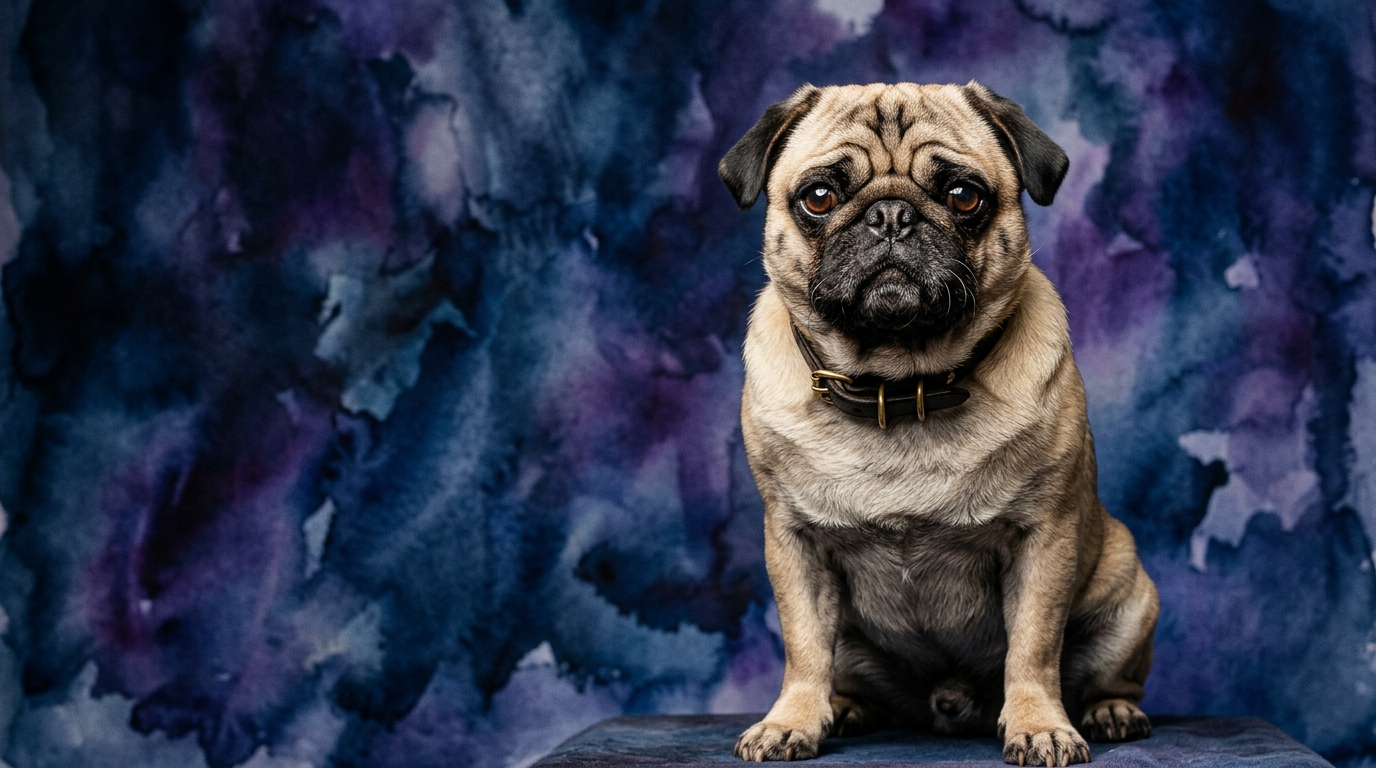
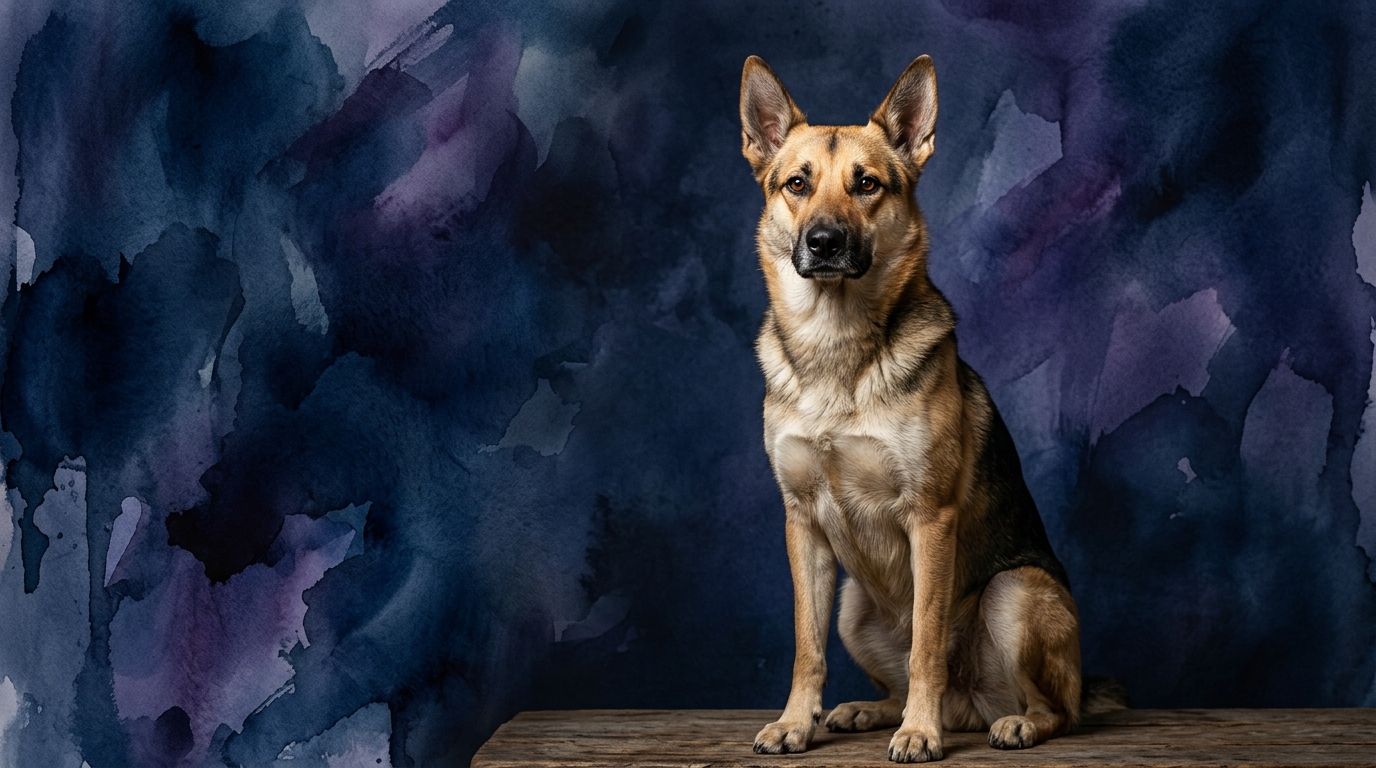
Side-by-Side Cognitive Profiles: Pug vs. Canaan Dog
The Cosmic Pet Pet IQ Lab employs five dimensions to assess canine intelligence, offering a nuanced understanding beyond simple obedience. Let's delve into how the Pug, a Toy breed, and the Canaan Dog, a Herding breed, measure up across these distinct cognitive faculties.
**Pug's Cognitive Landscape (Coren Rank #57):**
**Problem Solving (2/5):** The Pug typically approaches novel challenges with less independent strategizing. They may attempt familiar learned behaviors or look to their human companions for guidance rather than devising complex solutions autonomously. Their strength lies more in adapting to human-provided solutions than in generating their own.
**Training Speed (2/5):** Pugs often require patience and repetition to grasp new commands or routines. While they possess a strong desire to please, their processing speed for new information can be deliberate, meaning training sessions need to be short, engaging, and highly rewarding to maintain their focus.
**Social Intelligence (5/5):** This is where the Pug truly shines. They are remarkably attuned to human emotions, body language, and social cues. They excel at discerning mood shifts, adapting their behavior to comfort or amuse, and integrating seamlessly into the family's social structure, often acting as intuitive emotional support.
**Instinctive Drive (2/5):** Pugs generally exhibit low levels of ancient canine drives such as hunting, herding, or guarding. Their primary motivations revolve around companionship, comfort, and interaction with their human family, rather than engaging in complex, instinct-driven tasks.
**Memory (3/5):** Pugs possess a moderate memory, capable of retaining routines, familiar commands, and the layout of their immediate environment. They remember their people and past positive (or negative) interactions, but are unlikely to recall intricate sequences or a vast array of distinct commands with high precision.
**Canaan Dog's Cognitive Landscape (Coren Rank #43):**
**Problem Solving (3/5):** The Canaan Dog demonstrates a moderate capacity for independent problem-solving. Originating as pariah dogs, they often had to navigate complex environments and find solutions for survival, translating into a dog that can assess situations and devise effective strategies, albeit not always the ones their human desires.
**Training Speed (3/5):** Canaan Dogs typically learn new commands at an average pace. They are capable of acquiring information efficiently but are also independent thinkers. While they can quickly grasp concepts, their compliance often hinges on understanding the purpose of a command or respecting the trainer’s leadership, rather than an inherent eagerness to simply please.
**Social Intelligence (3/5):** While observant of human behavior, the Canaan Dog's social intelligence is more rooted in independent assessment than overt demonstrativeness. They form deep bonds with their family but maintain a degree of self-reliance, not always seeking constant interaction or emotional validation in the same way a Pug might. They are discerning about strangers.
**Instinctive Drive (3/5):** Canaan Dogs retain moderate instinctive drives related to their ancestral role as guardians and survivors in harsh environments. This includes strong territorial instincts, vigilance, and an innate sense of self-preservation, which contributes to their independent nature and protective tendencies.
**Memory (4/5):** Canaan Dogs exhibit a strong memory, particularly for spatial relationships, past experiences, and the boundaries of their territory. This enhanced recall supports their independent exploration and ability to navigate complex outdoor environments, remembering routes and potential hazards with notable accuracy.
Where the Pug's Mind Excels
The Pug's most significant cognitive strength lies in its unparalleled social intelligence. At a perfect 5/5, their ability to interpret and respond to human social cues is exceptional. This isn't merely about recognizing a command; it's about discerning subtle shifts in tone, body language, and emotional states. A Pug can often sense when their human is feeling down, offering gentle comfort or playful antics to lighten the mood without being explicitly told. They master the art of charming their way into desired outcomes, understanding precisely how to elicit attention, affection, or a treat through their expressions and behaviors. This deep social attunement allows them to integrate into family life with remarkable ease, becoming intuitive companions who anticipate needs and fit seamlessly into the emotional fabric of a household. Their world revolves around their human connections, and their cognitive skills are finely tuned to optimize these relationships.
Where the Canaan Dog's Mind Shines
The Canaan Dog's cognitive strengths are rooted in their history as resourceful, independent survivors. Their problem-solving score of 3/5, combined with a strong instinctive drive (3/5) and superior memory (4/5), enables them to excel in situations requiring independent thought and environmental awareness. Unlike the Pug, a Canaan Dog is more likely to assess a novel situation, such as a gate left ajar or an unfamiliar object in their territory, and devise a strategy to investigate or address it on their own. Their strong memory allows them to recall complex routes, understand territorial boundaries, and remember past interactions or lessons, contributing to their self-sufficient nature. This breed possesses an innate vigilance and a capacity for strategic thinking that allows them to thrive in environments where independent decision-making and a keen awareness of their surroundings are paramount. Their intelligence manifests in their ability to learn from experience and adapt to changing circumstances with a degree of autonomy.
Navigating the Training Journey: Pug vs. Canaan Dog
When considering ease of training, the Pug and Canaan Dog present distinct experiences, directly correlating with their IQ profiles. The Canaan Dog, with a Training Speed of 3/5, generally acquires new commands and concepts at a quicker pace than the Pug (2/5). This efficiency stems from their inherent capacity for independent thought and their ability to grasp connections between actions and consequences. However, their independence means they are less inclined to blindly follow commands; they often require a trainer who can engage their intellect, provide clear reasons, and establish consistent, respectful leadership. A Canaan Dog might question a command if they don't perceive its utility, demanding a nuanced approach from their handler.
Conversely, the Pug, despite its slower processing speed for new tasks, often makes the training journey feel "easier" for a patient, novice owner due to their profound social intelligence (5/5). While it may take more repetitions for a Pug to master a command, their strong desire for human connection and approval means they are typically eager to please. They respond exceptionally well to positive reinforcement, praise, and making training sessions fun and short. Their compliance, once a command is understood, is usually high because it strengthens their bond with their human. Therefore, while the Canaan Dog learns quicker, the Pug's social motivation can make them a more compliant and less challenging student for an owner prioritizing a strong bond over rapid command acquisition.
Matching Cognitive Profiles to Lifestyles: Active vs. Relaxed Owners
The distinct cognitive profiles of the Pug and Canaan Dog lend themselves to very different owner lifestyles. For individuals seeking a relaxed, companion-oriented experience, the Pug is often an ideal match. Their low instinctive drives (2/5) mean they have minimal requirements for complex mental or physical tasks, thriving instead on close proximity and interaction with their human family. A Pug is content with short, leisurely walks, indoor games, and extensive cuddle sessions. Their moderate memory (3/5) is perfectly adequate for remembering household routines and commands necessary for a calm domestic life, and their exceptional social intelligence (5/5) makes them highly adaptable to varied social settings and family dynamics. They are not dogs that will seek out independent 'work' or challenge their environment, preferring instead to be a devoted, charming shadow.
The Canaan Dog, on the other hand, is better suited for active owners who relish providing mental and physical stimulation. Their higher instinctive drives (3/5) and problem-solving abilities (3/5) mean they require outlets for their intelligence and natural vigilance. These dogs thrive on structured activities like obedience training, agility, or scent work, which engage both their bodies and minds. Their strong memory (4/5) and independent nature mean they benefit from consistent challenges and opportunities to explore, whether through hiking, secure off-leash areas, or puzzle toys. An owner who understands and respects the Canaan Dog's need for purpose and autonomy will find a deeply loyal, resourceful partner, while a more relaxed owner might find their independent spirit and innate drives overwhelming.
The Verdict
Choose the Pug if you prioritize a devoted, socially adept companion who thrives on close interaction, offers intuitive emotional support, and is content with a more relaxed, companionship-focused lifestyle.
Opt for the Canaan Dog if you appreciate an independent, resourceful canine partner who excels with mental challenges, consistent, engaging training, and an active, stimulating environment that respects their natural vigilance.
🧠 Find Your Pet's IQ Score
Our Pet IQ Lab assessment covers 25+ tests across 5 cognitive dimensions — personalized to your breed.
Take the Full IQ Test →Frequently Asked Questions
Are Pugs truly stubborn, or is it a misunderstanding of their intelligence?
Pugs aren't necessarily stubborn, but their lower training speed and problem-solving scores mean they process new information more slowly and require patient, consistent methods. Their strong social intelligence often means they eventually comply, driven by a desire for connection and positive interaction with their human companions.
How does the Canaan Dog's independence impact daily life and training?
The Canaan Dog's independence means they are less prone to separation anxiety but require clear boundaries and consistent, engaging training to prevent them from making their own "rules." They excel when given tasks and opportunities for mental engagement, needing a handler who respects their self-reliance while providing direction.
Can a Pug be trained for complex tasks despite its lower problem-solving score?
While Pugs may not independently strategize complex tasks, their strong social intelligence and moderate memory allow them to learn intricate routines through repetition and positive reinforcement. They can perform impressive tricks and participate in activities like rally obedience, though the learning process might take longer and require more focused guidance.