Side-by-Side: Unpacking Their Cognitive Profiles
Let's first establish the baseline for understanding the mental faculties of these two distinct breeds, as evaluated by The Cosmic Pet Pet IQ Lab. Our five-dimensional IQ framework offers a nuanced view beyond simple obedience.
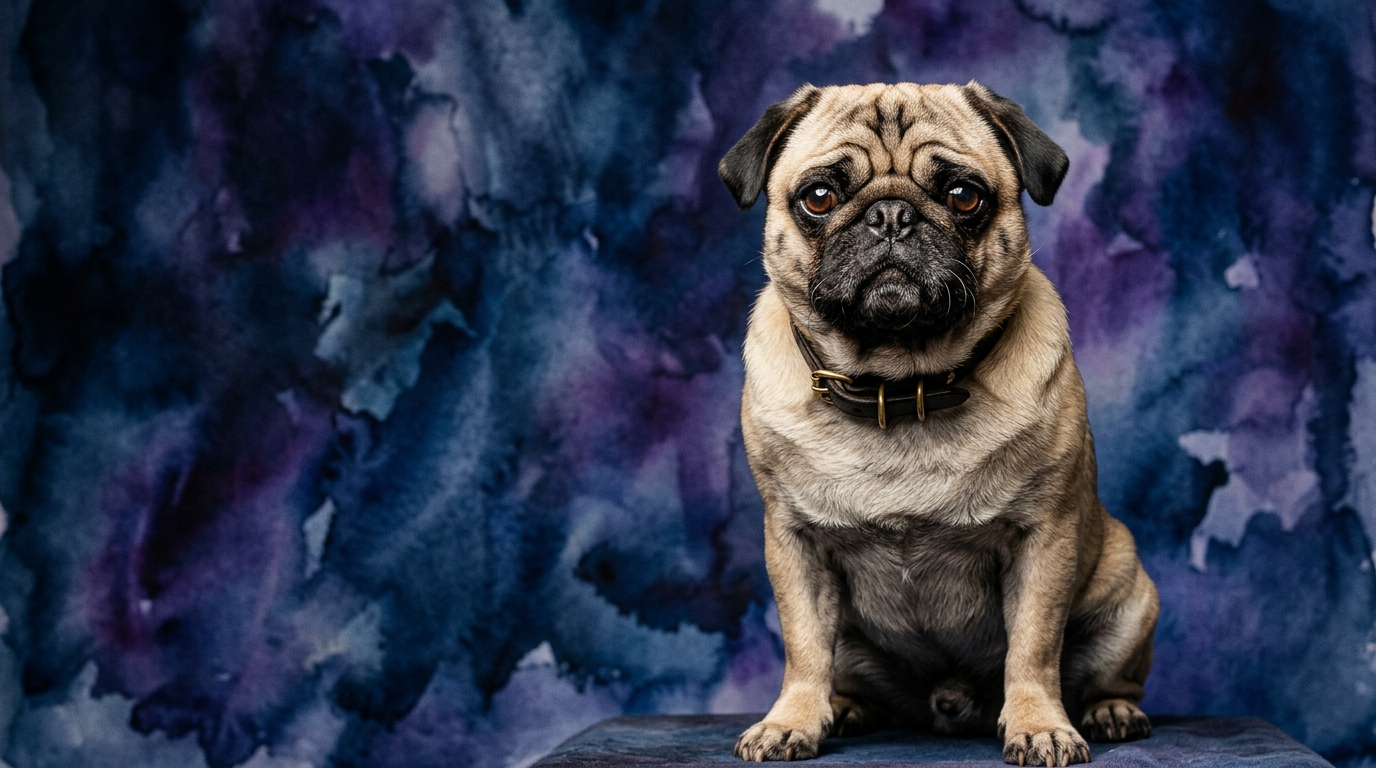
**Pug (Toy Group, Coren Rank #57):**
**Problem Solving (2/5):** Pugs typically exhibit a moderate capacity for independent thought and complex task resolution. They may struggle with intricate puzzles or multi-step commands without significant guidance, preferring simpler, more direct interactions. Their approach to challenges is often more about seeking human assistance than solitary strategizing.
**Training Speed (2/5):** While capable of learning, Pugs require consistent repetition and patience during training. Their attention spans can be brief, and they may need more frequent, shorter sessions to solidify new commands and behaviors. Motivation often comes from positive reinforcement tied to social interaction.
**Social Intelligence (5/5):** This is where the Pug shines brightest. Possessing an exceptional ability to read human emotions and social cues, they are masters of companionship. They seek connection, understand nuances in tone and body language, and excel at forming deep emotional bonds, often anticipating their owner's needs for comfort or play.
**Instinctive Drive (2/5):** Pugs generally have a low instinctive drive. Their inclination for hunting, guarding, or performing physical tasks is minimal. They are more geared towards domestic comfort and social engagement than pursuing strong innate working behaviors.
**Memory (3/5):** Pugs demonstrate an average memory capacity. They can recall learned commands, routines, and familiar faces, but might not retain complex sequences or less frequently reinforced information over long periods without refreshers.
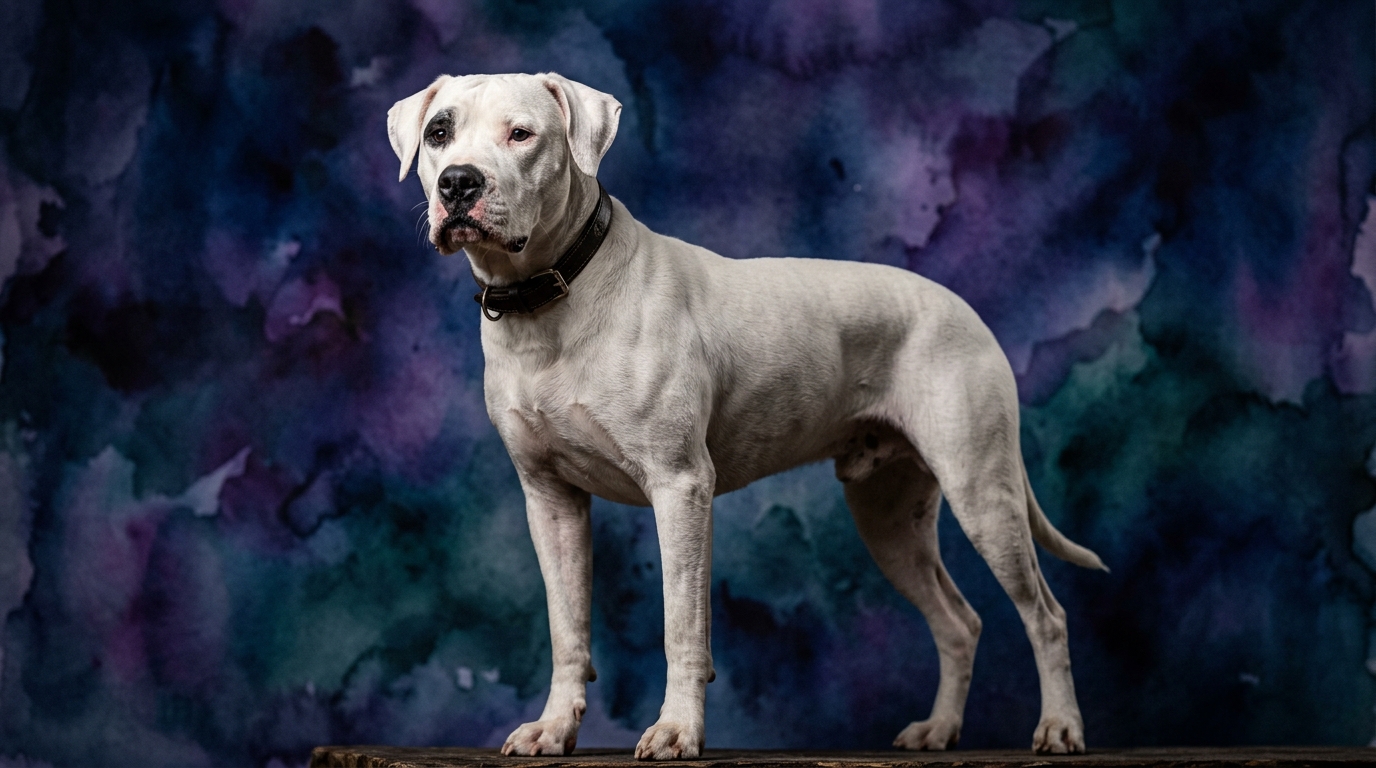
**Dogo Argentino (Working Group, Not Coren-Ranked):**
**Problem Solving (3/5):** Dogo Argentinos show a good capacity for problem-solving, capable of navigating moderate challenges and adapting to new situations. They can independently assess scenarios and devise solutions, which is crucial for their working heritage, though they may not be as innovative as breeds with higher scores.
**Training Speed (3/5):** These dogs learn at a reasonable pace, absorbing new commands and behaviors with consistent, clear instruction. Their focus and drive allow for effective training sessions, and they typically require fewer repetitions than a Pug to grasp concepts, especially when tasks align with their natural instincts.
**Social Intelligence (3/5):** Dogo Argentinos possess a solid understanding of social dynamics and human interactions. While not as overtly emotionally attuned as a Pug, they recognize hierarchy, respond to leadership, and form strong, loyal bonds with their family. Their social interactions are often more purposeful and less effusive.
**Instinctive Drive (3/5):** With a moderate instinctive drive, the Dogo Argentino exhibits a natural inclination for tasks such as guarding, tracking, or physical activity. This drive, stemming from their heritage as big-game hunters, translates into a need for purposeful engagement and can be channeled effectively in training.
**Memory (3/5):** Similar to the Pug, Dogo Argentinos have an average memory. They retain training, routines, and important associations, making them reliable in consistent environments and structured training regimes.
Where the Pug's Mind Excels
The Pug's true cognitive strength lies in its unparalleled social intelligence. At a perfect 5/5, their ability to read and respond to human emotions is a profound advantage in a companion animal. They can often anticipate a change in mood or a desire for interaction, offering comfort or soliciting play with remarkable intuition. This deep emotional attunement makes them exceptional at forming symbiotic relationships, thriving on connection and reciprocal affection. While they might not be solving complex puzzles, their skill in navigating the intricate social landscape of a human household is a sophisticated form of intelligence in itself, ensuring they are always deeply integrated into family life. Furthermore, their low instinctive drive (2/5) means they are generally content with a calm indoor existence, rarely driven by urges to chase or guard, which simplifies their management in a domestic setting.
Where the Dogo Argentino's Mind Shines
The Dogo Argentino's cognitive strengths are rooted in their working heritage, particularly in problem-solving (3/5) and training speed (3/5). These dogs possess a commendable capacity to analyze situations and execute solutions, making them apt students for more complex tasks. Their moderate instinctive drive (3/5) means they are naturally inclined towards purposeful activities, allowing them to excel in structured training that taps into their physical and mental vigor. Unlike the Pug, a Dogo Argentino is more likely to engage with and persevere through a challenging task, demonstrating a focus that makes them highly trainable for specific roles, from protection work to various dog sports. Their cognitive profile supports a dog that is both capable and willing to learn and perform, provided they receive appropriate guidance and mental stimulation.
Ease of Training: Pug vs. Dogo Argentino
When considering ease of training, the Dogo Argentino generally presents a more straightforward path for an experienced owner, despite the Pug's higher social intelligence. The Dogo's training speed (3/5) and problem-solving ability (3/5) mean they can grasp concepts more readily and require less repetition for command retention. Their moderate instinctive drive also provides a powerful motivator for task-oriented training. A Dogo Argentino thrives on clear structure, consistent boundaries, and engaging mental challenges that leverage their natural inclinations.
Conversely, the Pug's training speed (2/5) suggests a need for greater patience and more creative approaches. While they are eager to please their human companions due to their high social intelligence (5/5), their lower problem-solving score and shorter attention span can make learning new, complex commands a slower process. Training a Pug often involves breaking tasks into tiny steps, using high-value rewards, and keeping sessions short and fun to maintain their engagement, leveraging their desire for social interaction as a primary motivator. They can exhibit a charming stubbornness, making consistency paramount.
Matching Minds to Lifestyles: Active vs. Relaxed Owners
The cognitive profiles of the Pug and Dogo Argentino strongly dictate their suitability for different owner lifestyles.
For the relaxed owner seeking a devoted, low-activity companion, the Pug is an ideal match. Their low instinctive drive (2/5) means they have minimal demands for strenuous physical exercise or complex mental tasks, preferring instead to spend their days in close proximity to their human family. Their exceptional social intelligence (5/5) ensures they are content with a lifestyle centered around companionship, cuddles, and gentle play, making them perfectly suited for apartment living or households where a calm presence is valued above all else. Their cognitive makeup is geared towards emotional connection rather than physical exertion or intricate mental work.
In contrast, the Dogo Argentino is best suited for active, experienced owners who can consistently provide both physical outlets and structured mental engagement. Their moderate problem-solving (3/5) and instinctive drive (3/5) mean they require regular challenges to prevent boredom and channel their energy constructively. This breed thrives with owners committed to consistent training, dog sports, or other purposeful activities that engage their mind and body. An owner who understands and can harness their working breed tendencies will find the Dogo Argentino a loyal and capable partner, but without this commitment, their cognitive strengths can manifest as destructive behaviors or an inability to settle.
The Verdict
Opt for a Pug if you prioritize an exceptionally socially attuned companion who thrives on emotional connection and requires minimal structured mental or physical exertion, fitting seamlessly into a relaxed, companion-focused household.
Select a Dogo Argentino if you are an active, experienced owner prepared to provide consistent, structured training and mental challenges that harness their problem-solving abilities and moderate instinctive drive for purposeful engagement.
🧠 Find Your Pet's IQ Score
Our Pet IQ Lab assessment covers 25+ tests across 5 cognitive dimensions — personalized to your breed.
Take the Full IQ Test →Frequently Asked Questions
Does a Pug's lower problem-solving score mean they can't learn tricks?
Not at all. A Pug's 2/5 problem-solving score indicates they may require more repetition and simpler steps compared to other breeds, but they are fully capable of learning a variety of tricks. Their high social intelligence often makes them eager to participate in training for the positive attention it brings from their owners.
How does the Dogo Argentino's instinctive drive impact daily life?
A Dogo Argentino's moderate instinctive drive (3/5) means they have natural inclinations for activities like guarding or focused pursuit. In daily life, this translates to a need for purposeful engagement through training, structured walks, or dog sports, helping to channel this drive constructively and prevent boredom or unwanted behaviors.
Is Coren rank a definitive measure of a dog's overall intelligence?
Coren rank primarily measures "working and obedience intelligence," focusing on training speed and command retention. While useful, it doesn't encompass the full spectrum of a dog's cognitive abilities, such as social intelligence or problem-solving in novel situations, which our Pet IQ Lab framework aims to address.