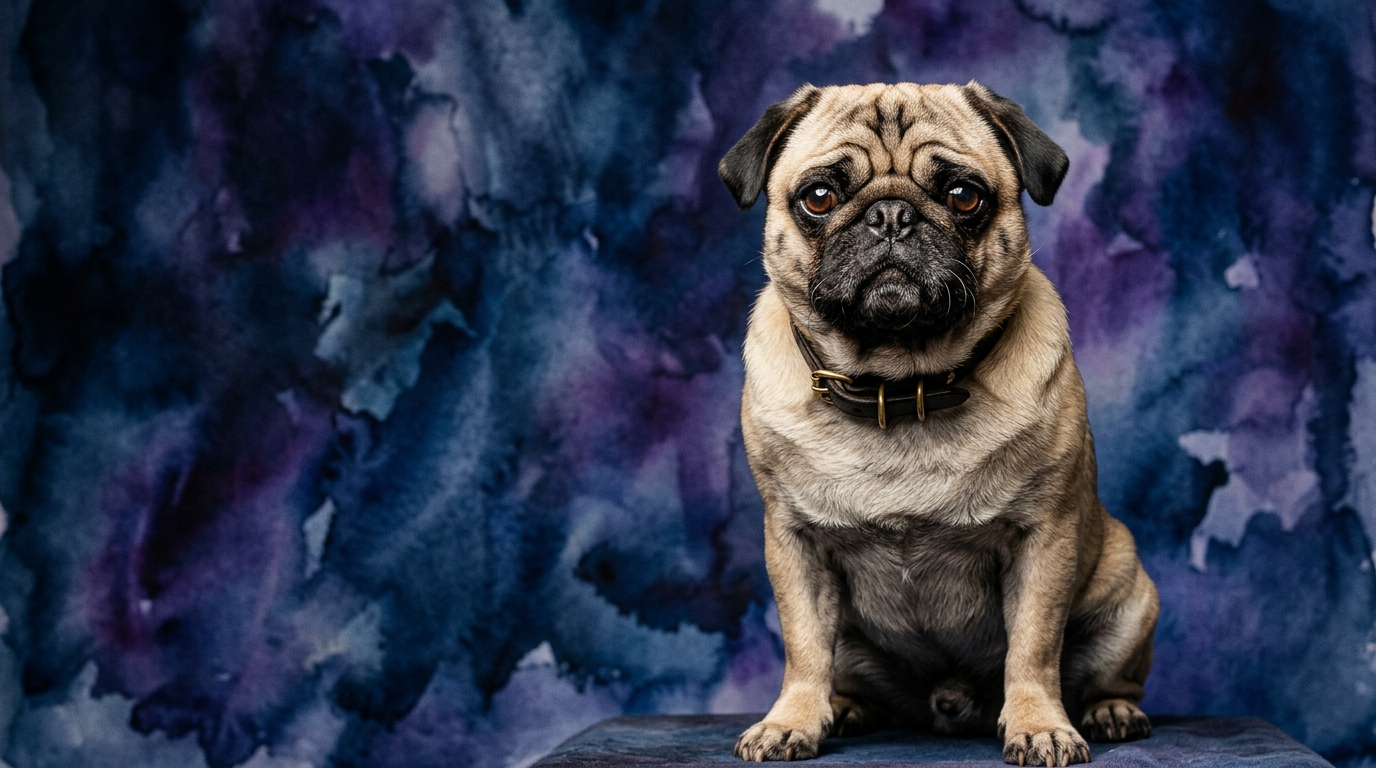
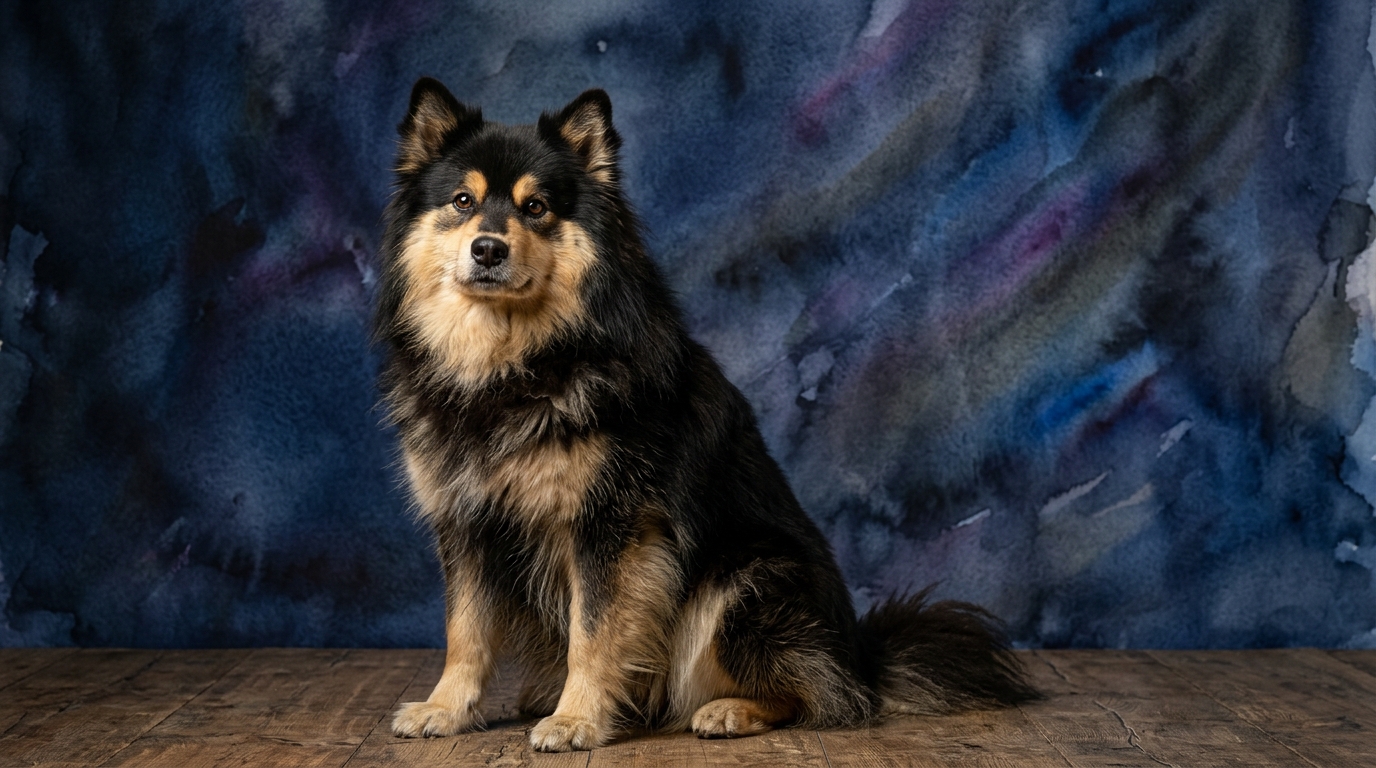
Side-by-Side IQ Profile
The Cosmic Pet Pet IQ Lab employs a five-dimensional model to map canine intelligence, offering a granular view beyond generic labels. For the Pug, this model reveals a breed primarily oriented towards social interaction, while the Finnish Lapphund demonstrates a more balanced, task-oriented cognitive suite.
Pug's Cognitive Blueprint:
Problem Solving (2/5): Pugs tend to approach novel challenges with less independent strategizing. They might prefer to observe or solicit human assistance rather than persistently experiment with solutions to complex puzzles or barriers. Their problem-solving often revolves around social cues.
Training Speed (2/5): While capable of learning, Pugs generally require more repetition and patience in training. Their motivation is often tied to immediate rewards and human attention, and they can be easily distracted if the task isn't engaging or the reward isn't compelling.
Social Intelligence (5/5): This is where the Pug truly shines. They possess an exceptional ability to read human emotions, intentions, and subtle cues, making them masters of companionship. Their awareness of social dynamics allows them to integrate seamlessly into family life, often anticipating needs or moods.
Instinctive Drive (2/5): Pugs exhibit a low drive for traditional canine instincts such as hunting, herding, or guarding. Their actions are rarely dictated by deep-seated urges to perform specific tasks, instead focusing on comfort and proximity to their human companions.
Memory (3/5): Pugs demonstrate an average capacity for memory retention. They can recall commands and routines with consistency, especially those associated with positive experiences, but they might not hold onto complex sequences or rarely practiced tasks with the same tenacity as breeds with higher scores.
Finnish Lapphund's Cognitive Blueprint:
Problem Solving (3/5): Finnish Lapphunds show a moderate ability to independently assess and overcome obstacles. Derived from a lineage of herding dogs, they can often devise practical solutions to environmental challenges, such as finding a way around a barrier or figuring out how to access a desired object.
Training Speed (3/5): These dogs possess a respectable capacity for learning new commands and behaviors at a moderate pace. Their herding background means they are generally receptive to instruction and enjoy engaging in structured activities, though they also have an independent streak that can sometimes require firm, consistent guidance.
Social Intelligence (3/5): Finnish Lapphunds exhibit a solid, functional social intelligence. They are attuned to their human family and capable of forming strong bonds, but their focus isn't solely on social dynamics in the way a Pug's is. They understand social cues and integrate well, but might not be as overtly expressive in their emotional mirroring.
Instinctive Drive (3/5): With a clear herding heritage, Finnish Lapphunds display a moderate instinctive drive. This can manifest as an urge to gather or control movement, whether of livestock, children, or even other pets. This drive, while not as intense as some specialized herding breeds, needs appropriate outlets.
Memory (3/5): Their memory capabilities are on par with the Pug, showing a reliable capacity to recall commands, routines, and the locations of favored items. This allows them to maintain a consistent understanding of their environment and expectations.
Where Pug Wins Cognitively
The Pug's undisputed cognitive strength lies in its exceptional social intelligence, scoring a perfect 5/5. This isn't merely about being affectionate; it's a sophisticated ability to interpret human body language, vocal inflections, and emotional states with remarkable accuracy. A Pug might not solve a complex puzzle box, but it will almost certainly know when you're feeling down and offer quiet companionship, or understand the precise moment you're about to reach for their leash. This profound social acumen allows them to navigate human households with an almost intuitive understanding of social cues and unspoken rules. Their world revolves around their human companions, leading to a finely tuned perception of social dynamics that few other breeds can match. This cognitive advantage translates into a dog that integrates into family life with unparalleled ease, often anticipating needs and reacting to subtle shifts in the emotional atmosphere of a room. For owners seeking a canine confidant who intrinsically understands the nuances of human interaction, the Pug's social cognitive prowess is a clear winner.
Where Finnish Lapphund Wins Cognitively
The Finnish Lapphund's cognitive strengths are rooted in its working heritage, manifesting in superior problem-solving (3/5), training speed (3/5), and instinctive drive (3/5) compared to the Pug. Their moderate problem-solving skills mean they are more likely to independently assess a situation and devise a strategy, such as figuring out how to open a gate or retrieve a toy from a tricky spot. This isn't about brute force; it's about a methodical approach to obstacles. Their training speed, also at 3/5, indicates a greater receptiveness to structured learning and a quicker grasp of new commands, making them more adaptable to various activities and roles. Furthermore, their instinctive drive, stemming from generations of herding reindeer, means they possess an innate motivation to engage with tasks and demonstrate purpose. This drive, channeled appropriately, allows them to excel in activities requiring focus and follow-through, from obedience training to canine sports. While not as socially acute as the Pug, the Lapphund's balanced cognitive profile makes it a more versatile and adaptable learner, capable of engaging with the world through independent thought and task-oriented action. They are adept at understanding cause and effect in their environment, a significant cognitive edge for a dog expected to work alongside humans.
Which is Easier to Train and Why
Comparing training ease between the Pug and the Finnish Lapphund reveals distinct challenges and rewards rooted in their respective IQ profiles. The Finnish Lapphund, with a training speed of 3/5, generally proves easier to train for a wider range of tasks. Their herding background instills a willingness to work collaboratively, often showing a quicker grasp of new concepts and progressing through learning stages at a steadier pace, making them suitable for activities like agility or advanced obedience. While they possess an independent streak, their moderate instinctive drive means they can be motivated by tasks and challenges, making them suitable for activities like agility or advanced obedience.
Conversely, the Pug, with a training speed of 2/5, presents different considerations. While they are certainly capable of learning, their motivation is often heavily tied to social interaction and food rewards. They can be easily distracted and may require more repetition to solidify commands. Their strong social intelligence means they are often more interested in cuddling on the couch than performing complex routines, and their lower instinctive drive means they lack a strong innate desire to "work." Training a Pug effectively often relies on making sessions fun, short, and highly rewarding, leveraging their desire for human attention and affection. While a Pug can learn basic commands, teaching intricate sequences or demanding tasks often requires more patience. Thus, for owners seeking a dog that picks up commands quickly and enjoys varied training, the Finnish Lapphund offers a more direct path.
Which Suits Active Owners vs Relaxed Owners
Understanding the cognitive landscape of the Pug and Finnish Lapphund is crucial for matching them with suitable lifestyles. The Pug, with its high social intelligence (5/5), low problem-solving (2/5), and low instinctive drive (2/5), is an ideal companion for relaxed owners. These individuals appreciate a dog whose primary focus is companionship and comfort. Pugs thrive in environments where their main "job" is to be present, offering warmth and affection. Their limited need for complex mental stimulation or strenuous physical activity makes them content with short walks and extensive cuddle sessions, perfectly suited for apartment living or homes with less active routines where social needs are paramount.
In contrast, the Finnish Lapphund, with its balanced cognitive profile—moderate problem-solving (3/5), training speed (3/5), and instinctive drive (3/5)—is a better fit for active owners. Their heritage as herding dogs means they possess a natural inclination for purposeful activity and mental engagement. They require more than just physical exercise; their minds need stimulation through training, puzzles, or canine sports. An active owner who enjoys hiking, dog sports like agility, or advanced obedience will find the Lapphund a willing partner. Their moderate instinctive drive means they benefit from having a "job," flourishing when given opportunities to use their cognitive abilities and physical energy, making them unsuitable for owners seeking a purely sedentary companion.
The Verdict
Choose the Pug if you prioritize unparalleled social connection and a constant, emotionally attuned companion, thriving in a relaxed home where mental stimulation comes primarily from human interaction.
Opt for the Finnish Lapphund if you are an active owner seeking a versatile, engaging partner for training and outdoor activities, capable of independent thought and purposeful engagement.
🧠 Find Your Pet's IQ Score
Our Pet IQ Lab assessment covers 25+ tests across 5 cognitive dimensions — personalized to your breed.
Take the Full IQ Test →Frequently Asked Questions
Does a Pug's low problem-solving score mean it cannot learn?
Not at all. A Pug's problem-solving score of 2/5 indicates they may not independently strategize complex solutions, preferring to rely on human guidance or social cues. They are fully capable of learning routines and commands, especially when training is made enjoyable and reward-based.
How does the Finnish Lapphund's instinctive drive manifest in a typical home setting?
A Finnish Lapphund's moderate instinctive drive (3/5) often manifests as a desire to "herd" family members, especially children or other pets, by gently nudging or circling. This drive is generally manageable but benefits from outlets like herding games, structured play, or training to redirect their natural inclinations.
Is a Finnish Lapphund a good choice for a first-time dog owner?
A Finnish Lapphund can be a good choice for a first-time owner who is committed to consistent training, socialization, and providing ample mental and physical stimulation. Their moderate training speed and drive mean they are responsive but also require an owner dedicated to understanding and channeling their herding instincts.