Side-by-Side IQ Profile
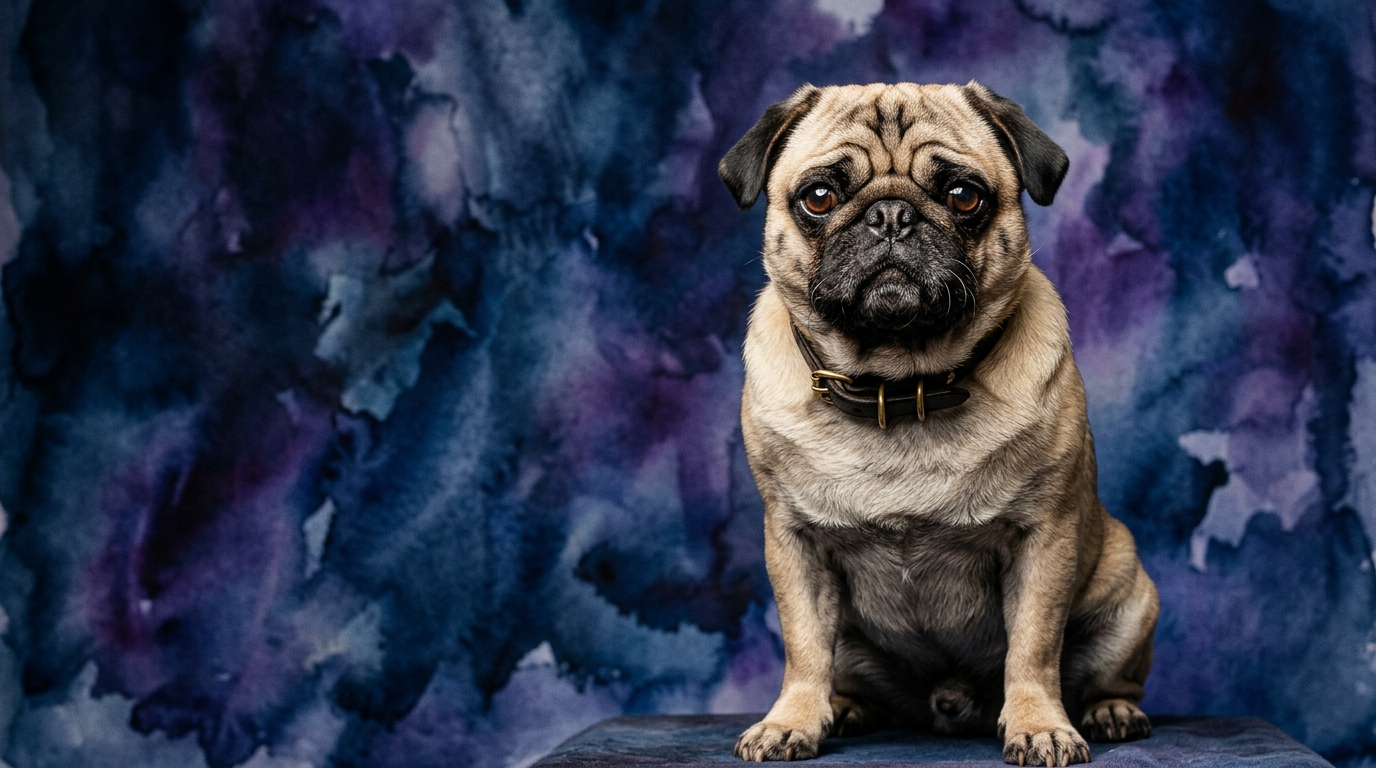
At The Cosmic Pet Pet IQ Lab, we dissect canine cognition across five crucial dimensions, offering a nuanced understanding of each breed's mental makeup. The Pug, ranked #57 by Coren for working and obedience intelligence, presents a profile marked by profound social connection. Its Problem Solving is rated 2/5, indicating a preference for routine over novel intellectual challenges, while its Training Speed also stands at 2/5, suggesting a need for patient, consistent instruction. Where the Pug truly shines is in Social Intelligence, earning a perfect 5/5, demonstrating an exceptional ability to read and respond to human emotions. Its Instinctive Drive is a low 2/5, meaning less inclination towards independent hunting or exploration, and its Memory is an average 3/5, capable of retaining learned behaviors over time.
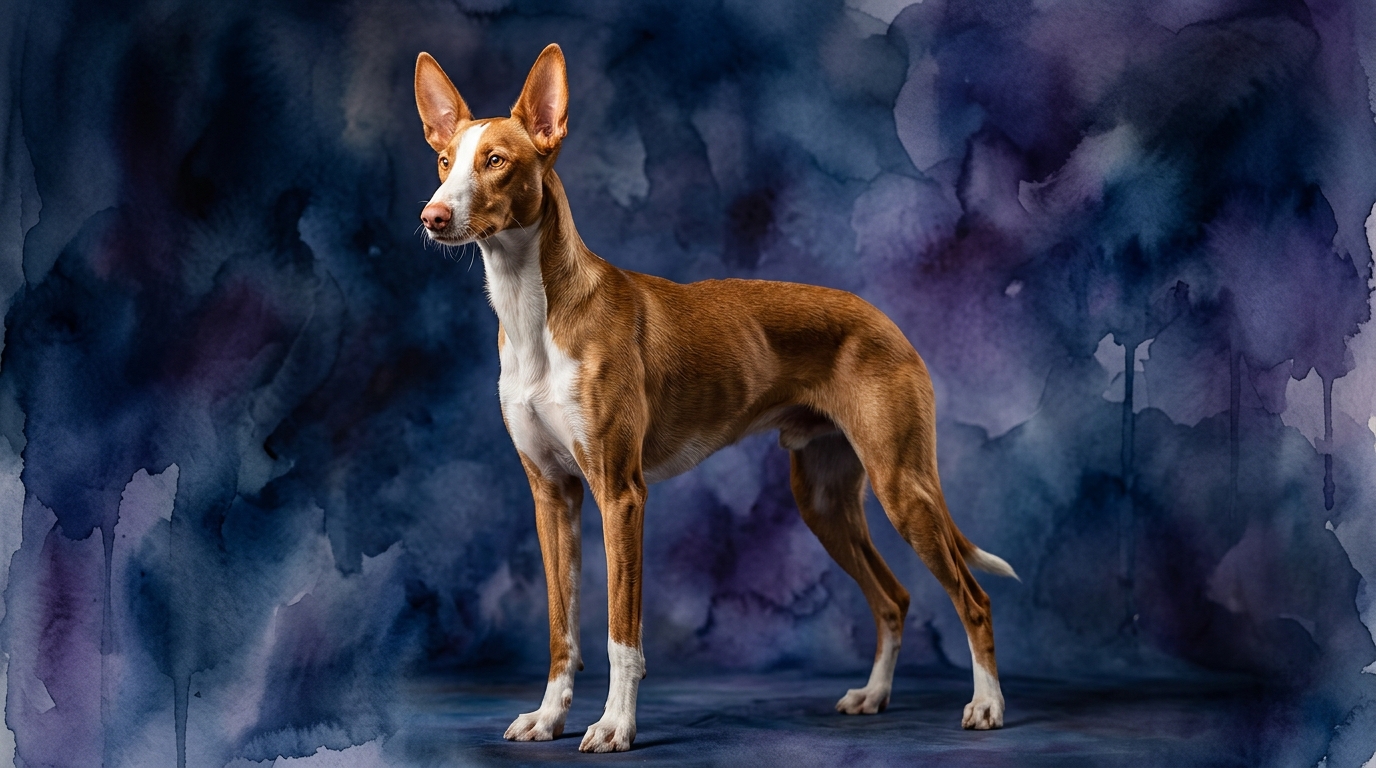
In contrast, the Ibizan Hound, with a Coren rank of #53, exhibits a cognitive blueprint geared more towards independent action and environmental engagement. This breed scores 3/5 in Problem Solving, showing a moderate aptitude for navigating new situations and overcoming obstacles, and an identical 3/5 in Training Speed, suggesting a more efficient learning curve than the Pug. Its Social Intelligence is rated 3/5, indicating a capacity for connection but with a greater degree of independence compared to the Pug's fervent people-focus. The Ibizan Hound’s Instinctive Drive is also 3/5, reflecting a moderate yet discernible urge for chasing and exploring, characteristic of its sighthound heritage. Like the Pug, its Memory is 3/5, indicating a comparable ability to recall experiences and training.
Where Pug Wins Cognitively
The Pug's preeminent cognitive strength lies undeniably in its Social Intelligence, scoring a rare 5/5, a dimension where it significantly surpasses the Ibizan Hound's 3/5. This isn't merely about affection; it's a sophisticated ability to interpret human body language, vocal inflections, and emotional states with remarkable accuracy. A Pug can often sense a shift in its owner's mood, offering comfort or seeking engagement precisely when needed, demonstrating a profound empathic capacity. Their high social IQ translates into an intuitive understanding of household dynamics, making them exceptional family members who seamlessly integrate into human routines and relationships.
This superior social cognition means a Pug is often more motivated by human interaction and approval than by external rewards or independent pursuits. They excel in scenarios requiring close partnership and emotional reciprocity, such as therapy work or simply providing steadfast companionship. Their cognitive processing is heavily weighted towards understanding and maintaining social bonds, making them highly adept at navigating complex social environments within a family structure. While their problem-solving and training speed scores might be lower, their unparalleled social acumen allows them to 'solve' human emotional needs and adapt to social expectations with an ease few other breeds can match, truly making them experts in the art of companionship.
Where Ibizan Hound Wins Cognitively
The Ibizan Hound's cognitive advantages manifest primarily in its Problem Solving and Instinctive Drive, both rated 3/5 compared to the Pug's 2/5 in these areas. This breed’s problem-solving aptitude is rooted in its historical role as an independent hunter, requiring it to assess and adapt to dynamic environmental challenges. An Ibizan Hound is more likely to devise a strategy to open a gate, navigate a complex scent trail, or figure out how to access a desired object through trial and error, demonstrating a higher degree of cognitive flexibility and initiative. They aren't just reacting; they're actively engaging with their surroundings to achieve a goal, which is a hallmark of more robust problem-solving skills.
Their moderate Instinctive Drive further supports this independent problem-solving. This isn't just about chasing; it's about a cognitive framework that prioritizes observation, decision-making, and follow-through in pursuit of a natural inclination. An Ibizan might display a keen interest in exploring new territories, analyzing wind patterns for scents, or strategizing how to catch a fast-moving lure. This drive fuels their curiosity and prompts them to engage more deeply with their environment, often leading them to discover solutions or pathways that a less instinctively driven breed might overlook. These cognitive strengths make the Ibizan Hound particularly adept at activities requiring independent thought, agility, and a strong connection to their physical surroundings.
Which Is Easier to Train and Why
Determining which breed is 'easier' to train requires a nuanced look at their cognitive profiles, as both present unique dynamics. The Ibizan Hound boasts a Training Speed of 3/5, slightly higher than the Pug's 2/5, suggesting it can grasp new commands and concepts more quickly on average. However, the Ibizan's moderate Social Intelligence (3/5) and Instinctive Drive (3/5) mean that while it might learn *what* you want, its independent nature, characteristic of sighthounds, means it often decides *whether* to comply based on its own assessment of the situation or if something more interesting captures its attention. This independence can manifest as selective hearing, especially if the training environment is distracting or if a strong instinctual urge takes over.
Conversely, the Pug, despite its lower Training Speed (2/5) and Coren rank of #57, often proves highly amenable to training, particularly for companion behaviors, due to its exceptional Social Intelligence (5/5). A Pug’s profound desire to please and connect with its human means it is highly motivated by positive reinforcement rooted in social praise and affection. While it may take more repetitions for a Pug to solidify a command, its eagerness to cooperate and maintain social harmony can make the training process feel more rewarding and less confrontational for the owner. For basic obedience and house manners, the Pug’s inherent people-focus often outweighs its slower learning speed, leading to a consistently compliant and devoted companion, whereas the Ibizan might require more creative motivation to overcome its independent streak.
Which Suits Active Owners vs. Relaxed Owners
For owners seeking a relaxed, devoted companion, the Pug's cognitive profile aligns perfectly. Their low Instinctive Drive (2/5) means they are less compelled to explore independently or engage in strenuous physical activities, making them content with shorter walks and ample time spent lounging with their family. Their extraordinary Social Intelligence (5/5) ensures they thrive on human interaction, making them ideal for individuals or families who cherish close companionship and a pet that is deeply attuned to their emotional rhythms. The Pug's moderate Problem Solving (2/5) suggests they are not seeking complex mental challenges, preferring predictable routines and the comfort of familiar surroundings. They are the quintessential lap dog, finding their greatest contentment in shared quiet moments.
Conversely, the Ibizan Hound is a far better match for active owners who can provide consistent outlets for both physical exertion and mental engagement. Their moderate Problem Solving (3/5) and Instinctive Drive (3/5) mean they possess a natural curiosity and a need to engage with their environment, often enjoying activities like lure coursing, agility, or long, exploratory hikes. These dogs benefit from owners who understand and respect their sighthound heritage, providing secure spaces for them to run and opportunities to 'hunt' (even if it's just a toy). While they can be affectionate, their 3/5 Social Intelligence suggests a more independent streak; they appreciate companionship but are not as intensely focused on human approval as a Pug, making them suitable for owners who value a dog with a bit more self-reliance and a zest for adventure.
The Verdict
Choose the Pug if you prioritize a deeply empathetic, socially astute companion who thrives on close human connection and requires less intense physical or mental stimulation, valuing a calm, predictable home life.
Opt for the Ibizan Hound if you are an active owner prepared to engage a curious, independent thinker with moderate problem-solving skills and a natural drive for exploration and physical activity.
🧠 Find Your Pet's IQ Score
Our Pet IQ Lab assessment covers 25+ tests across 5 cognitive dimensions — personalized to your breed.
Take the Full IQ Test →Frequently Asked Questions
Is a Pug difficult to train due to its low training speed score?
While the Pug's training speed is rated 2/5, meaning it may take more repetitions to learn new commands, its exceptional social intelligence (5/5) often makes it very willing to please. This strong desire for human approval can make the training process rewarding, especially with positive reinforcement, leading to a well-behaved companion despite slower initial learning.
Do Ibizan Hounds have a strong prey drive, and how does it affect their intelligence?
Yes, Ibizan Hounds have a moderate instinctive drive (3/5), which includes a notable prey drive characteristic of sighthounds. This drive fuels their problem-solving skills (3/5) and curiosity, making them adept at independent thinking and environmental engagement. It means they excel in activities like lure coursing but require secure areas and consistent recall training to manage their natural instincts.
How does social intelligence impact the daily life with a Pug versus an Ibizan Hound?
A Pug's 5/5 social intelligence means it is deeply attuned to human emotions, seeking constant interaction and comfort, making it an intuitive and empathetic companion. An Ibizan Hound's 3/5 social intelligence indicates it is affectionate but more independent, appreciating companionship without the same intense need for constant human focus, making it a good fit for owners who value a dog with more self-reliance.