
Side-by-Side IQ Profile: Pug vs. Kerry Blue Terrier
The Cosmic Pet Pet IQ Lab provides a nuanced framework for understanding canine cognition, moving beyond simple 'smart' labels to assess specific dimensions of intelligence. For the Pug, a Toy breed ranked #57 by Coren, its profile highlights a unique set of abilities: Problem Solving at 2/5, Training Speed at 2/5, Social Intelligence at a remarkable 5/5, Instinctive Drive at 2/5, and Memory at 3/5. This paints a picture of a dog deeply attuned to human connection, yet less inclined towards independent, complex tasks or driven by primal urges.
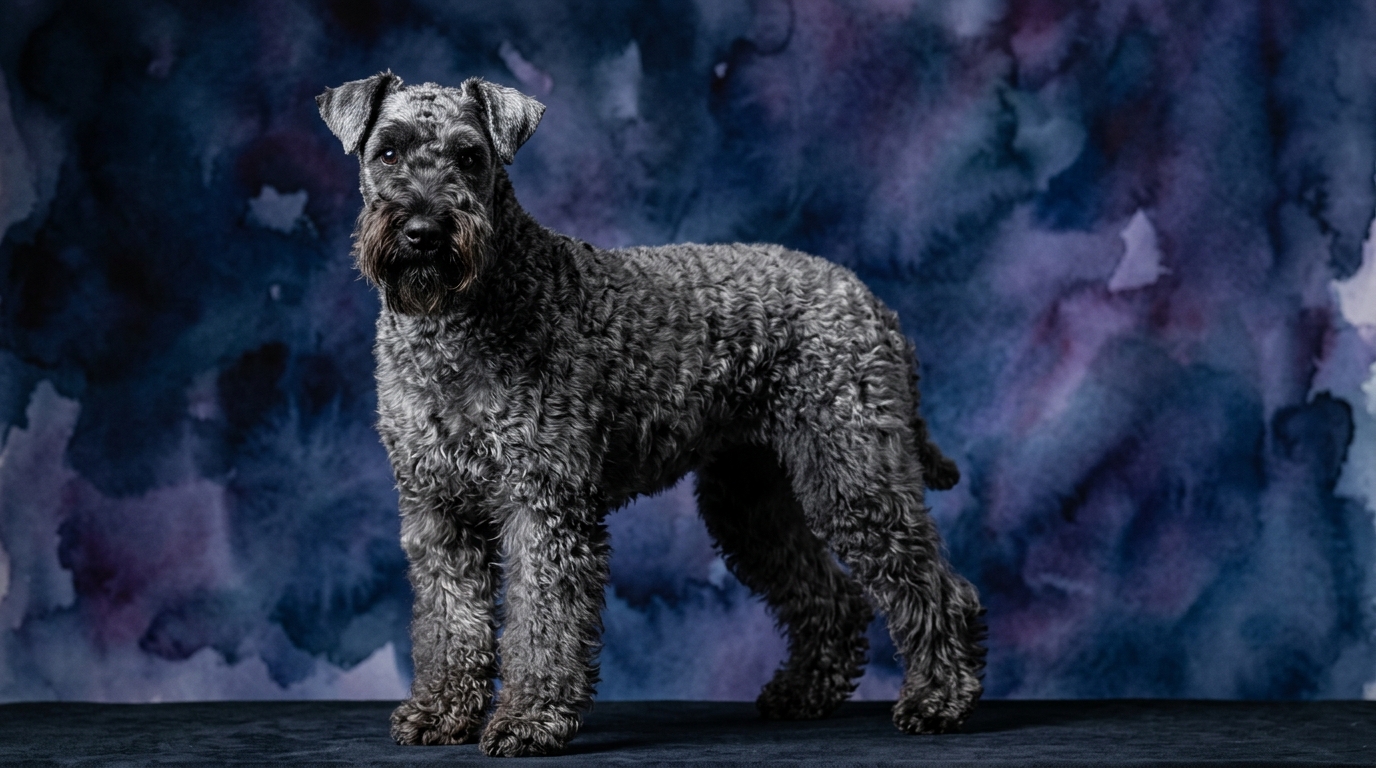
In stark contrast, the Kerry Blue Terrier, a robust Terrier breed not included in Coren's ranking, presents a more balanced cognitive spread. Its IQ scores show Problem Solving at 3/5, Training Speed at 3/5, Social Intelligence at 3/5, Instinctive Drive at 3/5, and Memory also at 3/5. This moderate scoring across all dimensions suggests a dog that is adaptable, capable of engaging in various activities without excelling or lagging significantly in any single area compared to its counterpart. It's a profile indicative of a versatile working breed, possessing a more self-reliant and moderately interactive disposition.
Where the Pug Excels Cognitively
The Pug's most pronounced cognitive strength lies in its exceptional Social Intelligence, scoring a perfect 5/5. This isn't merely about friendliness; it signifies an acute ability to read and respond to human emotions, cues, and social dynamics. Pugs are adept at integrating into family structures, understanding household routines, and forming deep, intuitive bonds with their people. Their contentment often stems from close proximity and interaction with humans, making them highly responsive to social rewards and approval. This high social aptitude allows them to quickly learn which behaviors elicit positive human attention, even if the underlying task itself is not inherently stimulating. Their average memory (3/5) further supports their capacity to recall specific individuals, preferred routines, and the social etiquette of their home environment, ensuring consistent, affectionate interactions.
While their Problem Solving and Instinctive Drive scores are modest at 2/5, these traits contribute to their role as dedicated companions rather than independent workers. A Pug is less likely to become restless or destructive if not given complex puzzles to solve or a job to do; their primary 'job' is often companionship. This cognitive makeup makes them remarkably low-maintenance in terms of needing constant mental challenges that require independent thought, instead thriving on consistent human interaction and affection.
Where the Kerry Blue Terrier Shows Cognitive Strength
The Kerry Blue Terrier's cognitive profile demonstrates a more robust and balanced set of capabilities, particularly in areas requiring independent thought and action. Its Problem Solving score of 3/5 indicates a moderate capacity for navigating novel situations and figuring out solutions, whether it's opening a gate or determining how to access a desired object. This is a step above the Pug's approach, suggesting a KBT might be more inclined to experiment and persist when faced with a challenge that doesn't immediately involve human direction.
Similarly, its Training Speed (3/5) and Instinctive Drive (3/5) combine to create a dog that can pick up new commands and tasks with reasonable efficiency and possesses an inherent motivation to engage with its environment. This moderate drive means they are not overwhelmingly hyperactive, but they do possess a natural inclination to explore, hunt, and participate in activities, a characteristic rooted in their terrier heritage. Their average Social Intelligence (3/5) allows them to form good bonds with their families, but with a degree of independence not seen in the Pug, making them capable of being content without constant human interaction, as long as their physical and mental needs are met.
Training Dynamics: Pug vs. Kerry Blue Terrier
When considering ease of training, the differences between these two breeds become quite apparent, stemming directly from their IQ profiles. The Pug's Training Speed score of 2/5 suggests that they may take longer to grasp new commands or behaviors compared to many breeds. Their modest Problem Solving (2/5) means they aren't naturally inclined to figure out what's expected through independent deduction. However, their outstanding Social Intelligence (5/5) can be a powerful motivator; Pugs often learn best when training is framed as a positive social interaction, heavily reliant on praise, affection, and food rewards from their beloved humans. They may appear 'stubborn' not out of defiance, but due to a low intrinsic drive for task completion and a preference for simply being near their person.
The Kerry Blue Terrier, with a Training Speed of 3/5, is generally quicker to learn and retain commands. Their Problem Solving (3/5) and Instinctive Drive (3/5) mean they are more engaged by the challenge of learning and performing tasks. While they still respond well to positive reinforcement, their terrier independence means they might question commands or try to find their own way if not consistently motivated and given clear expectations. Training a KBT often requires more mental engagement and variety to keep their attention, as their moderate drive can lead them to seek out their own entertainment if not properly channeled. Consistency and firm, yet fair, leadership are crucial to harness their cognitive potential effectively, preventing their independent streak from becoming a challenge.
Matching Breeds to Lifestyles: Active vs. Relaxed Owners
The cognitive profiles of the Pug and Kerry Blue Terrier offer clear guidance for matching them with suitable owner lifestyles. The Pug, with its low Instinctive Drive (2/5) and modest Problem Solving skills (2/5), is an ideal companion for relaxed owners or those with less active lifestyles. They are content with short walks, ample cuddle time, and generally prefer a calm, predictable home environment. Their high Social Intelligence means they thrive on human companionship and are perfectly happy to be a 'lap dog,' requiring minimal structured activity beyond social interaction. Owners who value constant, affectionate presence and a dog that doesn't demand rigorous mental or physical exertion will find the Pug's cognitive makeup perfectly aligned with their desires.
Conversely, the Kerry Blue Terrier, with its balanced scores across Problem Solving (3/5), Training Speed (3/5), and Instinctive Drive (3/5), is better suited for active owners. This breed requires consistent physical exercise and mental stimulation to prevent boredom and channel its inherent terrier energy. Owners who enjoy engaging in dog sports, regular walks, puzzle toys, or even just consistent training sessions will find the KBT's cognitive aptitudes a rewarding challenge. Their moderate drive means they appreciate having a 'job' or purpose, and their problem-solving ability can be satisfied through activities that require a bit of thought. An active owner can provide the varied engagement that allows the Kerry Blue Terrier to flourish both mentally and physically.
The Verdict
Choose the Pug if you seek an exceptionally social, affectionate companion whose primary purpose is to be a devoted presence, thriving on human connection rather than complex tasks.
Opt for the Kerry Blue Terrier if you desire a versatile, moderately independent dog capable of engaging in diverse activities, and you're prepared to provide consistent mental and physical stimulation.
🧠 Find Your Pet's IQ Score
Our Pet IQ Lab assessment covers 25+ tests across 5 cognitive dimensions — personalized to your breed.
Take the Full IQ Test →Frequently Asked Questions
Are Pugs truly difficult to train?
Pugs may take longer to learn new commands due to their 2/5 Training Speed score, but their high Social Intelligence (5/5) means they are highly motivated by human approval and affection. Consistent positive reinforcement, patience, and making training a fun, social experience are key to their success.
Do Kerry Blue Terriers need a lot of mental stimulation?
Yes, with moderate scores in Problem Solving (3/5) and Instinctive Drive (3/5), Kerry Blue Terriers benefit significantly from mental challenges. Engaging them with puzzle toys, varied training routines, and activities that tap into their natural curiosity helps prevent boredom and promotes a well-adjusted temperament.
Which breed is better for a first-time dog owner?
For a first-time owner seeking a relatively low-maintenance companion focused on affection, the Pug's social nature might be a gentler introduction. However, a first-time owner prepared for consistent training and providing ample mental/physical engagement could certainly thrive with a Kerry Blue Terrier, provided they commit to understanding its moderate independence and drive.