
A Side-by-Side Cognitive Profile
At The Cosmic Pet Pet IQ Lab, we evaluate canine intelligence across five key dimensions, offering a nuanced view beyond simplistic labels. For the Pug, a Toy breed with a Coren rank of #57, their cognitive blueprint emphasizes connection and comfort. Their Problem Solving is rated 2/5, indicating they may not independently navigate complex environmental challenges or figure out intricate puzzles without significant human guidance. Training Speed also scores 2/5, suggesting that Pugs typically require patient, consistent repetition to grasp new commands and behaviors, not being the quickest study in a classroom setting. However, their Social Intelligence shines brightly at 5/5, reflecting an exceptional capacity to understand and respond to human emotions and social cues, thriving on companionship. Their Instinctive Drive is low at 2/5, meaning they possess minimal inclination for tasks like hunting, guarding, or scent work, preferring a more sedentary, integrated family role. Memory for the Pug is a moderate 3/5, allowing them to retain learned routines and commands over time, provided they are reinforced.
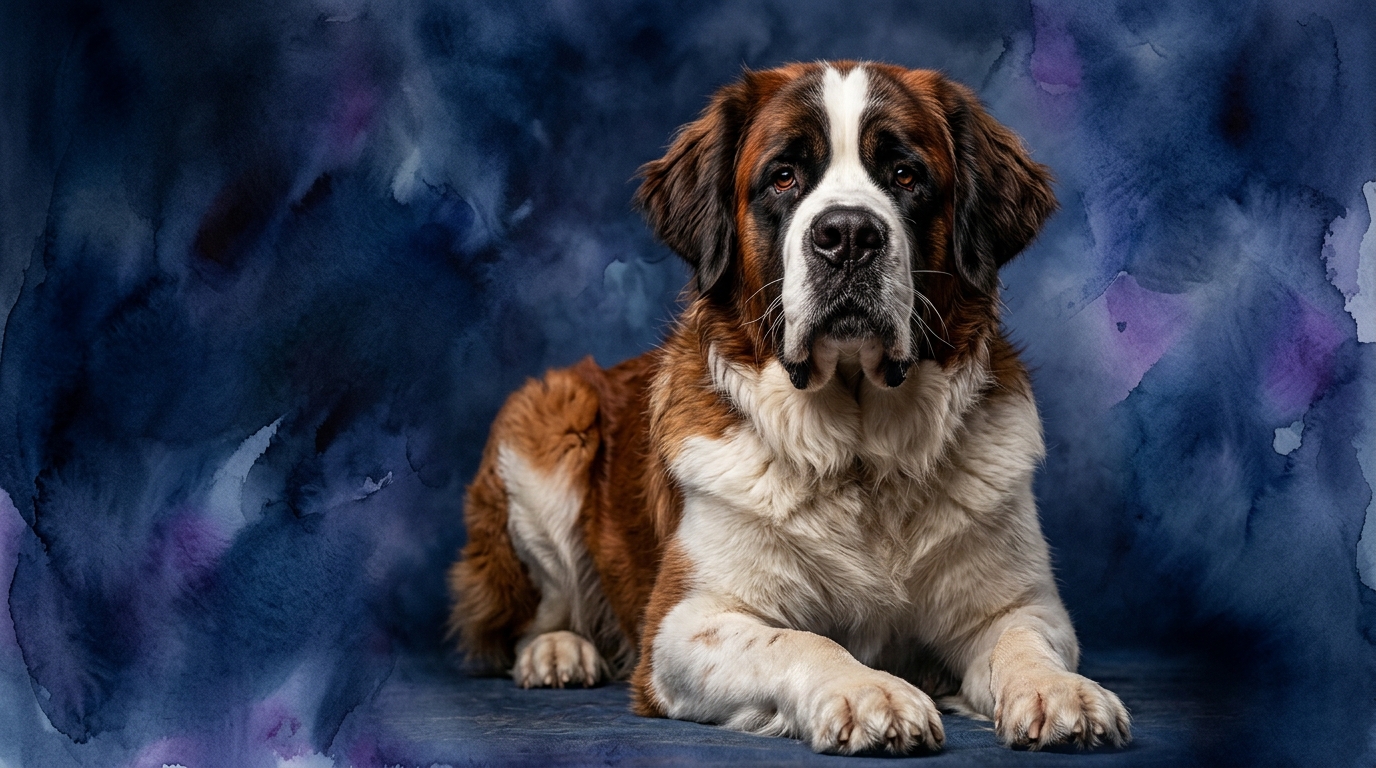
The Saint Bernard, a Working breed ranked #65 by Coren, presents a cognitive profile geared towards purpose and steadfastness, albeit with a deliberate pace. Their Problem Solving aptitude is a respectable 3/5, indicating a capacity to figure out moderately challenging obstacles or simple environmental puzzles, showcasing a degree of independent thought. Similar to the Pug, their Training Speed is 2/5, meaning that while they are certainly capable of learning, it requires consistent effort, clear communication, and patience from their trainers. Where the Saint Bernard distinguishes itself is in its robust Instinctive Drive, scoring an impressive 5/5. This reflects their strong inherent inclination towards tasks such as search and rescue, guarding, or companionship in challenging environments, driven by a deep-seated purpose. Social Intelligence for the Saint Bernard is a solid 4/5, indicating a good understanding of human dynamics and a gentle, empathetic nature, though perhaps not with the same nuanced emotional attunement as the Pug. Their Memory, like the Pug's, stands at 3/5, enabling them to recall commands, routines, and experiences effectively, which is crucial for their working roles.
Where the Pug's Mind Excels
The Pug's primary cognitive advantage lies in its unparalleled Social Intelligence, scoring a perfect 5/5. This isn't merely about being friendly; it signifies a profound ability to read and interpret human emotions, body language, and subtle social cues. A Pug can often sense a change in its owner's mood, offering comfort or seeking engagement with an almost intuitive understanding. They are masters of integration into human family units, effortlessly becoming the emotional centerpiece, often adapting their behavior to elicit positive human interaction. This high social acumen makes them exceptional companions, particularly for individuals or families who cherish deep, reciprocal emotional bonds and seek a canine partner who is intimately attuned to their daily lives and feelings. Their capacity for empathetic connection is a unique cognitive strength, allowing them to navigate complex human social landscapes with remarkable finesse, ensuring they are always at the heart of the home's emotional ecosystem.
The Saint Bernard's Cognitive Strengths
The Saint Bernard demonstrates clear cognitive superiority in two key areas: Problem Solving and Instinctive Drive. With a Problem Solving score of 3/5 compared to the Pug's 2/5, Saint Bernards exhibit a greater capacity for independent thought when faced with obstacles. They are more likely to ponder a situation, such as how to retrieve a toy from under furniture or navigate a slightly altered environment, and devise a solution rather than immediately deferring to human intervention. This moderate problem-solving skill, while not indicative of genius, allows them to function more autonomously in certain situations. However, their most significant cognitive advantage is their robust Instinctive Drive, rated 5/5. This isn't just about raw energy; it reflects a deep-seated desire and capability for purpose-driven tasks. Historically bred for rescue work in the Alps, this drive manifests as a natural inclination towards vigilance, protection, and a steadfast dedication to a 'job,' whether it's carrying a pack, participating in scent games, or simply guarding their family. This strong intrinsic motivation makes them exceptionally well-suited for roles requiring focus and dedication, enabling them to perform complex, multi-stage tasks over extended periods once properly trained and motivated.
Training Dynamics: Pug vs. Saint Bernard
When it comes to training speed, both the Pug and the Saint Bernard share a similar rating of 2/5, suggesting that neither breed is a rapid learner of new commands. However, the *nature* of the training challenge differs significantly due to their other cognitive attributes. For the Pug, their low instinctive drive (2/5) means they aren't inherently motivated by task completion or working for a living. Their high social intelligence (5/5) means they respond well to positive reinforcement and human connection, but their motivation often stems from seeking comfort, attention, or a treat rather than the inherent satisfaction of a job well done. They can also exhibit a charming stubbornness, often preferring to snuggle on the couch than engage in rigorous drills. Training a Pug requires patience, creativity, and leveraging their desire for social interaction and comfort, making sessions short, fun, and highly rewarding to keep their attention and overcome their inclination for ease. Their small size makes physical management during training relatively straightforward, but their focus can be fleeting.
The Saint Bernard, despite the same training speed score, presents a different set of considerations. Their sheer size and strength mean that early and consistent training is not just beneficial, but crucial for management. While their training speed is not fast, their strong instinctive drive (5/5) can be a powerful asset if channeled correctly. They can be motivated by tasks that align with their natural inclinations, such as carrying a small pack on a walk or engaging in search-and-find games. Their moderate problem-solving (3/5) might mean they grasp the *concept* of a command more thoroughly than a Pug, but their physical maturity takes longer, meaning training needs to be gentle yet firm, consistent, and patient over an extended period. Managing a large, powerful dog during training requires significant physical consistency and a deep understanding of positive reinforcement to prevent them from becoming overwhelming. While neither breed is for owners seeking instant results, the Pug's challenge lies in sustained engagement, while the Saint Bernard's lies in consistent, long-term physical and mental guidance.
Matching Canine Minds to Lifestyles
Considering their distinct cognitive profiles, the Pug and the Saint Bernard align with vastly different owner lifestyles. For individuals or families seeking a companion perfectly suited for a relaxed, comfort-oriented existence, the Pug is an ideal match. Their low instinctive drive means they are not demanding of extensive physical activity or complex mental tasks; their cognitive needs are largely met through social interaction, affection, and being an integral part of daily family life. They thrive on proximity to their humans and are perfectly content with shorter walks, ample cuddle time, and being the center of attention. Their exceptional social intelligence makes them adept at fitting into various domestic environments, providing unwavering companionship without requiring a significant commitment to structured work or high-intensity activity.
Conversely, the Saint Bernard is better suited for owners who can provide a more purposeful and structured environment, even if not intensely active in a high-octane sense. Their strong instinctive drive suggests they benefit from having a 'job,' however simple, whether it's carrying a small backpack on walks, participating in scent work, or engaging in consistent obedience training that provides mental stimulation. While not requiring marathon runs, they do need regular, purposeful exercise to maintain their physical and mental well-being. Owners who appreciate a steadfast, gentle giant with a history of dedicated work will find the Saint Bernard a rewarding partner. They are best suited for those who can offer consistent training, patient guidance, and a lifestyle that accommodates their substantial size and inherent desire for purpose, allowing their noble instincts to flourish constructively.
The Verdict: Choosing Your Canine Companion
The Verdict
For owners prioritizing an exceptionally social and affectionate companion content with a less demanding routine, the Pug's cognitive profile aligns perfectly with a life of comfort and close human connection.
If you seek a gentle giant with a strong sense of purpose and the capacity for focused work, requiring consistent, patient guidance, the Saint Bernard offers a rewarding partnership for those able to accommodate its significant physical and mental needs.
🧠 Find Your Pet's IQ Score
Our Pet IQ Lab assessment covers 25+ tests across 5 cognitive dimensions — personalized to your breed.
Take the Full IQ Test →Frequently Asked Questions
Do Pugs understand human emotions better than Saint Bernards?
Yes, based on their 5/5 social intelligence score compared to the Saint Bernard's 4/5, Pugs exhibit a superior aptitude for reading and responding to human emotional states. They are exceptionally attuned to their owner's moods, often seeking to comfort or engage based on subtle cues, making them highly empathetic companions.
Can a Saint Bernard be trained for complex tasks despite its average training speed?
Absolutely. While their training speed is rated 2/5, a Saint Bernard's high instinctive drive (5/5) and moderate problem-solving (3/5) mean they can excel in complex tasks like search and rescue or therapy work with consistent, patient training. Their inherent desire for purpose, when channeled correctly, allows them to master intricate behaviors over time.
What does 'instinctive drive' mean for daily life with a Pug versus a Saint Bernard?
For a Pug, a low instinctive drive (2/5) means they are generally less inclined towards independent exploration, hunting, or working tasks, preferring to stay close to their humans and relax. In contrast, a Saint Bernard's high instinctive drive (5/5) suggests a natural inclination towards purpose-driven activities, vigilance, and potentially a stronger protective instinct, requiring outlets for these inherent behaviors to ensure their well-being.