Side-by-Side IQ Profile: Puli vs. Border Terrier
Despite their differing breed groups, the Puli and Border Terrier share identical scores across The Cosmic Pet Pet IQ Lab's five cognitive dimensions, yet the *expression* of these capacities is profoundly unique to their historical roles.
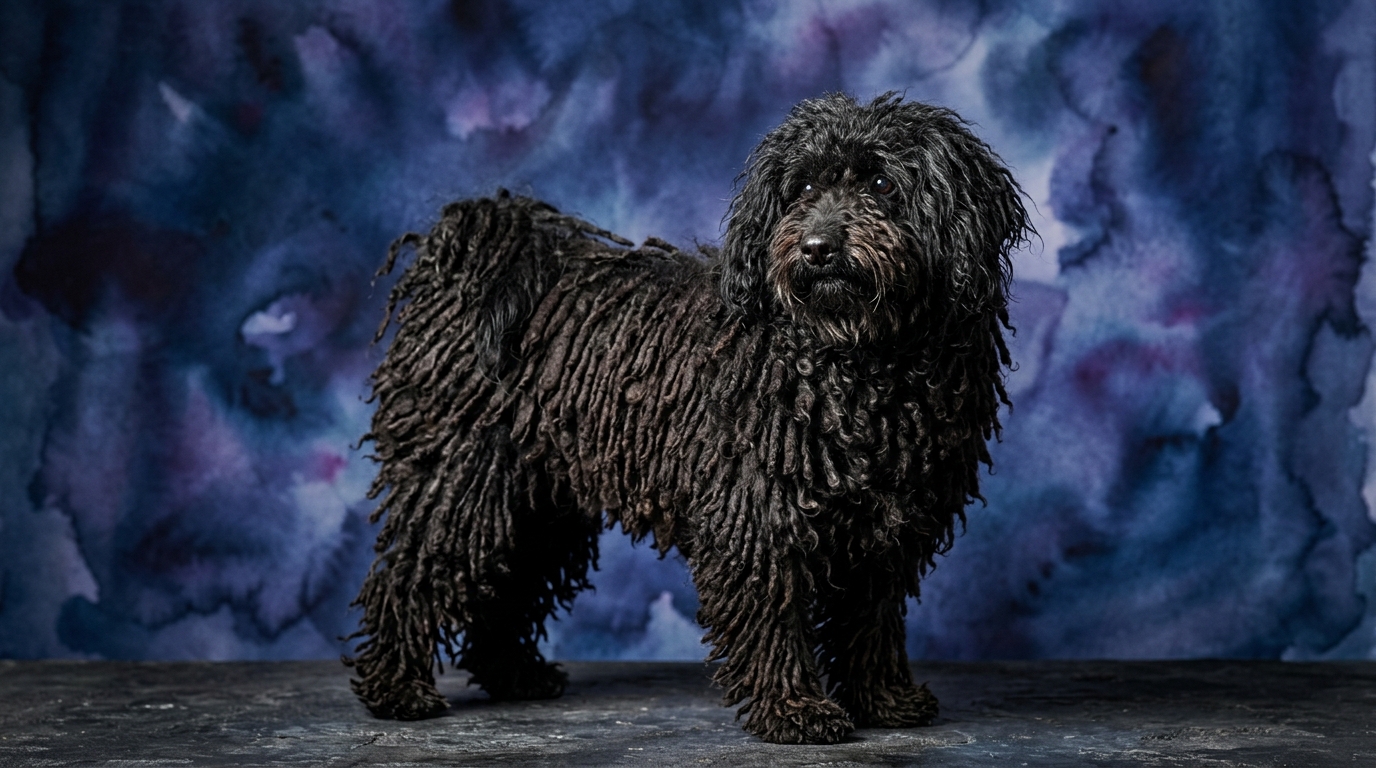
For the **Puli** (Coren Rank #25, Herding Group): Problem Solving (4/5) reflects its expertise in dynamic flock management, assessing fluid situations, anticipating livestock movements, and strategizing to maintain group cohesion. Training Speed (4/5) indicates they acquire new commands efficiently, driven by a cooperative spirit and a desire to engage in purposeful tasks alongside their handler. Social Intelligence (3/5) leans towards understanding group dynamics and hierarchy within their "flock," making them observant but reserved with outsiders. Instinctive Drive (3/5) is primarily rooted in herding, manifesting as a powerful impulse to gather, guard, and control, often seen in their desire to keep family members together. Memory (4/5) is robust, crucial for recalling intricate routes, specific individuals within a flock, and a broad range of learned behaviors, ensuring consistency in complex tasks.
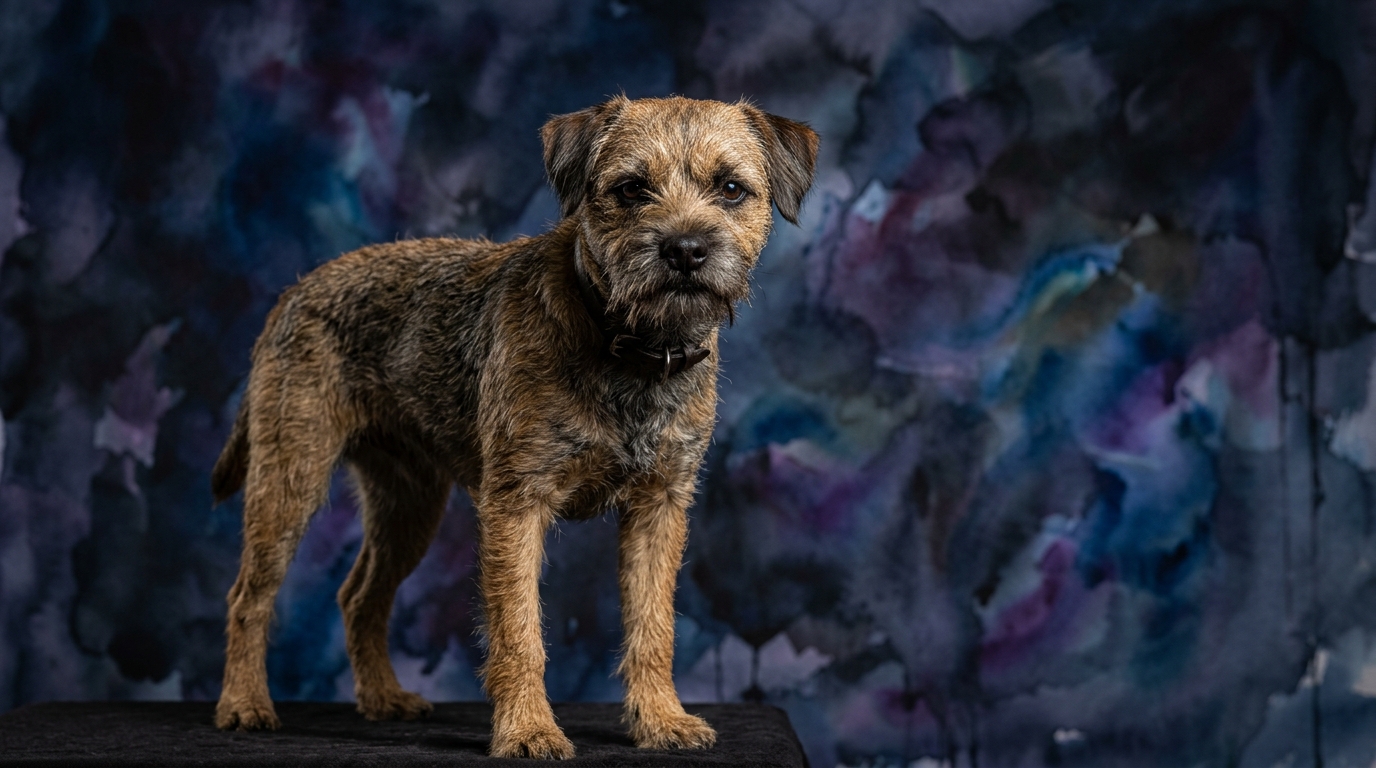
For the **Border Terrier** (Coren Rank #30, Terrier Group): Problem Solving (4/5) is about independent navigation and overcoming physical obstacles in confined spaces, such as earthworks, demanding spatial reasoning and creative solutions to flush quarry. Training Speed (4/5) shows they learn quickly, absorbing information with enthusiasm, though their inherent independence means application can vary. Social Intelligence (3/5) suggests practical social awareness, generally interacting well with others but maintaining a terrier's characteristic self-reliance, assessing situations with a watchful demeanor. Instinctive Drive (3/5) is a potent blend of prey drive and tenacity, manifesting as a compelling urge to pursue small game, dig, and explore, driven by their "go to ground" heritage. Memory (4/5) aids in recalling hunting paths, locations of dens, and learned strategies, contributing to their adaptability across various terrains and challenges.
Where the Puli Wins Cognitively
The Puli's cognitive strengths truly emerge in scenarios requiring complex, multi-variable management and cooperative strategy. Their herding heritage has refined an ability to process and react to dynamic situations, like anticipating flock movements and adjusting their approach instantaneously. This involves a sophisticated form of distributed intelligence, where they grasp not just individual commands but the overarching goal of a task, often working in concert with a handler. Their problem-solving (4/5) is uniquely geared towards systemic challenges, orchestrating movements and maintaining boundaries. This capacity for integrated task management, coupled with their excellent memory (4/5) for intricate patterns, gives them an edge in activities demanding sustained, strategic engagement and a deep understanding of group dynamics.
Where the Border Terrier Wins Cognitively
Conversely, the Border Terrier excels in cognitive domains demanding intense focus, individual initiative, and tenacious perseverance in challenging, often confined, environments. Their problem-solving (4/5) is less about group management and more about overcoming direct, physical barriers or outsmarting a single target. This requires acute spatial reasoning and an unwavering determination to achieve a specific outcome, such as navigating complex tunnel systems. Their instinctive drive (3/5) is channeled into a singular, powerful pursuit, fostering a relentless cognitive loop of identification, chase, and resolution. This breed’s cognitive advantage lies in its ability to make rapid, independent decisions under pressure, demonstrating resilient mental fortitude and an unyielding commitment to a task, even when faced with isolation.
Which is Easier to Train, and Why?
While both breeds share an identical training speed score of 4/5, the *ease* of consistent, reliable training can differ significantly due to their inherent behavioral blueprints. A Puli, with its herding background, often exhibits a strong desire to please and work cooperatively. Their instinctual drive to form a cohesive unit with their "flock" (family) makes them generally eager to follow direction, especially when tasks mimic their ancestral work, like agility or advanced obedience. They are receptive to complex command sequences and thrive on a partnership model. However, their intelligence can also lead to independent decision-making if they perceive a handler's instruction as less efficient, or if their herding instinct surfaces without proper guidance.
The Border Terrier, while equally quick to learn, presents a different training dynamic shaped by its independent hunting heritage. Their problem-solving (4/5) and instinctive drive (3/5) are geared towards solitary work, demanding self-reliance and tenacity. This translates into a dog that grasps commands rapidly but may apply them selectively, particularly if a more compelling scent or activity diverts their attention. Their strong prey drive and independent spirit mean that while they understand instructions, consistent, reliable recall or deference in high-distraction environments requires significant, patient, and consistent reinforcement. Training a Border Terrier involves channeling considerable drive and focus into desired behaviors, a different challenge than the Puli's more cooperative default.
Suitability for Active vs. Relaxed Owners
Both the Puli and Border Terrier thrive with active engagement, making neither suitable for genuinely relaxed, sedentary lifestyles, though their activity needs differ in nuance. A Puli demands an owner who can provide ample opportunities for mental stimulation and physical exercise that taps into their herding intelligence. This includes long walks, regular play, and structured activities like agility, herding trials, or advanced obedience. Owners should be prepared for their grooming needs, which, while not cognitive, impact their well-being and require time. Their instinct to "manage" their family means they appreciate having a role and a routine, making them excellent companions for owners who enjoy consistent interaction and dynamic outdoor activities.
The Border Terrier also requires an active owner, but one who understands and can channel their intense prey drive and exploratory nature. Daily vigorous exercise, secure off-leash areas, and engaging games that simulate hunting behaviors are crucial. They excel in earthdog trials, flyball, or long hikes where they can explore and sniff. A Border Terrier's curiosity and desire to investigate means they are not content to simply lounge; they need outlets for their instinctive drive to dig, chase, and problem-solve independently. While their grooming is minimal compared to a Puli, their need for consistent mental and physical outlets is substantial, making them a better fit for owners who embrace energetic outdoor adventure and can provide firm, consistent guidance for their independent streak.
The Verdict
Choose a Puli if you seek a cooperative, strategic partner for complex tasks and enjoy a dog that thrives on managing its "flock" within a structured, active family environment. Their nuanced problem-solving and strong memory suit owners who appreciate a deep, working bond and are prepared for dedicated grooming.
Opt for a Border Terrier if you desire a tenacious, independent companion for adventurous pursuits, valuing a dog that excels at individual problem-solving and possesses an unwavering drive for exploration. They are ideal for owners who can channel their energetic prey drive into constructive activities and appreciate a resilient, self-reliant spirit.
🧠 Find Your Pet's IQ Score
Our Pet IQ Lab assessment covers 25+ tests across 5 cognitive dimensions — personalized to your breed.
Take the Full IQ Test →Frequently Asked Questions
Do Pulis or Border Terriers require more mental stimulation?
Both breeds require substantial mental stimulation, though the type differs. Pulis thrive on tasks involving strategy and cooperation, like advanced obedience or herding games, while Border Terriers need outlets for their independent problem-solving and prey drive, such as puzzle toys or earthdog activities.
Are Pulis or Border Terriers better for first-time dog owners?
Neither breed is typically recommended for entirely novice owners without prior research and commitment. Both possess strong drives and require consistent, knowledgeable training, but a Puli's cooperative nature might be slightly more forgiving than a Border Terrier's independent terrier tenacity for a committed beginner.
How do their social intelligence scores of 3/5 impact their family life?
A 3/5 social intelligence indicates they are capable of strong bonds within their primary family but may be reserved or selective with strangers. Pulis tend to be watchful guardians of their "flock," while Border Terriers are generally affable but retain a self-reliant demeanor, often choosing their interactions.