Unpacking the Cognitive Profiles: Puli vs. Borzoi
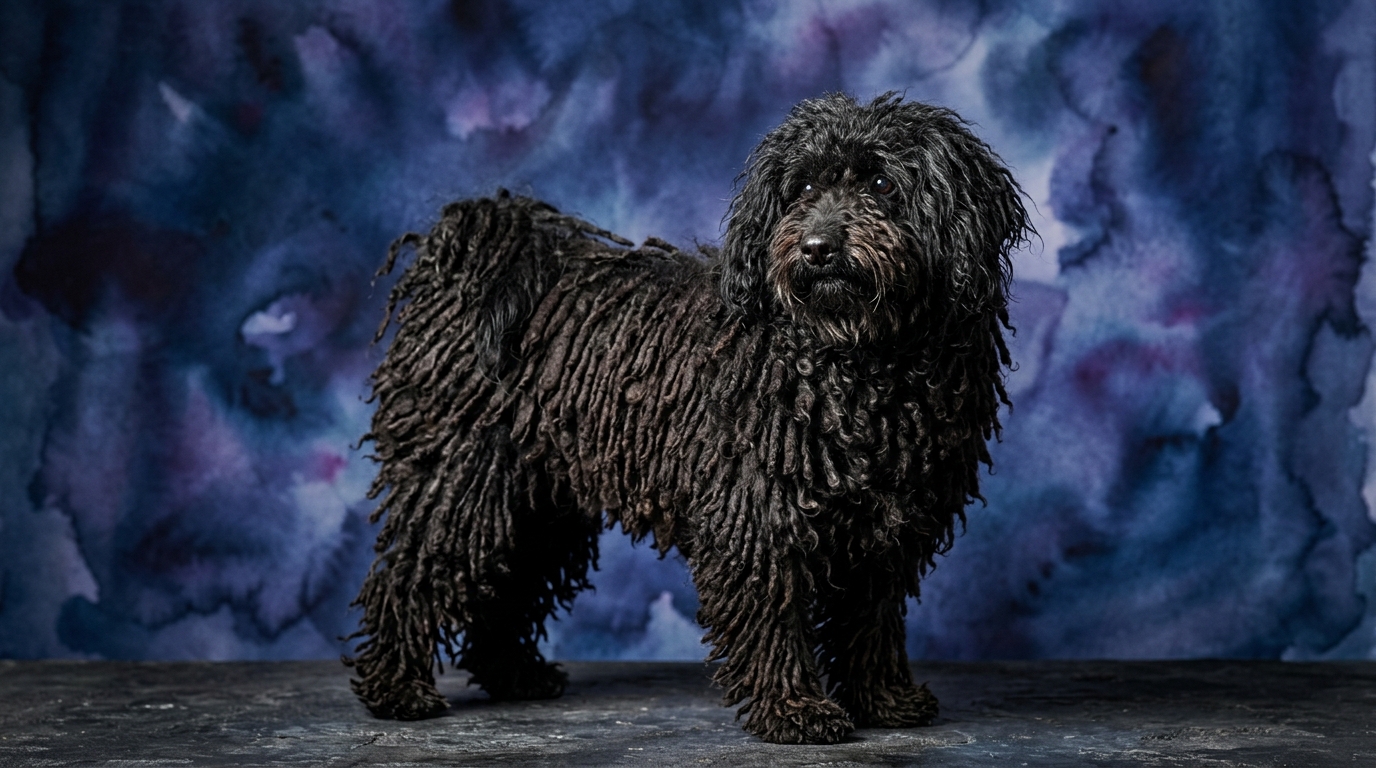
At The Cosmic Pet Pet IQ Lab, we evaluate canine intelligence across five key dimensions, offering a nuanced look beyond simple rankings. The Puli, a Hungarian herding dog, registers a Coren rank of #25, reflecting a strong operational intelligence. Its Problem Solving score of 4/5 indicates a significant capacity for independent thought and adapting to novel situations, a trait crucial for managing livestock. Training Speed, also at 4/5, suggests the Puli readily grasps new commands and sequences, often requiring fewer repetitions to achieve proficiency. Social Intelligence for the Puli stands at 3/5, denoting a solid ability to understand and respond to human cues and social dynamics within its pack or family. Its Instinctive Drive, rated 3/5, speaks to its inherent motivation for its working purpose, though perhaps not as singularly focused as some specialized hunting breeds. Finally, Memory at 4/5 highlights the Puli's aptitude for retaining learned behaviors and environmental information over time.
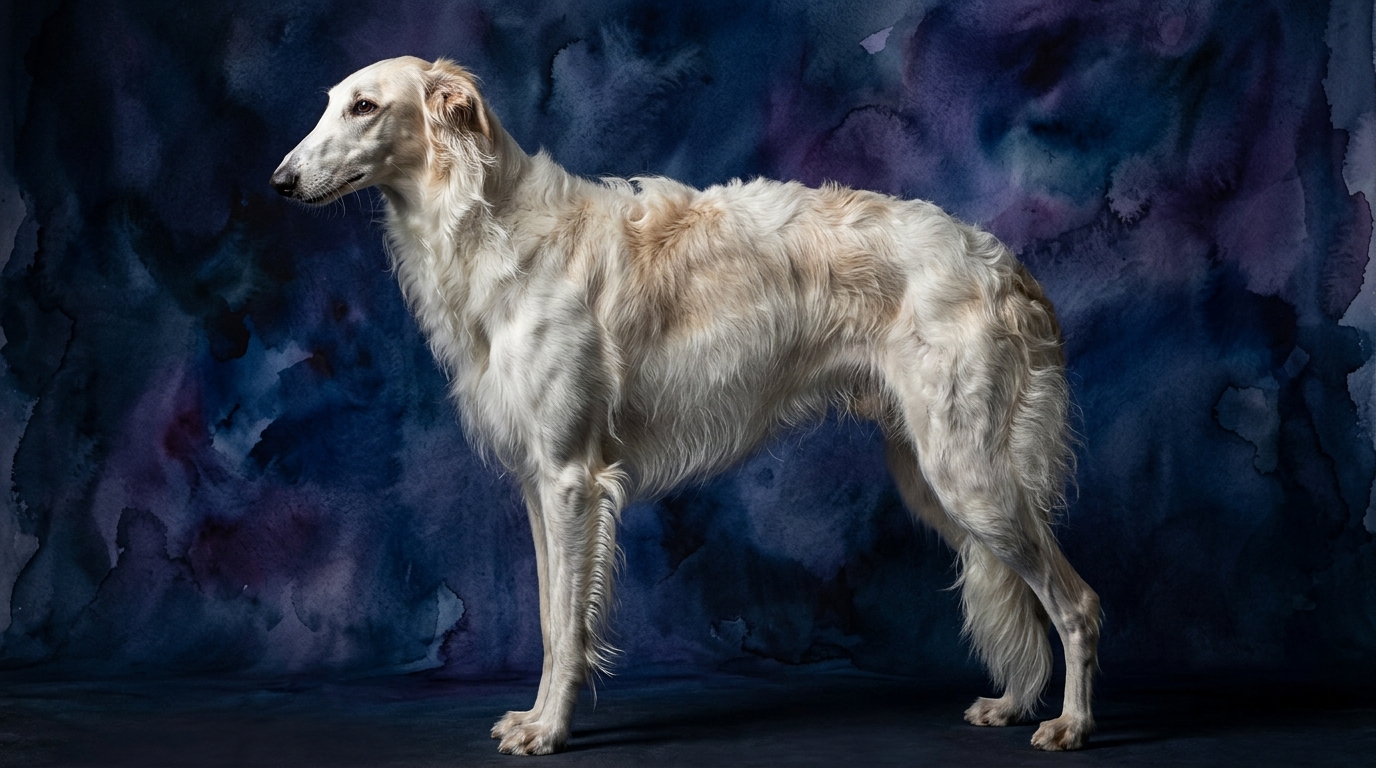
In contrast, the Borzoi, a majestic Russian sighthound, holds a Coren rank of #75, placing it lower on the spectrum of operational intelligence often associated with obedience and problem-solving. Its Problem Solving score of 3/5 suggests a functional capacity for navigating challenges, but perhaps with less improvisation than a herding breed; they are more likely to rely on ingrained patterns or direct commands. Training Speed, also at 3/5, indicates that the Borzoi learns at a steady pace, but may require more patient, consistent reinforcement compared to breeds with higher scores. Social Intelligence is equal to the Puli at 3/5, demonstrating an awareness of social cues and a capacity for forming strong bonds, though often with a dignified reserve. The Borzoi's Instinctive Drive, also 3/5, is powerfully channeled towards its original purpose of pursuing fast-moving prey, a drive that can be intense and focused when triggered. Memory, like its problem-solving and training speed, is rated 3/5, meaning it retains information adequately but might not recall complex sequences with the same ease or detail as a Puli.
Where the Puli's Cognition Shines Brightest
The Puli's cognitive advantages are most evident in its superior Problem Solving and Training Speed. A Puli's 4/5 Problem Solving score means it isn't just following orders; it's actively assessing situations and making decisions. For instance, when herding, a Puli might independently determine the best path to move a stray lamb back to the flock, or figure out how to open a gate that's not perfectly latched. This adaptability translates well into complex dog sports like agility or obedience, where quick, independent thinking is a huge asset for navigating novel courses and unexpected obstacles. They are less likely to 'freeze' when faced with an unfamiliar scenario and more prone to attempting a solution based on prior learning.
Its 4/5 Training Speed complements this problem-solving ability by allowing for rapid acquisition of intricate commands and multi-step tasks. Owners often find Pulis pick up new tricks or advanced obedience routines with fewer repetitions than many other breeds. This isn't just about simple 'sit' or 'stay'; it extends to learning complex sequences of actions, differentiating between subtle cues, and understanding contextual commands. A Puli can often generalize a learned behavior to new environments or slight variations in a command, indicating a deeper understanding rather than rote memorization. This makes them highly rewarding for owners who enjoy engaging in advanced training and mental stimulation.
The Borzoi's Unique Cognitive Strengths
While the Borzoi’s scores might appear lower in direct comparison, its cognitive profile is perfectly attuned to its historical role as a sighthound. The Borzoi's 3/5 Instinctive Drive, while numerically matching the Puli, manifests very differently; it's a powerful, almost singular focus on visual prey detection and pursuit. This isn't about complex problem-solving in the moment, but rather an unwavering dedication to a specific, highly demanding task. When a Borzoi spots something moving at a distance, its cognitive resources are entirely dedicated to calculating the pursuit, assessing speed and trajectory, and maintaining focus despite distractions. This specialized drive, while often challenging for owners in suburban environments, is a testament to its highly refined predatory cognition.
Furthermore, the Borzoi’s 3/5 Social Intelligence, combined with its independent nature, means it forms strong, often deep bonds with its family but typically expresses affection with a dignified calm rather than boisterous enthusiasm. They are observant of their human companions and can be quite sensitive to mood, offering quiet companionship. Their lower Problem Solving score doesn't imply a lack of capacity, but rather a preference for direct, efficient action over elaborate strategizing, especially when their prey drive is engaged. This can sometimes be a 'win' for owners seeking a more predictable companion less inclined to 'outsmart' household rules with clever improvisations, preferring instead a clear routine and consistent expectations.
Training Dynamics: Puli's Eagerness vs. Borzoi's Independence
When it comes to training, the Puli’s 4/5 Training Speed and 4/5 Problem Solving make it generally more eager and responsive to instruction. Pulis typically thrive on mental challenges and enjoy the process of learning new tasks. They are often quick to understand what is being asked of them and possess an inherent desire to work collaboratively with their handler, a remnant of their herding ancestry where cooperation was paramount. This means they are more likely to experiment with behaviors to earn a reward and can generalize learned commands across different contexts with relative ease. Positive reinforcement methods work exceptionally well, as they are motivated by praise, treats, and the joy of engagement.
The Borzoi, with its 3/5 Training Speed and 3/5 Problem Solving, presents a different training experience. They are not necessarily 'difficult' to train, but they require a more patient, consistent, and understanding approach. Their independent hound nature means they often need to understand the 'why' behind a command or perceive it as worthwhile. Rote repetition without clear motivation can lead to disengagement. Training a Borzoi often involves tapping into their natural instincts; for instance, using lure coursing to channel their prey drive in a controlled environment can be a powerful motivator. Behavioral differences like their often-selective hearing when a scent or sight stimulus is present mean owners must build a very strong foundation of recall and impulse control from a young age, understanding that their primary motivation isn't always human approval but inherent drive.
Matching Canine Cognition to Lifestyle: Active vs. Relaxed Owners
The Puli's cognitive profile aligns beautifully with active, engaged owners who seek a partner for various activities and enjoy a dog that thinks alongside them. Owners who are keen on dog sports like agility, competitive obedience, rally, or even advanced trick training will find the Puli's problem-solving aptitude and rapid learning speed incredibly rewarding. They require consistent mental stimulation to prevent boredom and channel their sharp minds constructively. A Puli thrives in an environment where its brain is as active as its body, making them ideal for individuals or families who embrace a dynamic lifestyle and can provide structured mental work daily. They are often described as having a 'sense of humor' and enjoy interactive games that challenge their intellect.
Conversely, the Borzoi often suits owners who appreciate a more relaxed, independent companion indoors, but who can also provide appropriate outlets for their powerful instinctive drives. While not requiring constant mental puzzles in the same way as a Puli, a Borzoi needs safe, expansive spaces where it can stretch its legs and indulge its sighthound instincts, such as a securely fenced yard or regular trips to a private, enclosed field for running. Their calm, sometimes aloof demeanor inside the home belies a deep-seated need for bursts of intense physical activity. Owners who understand and respect the Borzoi's unique blend of independence and affection, and who are prepared for the challenges of managing a strong prey drive, will find a devoted, albeit often reserved, companion.
The Verdict
Choose a Puli if you desire an intellectually engaged partner for dog sports, complex training, and a companion who actively participates in problem-solving alongside you.
Opt for a Borzoi if you appreciate a dignified, independent companion with a calm indoor presence, provided you can safely accommodate its powerful sighthound instincts for bursts of intense outdoor activity.
🧠 Find Your Pet's IQ Score
Our Pet IQ Lab assessment covers 25+ tests across 5 cognitive dimensions — personalized to your breed.
Take the Full IQ Test →Frequently Asked Questions
Are Pulis difficult to live with due to their high problem-solving skills?
Pulis are not difficult, but their high problem-solving capacity means they require consistent mental engagement and clear boundaries. Without adequate stimulation, they might find their own 'problems' to solve, which could manifest as unwanted behaviors, so proactive training and enrichment are key to a harmonious household.
How does a Borzoi's 'instinctive drive' impact daily life for owners?
A Borzoi's strong instinctive drive means they are highly motivated by sight and movement, making them prone to chasing small animals or even distant objects. Owners must prioritize secure fencing and leashed walks in unfenced areas, as their recall can be overridden by their prey drive, necessitating vigilance and consistent impulse control training from an early age.
Can a Borzoi be trained for complex tasks despite its lower training speed?
Yes, a Borzoi can learn complex tasks, but it typically requires more patience, consistency, and a motivation strategy tailored to its independent nature. While they may not pick up new commands as quickly as a Puli, with positive reinforcement and a clear understanding of their motivations, Borzoi can achieve impressive levels of training, especially in areas that align with their natural aptitudes.