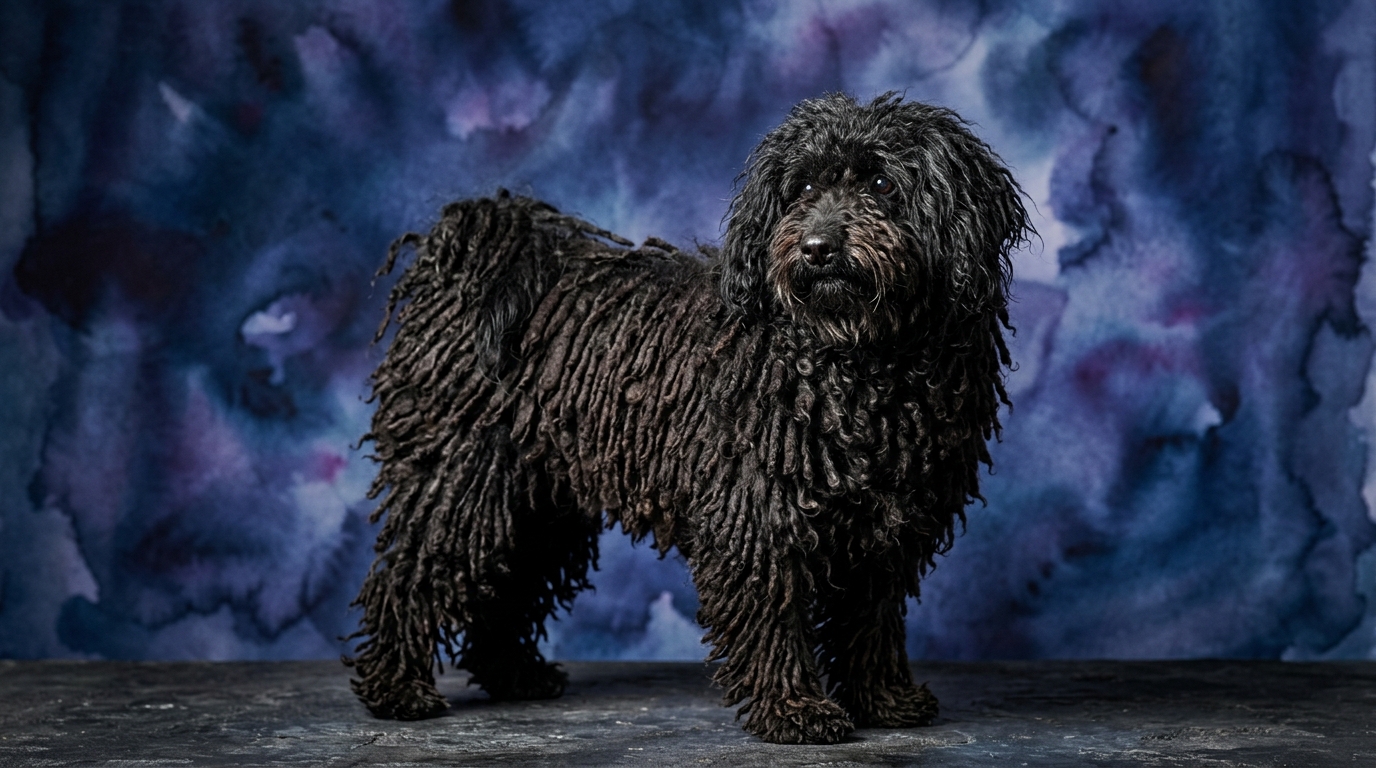
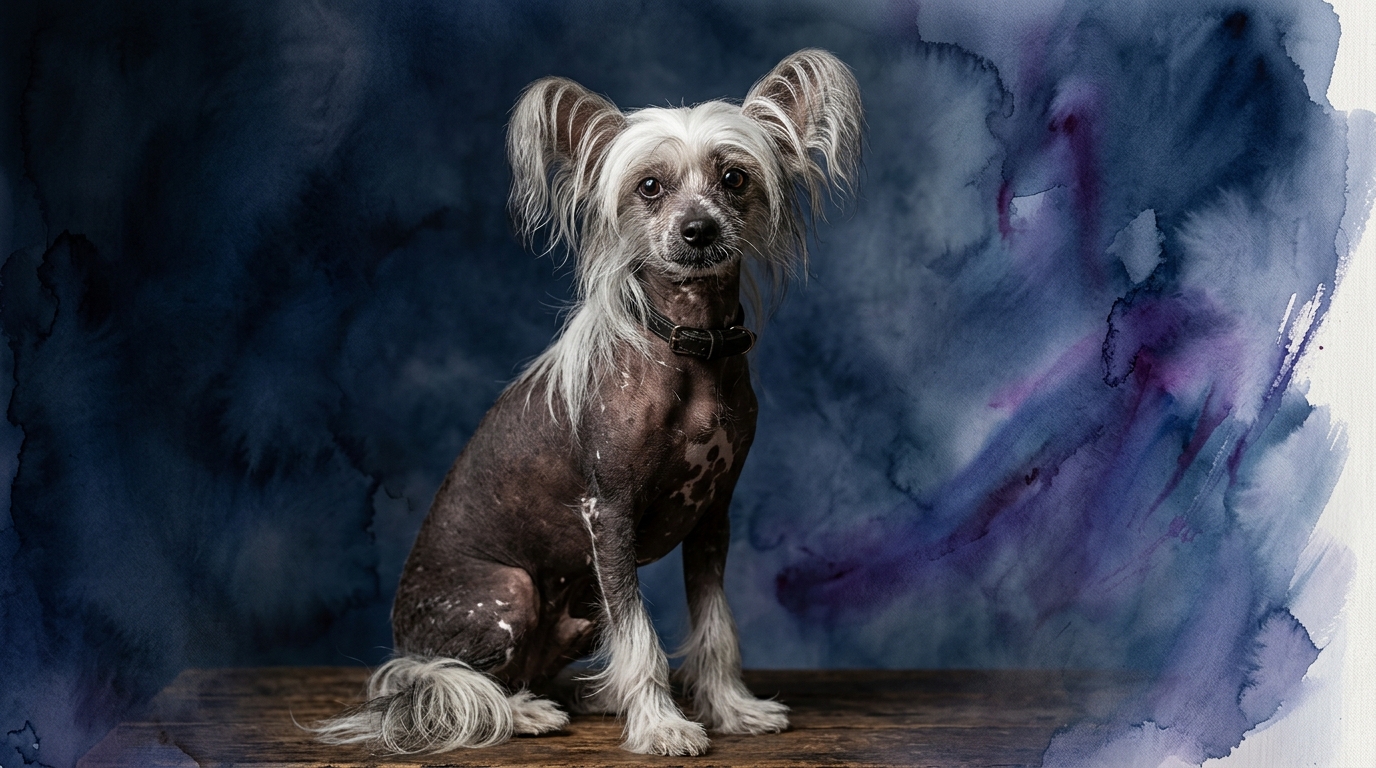
Side-by-Side IQ Profile: Puli vs. Chinese Crested
The Puli, a Hungarian herding dog, registers a notable Coren rank of #25, reflecting a capacity for complex tasks and quick learning. Our Pet IQ Lab scores reveal a Problem Solving of 4/5, indicating an aptitude for independent thought and strategic action. Their Training Speed is also 4/5, suggesting a rapid grasp of new commands and routines. Social Intelligence for the Puli stands at 3/5; they understand human cues but maintain a degree of independence, characteristic of working breeds. An Instinctive Drive of 3/5 points to their inherent herding tendencies, requiring appropriate outlets. Finally, their Memory is strong at 4/5, allowing them to retain extensive repertoires of learned behaviors and spatial information over time.
In contrast, the Chinese Crested, a dedicated toy companion, does not appear on Coren's ranking, which often focuses on working obedience. Their Pet IQ Lab scores paint a picture of a different kind of cognitive strength. Problem Solving for the Chinese Crested is 3/5; they can learn routines and navigate familiar environments effectively but may be less inclined toward novel solutions for complex puzzles. Their Training Speed is 3/5, meaning they learn with consistency and positive reinforcement, though perhaps not with the same alacrity as a Puli. Social Intelligence is 3/5, reflecting a deep attunement to human emotions and a strong desire for interaction. An Instinctive Drive of 3/5 indicates minimal prey drive, with their cognitive focus largely centered on companionship. Their Memory is also 3/5, sufficient for retaining daily routines and familiar commands, but less robust for intricate sequences.
Where the Puli Demonstrates Cognitive Superiority
The Puli's cognitive strengths distinctly outshine the Chinese Crested's in areas demanding proactive problem-solving, rapid acquisition of skills, and long-term retention. With a Problem Solving score of 4/5, Pulis excel at navigating complex environments, figuring out how to move livestock, or even manipulating simple latches to achieve a goal. Their working heritage demands adaptive thinking, allowing them to assess situations and devise solutions independently. This manifests as a dog that can often 'think through' a new puzzle toy or an obstacle in their path, rather than relying solely on repetitive trial and error, showcasing a robust capacity for cognitive mapping and strategic planning.
Their Training Speed, also at 4/5, signifies a quick grasp of commands and an eagerness to perform tasks for their handler, making them exceptionally responsive. Pulis absorb new information rapidly, often requiring fewer repetitions than many other breeds to solidify a behavior. This isn't just about basic obedience; it extends to learning complex sequences in dog sports or intricate routines, where their focused attention and desire to cooperate shine. This quick learning curve is invaluable in environments where new challenges are frequent. Furthermore, Pulis possess robust memory capabilities, scoring 4/5. They retain extensive repertoires of commands, spatial awareness of their territory, and the nuances of their daily routines. This strong memory underpins their ability to perform complex herding patterns and maintain consistent behavior over time, even after periods of inactivity, making them reliable partners in demanding roles.
Cognitive Nuances: The Chinese Crested's Unique Strengths
While the Chinese Crested's scores may not exceed the Puli's in raw cognitive power, their strengths lie in the *application* of their cognitive profile to their primary role: companionship. Their Social Intelligence, rated 3/5, is a nuanced strength that manifests in their keen sensitivity to human emotional states and their profound desire for connection. They might not be solving complex environmental puzzles, but they excel at reading subtle cues from their owners, understanding moods, and offering comfort or playful engagement accordingly. This isn't about manipulating the physical environment but about navigating the intricate social landscape of a human-dog bond with remarkable perceptiveness, making them highly empathetic companions.
The Chinese Crested's cognitive energy is less about mastering new tasks and more about integrating smoothly into the domestic environment. Their Problem Solving at 3/5, coupled with a 3/5 in Training Speed, means they are often quite adaptable to various living situations, provided they receive consistent affection and routine. They are adept at learning the rhythms of a household and anticipating their owner's presence or actions, which contributes to their seamless integration into family life. Their relatively moderate Instinctive Drive (3/5) ensures their cognitive focus isn't diverted by strong prey drives or territorial guarding, allowing them to pour their mental energy into their human relationships. The Chinese Crested's cognitive 'wins' are found in their capacity for focused, gentle companionship, where their mental faculties are primarily dedicated to forming a deep, reciprocal bond with their human family.
Training Aptitude: Puli vs. Chinese Crested
When it comes to training, the Puli generally presents an easier and more rewarding experience for those seeking to teach complex tasks and competitive obedience. Their 4/5 in Training Speed and Problem Solving means they pick up cues quickly, generalize learned behaviors across different environments, and are motivated by purpose and cooperation. Pulis respond exceptionally well to clear, consistent instruction and thrive on having a 'job,' whether it's herding, agility, or advanced obedience. Their herding background instills a desire to cooperate and follow direction, leading them to learn not just *what* to do, but often to understand the underlying 'why' (in a canine sense), making them highly adaptable and eager students.
The Chinese Crested, on the other hand, typically requires more patience and a different motivational approach during training. Their 3/5 in Training Speed and Problem Solving suggests they learn, but at a slower pace and might need more repetition to solidify behaviors. Motivation often needs to be high-value treats or enthusiastic praise, as they are less driven by an intrinsic desire to 'work' or perform complex tasks for their own sake. They are more sensitive and can shut down with harsh or inconsistent methods, making positive reinforcement absolutely crucial for success. While they are certainly capable of learning basic commands and even some tricks, expecting them to master intricate routines with the speed and precision of a Puli might lead to frustration for both dog and handler. Their training success often hinges on the handler's ability to make learning fun and rewarding, rather than relying on an innate drive for mastery.
Matching Canine Intelligence to Owner Lifestyles
The cognitive profiles of the Puli and Chinese Crested clearly delineate which breed aligns better with active versus relaxed owner lifestyles. The Puli, with its higher problem-solving aptitude, rapid training speed, robust memory, and a 3/5 Instinctive Drive rooted in herding, is an ideal match for active owners. These dogs need consistent mental and physical engagement. They thrive in environments where they have a 'job,' whether it's participating in herding trials, agility courses, advanced obedience, or extensive hiking adventures. Owners who enjoy the process of training and challenging their dogs will find a Puli an incredibly rewarding and dedicated partner. A Puli that lacks sufficient mental and physical outlets can often invent its own 'work,' which may manifest as undesirable behaviors like excessive barking, digging, or trying to 'herd' family members.
Conversely, the Chinese Crested is perfectly suited for more relaxed owners. Their cognitive profile leans heavily towards companionship, with their moderate scores in problem-solving and training speed, and their 3/5 Instinctive Drive indicating a lower demand for intense 'work.' While they enjoy walks and playtime, they don't demand constant mental or physical challenges to the same degree as a Puli. They are content with being close to their people, enjoying quiet time on the couch, and engaging in routine daily activities. Chinese Cresteds are ideal for individuals or families seeking a devoted lap companion who is less demanding in terms of structured 'work' but thrives on consistent affection, gentle handling, and a predictable, loving home environment. Their intelligence is best nurtured through close social interaction and a calm routine.
The Verdict
Choose a Puli if you are an active owner seeking a highly trainable, problem-solving partner for dog sports, herding, or complex obedience, and you can provide consistent mental and physical challenges. Their quick learning and robust memory make them excel in structured activities, needing a handler who appreciates their working heritage.
Opt for a Chinese Crested if you desire a sensitive, devoted companion whose primary joy is intimate human connection, thriving in a relaxed home environment with consistent affection and gentle, positive training methods. Their cognitive strengths are best appreciated in their capacity for close emotional bonding rather than task mastery.
🧠 Find Your Pet's IQ Score
Our Pet IQ Lab assessment covers 25+ tests across 5 cognitive dimensions — personalized to your breed.
Take the Full IQ Test →Frequently Asked Questions
Is the Puli a good choice for first-time dog owners?
Pulis are intelligent and trainable, but their strong herding instincts and need for mental engagement can be challenging for novice owners who might underestimate their needs. They require consistent training and socialization from a young age to channel their cognitive strengths positively, making them better suited for owners with some prior dog experience.
Can Chinese Crested dogs learn tricks and participate in dog sports?
Yes, Chinese Crested dogs can certainly learn tricks and participate in dog sports like agility or obedience, though they might not achieve the same speed or precision as a Puli. Their 3/5 training speed means they will learn with patience and positive reinforcement, often motivated by treats and the desire to please their beloved owner.
How do the social intelligence scores (3/5 for both) differ in practice?
While both breeds score 3/5, the Puli's social intelligence leans towards understanding handler commands for work, maintaining a certain independence required for herding tasks. The Chinese Crested's 3/5 is more about nuanced emotional attunement, excelling at reading human moods and seeking close, affectionate interaction, making them highly responsive companion animals.