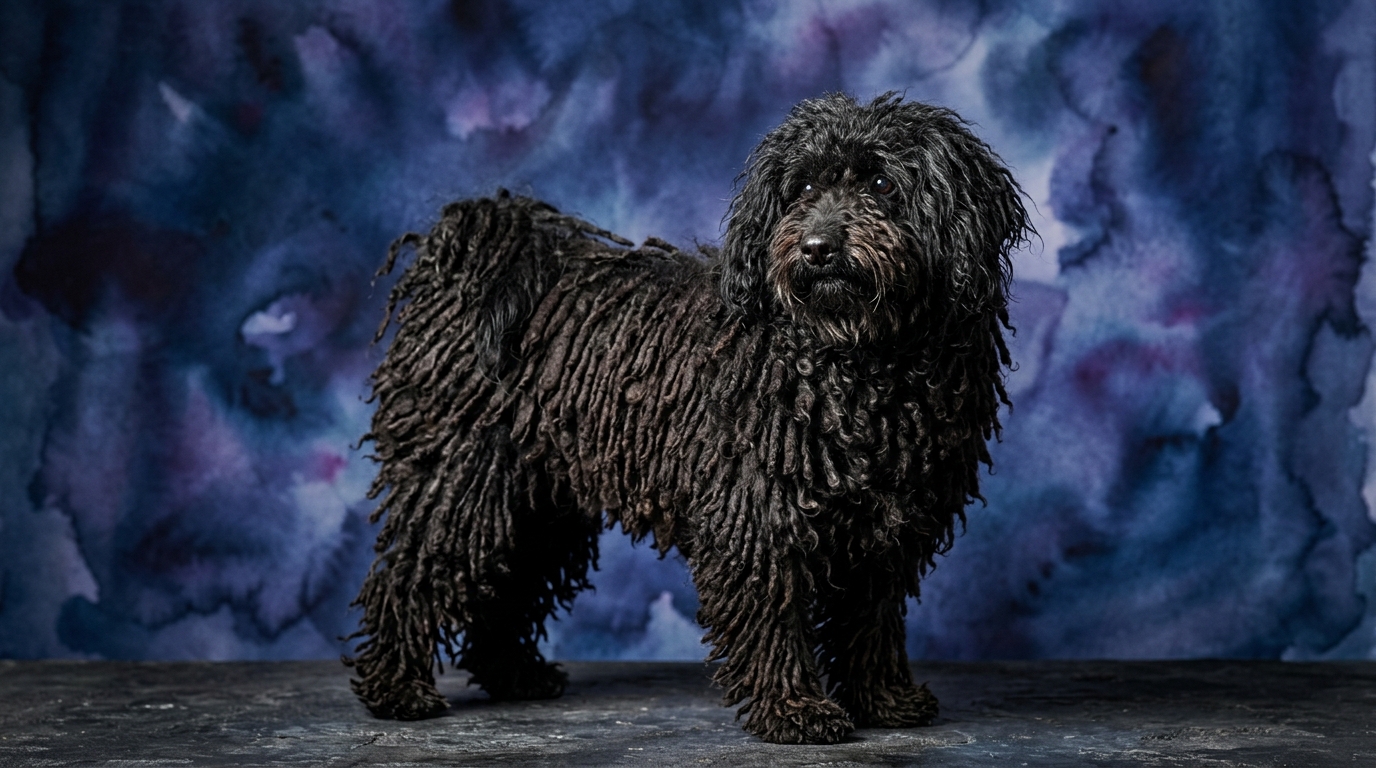
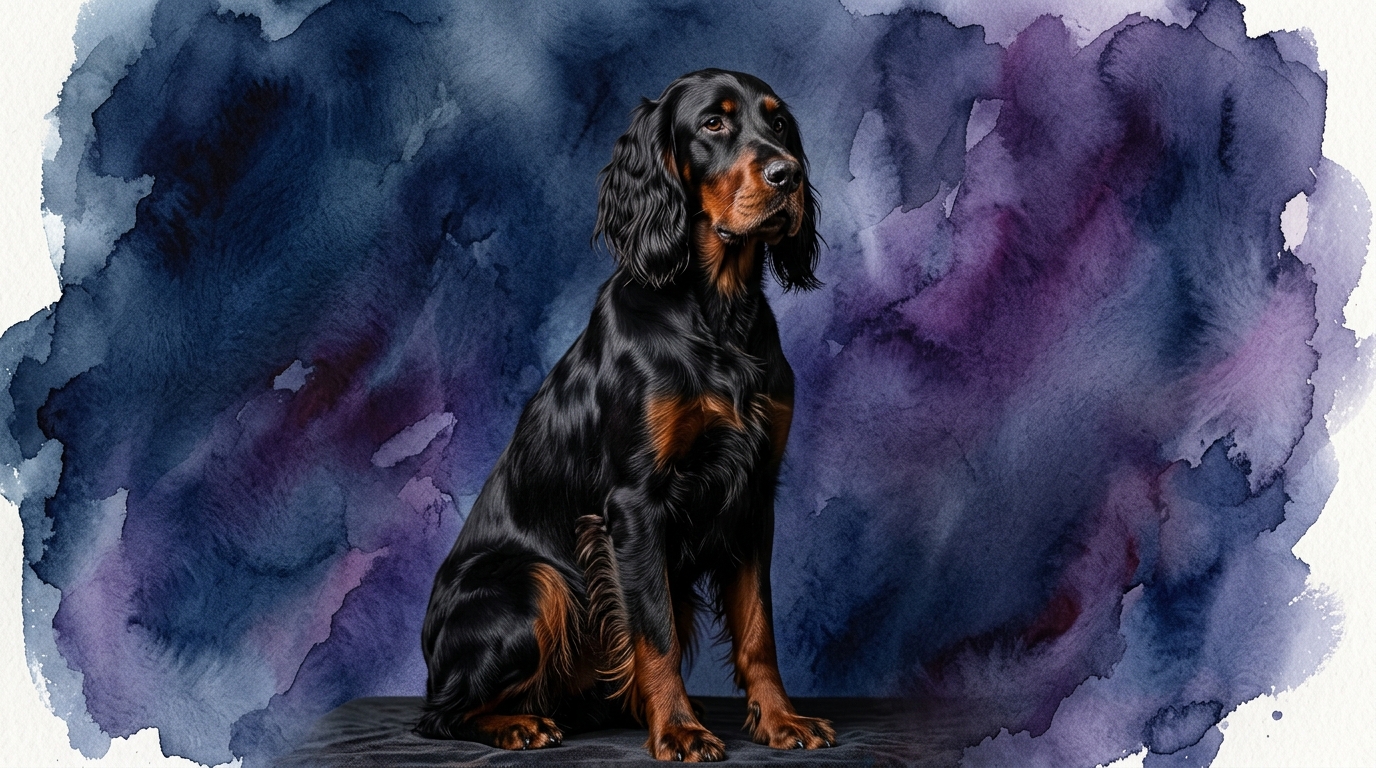
Side-by-Side IQ Profile
The Cosmic Pet Pet IQ Lab employs a multi-faceted approach to assess canine cognition, moving beyond simple obedience to explore the depth of a breed's mental landscape. For both the Puli and the Gordon Setter, our analysis reveals identical scores across five key cognitive dimensions, yet their Coren ranks – Puli at #25 and Gordon Setter at #39 – hint at underlying differences in their working and obedience intelligence. Let's dissect these dimensions through the lens of their breed roles.
Both breeds achieve a 4/5 in Problem Solving, indicating a robust capacity to navigate novel situations and devise solutions. For the Puli, a Herding breed, this often translates into figuring out complex livestock movements or anticipating animal behavior to maintain control, requiring rapid, independent decisions. The Gordon Setter, a Sporting breed, applies its problem-solving acumen to locate and track game, discerning subtle scent changes or navigating challenging terrains with sustained focus towards finding birds.
Both breeds also score 4/5 in Training Speed, suggesting they grasp new commands and routines with relative swiftness. The Puli's quick uptake likely stems from its need to learn and execute complex herding patterns. For the Gordon Setter, a quick training speed supports its role in learning precise commands for hunting, enabling a seamless partnership with a human.
Social Intelligence, rated 3/5 for both, reflects their capacity to understand and respond to social cues. Pulis typically form deep bonds with family, exhibiting a protective nature and understanding owner intentions, though reserved with strangers. Gordon Setters, while affectionate with their families, also display similar reserve with new acquaintances, their social intelligence finely tuned to a hunting partner's subtle communications.
Instinctive Drive stands at 3/5 for both, yet its manifestation differs significantly. The Puli's drive is inherently tied to herding – an inclination to gather, control, and move other animals, requiring appropriate outlets. The Gordon Setter's instinctive drive is rooted in its hunting heritage – an innate desire to scent, locate, point, and retrieve game birds, manifesting as a powerful urge to explore and follow scent trails.
Finally, both breeds achieve a 4/5 in Memory, a critical cognitive function for consistent performance. The Puli's memory is vital for recalling intricate herding routes and specific commands over long periods. The Gordon Setter's memory is equally crucial for remembering scent locations, past game finds, and the precise execution of learned hunting routines, ensuring reliability and effectiveness during field work.
Where Puli Wins Cognitively
The Puli, with its higher Coren rank of #25, demonstrates a particular edge in what we term 'working obedience intelligence.' This suggests that while both breeds learn quickly, the Puli tends to consolidate and execute commands with fewer repetitions and greater consistency in a formal obedience setting. Their cognitive makeup, honed for managing livestock, predisposes them to understanding and responding to direction with precision.
This breed excels in independent strategic thinking, a direct result of their historical role requiring them to make decisions without constant human oversight while managing livestock. Their problem-solving isn't just about finding a solution, but often about finding the most efficient or least disruptive solution within a complex, moving system. This capacity for nuanced, self-directed tactical planning is a distinct cognitive advantage.
Where Gordon Setter Wins Cognitively
The Gordon Setter, despite its lower Coren rank, exhibits a specific cognitive strength in sustained focus and environmental processing, particularly concerning scent and terrain. Their problem-solving, rated 4/5, is often applied to intricate tasks like tracking faint scent trails over varied landscapes for extended periods, demanding immense concentration and sensory discrimination. This specialized cognitive application allows them to 'read' the environment in ways a Puli might not prioritize.
Furthermore, their cooperative intelligence, while rated similarly in social intelligence (3/5), manifests as a profound ability to work in tandem with a human partner over long durations, often anticipating a hunter's movements and intentions through subtle cues. This partnership-oriented cognitive strength, focused on a shared objective in the field, is a hallmark of the Gordon Setter's mental make-up.
Which is Easier to Train and Why
Determining which breed is 'easier' to train is nuanced, despite both scoring 4/5 in Training Speed. The Puli's higher Coren rank suggests they will generally learn new obedience commands faster and require fewer repetitions to achieve reliable execution. Their cognitive makeup, honed for managing livestock, predisposes them to understanding and responding to direction with precision. However, their inherent independence and strong will, typical of many herding breeds, can mean they are not always eager to comply if they don't see the purpose or if the trainer isn't consistently engaging. Training a Puli demands consistency, clarity, and a confident handler who can channel their problem-solving skills into desired behaviors.
The Gordon Setter, while also a quick learner, often requires more repetitions to solidify commands, reflected in their lower Coren rank. Yet, their desire to please and their cooperative nature, crucial for a hunting partner, can make them highly amenable to positive reinforcement and eager to engage in training sessions. They might be more sensitive to harsh methods, responding better to gentle, encouraging approaches. Thus, while the Puli might learn faster, the Gordon Setter might be more willing to engage in the training process, making the overall experience potentially smoother for owners who prioritize enthusiasm and cooperation over sheer speed of acquisition.
Which Suits Active Owners vs Relaxed Owners
Neither the Puli nor the Gordon Setter is suited for truly 'relaxed' ownership; both require significant engagement to thrive, though the nature of that engagement differs. The Puli demands active owners who can provide consistent mental stimulation and a 'job' to do. This doesn't necessarily mean herding livestock, but could involve advanced obedience, agility, or puzzle games that tap into their problem-solving and strategic thinking. Owners must be prepared to channel their intense herding drive and independent nature into constructive activities, preventing boredom and potential behavioral issues. A Puli thrives when it has a purpose and a structured routine.
The Gordon Setter also requires active owners, but their needs lean more towards sustained physical activity and opportunities for scent work. Their background as a field dog means they need regular, vigorous exercise – long walks, runs, or off-leash exploration in safe environments where they can engage their keen sense of smell. While they also benefit from mental challenges, their primary need is for physical outlets that mimic their hunting heritage. Owners who enjoy outdoor adventures and can provide consistent opportunities for exploration and exercise will find a Gordon Setter a rewarding companion.
The Verdict
Choose the Puli if you seek a cognitively agile, independent thinker who learns quickly and thrives on having a 'job,' provided you can offer consistent mental challenges and firm, engaging leadership.
Opt for the Gordon Setter if you desire a cooperative, affectionate companion for outdoor adventures, valuing sustained physical activity and scent work, and are prepared for a sensitive learner who responds best to patient, positive training.
🧠 Find Your Pet's IQ Score
Our Pet IQ Lab assessment covers 25+ tests across 5 cognitive dimensions — personalized to your breed.
Take the Full IQ Test →Frequently Asked Questions
Do identical IQ scores mean Pulis and Gordon Setters are equally easy to train?
Not necessarily. While both score 4/5 in Training Speed, the Puli's higher Coren rank suggests faster command acquisition in obedience, whereas the Gordon Setter's cooperative nature might make them more enthusiastically compliant with consistent positive reinforcement, despite potentially needing more repetitions.
How does the Puli's herding drive compare to the Gordon Setter's hunting drive, given both score 3/5 in Instinctive Drive?
Their drives manifest differently: the Puli's 3/5 is for gathering and controlling movement, often through nipping or circling, while the Gordon Setter's 3/5 is for scenting, pointing, and retrieving prey. Both require outlets, but for distinct purposes.
Can a Puli or Gordon Setter adapt to apartment living?
Both breeds require significant daily exercise and mental engagement, making apartment living challenging without a dedicated owner committed to fulfilling these needs. A Puli might adapt if its cognitive needs are met, while a Gordon Setter needs substantial outdoor space for physical exertion and scent exploration.