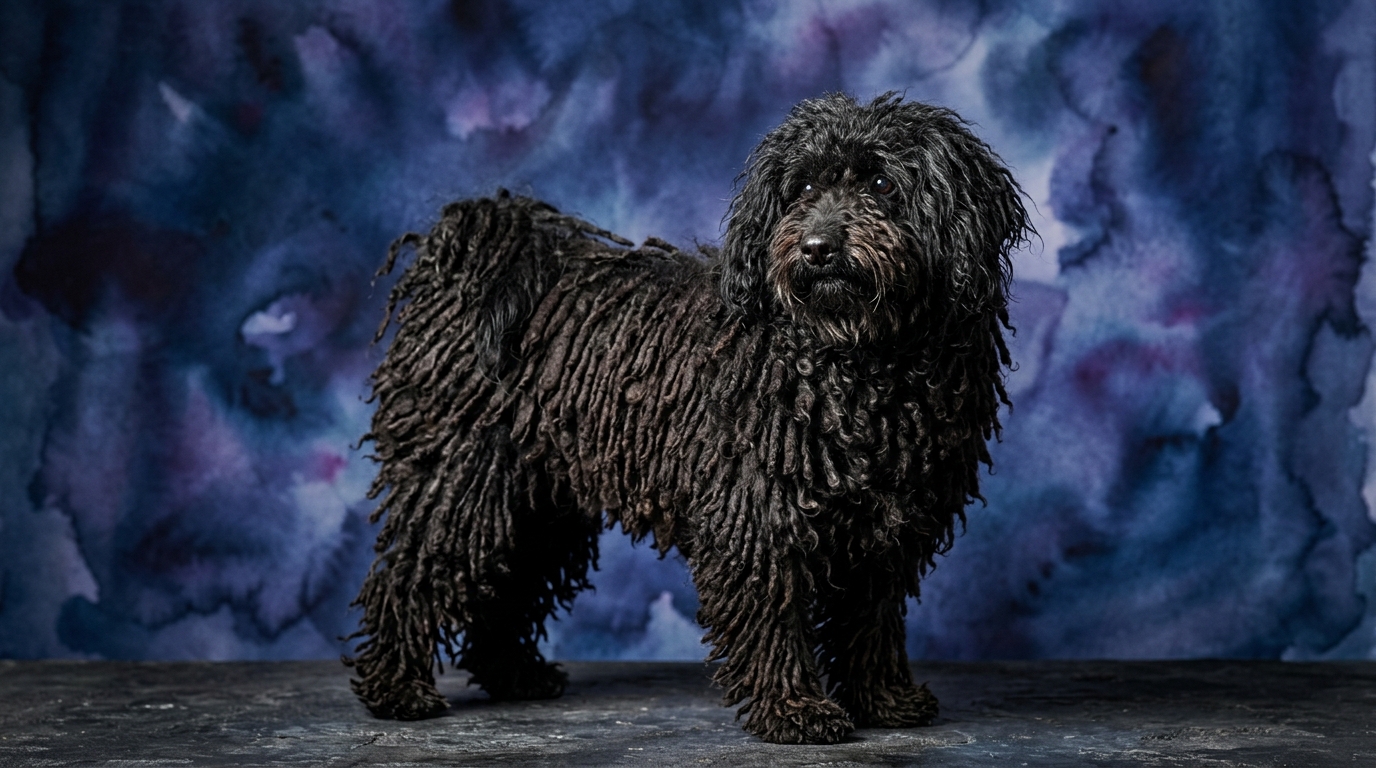
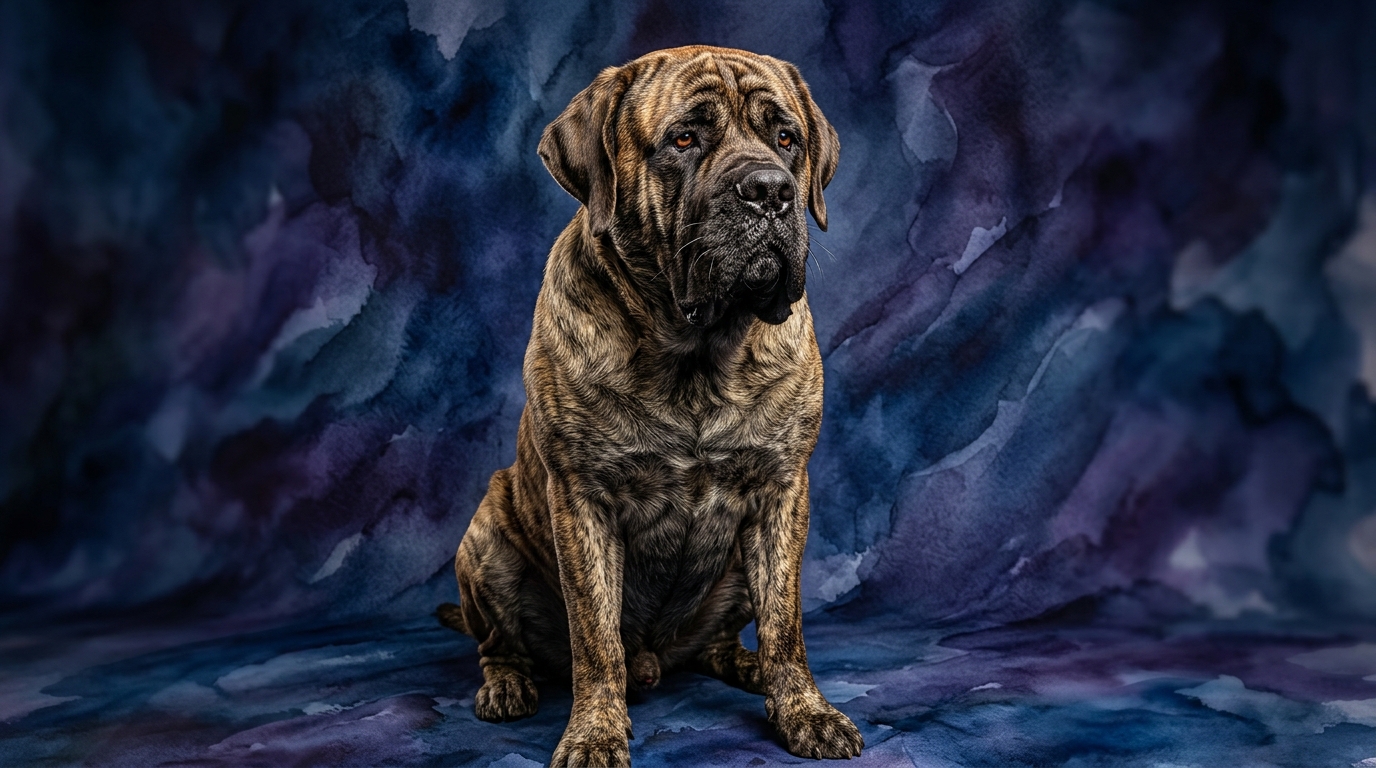
Side-by-Side IQ Profile: Puli vs. Mastiff
The Cosmic Pet Pet IQ Lab evaluates canine cognition across five key dimensions, providing a granular look at how different breeds process information and interact with their world. Let's examine the Puli and Mastiff through this lens to understand their specific mental aptitudes.
Puli (Herding, Coren rank #25): Problem Solving (4/5): Pulis exhibit strong independent problem-solving capabilities, crucial for their historical role of managing livestock without constant human direction. They can devise strategies for navigating obstacles, locating lost flock members, or herding wayward animals back into the group. This isn't just following commands; it's an innate ability to assess and act autonomously. Training Speed (4/5): Their quick grasp of commands and routines reflects a readiness to learn and an eagerness to engage in structured activities. They often pick up new tricks or complex sequences with fewer repetitions than many other breeds, demonstrating a keen understanding of cause and effect in training scenarios. This mental agility makes them rewarding students. Social Intelligence (3/5): While capable of forming deep, loyal bonds, their social intelligence is often geared towards their primary handler or family unit, with a certain reservedness or wariness towards strangers. They understand complex family dynamics and can be sensitive to the moods of their trusted humans, but their social circle is typically well-defined. Instinctive Drive (3/5): The herding instinct is undeniably present but manageable, manifesting as a desire to keep their "flock" (family members, other pets) together and accounted for. This drive is more about watchful management and gentle guidance than aggressive pursuit, often seen in their tendency to "patrol" their home environment. Memory (4/5): Pulis possess a robust memory, retaining learned commands, routines, and experiences over long periods. This strong recall aids in their consistent performance in training and their ability to adapt to changing environments by drawing on past knowledge, making them reliable companions.
Mastiff (Working, Coren rank #72): Problem Solving (3/5): Mastiffs approach problems with a more deliberate, less frantic style. Their problem-solving often involves assessing a situation calmly and applying known solutions or patiently waiting for human intervention, rather than inventing new strategies on the fly. They excel at understanding routines and anticipating events based on familiar patterns. Training Speed (3/5): They learn at a steady, consistent pace, requiring patience and clarity from their trainers. While not as quick to pick up new commands or respond to subtle cues as some breeds, once a concept is thoroughly understood and ingrained, it is typically well-retained and reliably performed. Consistency is key to their learning process. Social Intelligence (3/5): Mastiffs display a profound social awareness within their family, demonstrating empathy and a strong desire for companionship and connection. They are generally tolerant and understanding of social cues from their trusted humans, often acting as gentle giants who are sensitive to the emotional atmosphere of their home. Instinctive Drive (3/5): Their instinctive drive is primarily geared towards guardianship and protection of their family and territory, manifesting as a watchful presence rather than an active, high-energy pursuit. This drive is about deterrence through their imposing size and calm vigilance, making them natural protectors who observe rather than react impulsively. Memory (3/5): Mastiffs have a solid memory for routines, familiar people, and established places. They remember past interactions and learned behaviors effectively, which contributes to their reliability and predictability. However, their memory might not be as detailed or as adaptable to complex, rapidly changing sequences as breeds with higher scores.
Where the Puli Wins Cognitively
Pulis excel in tasks requiring quick thinking, adaptability, and independent decision-making. Their superior problem-solving (4/5) and training speed (4/5) mean they can rapidly process new information and apply it to novel situations, a trait honed by centuries of working livestock autonomously in varied conditions. For instance, a Puli might quickly figure out how to unlatch a gate, navigate an unfamiliar agility course, or herd a group of unruly ducks back into a pen with minimal prior instruction, demonstrating an agile mental approach. Their robust memory (4/5) further enhances this, allowing them to build upon past experiences efficiently and perform complex sequences reliably.
Where the Mastiff Wins Cognitively
The Mastiff's cognitive strengths lie in their deliberate approach, unwavering presence, and profound social connection within their trusted circle. While their problem-solving and training speed scores are moderate (3/5), their social intelligence (3/5) is characterized by a deep, intuitive understanding of human emotions and family dynamics. A Mastiff might not invent a complex solution to a puzzle toy as quickly as a Puli, but they are exceptionally adept at sensing distress or changes in mood in their owner and offering calm, comforting presence without being prompted. Their instinctive drive (3/5) for guardianship, combined with their steady nature, means they excel at tasks requiring patience, consistent vigilance, and a protective, unwavering presence, rather than rapid action or complex manipulation.
Which Is Easier to Train and Why
Based on The Cosmic Pet Pet IQ Lab's metrics, the Puli generally presents as the easier breed to train for a wide array of tasks. Their higher training speed (4/5) indicates a quicker grasp of new commands, a greater willingness to participate, and an eagerness to engage in learning sessions. Pulis respond exceptionally well to positive reinforcement and consistency, often delighting in the mental stimulation that structured training provides. Their superior problem-solving ability also means they can generalize learned behaviors to new contexts more readily, making them versatile students. In contrast, Mastiffs, with a training speed of 3/5, require more repetition, patience, and clear, consistent instruction. They are not unintelligent, but they process information at a more measured pace and can be less inclined to perform tasks purely for the sake of novelty. Training a Mastiff is about building trust, establishing a predictable routine, and appealing to their desire for companionship and approval, rather than their need for constant mental puzzles. A Puli might master a complex agility sequence or a series of advanced tricks faster, while a Mastiff will reliably perform a practiced obedience command with serene dignity once it's deeply ingrained.
Which Suits Active Owners vs. Relaxed Owners
The Puli, with its heritage in active herding roles, is decidedly better suited for active owners. Their mental agility, combined with their physical demands, means they thrive with regular, vigorous exercise, structured training, and ample opportunities for mental engagement, such as dog sports, advanced obedience, or even farm work. Owners who enjoy hiking, agility competitions, or engaging in complex trick training will find a Puli a rewarding, enthusiastic, and capable companion. Conversely, the Mastiff is an excellent match for more relaxed owners. While they certainly require regular, moderate exercise to maintain their substantial physical health and prevent obesity, their overall energy level is significantly lower. They are generally content with leisurely walks around the neighborhood and ample time spent lounging comfortably with their family indoors. Owners who appreciate a calm, watchful, and profoundly devoted presence, and are prepared for a large, gentle companion who values quiet companionship over constant activity, will find the Mastiff's steady temperament a perfect fit for their lifestyle.
The Verdict
Choose a Puli if you are an active owner seeking a mentally agile companion eager for consistent training, dog sports, and independent problem-solving challenges, thriving on purpose and engagement.
Choose a Mastiff if you are a relaxed owner desiring a calm, devoted companion who excels in watchful guardianship, offering profound emotional connection and requiring patience in training.
🧠 Find Your Pet's IQ Score
Our Pet IQ Lab assessment covers 25+ tests across 5 cognitive dimensions — personalized to your breed.
Take the Full IQ Test →Frequently Asked Questions
Are Pulis prone to herding children?
Pulis may exhibit mild herding behaviors towards children due to their instinct, such as gently nudging or circling. This is typically not aggressive and can often be redirected with consistent training and providing appropriate outlets for their herding drive.
Do Mastiffs need a lot of exercise despite their calm nature?
While Mastiffs are calm, they still require regular, moderate exercise to maintain their health and prevent obesity, such as daily walks. Over-exertion, especially in puppies, should be avoided due to their rapid growth and joint susceptibility.
How do Pulis and Mastiffs typically interact with strangers?
Pulis are often reserved or wary with strangers, observing new people carefully before accepting them, a trait stemming from their protective herding nature. Mastiffs are generally tolerant and polite with strangers once introduced, though their imposing size naturally serves as a deterrent, and they remain watchful of their family.