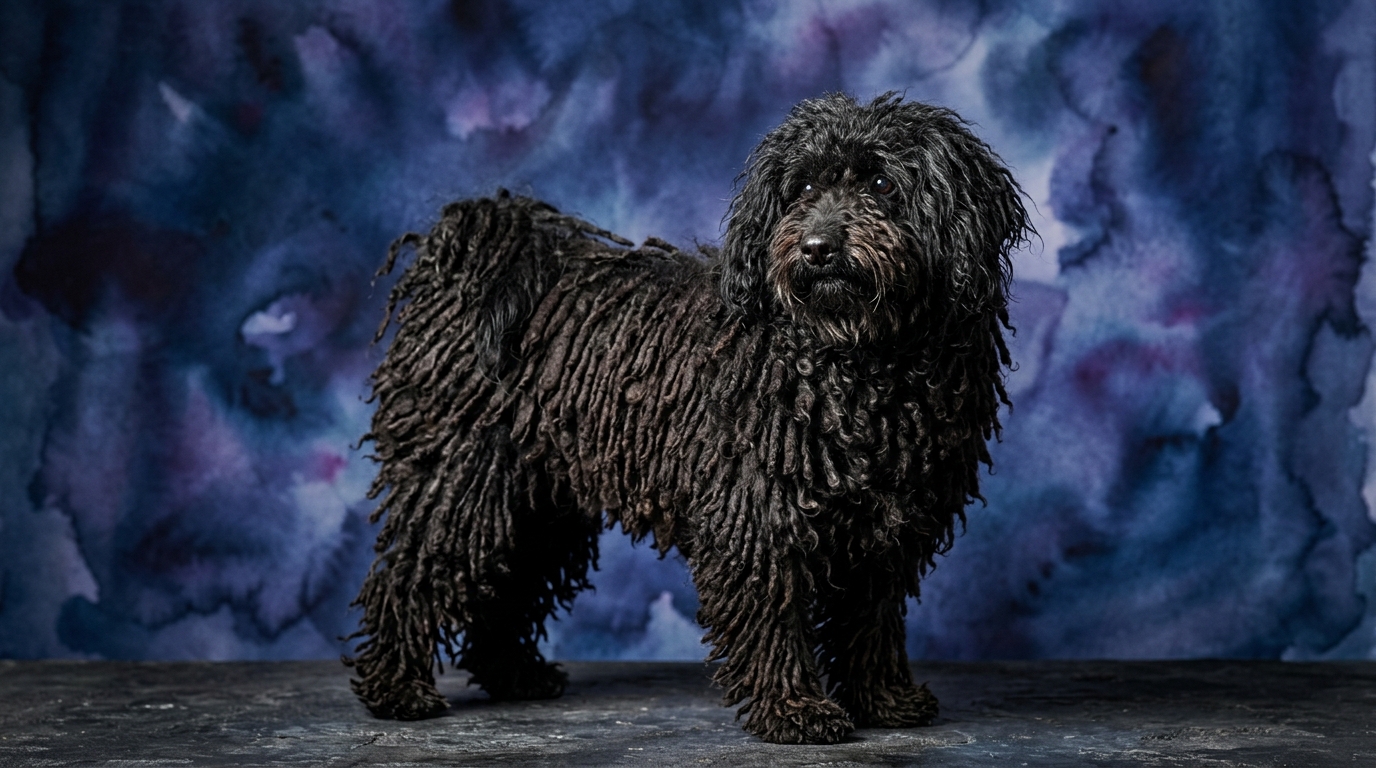
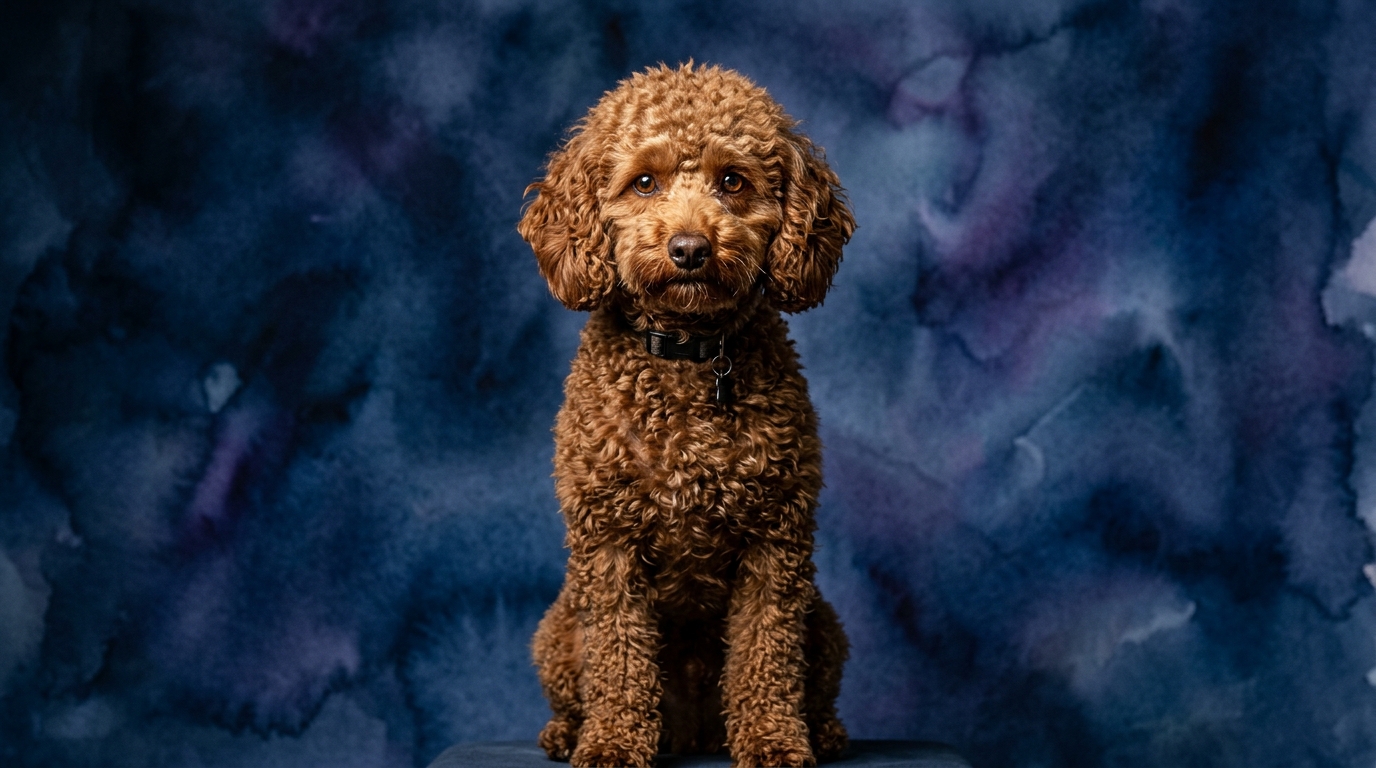
Side-by-Side IQ Profile: Puli vs. Miniature Poodle
The Cosmic Pet Pet IQ Lab employs a multi-dimensional assessment to offer a nuanced understanding of canine cognition, moving beyond simplistic 'smartness' rankings. For the Puli, a Herding breed with a Coren ranking of #25, its profile showcases a blend of independent thought and practical learning. Its Problem Solving score of 4/5 indicates a strong capacity for figuring things out, often with a self-reliant approach. Training Speed, also at 4/5, suggests a quick learner, though perhaps one who processes information through a lens of utility and independence. Social Intelligence, rated 3/5, points to a moderate awareness of human social cues, making them connected but not overtly people-pleasing. An Instinctive Drive of 3/5 reflects their foundational herding instincts, guiding behavior with purpose. Finally, a Memory score of 4/5 means they retain learned information and experiences effectively over time.
In contrast, the Miniature Poodle, a Non-Sporting breed with an exceptional Coren ranking of #2, presents a profile geared for rapid acquisition and application of knowledge. Its Problem Solving at a perfect 5/5 signifies an outstanding ability to analyze situations and devise optimal solutions with remarkable efficiency. Training Speed, also at 5/5, denotes an unparalleled capacity to grasp new commands and concepts in very few repetitions. Like the Puli, its Social Intelligence is rated 3/5, indicating a solid connection to humans but not necessarily an overwhelming desire to constantly anticipate every whim. An Instinctive Drive of 3/5, while not focused on herding, still speaks to a strong, inherent motivation that can be channeled effectively. The Miniature Poodle's Memory, scoring 5/5, highlights its superior ability to recall information, making it adept at complex sequences and vast repertoires of learned behaviors.
Where the Puli Wins Cognitively
While the Miniature Poodle often seeks to please, the Puli's problem-solving, rated 4/5, coupled with its moderate social intelligence, means it often excels in situations demanding self-directed action. Its heritage as a working herding dog means it's wired to make decisions independently, sometimes at a distance from a handler, which is a unique cognitive strength. This breed might outshine a Poodle in tasks requiring sustained, independent effort without constant human input, such as navigating a complex, unfamiliar environment where its instinctive drive (3/5) guides its response rather than direct instruction. Their memory (4/5) is robust enough to recall these self-devised solutions, allowing them to adapt and learn from their own experiences in a way that prioritizes practical efficacy over human approval. A Puli's cognitive edge lies in its capacity for thoughtful, autonomous engagement with its surroundings, making it a canine that 'thinks for itself' rather than merely reacting to cues.
Where the Miniature Poodle Wins Cognitively
The Miniature Poodle's superior problem-solving (5/5), training speed (5/5), and memory (5/5) collectively create a canine that excels in structured learning environments and performance sports. They demonstrate an unparalleled ability to learn new cues rapidly, retain vast repertoires of commands, and apply learned behaviors with precision, making them stars in obedience, agility, and trick training. Their cognitive framework allows for quick processing of information and an almost immediate understanding of cause-and-effect in training scenarios. This breed's strength lies in its capacity for complex pattern recognition and its ability to generalize learned behaviors across different contexts with minimal effort. The Miniature Poodle's mental agility translates into a dog that can master intricate sequences and adapt its responses with impressive speed, making it an ideal candidate for any owner seeking a highly responsive and versatile companion in organized activities.
Which is Easier to Train and Why
Training a Miniature Poodle often feels like a rapid-fire exchange, with new concepts grasped in remarkably few repetitions due to their 5/5 training speed and memory. Their eagerness to engage and their quick cognitive processing mean they thrive on consistent, positive reinforcement, often picking up complex routines with surprising ease. They are keen observers and quick to understand what is being asked of them, making early socialization and obedience a relatively smooth process. Their high scores across problem solving, training speed, and memory mean they are designed for efficient learning and retention, minimizing frustration for both dog and owner.
In contrast, while the Puli also boasts a strong 4/5 training speed, its independent nature, stemming from its herding roots, means it might require a more nuanced approach. A Puli might learn just as quickly but may choose to apply its knowledge on its own terms, necessitating trainers to be engaging and demonstrate the 'why' behind a command rather than simply expecting rote compliance. Their problem-solving (4/5) is excellent, but they might use it to find a workaround rather than simply follow a directive if they perceive a more efficient path. This independence means Pulis often benefit from patient, creative training methods that appeal to their problem-solving instincts and make training feel like a collaborative effort, rather than a series of strict commands.
Cognitive Profiles for Active vs. Relaxed Owners
An active owner who relishes daily mental challenges and the pursuit of canine sports will find an ideal partner in the Miniature Poodle. Their exceptional capacity for learning and retention demands consistent engagement, making them perfect for activities like advanced obedience, agility, or even canine freestyle. These dogs thrive on having a 'job' that exercises their quick minds, and without sufficient mental stimulation, their cognitive energy can manifest as boredom or undesirable behaviors. Owners who enjoy teaching new tricks, participating in dog sports, or engaging in complex puzzle toys will find the Miniature Poodle's cognitive profile perfectly aligned with their lifestyle, as the dog will eagerly participate and excel.
For owners seeking a more independent companion, one that offers thoughtful companionship without demanding constant, intricate instruction, the Puli could be a better fit. While still requiring mental stimulation to prevent boredom, their cognitive profile leans towards self-sufficiency, making them suitable for owners who appreciate a dog that can entertain itself or work through problems on its own. Their strong problem-solving and memory, coupled with a moderate social intelligence, mean they will engage with their environment in a self-directed manner. They might enjoy long, exploratory walks where they can engage their senses and use their instincts, rather than strictly follow a command sequence. This doesn't imply a 'relaxed' owner can be hands-off, but rather that the Puli's cognitive needs might align with an owner who values independent problem-solving and a less 'performance-oriented' partnership.
The Verdict: When to Choose Each Breed
The Verdict
Choose a Puli if you appreciate a dog with strong independent thought, a self-reliant problem-solving approach, and a thoughtful companion that engages with its environment on its own terms, requiring stimulating activities that appeal to its practical intelligence.
Opt for a Miniature Poodle if you desire a highly trainable, versatile companion for performance sports, intricate trick training, or consistent engagement in mental challenges, one that thrives on rapid learning and precise execution of commands.
🧠 Find Your Pet's IQ Score
Our Pet IQ Lab assessment covers 25+ tests across 5 cognitive dimensions — personalized to your breed.
Take the Full IQ Test →Frequently Asked Questions
Do Pulis require as much mental stimulation as Miniature Poodles?
Pulis certainly require mental stimulation to prevent boredom and channel their problem-solving skills, but their self-reliant cognitive style means they can often entertain themselves or work through challenges independently more readily than a Miniature Poodle. While both need engagement, the Poodle's high training speed and memory demand more consistent, directed mental work from an owner.
Which breed is better for a first-time dog owner?
For a first-time dog owner, the Miniature Poodle's exceptional trainability and eagerness to learn often make the initial training process smoother and more rewarding. The Puli's independent nature, while not 'difficult,' may require a more experienced hand to navigate its self-directed problem-solving and ensure consistent compliance without relying solely on rote commands.
Are there any specific activities where one breed would clearly excel over the other due to their IQ profile?
Yes, a Miniature Poodle would typically excel in complex obedience trials, agility courses requiring intricate sequences, or advanced trick training due to its 5/5 scores in problem-solving, training speed, and memory. A Puli, with its independent problem-solving and instinctive drive, might shine in tasks requiring self-directed work, such as advanced scent work where it needs to independently follow a trail, or in a role where its discerning nature guides its actions without constant human intervention.