Side-by-Side IQ Profile: Puli vs. Norfolk Terrier
To understand the cognitive landscape of these two distinct breeds, we'll examine their individual strengths across five key dimensions as assessed by The Cosmic Pet Pet IQ Lab.
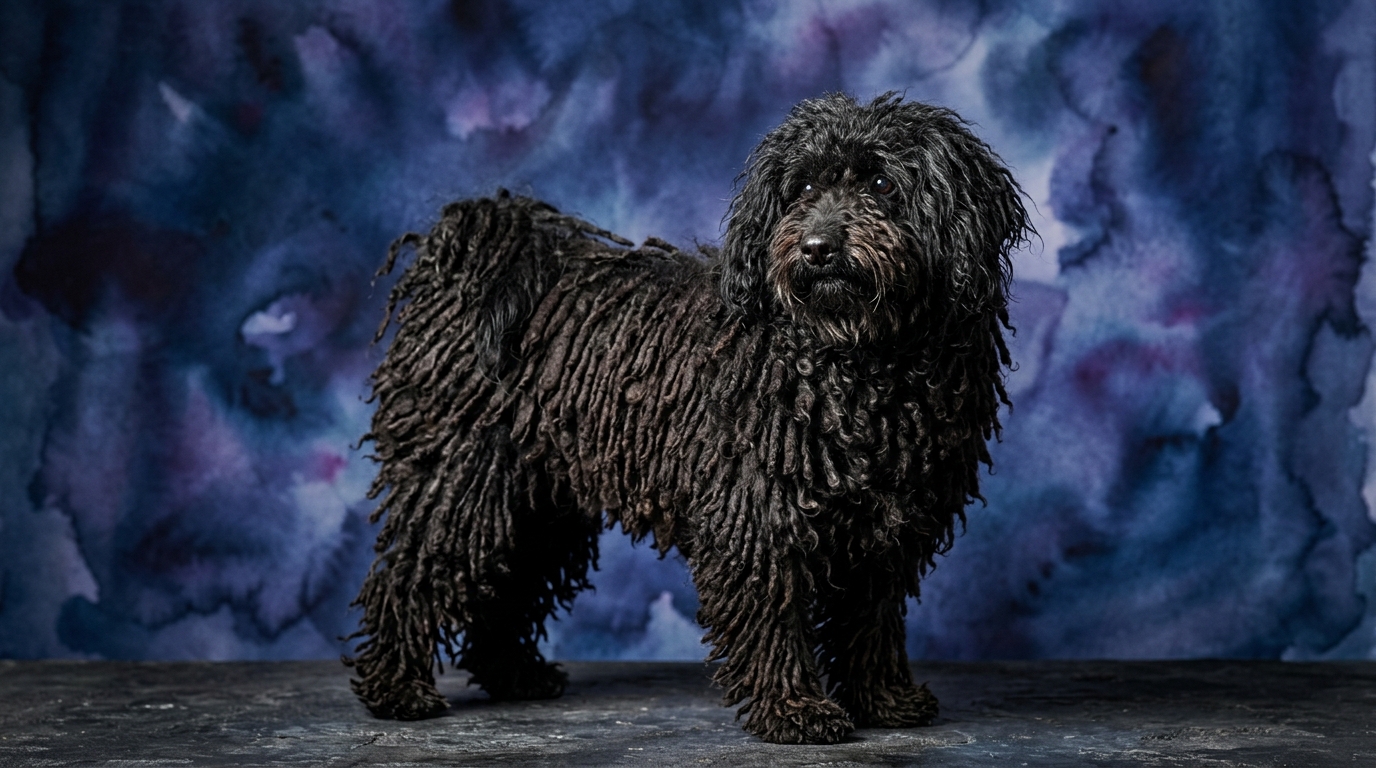
**Puli (Herding, Coren Rank #25):** The Puli’s cognitive profile reflects its heritage as a diligent herding dog, demanding both mental agility and a capacity for independent thought. Their **Problem Solving (4/5)** is robust, indicating a strategic approach to obstacles, often assessing situations before acting. **Training Speed (4/5)** is impressive, allowing them to grasp new commands and routines with efficiency, a crucial trait for a working dog needing to learn complex sequences. Their **Social Intelligence (3/5)** suggests a focused understanding of their immediate 'flock,' capable of reading family cues but perhaps less broadly adaptable than some. The **Instinctive Drive (3/5)** manifests as a desire to gather and patrol, present but manageable in a companion setting. Finally, their **Memory (4/5)** is strong, contributing significantly to their ability to retain and execute learned behaviors over time.
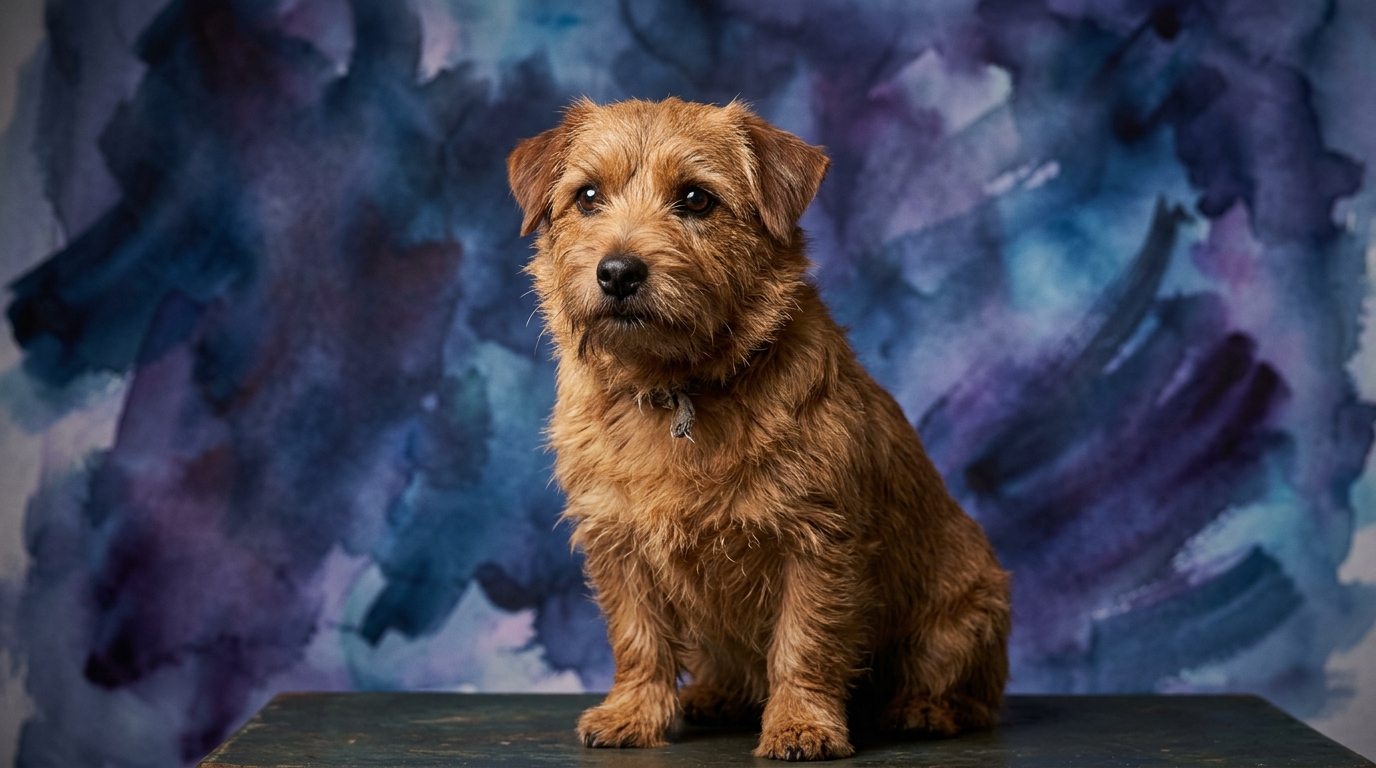
**Norfolk Terrier (Terrier, Not Coren-ranked):** The Norfolk Terrier, while not appearing on the Coren ranking, possesses a distinct set of cognitive strengths rooted in its terrier lineage, emphasizing tenacity and resourcefulness. Their **Problem Solving (3/5)** is characterized by a persistent, often trial-and-error approach, finding creative solutions through sheer determination. **Training Speed (3/5)** is steady; they learn new tasks effectively, though their independent spirit may require more consistent, engaging reinforcement. **Social Intelligence (3/5)** is balanced, allowing them to generally adapt well to various human interactions and social settings with curiosity. Their **Instinctive Drive (3/5)** is strong, reflecting their heritage for hunting small game, manifesting as a keen interest in scents, digging, and chasing. Their **Memory (3/5)** is competent, enabling them to recall commands and routines reliably, though perhaps not with the same depth or complexity as a Puli.
Where the Puli Wins Cognitively
The Puli demonstrates clear cognitive advantages in several key areas, largely stemming from their demanding herding background. Their **Problem Solving (4/5)** significantly outpaces the Norfolk Terrier’s (3/5). Pulis aren't just resourceful; they exhibit a strategic, analytical approach to challenges. For instance, when faced with a barrier, a Puli is more likely to assess its structure and find a leverage point or a sequence of actions to overcome it, rather than simply attempting brute force or repeated, unvaried efforts. This strategic depth allows them to excel in complex tasks or novel environments where quick, thoughtful decisions are required.
Furthermore, the Puli's superior **Training Speed (4/5)** and **Memory (4/5)** provide a distinct edge. They typically absorb and retain new information and commands with greater efficiency than the Norfolk Terrier (both 3/5). This means a Puli can often master a multi-step obedience routine or a trick sequence in fewer repetitions and recall it more reliably after a break. Their capacity for strong memory and swift learning makes them particularly suited for advanced training, dog sports, or roles requiring a vast repertoire of learned behaviors, where they can build upon previous knowledge more readily.
Where the Norfolk Terrier Wins Cognitively
While the Puli shines in strategic problem-solving and rapid learning, the Norfolk Terrier’s cognitive profile offers unique strengths, particularly in the nuanced application of their 3/5 scores. Their **Instinctive Drive (3/5)**, rooted in their terrier purpose, manifests as an unwavering curiosity and a robust drive for exploration and scent work. This isn't just a baseline drive; it's a persistent, tenacious pursuit that, while requiring management, can be a powerful asset for engagement. A Norfolk’s drive to investigate a new smell or dig for a perceived buried treasure often showcases a spirited, independent mental focus that can be channeled into scent games or agility, providing a different kind of cognitive challenge.
In terms of **Social Intelligence (3/5)**, while both breeds score similarly, the Norfolk Terrier’s expression of it often involves a more broadly adaptable, outgoing demeanor. They tend to be quite amiable and curious with a wider range of people and situations, a trait that can make them excellent companions in diverse social settings. Their problem-solving, though rated 3/5, is characterized by an indomitable spirit and persistence. A Norfolk may not strategize like a Puli, but their sheer determination to achieve a goal—whether it's retrieving a toy stuck under furniture or figuring out how to open a cabinet—highlights a different, equally effective form of cognitive resourcefulness: one driven by pluck and unwavering focus.
Which is Easier to Train and Why?
When considering ease of training, the Puli generally holds an advantage due to its higher scores in **Training Speed (4/5)** and **Memory (4/5)**. Pulis were bred to work closely with shepherds, requiring them to be highly attentive to human direction and capable of executing complex instructions. This historical context translates into a dog that is often eager to please, quick to understand new commands, and reliable in recalling them, even after periods of inactivity. Their problem-solving abilities also mean they can generalize learned behaviors to new situations more readily, making training more efficient and progressive. They thrive on collaboration and mental engagement, often viewing training as a fulfilling partnership.
The Norfolk Terrier, with a **Training Speed (3/5)** and **Memory (3/5)**, is certainly trainable, but their independent Terrier spirit means they often require a different approach. They are intelligent and capable of learning, but they may be more prone to expressing their own opinions or pursuing interesting scents over immediate compliance. Training a Norfolk often demands more patience, creativity, and consistency to keep them engaged and motivated. While they learn, their independent nature means an owner might need to work harder to make training sessions feel like a game or a rewarding challenge, rather than a direct command-and-control scenario. Their persistence, while a strength, can also translate into stubbornness during training if they don't see the immediate value or if their instincts are pulling them elsewhere.
Which Suits Active Owners vs. Relaxed Owners?
The choice between a Puli and a Norfolk Terrier depends significantly on an owner's lifestyle and their capacity to meet their dog's specific cognitive and physical needs. A **Puli** is an excellent fit for active owners who are prepared to provide significant mental stimulation and structured activity. Their high problem-solving and memory scores mean they are not content with just physical exercise; they thrive when given a 'job' or opportunities for advanced learning. Owners who enjoy dog sports like agility, obedience, or herding trials, or those who can integrate complex puzzle toys and consistent training into daily life, will find a Puli a highly rewarding companion. They require an owner who understands their need for purpose and intellectual engagement, making them less suitable for purely relaxed, low-engagement households.
The **Norfolk Terrier**, while smaller, is a robust and energetic dog that also suits active owners, though with a different focus. Their **Instinctive Drive (3/5)** for hunting and exploring means they benefit from consistent physical exercise and opportunities to engage their senses. Daily walks, off-leash exploration in secure areas, and interactive play that satisfies their chasing and digging instincts are crucial. While they don't demand the same level of complex mental 'work' as a Puli, they are curious and enjoy active participation in family life. They are less suited for owners who prefer a truly sedentary lifestyle, as their spirited nature and need for engagement will lead to restlessness. A relaxed owner might find their independent, tenacious spirit challenging without appropriate outlets for their energy and curiosity.
The Verdict: When to Choose Each Breed
Choosing between a Puli and a Norfolk Terrier hinges on understanding their unique cognitive blueprints and how they align with your lifestyle and expectations.
The Verdict
Choose a Puli if you seek a highly trainable, collaborative partner for advanced obedience, dog sports, or a working role, and are prepared to consistently challenge their strategic problem-solving and memory. They thrive with owners who can provide consistent mental engagement and a sense of purpose.
Opt for a Norfolk Terrier if you desire a spirited, tenacious companion with a curious mind and robust energy, appreciating their independent streak and willingness to explore. They are best for owners who enjoy active play, consistent outdoor adventures, and can manage their strong instinctive drives with patience and creativity.
🧠 Find Your Pet's IQ Score
Our Pet IQ Lab assessment covers 25+ tests across 5 cognitive dimensions — personalized to your breed.
Take the Full IQ Test →Frequently Asked Questions
Which breed requires more mental stimulation?
The Puli, with its higher problem-solving (4/5) and memory (4/5) scores, generally requires more structured mental stimulation to prevent boredom. While Norfolks need engagement, Pulis crave complex tasks and learning opportunities.
How do their instinctive drives impact daily life?
A Puli's herding drive (3/5) might manifest as a desire to keep family members together or patrol boundaries, while a Norfolk's terrier drive (3/5) means a keen interest in scents, digging, and chasing, requiring secure yards and managed walks.
Are Pulis or Norfolk Terriers better with children?
Both breeds can be good with children when properly socialized. Pulis, with their 'flock' mentality, can be protective and gentle with their family, while Norfolk Terriers are sturdy, playful, and generally tolerant companions for respectful children.