Side-by-Side Cognitive Profile
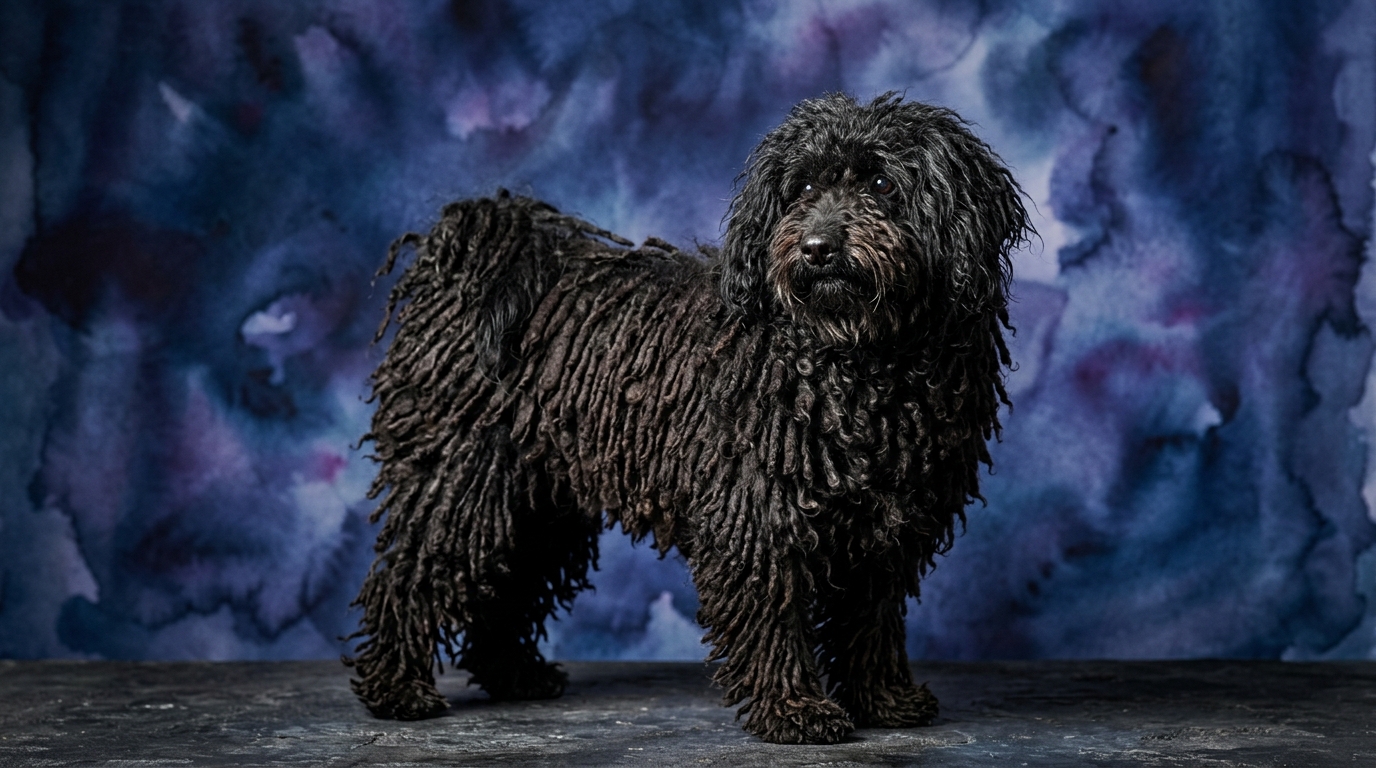
To understand the cognitive landscape of these two breeds, The Cosmic Pet Pet IQ Lab evaluates five key dimensions. For the Puli, a Herding breed ranked #25 by Coren, its scores reflect a working dog's versatility and quickness. Its Problem Solving is rated 4/5, indicating a strong capacity for independent thought and strategic action. Training Speed is also 4/5, suggesting rapid learning and retention of commands. Social Intelligence stands at 3/5, showing a good understanding of social cues without excessive dependence. Instinctive Drive is 3/5, representing a moderate herding inclination. Finally, Memory is 4/5, underscoring its ability to recall learned behaviors and experiences over time.
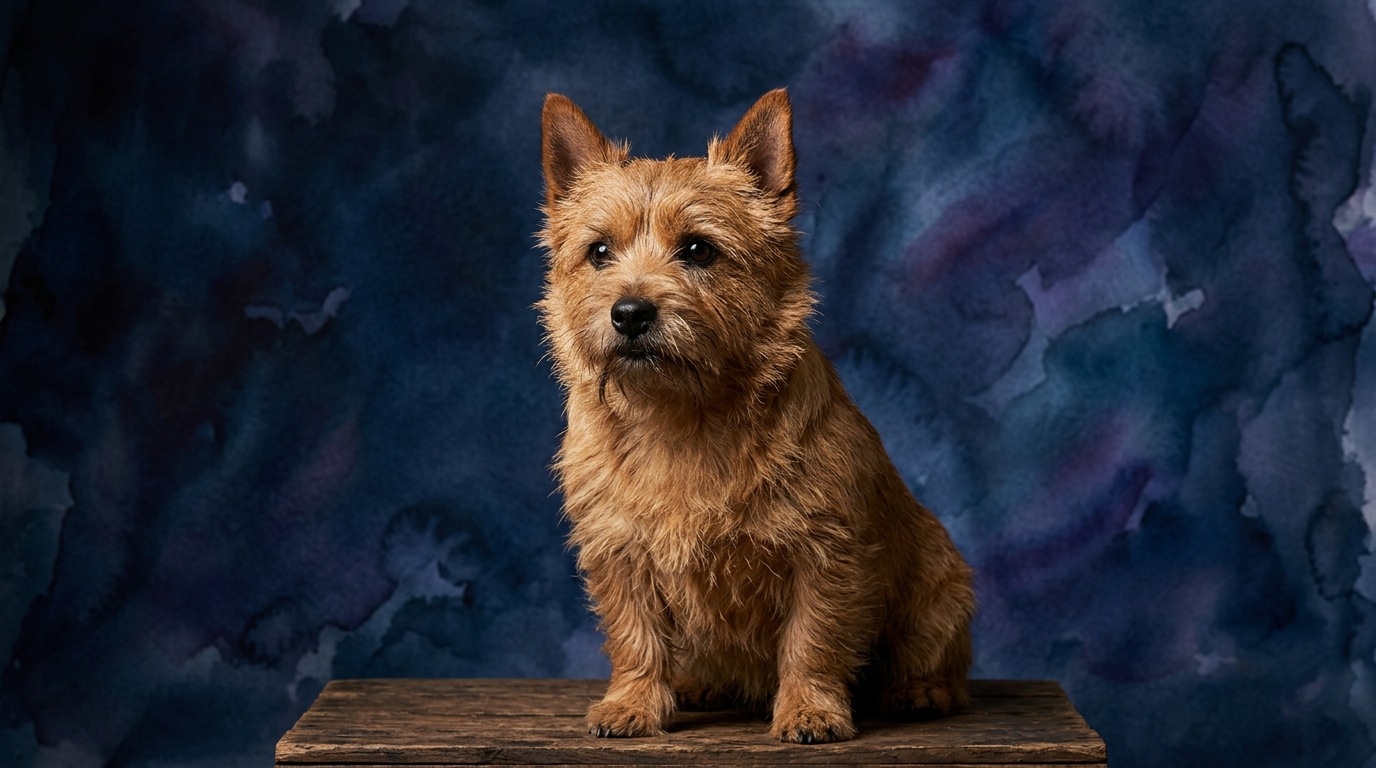
The Norwich Terrier, a Terrier breed without a Coren ranking, presents a profile geared more towards its tenacious and focused heritage. Its Problem Solving is 3/5, indicating practical, persistent approaches to challenges, often driven by instinct. Training Speed is 3/5, meaning it learns steadily with consistent instruction. Social Intelligence is 3/5, highlighting its ability to connect with humans and understand social dynamics. Instinctive Drive is 3/5, reflecting a pronounced terrier drive for chasing and digging. Memory is 3/5, suggesting reliable recall of instructions and experiences, albeit perhaps not with the same depth as the Puli.
Where the Puli Wins Cognitively
The Puli's cognitive advantage is most evident in its superior Problem Solving (4/5 compared to the Norwich Terrier's 3/5) and Memory (4/5 versus 3/5). A Puli demonstrates a more sophisticated capacity for abstract thought, often analyzing a situation and formulating a multi-step plan to achieve a goal. For example, confronted with a gate, a Puli might systematically try various latches or even attempt to climb, showcasing a flexible, strategic approach beyond simple trial and error. This ability to think through novel challenges and adapt its approach is a hallmark of its herding intellect, where anticipating livestock movement and strategizing containment are crucial. Its exceptional Memory reinforces this, allowing it to recall successful strategies and apply them to similar future scenarios, or remember complex sequences in advanced obedience or agility. This means a Puli is likely to retain intricate commands or routines for extended periods, requiring less re-teaching and building upon a solid foundation of learned knowledge.
Where the Norwich Terrier Wins Cognitively
While the Puli excels in broad, strategic problem-solving, the Norwich Terrier's cognitive strengths are deeply rooted in its specialized terrier heritage, manifesting as a tenacious and goal-oriented focus. Its Problem Solving, rated at 3/5, might not involve the same level of abstract planning as the Puli, but it shines in tasks demanding persistence and a singular drive to achieve an objective. For instance, a Norwich Terrier presented with a puzzle feeder will likely tackle it with relentless determination, using its paws and nose to manipulate it until the reward is retrieved, rather than giving up quickly. This isn't about complex strategy, but about an unwavering, practical application of effort. Its Instinctive Drive, also rated 3/5, is a significant cognitive asset when directed appropriately, making it a superb candidate for earthdog trials or scent work where a focused, persistent hunt is paramount. This breed's cognitive profile is optimized for practical, hands-on tasks where grit and an unyielding will to succeed are more valuable than generalized intellectual agility.
Which Is Easier to Train and Why
The Puli generally presents as the more straightforward breed to train, primarily due to its higher Training Speed (4/5) and superior Memory (4/5). These dogs possess an innate eagerness to learn and a quick grasp of new concepts. For example, teaching a Puli a complex sequence of commands for an obedience routine or the intricate movements required in herding trials typically sees them making rapid progress, often anticipating the next step. Their strong memory ensures that once a command is mastered, it is retained with high fidelity, leading to consistent performance without constant refreshing. In contrast, the Norwich Terrier, with a 3/5 rating in both Training Speed and Memory, requires a more patient and consistent approach. While capable of learning, their independent terrier spirit and strong instinctive drives mean they might be more easily distracted by environmental stimuli, such as interesting scents or perceived 'prey.' A Norwich might understand a command but choose to prioritize investigating a rustle in the bushes over immediate compliance. This doesn't indicate a lack of capacity, but rather a different motivational framework; their training often benefits from making tasks engaging and rewarding to overcome their innate focus on independent exploration and pursuit.
Which Suits Active Owners vs. Relaxed Owners
The Puli is undeniably suited for active owners who can provide consistent and varied mental and physical engagement. Its background as a herding dog means it possesses both the physical stamina for long walks, runs, or dog sports, and a significant cognitive need for challenges. Owners who enjoy activities like agility, advanced obedience, herding trials, or even complex puzzle toys will find the Puli a willing and capable partner. An under-stimulated Puli, with its problem-solving acumen and energetic drive, might invent its own 'work,' potentially leading to undesirable behaviors like excessive vocalization, attempts to 'herd' family members, or destructive chewing. Conversely, the Norwich Terrier, while certainly an energetic and spirited breed, can adapt to a somewhat less demanding routine. They thrive on daily walks, interactive play sessions in the yard, and companionship, but generally do not require the same intensity of complex mental work as a Puli. Their smaller size also makes them more manageable for urban living or for owners who prefer engaging activities that are less physically strenuous for themselves. For owners who enjoy a dog with personality and enthusiasm for daily adventures, but without the constant need for intricate mental challenges, the Norwich Terrier is an excellent fit, valuing quality time and fun over rigorous training demands.
The Verdict
Opt for a Puli if you are an active owner seeking a highly trainable companion eager for complex mental challenges, such as advanced dog sports or intricate problem-solving tasks, and can provide consistent engagement. Their strategic thinking and robust memory make them ideal for those who enjoy a true working partnership.
Select a Norwich Terrier if you appreciate a spirited, tenacious companion for daily adventures and interactive play, valuing loyalty and a focused, persistent approach to practical tasks over abstract cognitive prowess. They are perfect for owners who enjoy a dog with boundless enthusiasm and a determined spirit.
🧠 Find Your Pet's IQ Score
Our Pet IQ Lab assessment covers 25+ tests across 5 cognitive dimensions — personalized to your breed.
Take the Full IQ Test →Frequently Asked Questions
Is a Puli good for first-time dog owners?
Pulis can be a good fit for first-time owners who are committed to consistent training and providing ample mental and physical stimulation. Their quick learning means they respond well to clear guidance, but their energy and need for engagement require dedication.
Do Norwich Terriers bark a lot?
Norwich Terriers can be vocal, often using their bark to alert their owners to new sights or sounds, reflecting their historical role as watchdogs and vermin hunters. Consistent training can help manage excessive barking, but their alert nature means some vocalization is typical.
Which breed is better with children?
Both breeds can be good with respectful children, but the Puli's herding instincts might lead to nipping at heels if not properly managed, while the Norwich Terrier's robust play style needs supervision. Socialization from an early age is crucial for both to ensure positive interactions within a family setting.