Side-by-Side IQ Profile: Puli vs. Portuguese Water Dog
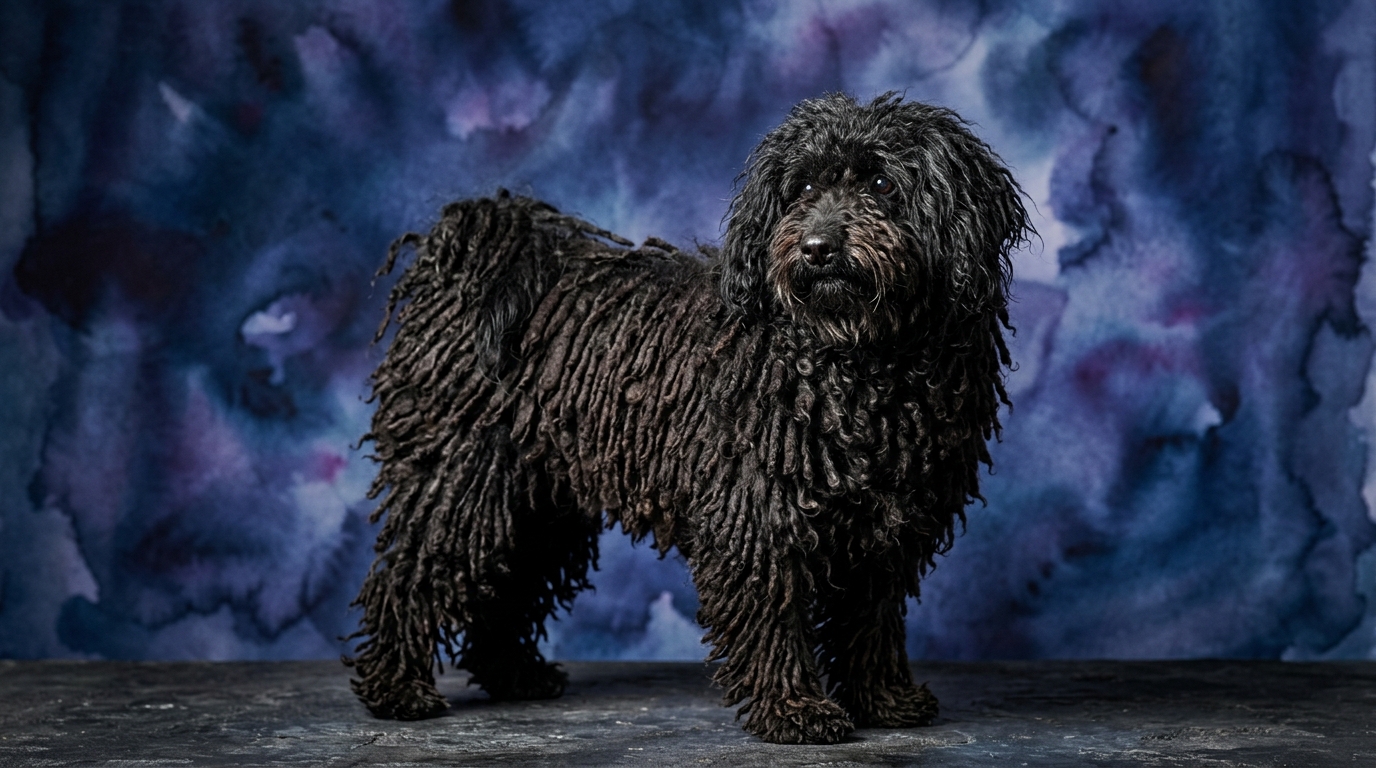
**Puli (Herding Group, Coren Rank #25):** This Hungarian herding dog, with its distinctive corded coat, is assessed by The Cosmic Pet IQ Lab for exceptional cognitive agility. Its problem-solving scores 4/5, reflecting a deep capacity for independent, adaptive strategies in managing livestock and complex situations. A training speed of 4/5 indicates a quick mastery of new commands and routines, essential for responding to a shepherd's subtle cues. Social intelligence at 3/5 suggests it understands human intentions well but maintains a focused independence. An instinctive drive of 3/5 points to a moderate, task-specific motivation, primarily directed towards its herding duties. Finally, its memory at 4/5 highlights a remarkable ability to retain intricate command sequences and environmental details over time, crucial for effective, long-term work.
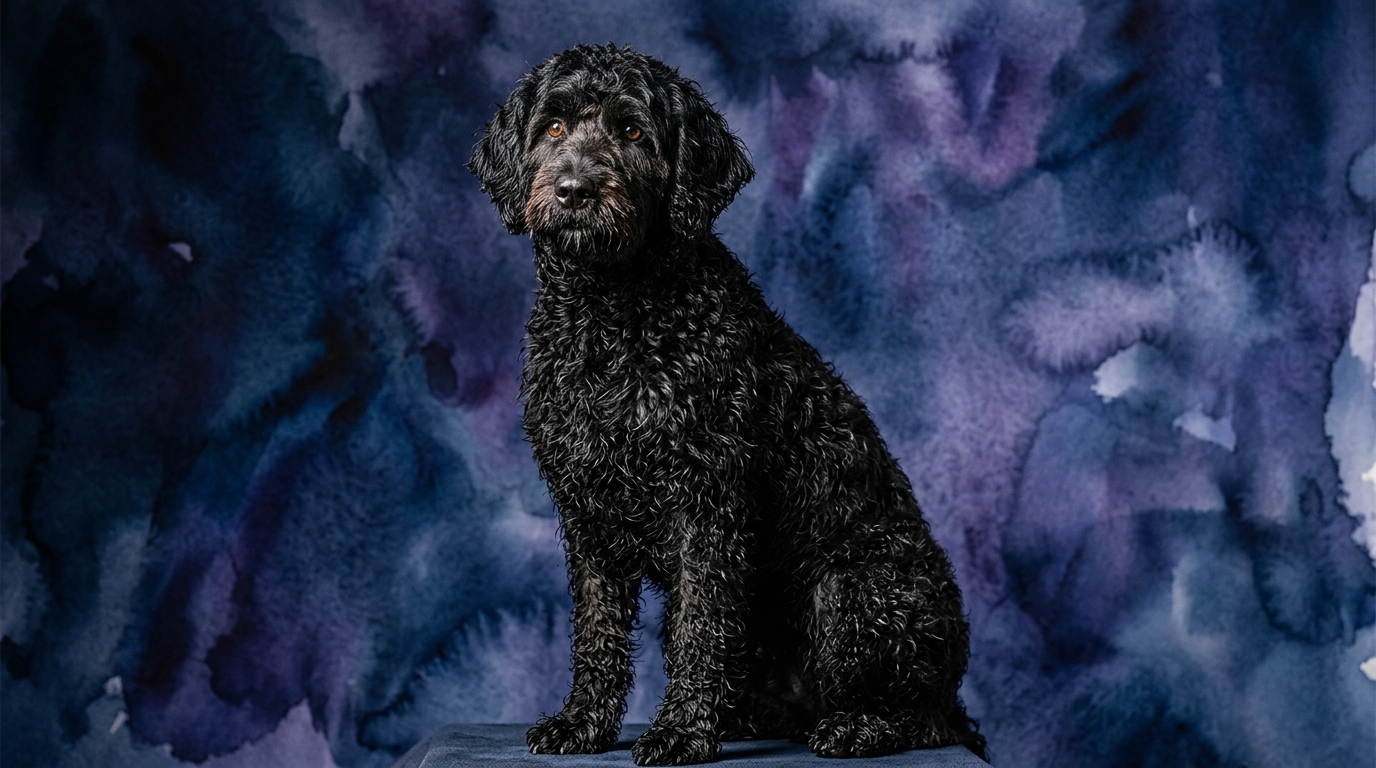
**Portuguese Water Dog (Working Group, Not Coren-ranked):** The robust, athletic Portuguese Water Dog (PWD) historically assisted fishermen, retrieving nets and acting as a maritime courier. Our IQ Lab gives the PWD a problem-solving score of 3/5, indicating a practical, learned approach to challenges rather than spontaneous innovation. Its training speed is 3/5, meaning it learns consistently with repetition and positive reinforcement, showing steady skill acquisition. Social intelligence also stands at 3/5, reflecting an agreeable, cooperative nature, eager to engage with its human companions. An instinctive drive of 3/5 underscores its strong inclination towards its working heritage, particularly water-related tasks and physical activity. Its memory is rated 3/5, suggesting it retains learned behaviors and routines effectively for its specific tasks, though perhaps not with the same depth for complex, multi-layered information as a Puli.
Where the Puli Wins Cognitively
The Puli demonstrates a clear cognitive advantage in several key areas, largely due to its sophisticated herding background. Its problem-solving score of 4/5, superior to the PWD's 3/5, highlights a greater capacity for independent thought and strategic adaptation. A Puli is more likely to devise novel solutions to complex tasks or environmental challenges without direct instruction, a trait honed by centuries of autonomous herding. This translates into a dog that genuinely enjoys intricate mental puzzles. Furthermore, the Puli's training speed, also at 4/5 versus the PWD's 3/5, signifies a remarkably quick grasp of new commands and concepts. This efficiency in processing and associating cues with actions allows them to master complex routines or advanced trick training with fewer repetitions. Their superior memory (4/5 vs. 3/5) perfectly complements this, enabling them to recall extensive command sets and intricate behavioral patterns over extended periods, making them exceptionally reliable in executing multi-step tasks.
Where the Portuguese Water Dog Wins Cognitively
While the Puli shines in rapid acquisition and independent strategy, the Portuguese Water Dog's cognitive profile emphasizes a different, equally valuable kind of strength, deeply rooted in its cooperative working relationship with humans. Its consistent 3/5 scores across all dimensions, while not individually outperforming the Puli's peak scores, create a balanced and resilient cognitive blend perfectly suited for its historical role as a fisherman's aide. The PWD's 'win' lies in its unwavering dedication and eagerness to please during shared activities. Its social intelligence, matching the Puli at 3/5, combined with a robust instinctive drive, means it thrives on collaborative tasks that require sustained effort and partnership. For an owner, this manifests as an exceptionally dedicated companion for joint objectives, such as retrieving specific items from water, performing in dog sports like agility, or maintaining focus on a shared goal with remarkable persistence. They excel in tasks where consistency, enthusiasm, and clear communication with their human partner are paramount.
Which Is Easier to Train and Why
Based on our IQ Lab scores, the Puli is generally the easier breed to train, primarily due to its higher training speed (4/5) and superior memory (4/5). A Puli's natural inclination to observe and interpret subtle cues, combined with rapid associative learning, means it can master new commands and elaborate routines with remarkable efficiency. Their herding background necessitates quick, precise responses, leading to a dog that actively seeks to understand and perform, requiring fewer repetitions to solidify behaviors. In contrast, the Portuguese Water Dog, with a training speed and memory of 3/5, requires more consistent repetition and patience. While cooperative and eager to please, their learning curve is steadier. Training success with a PWD often hinges on maintaining engagement through positive reinforcement, making tasks feel like a collaborative game, and tapping into their strong working drive.
Which Suits Active Owners vs. Relaxed Owners
The Puli, with its high problem-solving and memory scores, alongside a moderate instinctive drive, demands an owner who can consistently provide mental stimulation in addition to physical activity. While physically agile, their cognitive needs are substantial; they thrive on challenges like puzzle toys, advanced obedience, agility, or even continued herding practice. They are best suited for active owners who enjoy engaging their dogs in complex learning and interactive play, preventing the boredom that could lead to undesirable behaviors. A relaxed owner might find a Puli's need for mental engagement overwhelming. The Portuguese Water Dog, with its balanced 3/5 scores and strong instinctive drive, is also for active owners, but with a focus on sustained physical activity, especially water sports, long walks, or dog sports like dock diving. While they appreciate mental engagement, their primary need is a robust physical outlet tapping into their working heritage. A relaxed owner might struggle with the PWD's substantial energy, which, if unmet, can manifest as restlessness or destructive tendencies. Neither breed is ideal for a truly sedentary owner; both require owners committed to providing regular, appropriate engagement.
The Verdict
Choose the Puli if you are an owner who thrives on engaging a dog in complex mental challenges, enjoys advanced obedience or trick training, and appreciates a quick-thinking companion who can learn intricate routines efficiently.
Opt for the Portuguese Water Dog if you are an active individual or family looking for a robust, cooperative partner for sustained physical activities, especially those involving water, and value a dog that enjoys working alongside you with persistence.
🧠 Find Your Pet's IQ Score
Our Pet IQ Lab assessment covers 25+ tests across 5 cognitive dimensions — personalized to your breed.
Take the Full IQ Test →Frequently Asked Questions
Do Puli dogs need to herd to be happy?
While Pulis have a strong herding instinct, they don't necessarily need to herd livestock to be content. Their happiness stems from having a job to do that engages their problem-solving skills and provides mental stimulation, which can be fulfilled through dog sports, advanced training, or interactive games.
Is a Portuguese Water Dog difficult to train because it's not Coren-ranked?
No, not being Coren-ranked doesn't mean a Portuguese Water Dog is difficult to train; it simply means it wasn't included in that specific study. PWDs are cooperative and trainable, though they may require more repetition than a Puli due to their 3/5 training speed, thriving on consistent, positive reinforcement and task-oriented engagement.
Which breed is better for a first-time dog owner?
Neither breed is typically recommended for completely novice owners, as both require significant commitment to training and exercise. However, a PWD might be slightly more forgiving for a dedicated first-timer due to its eagerness to please and slightly less independent problem-solving, provided the owner is ready for its energy.