Side-by-Side Cognitive Profile
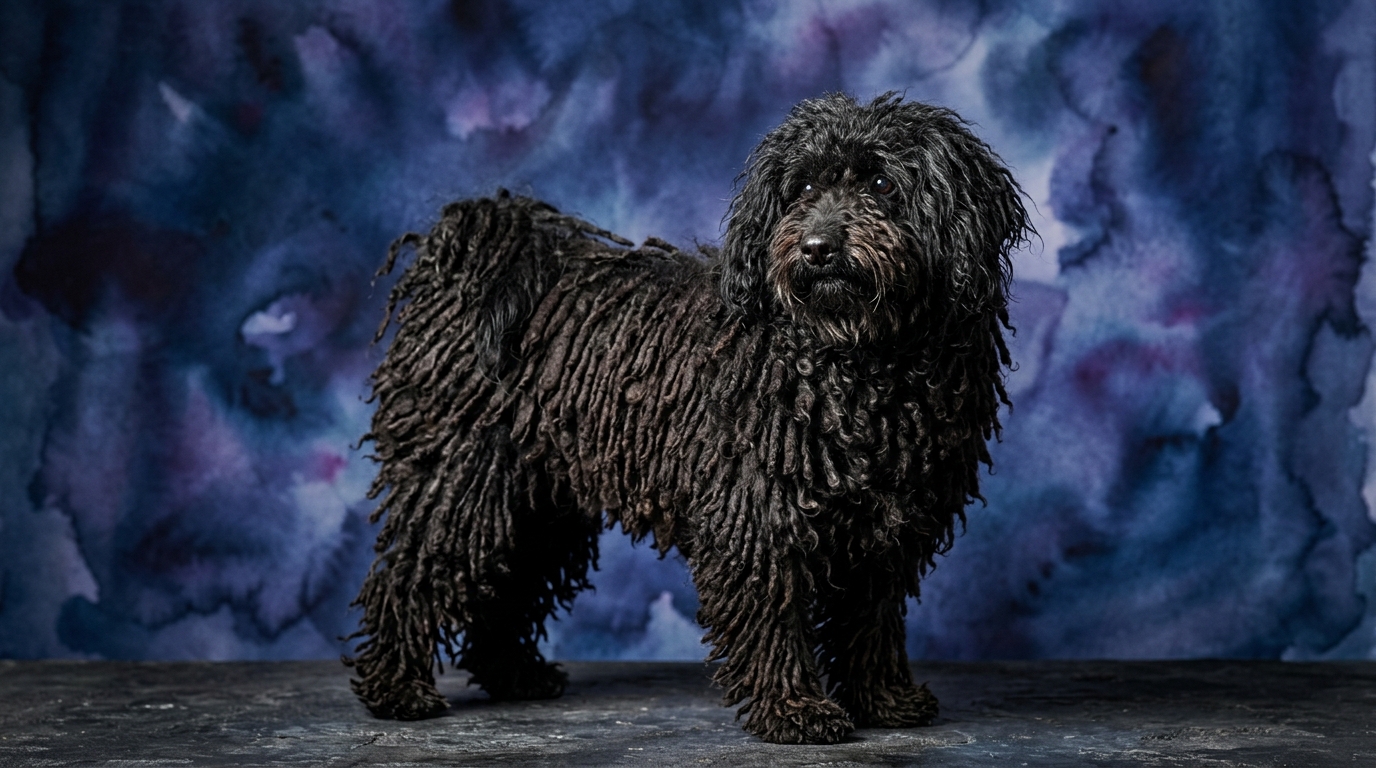
The Cosmic Pet Pet IQ Lab provides a detailed breakdown of five key cognitive dimensions for each breed, allowing us to understand their inherent intellectual leanings. The Puli, a Herding dog with a Coren rank of #25, shows a cognitive profile geared towards collaborative problem-solving and rapid learning.
**Puli (Herding, Coren rank #25):** Problem Solving 4/5, Training Speed 4/5, Social Intelligence 3/5, Instinctive Drive 3/5, Memory 4/5. Pulis exhibit a strong capacity for analyzing situations and devising solutions, a trait honed by their historical role in managing complex flock dynamics. They can quickly grasp multi-step tasks and adapt strategies when faced with novel challenges, demonstrating a thoughtful approach to obstacles. These dogs typically pick up new commands and routines with remarkable alacrity, often requiring fewer repetitions to solidify learning. Their desire to engage and work alongside their handler contributes significantly to their swift acquisition of new skills. Pulis possess a moderate level of social perceptiveness, enabling them to read human cues and adapt their behavior within a social context. While attentive to their family, they can be reserved with strangers, indicating a discerning rather than overtly effusive social nature. Their herding instincts are present but manageable, often manifesting as a desire to gather and control. This drive can be channeled into appropriate activities, making them responsive to direction while retaining a natural inclination for purposeful work. Pulis display a robust memory, recalling learned commands, routines, and even specific experiences over extended periods. This strong retention aids in long-term training success and allows them to build complex behavioral repertoires.
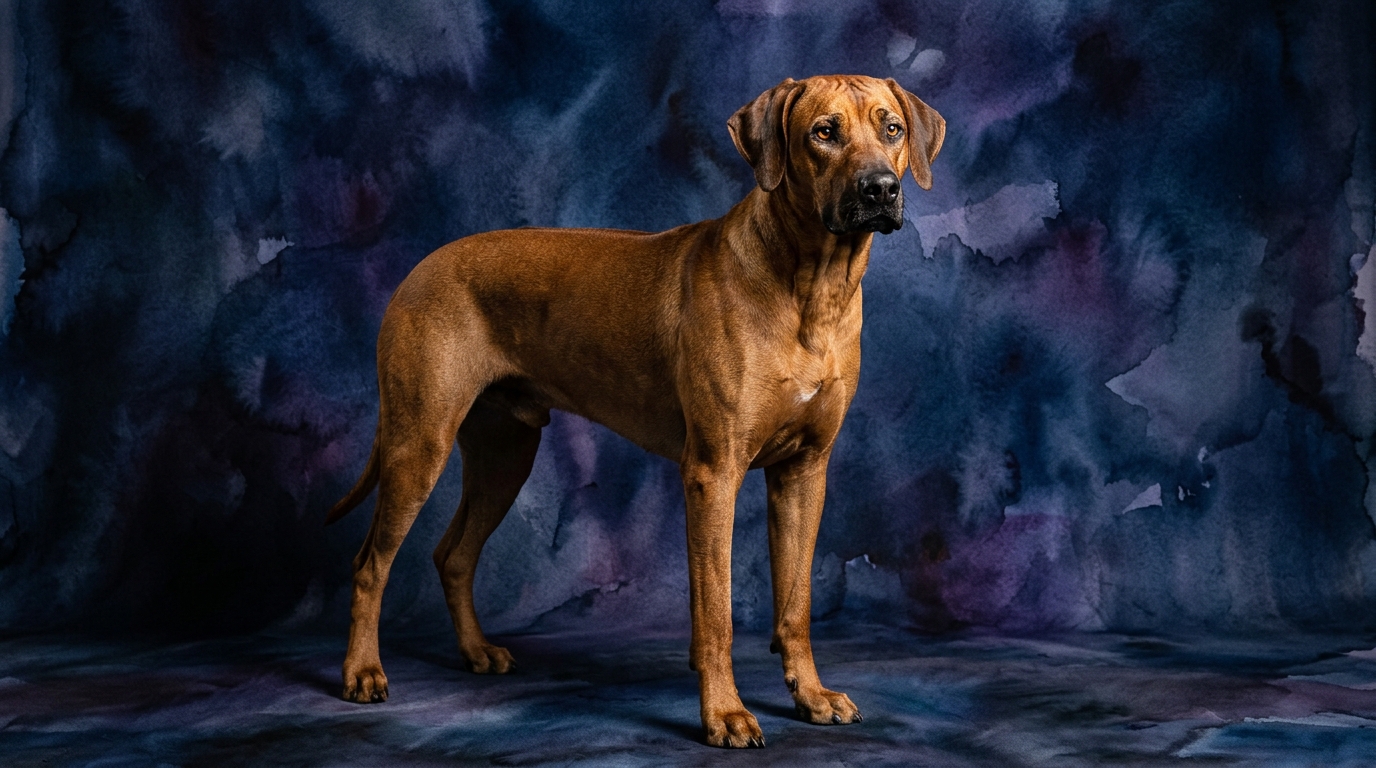
The Rhodesian Ridgeback, a Hound with a Coren rank of #52, presents a cognitive makeup more aligned with independent tracking and determined pursuit, requiring a different set of mental attributes.
**Rhodesian Ridgeback (Hound, Coren rank #52):** Problem Solving 3/5, Training Speed 3/5, Social Intelligence 3/5, Instinctive Drive 3/5, Memory 3/5. Rhodesian Ridgebacks approach problems with a practical, often direct method, relying on their keen senses and physical prowess rather than intricate planning. While capable of figuring things out, their solutions tend to be less abstract than those of some other breeds, often driven by immediate goals. Ridgebacks learn at a steady pace, but their independent nature and strong will can sometimes present a challenge in maintaining focus during training sessions. They require consistent, positive reinforcement and clear expectations to ensure new concepts are absorbed effectively. Similar to the Puli, Ridgebacks show a moderate degree of social intelligence, forming deep bonds with their families and often exhibiting a reserved demeanor towards outsiders. They are observant of their human companions' moods but typically prefer a close circle. The Ridgeback's instinctive drive is primarily rooted in their historical role as trackers and hunters, manifesting as a strong prey drive and an urge to explore scents. This drive, while powerful, can be managed with proper training and outlets, but it dictates much of their independent exploration. Ridgebacks possess a functional memory for commands and routines, retaining what they've learned with consistent practice. However, their recall might be less instantaneous or comprehensive compared to breeds with higher scores, particularly if a more compelling scent or stimulus is present.
Where the Puli Excels Cognitively
The Puli distinctly outperforms the Rhodesian Ridgeback in several cognitive domains, most notably in 'Problem Solving' (4/5 vs 3/5), 'Training Speed' (4/5 vs 3/5), and 'Memory' (4/5 vs 3/5). These higher scores reflect their heritage as active herding dogs, where quick thinking and adaptability were paramount. A Puli's superior problem-solving ability means they are more likely to independently navigate complex environments or figure out how to open a tricky gate, demonstrating a flexible cognitive approach to novel challenges.
Their accelerated training speed is a direct benefit of their inherent desire to collaborate and their capacity to quickly process new information. This means a Puli will often master a new trick or command in fewer repetitions, making advanced obedience or dog sports more accessible. Furthermore, their stronger memory ensures that these learned behaviors and solutions are retained over longer periods, building a robust repertoire of skills that can be reliably recalled even after a break from training.
Where the Rhodesian Ridgeback's Cognitive Strengths Shine
While the Rhodesian Ridgeback's scores are consistently lower or equal to the Puli's in our specific metrics, their cognitive profile is uniquely adapted to their historical role, showcasing different strengths. Their 'Instinctive Drive' (3/5) is particularly potent when it comes to tracking and scent work, a singular focus that underpins much of their problem-solving in the field. This drive, combined with impressive stamina, allows them to sustain mental effort over long periods while pursuing a scent trail, requiring a different kind of cognitive persistence than a herding dog's quick adjustments.
The Ridgeback's 'Problem Solving' (3/5) often manifests as a determined, rather than overtly strategic, approach. They excel at figuring out how to reach a desired object or location through sheer will and physical capability, rather than complex multi-step plans. Their moderate 'Social Intelligence' (3/5) means they are observant and form strong, discerning bonds, often exhibiting a quiet understanding of their family's dynamics without being overtly demanding or attention-seeking, a strength in their independent nature.
Training Easiness: Puli vs. Rhodesian Ridgeback
Based on the Cosmic Pet Pet IQ Lab data, the Puli is demonstrably easier to train than the Rhodesian Ridgeback. The Puli's 'Training Speed' score of 4/5, compared to the Ridgeback's 3/5, indicates a quicker grasp of new commands and a greater eagerness to perform tasks for their handler. This is often attributed to their herding lineage, where working closely with humans and responding to intricate signals was essential for their survival and success.
Conversely, the Rhodesian Ridgeback's training journey can be more protracted due to their independent nature and strong instinctive drives. While capable of learning, their 'Training Speed' of 3/5 reflects a need for greater patience and consistency from their owner. A Ridgeback might be more inclined to follow an intriguing scent or pursue an independent agenda, requiring a trainer to work harder to maintain their focus and motivation, contrasting with the Puli's inherent desire for cooperative engagement.
Owner Lifestyle Suitability: Active vs. Relaxed
Both the Puli and the Rhodesian Ridgeback are breeds that require active engagement, making them less suitable for genuinely relaxed owners who prefer a largely sedentary lifestyle. However, the *nature* of their activity preferences differs significantly. The Puli, with its herding background, thrives on purposeful activity that involves mental stimulation and interaction with its owner, such as agility, obedience, or even advanced trick training. They need consistent outlets for their problem-solving and training speed, making them ideal for owners who enjoy structured, interactive play and training sessions.
The Rhodesian Ridgeback, while equally active, often prefers sustained physical exertion and opportunities for independent exploration, especially scent-driven activities like long hikes or 'sniffaris.' Their 'Instinctive Drive' pushes them towards expansive outdoor adventures rather than solely handler-focused games. A relaxed owner might find both breeds challenging, but an owner who enjoys long, meandering walks or runs without constant direct interaction might find the Ridgeback's independent spirit more aligning, provided their substantial exercise needs are met.
The Verdict
The Puli is an exceptional choice for owners who desire a highly trainable, mentally agile partner eager to engage in complex activities and cooperative work, thriving on shared intellectual challenges and consistent interaction.
The Rhodesian Ridgeback, with its independent spirit and strong instinctive drive, is better suited for owners who appreciate a self-reliant companion and are prepared to provide ample opportunities for sustained physical activity and independent exploration, particularly those involving scent work or expansive outdoor adventures.
🧠 Find Your Pet's IQ Score
Our Pet IQ Lab assessment covers 25+ tests across 5 cognitive dimensions — personalized to your breed.
Take the Full IQ Test →Frequently Asked Questions
Do Pulis require more mental stimulation than Rhodesian Ridgebacks?
Yes, Pulis generally require more consistent mental stimulation through training, puzzle toys, and interactive games due to their higher problem-solving and training speed scores. While Ridgebacks also benefit from mental engagement, their independent nature means they might find satisfaction in scent work or exploring on their own for longer periods.
Which breed is better for first-time dog owners?
Given its higher scores in training speed and problem-solving, the Puli might be a more forgiving choice for a dedicated first-time owner willing to commit to consistent, engaging training. The Rhodesian Ridgeback's independent streak and strong will can be more challenging for an inexperienced owner, requiring a firm yet fair approach.
How do their social intelligence scores impact family life?
Both breeds have a moderate social intelligence score (3/5), meaning they form strong bonds with their immediate family but can be reserved with strangers. Pulis might be more inclined to 'herd' family members, while Ridgebacks are often described as silent guardians, observing rather than actively intervening unless necessary. Both require early socialization to develop well-adjusted social behaviors.