
Side-by-Side Cognitive Profiles
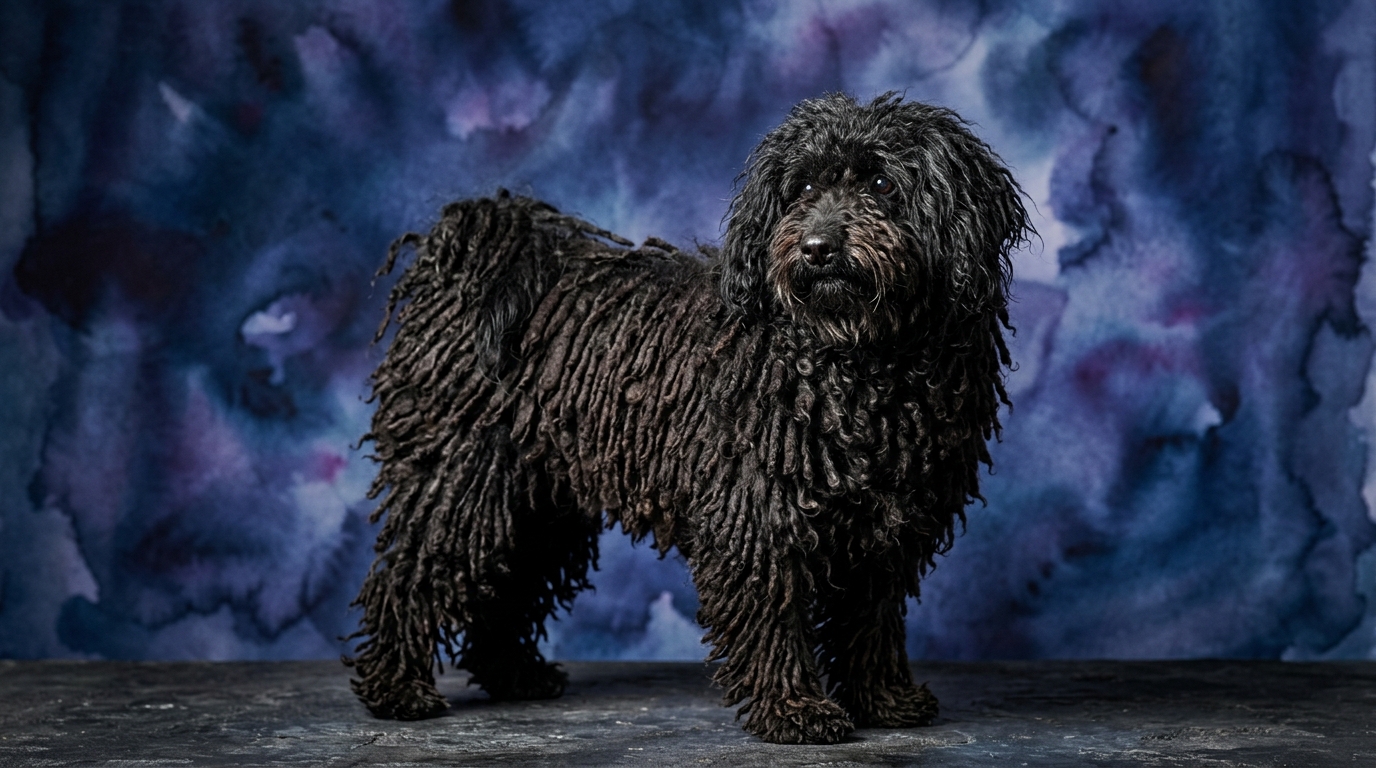
The Puli, a Herding breed, exhibits a Problem Solving score of 4/5, reflecting its capacity for independent thought and strategic decision-making crucial for managing livestock. Its Training Speed of 4/5 indicates a quick grasp of commands and complex sequences, a critical trait for a working partner. Social Intelligence at 3/5 suggests a competent understanding of human cues and interactions, though perhaps not an overly effusive or people-pleasing nature, often prioritizing task over constant social validation. The Instinctive Drive of 3/5 points to a moderate but present drive for its herding instincts, which can manifest in various ways if not channeled. Its Memory at 4/5 is essential for recalling intricate patterns, commands, and learned behaviors over time, crucial for a dog expected to perform consistent, complex tasks.
Hailing from the Toy group, the Russian Toy's Problem Solving score of 3/5 suggests an ability to navigate its immediate environment and learn routines, but perhaps less inclination for tackling abstract or complex puzzles without direct guidance. A Training Speed of 3/5 means they are certainly trainable, albeit requiring consistent, positive reinforcement and potentially more repetitions than a higher-scoring breed. Their Social Intelligence at 3/5 highlights their suitability as devoted companions, capable of forming strong bonds and understanding their human's emotional states, without necessarily needing to 'read' complex social dynamics beyond their family unit. Instinctive Drive at 3/5 indicates a moderate level of inherent behaviors, such as chasing or alerting, but typically not the intense, task-oriented drives seen in working breeds. Finally, their Memory at 3/5 enables them to recall commands, house rules, and familiar faces, perfectly adequate for a life primarily focused on companionship.
Where the Puli Wins Cognitively
The Puli's cognitive architecture, refined over generations of herding work, grants it distinct advantages in several intellectual domains. Its superior Problem Solving at 4/5 means a Puli is more likely to assess situations independently and devise solutions, whether it's figuring out how to open a gate or navigating a complex agility course. This isn't just about obedience; it's about active, adaptive thinking. Coupled with a Training Speed of 4/5, the Puli absorbs new commands and intricate routines with remarkable efficiency, often requiring fewer repetitions and demonstrating a deeper understanding of the 'why' behind an action. This capacity for rapid learning and application makes them exceptional candidates for advanced obedience, tracking, or competitive dog sports where complex sequences and quick decisions are paramount. Furthermore, its Memory at 4/5 ensures that these learned skills and solutions are retained over long periods, allowing a Puli to build a vast repertoire of knowledge and apply it consistently, making them a reliable and capable partner in various endeavors.
Where the Russian Toy Wins Cognitively
While the Russian Toy's scores are generally moderate, its cognitive profile represents a distinct 'win' in the context of companion suitability and adaptability to less demanding lifestyles. Its Problem Solving at 3/5 means it's less prone to independently engaging in potentially destructive 'problem-solving' activities out of boredom or excessive drive, making it a more manageable housemate for many owners. The Russian Toy's moderate Instinctive Drive (3/5) is a significant advantage for urban or apartment living, where intense working drives can become problematic without constant outlets. This breed is less likely to feel unfulfilled by a lack of complex 'jobs' and is content with a more relaxed routine. Their Social Intelligence at 3/5, while not the highest, is perfectly calibrated for forming deep, personal bonds with their human family, often expressing their understanding through subtle cues and devoted companionship rather than needing to manage a large 'flock' of people. For owners seeking a dog whose intelligence manifests as charming companionship and adaptability to a cozy home environment, rather than a relentless drive for intellectual challenges, the Russian Toy's cognitive balance is a clear asset.
Which is Easier to Train and Why
When it comes to ease of training, the Puli generally holds an advantage due to its higher scores in Training Speed (4/5) and Problem Solving (4/5). A Puli's innate capacity to quickly grasp new concepts and its tendency to think through tasks means it often requires fewer repetitions to master a command. They are more inclined to understand the underlying purpose of an exercise, making them responsive to varied training methods and capable of learning complex, multi-step behaviors efficiently. For instance, teaching a Puli a multi-part agility sequence might involve demonstrating the steps a few times before they connect the dots and execute it with precision. In contrast, the Russian Toy, with a Training Speed of 3/5, is certainly trainable and eager to please its owner, but typically requires more patience and consistency. They may need more frequent, shorter training sessions to solidify new commands, and their learning might be more reliant on positive reinforcement and clear, repetitive cues rather than independent deduction. While both breeds benefit from positive, reward-based training, the Puli's cognitive makeup often translates to a quicker, more fluid training experience, especially for advanced tasks, whereas the Russian Toy thrives on gentle, consistent guidance tailored to its companion-oriented nature.
Which Suits Active Owners vs Relaxed Owners
The cognitive profiles of the Puli and Russian Toy offer clear guidance for matching them with owner lifestyles. The Puli, with its elevated Problem Solving (4/5), Training Speed (4/5), and solid Memory (4/5), thrives with active owners who are prepared to engage its mind and body consistently. These dogs excel when given a 'job,' whether it's participating in dog sports like agility, herding trials, or advanced obedience, or even just engaging in complex puzzle toys and regular brain games. An owner who enjoys structured training, outdoor adventures, and sees a dog as a partner in demanding activities will find the Puli's cognitive drive deeply rewarding. Conversely, the Russian Toy, with its balanced 3/5 scores across all cognitive dimensions, is an ideal match for relaxed owners seeking a devoted companion without the need for intense mental or physical exertion. While they enjoy walks and basic training, their happiness stems more from close human interaction and a comfortable home environment. An owner who prefers cozy evenings, gentle strolls, and values a dog's presence as a calm, affectionate shadow will find the Russian Toy's cognitive make-up perfectly suited to their lifestyle, offering companionship without demanding constant intellectual challenges.
The Verdict
Choose the Puli if you are an active individual or family seeking a mentally agile, highly trainable partner for sports, complex tasks, or a working role, prepared to channel its significant cognitive drive.
Opt for the Russian Toy if you desire a charming, devoted companion whose intelligence shines in its affectionate nature and adaptability to a relaxed home environment, requiring consistent but less intense mental stimulation.
🧠 Find Your Pet's IQ Score
Our Pet IQ Lab assessment covers 25+ tests across 5 cognitive dimensions — personalized to your breed.
Take the Full IQ Test →Frequently Asked Questions
Does a Puli's herding background make it difficult to live with in a typical home?
A Puli's herding instincts can manifest as a desire to 'manage' family members or other pets, but with consistent training and appropriate mental and physical outlets, this drive can be channeled constructively, making them well-adjusted family members. Their intelligence allows them to learn household rules effectively.
Are Russian Toys difficult to house train given their small size?
Russian Toys are certainly capable of being house trained, but their small bladder size means more frequent trips outside. Consistency, positive reinforcement, and a regular schedule are key to success, as with any breed, and their social intelligence helps them understand owner expectations over time.
Can a Russian Toy participate in dog sports like agility?
Yes, Russian Toys can absolutely participate in dog sports like agility, often excelling in their own size categories due to their agility and eagerness to please. While their training speed is 3/5, their drive to work with their owner can overcome this, making them enthusiastic participants in many activities.