Side-by-Side Cognitive Profiles: Puli vs. Saluki
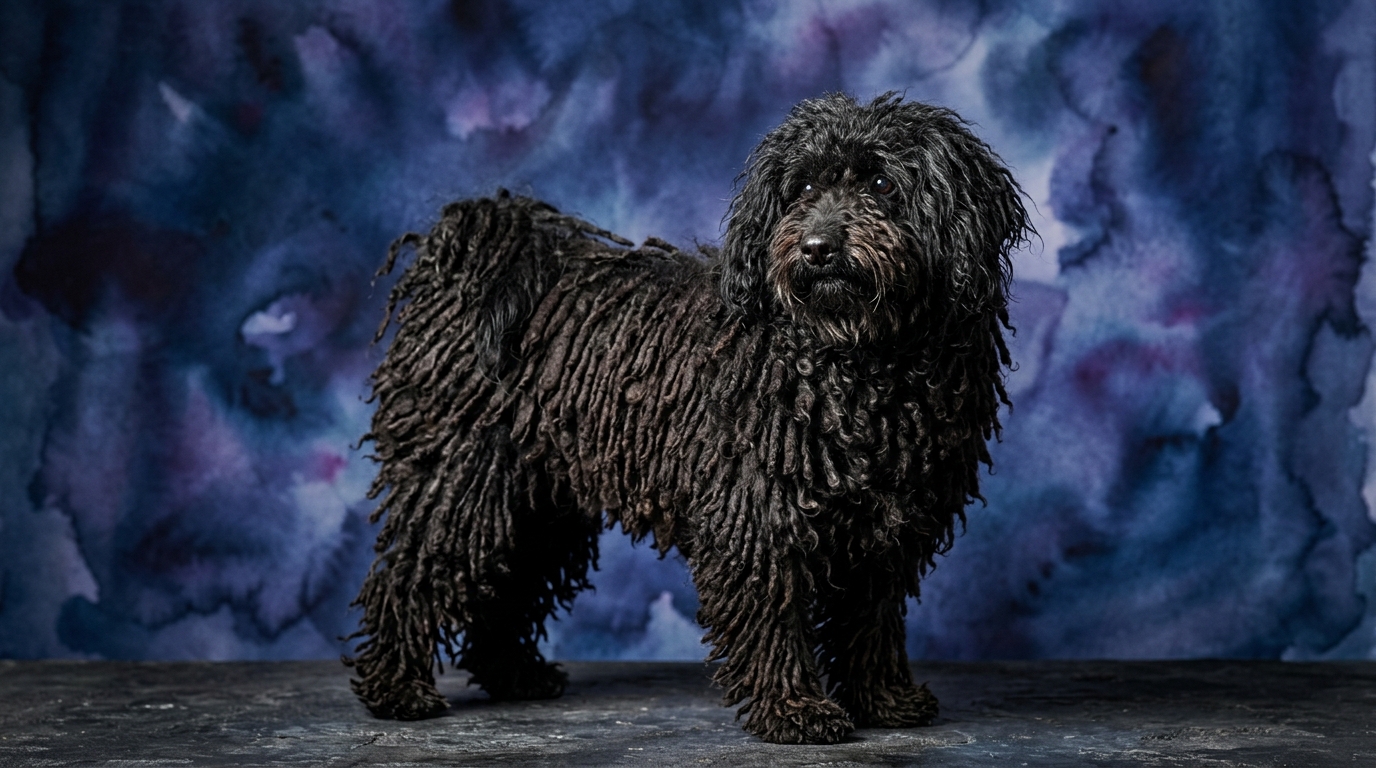
The Puli, a Coren-ranked breed at #25, exhibits a robust cognitive profile tailored for its demanding herding role. Our Pet IQ Lab assessment scores its Problem Solving at 4/5, indicating a strong capacity for independent thought and strategic action in complex situations, such as managing livestock. Its Training Speed also stands at 4/5, reflecting a keen eagerness to learn and retain commands efficiently. Social Intelligence is rated 3/5, suggesting a good understanding of human cues and pack dynamics, though perhaps not as overtly people-focused as some companion breeds. An Instinctive Drive of 3/5 points to a moderate but effective natural inclination for its herding tasks, while its Memory, at 4/5, ensures it can recall intricate patterns and learned behaviors over time.
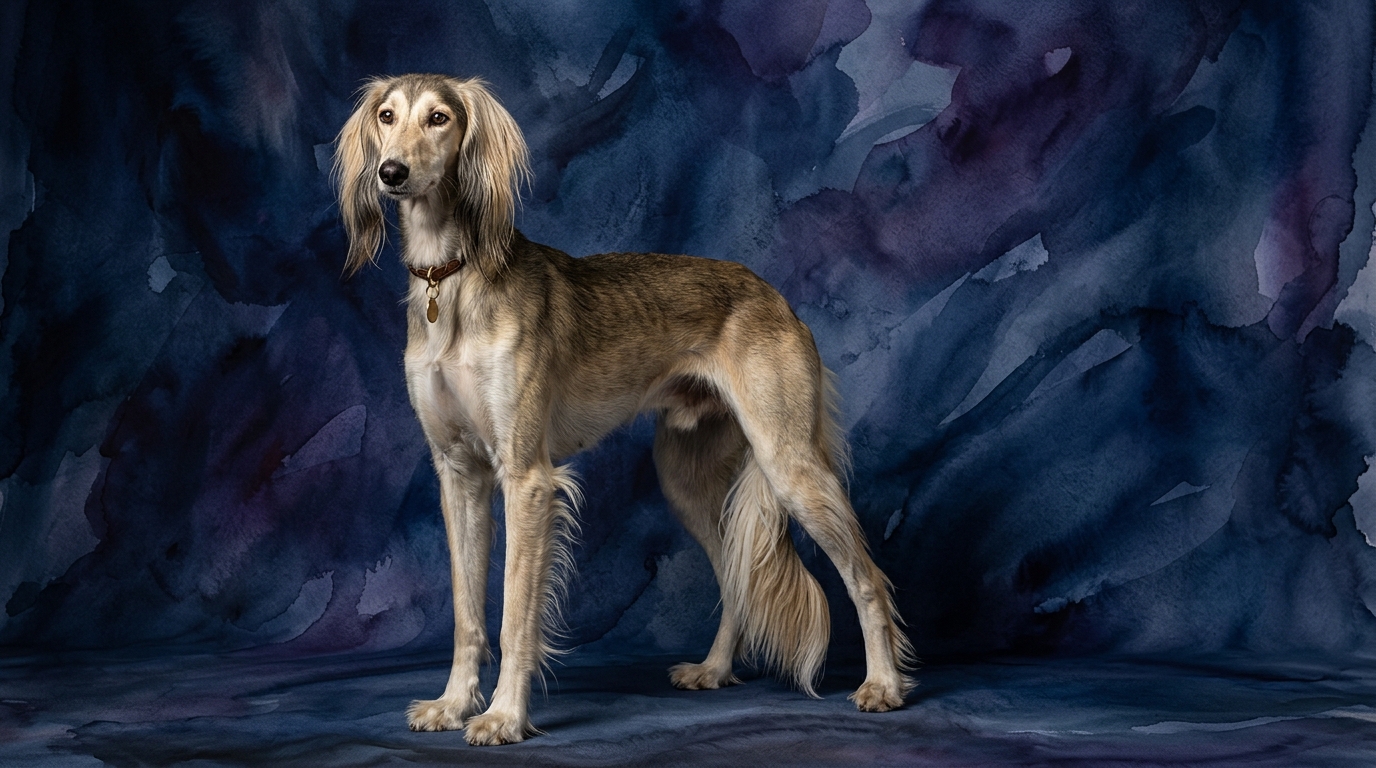
In contrast, the Saluki, a sighthound with a rich history of hunting alongside humans, presents a cognitive makeup optimized for speed, precision, and independent pursuit. Our Pet IQ Lab evaluates its Problem Solving at 3/5, meaning it navigates challenges effectively, particularly those related to its hunting purpose, though it may not seek out complex puzzles for their own sake. Its Training Speed is also 3/5, indicating a capacity to learn, but often requiring more patience and motivation, as sighthounds can be less driven by conventional rewards. Social Intelligence is assessed at 3/5, reflecting an ability to bond deeply with its chosen family, yet often maintaining a reserved demeanor with strangers. An Instinctive Drive of 3/5 powerfully manifests in its unparalleled prey drive, while its Memory, also 3/5, is sufficient for recalling hunting patterns and routines.
Where the Puli’s Mind Shines Brightest
The Puli's cognitive strengths are particularly evident in its superior problem-solving abilities and rapid training assimilation. Its 4/5 Problem Solving score means a Puli is not merely reactive but often proactive in navigating environmental challenges, capable of assessing a situation, devising a plan, and executing it. When faced with a gate or a hidden toy, a Puli is more likely to experiment with solutions rather than waiting for human intervention, a valuable trait honed by its historical need to independently manage livestock.
Furthermore, the Puli’s 4/5 Training Speed and 4/5 Memory combine to make it an exceptionally quick study. This breed often picks up new commands and complex sequences with remarkable alacrity, retaining them over long periods. Owners frequently report that Pulis seem to "understand" what is being asked of them almost telepathically, translating into efficient obedience training, agility, or even advanced trick learning. This cognitive efficiency is a direct legacy of its herding lineage, where precise and immediate responses to handler cues were critical for successful flock management.
The Saluki's Unique Cognitive Edge
While the Saluki's scores might appear lower in direct comparison, its cognitive profile represents an evolutionary triumph tailored for its specific purpose. Its 3/5 Instinctive Drive, though numerically equal to the Puli's, manifests as an exquisitely refined prey drive and unparalleled focus on movement, which is a cognitive "win" for its sighthound heritage. This isn't about general problem-solving, but an acute, specialized intelligence for spotting, tracking, and pursuing fast-moving targets, requiring incredible spatial awareness and decision-making in high-speed chases.
The Saluki's 3/5 in Social Intelligence and Training Speed, while not indicating a deficit, highlights its inherent independence, which can be a cognitive advantage in scenarios requiring self-reliance. Unlike a herding dog constantly looking to its handler for direction, a Saluki often operates with an elegant autonomy, making swift, independent judgments during a hunt. This self-sufficiency means it might not always prioritize human directives over its own perceived best course of action, particularly if a compelling scent or sight object captures its attention. This independent processing, rather than being a flaw, is a core aspect of its specialized intelligence.
Training Dynamics: Puli's Eagerness vs. Saluki's Independence
When it comes to training, the Puli generally offers a more straightforward experience due to its higher scores in Training Speed (4/5) and Problem Solving (4/5). Pulis are typically eager to please and derive satisfaction from mastering new tasks, making them highly responsive to positive reinforcement methods. Their strong memory means once a command is learned, it's deeply ingrained, leading to consistent performance. This makes them excellent candidates for advanced obedience, agility, or competitive herding, where complex sequences and rapid decision-making are paramount.
The Saluki, with its 3/5 Training Speed, presents a different training landscape. While capable of learning, their independent nature and strong instinctive drives mean they often require more patience, creativity, and a deep understanding of their sighthound motivations. A Saluki might understand a command perfectly but choose not to execute it if something more interesting (like a squirrel darting across the yard) captures its attention. Training success often hinges on making the desired behavior more rewarding than the competing instinct, and understanding that their "listening" is often a negotiation, not an automatic compliance. Their training is less about rote repetition and more about building a strong, respectful partnership based on mutual trust.
Matching Cognitive Needs to Lifestyles: Active vs. Relaxed Owners
For owners with an active lifestyle and a desire for a canine partner deeply engaged in structured activities, the Puli is an exceptional match. Its high Problem Solving and Training Speed scores mean it thrives on mental stimulation and regular "jobs" that challenge its intellect. These aren't dogs content to merely exist; they need outlets for their cognitive energy through advanced training, dog sports, or complex interactive puzzle toys. An owner who enjoys teaching new skills and providing consistent mental engagement will find the Puli an incredibly rewarding and responsive companion.
The Saluki, while possessing an incredible burst of physical energy, often suits owners who appreciate a more relaxed, independent companion for much of the day. Their cognitive needs are less about constant structured problem-solving and more about satisfying their innate drives in short, intense bursts. After a vigorous sprint in a secure area, a Saluki is often content to lounge gracefully indoors, observing its surroundings with a quiet dignity. Owners must understand that while its physical activity might be intense, its cognitive "work" often revolves around observation and independent exploration, rather than continuous handler-directed tasks. They thrive with owners who respect their self-possessed nature and provide safe opportunities for their natural running instincts.
The Verdict
Choose the Puli if you seek a highly engaged, responsive canine partner eager for structured learning, problem-solving, and a close working relationship, thriving on consistent mental stimulation.
Opt for the Saluki if you appreciate an elegant, independent companion who excels in short, intense bursts of activity, valuing quiet observation and self-possessed grace over constant interaction.
🧠 Find Your Pet's IQ Score
Our Pet IQ Lab assessment covers 25+ tests across 5 cognitive dimensions — personalized to your breed.
Take the Full IQ Test →Frequently Asked Questions
Do Pulis need a lot of mental stimulation?
Yes, with a Problem Solving score of 4/5 and high Memory, Pulis absolutely thrive on mental challenges. They benefit greatly from activities like puzzle toys, obedience, agility, or herding exercises to keep their sharp minds engaged and prevent boredom.
Is a Saluki difficult to train because of its independence?
A Saluki's 3/5 Training Speed and independent nature mean training requires patience and understanding, but they are certainly trainable. Success comes from positive reinforcement, making training fun and rewarding, and acknowledging their sighthound instincts rather than suppressing them.
How do their social intelligence scores impact their family life?
Both breeds score 3/5 in Social Intelligence, meaning they are capable of forming strong bonds with their families. Pulis tend to be more outwardly demonstrative and watchful, while Salukis often express affection more subtly and may maintain a more reserved demeanor, even with those they love most.