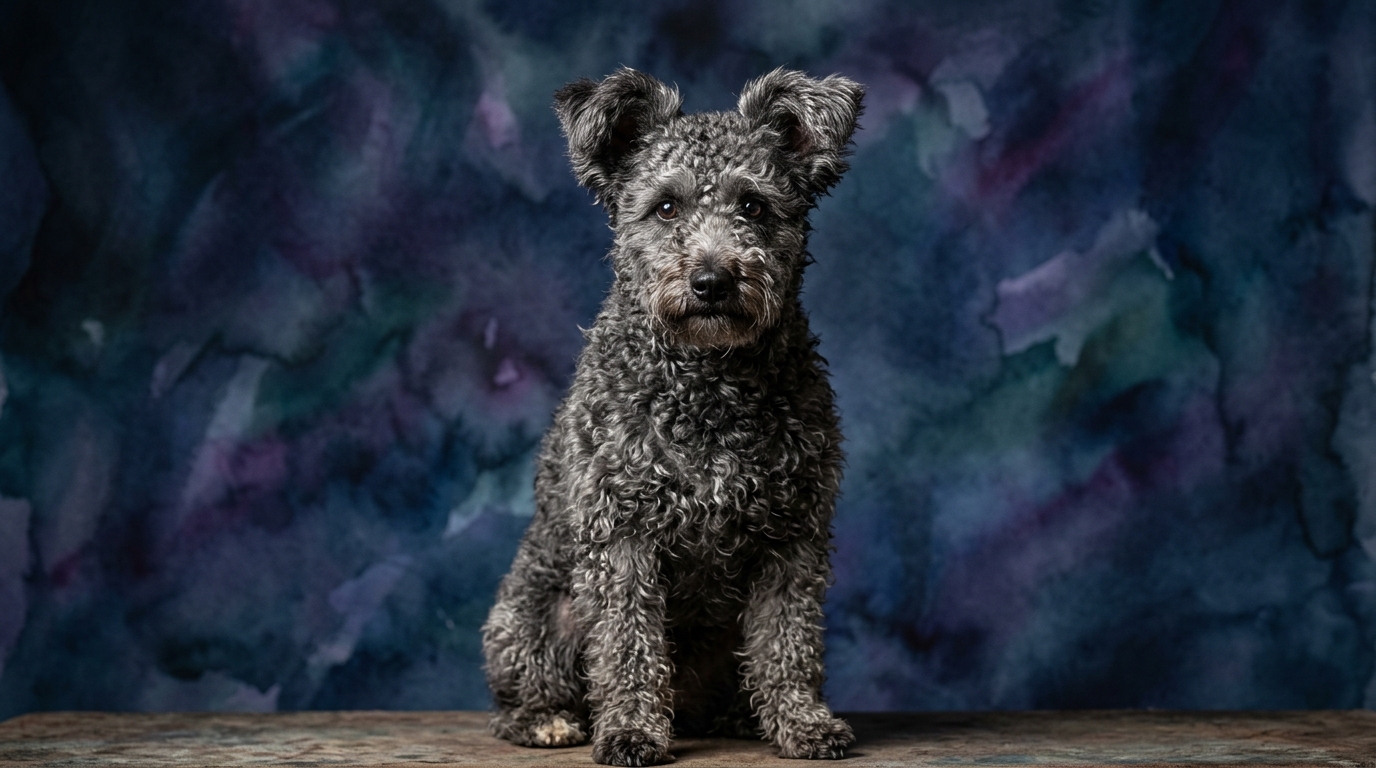

Side-by-Side Cognitive Profiles
The Pumi, a Hungarian herding dog, demonstrates a balanced cognitive profile marked by practical problem-solving. Their 3/5 problem-solving score reflects an ability to quickly assess and react to dynamic situations, such as maneuvering livestock through varied terrain, often requiring independent thought to achieve a task. This quick assessment is coupled with a training speed of 3/5, indicating a moderate pace of learning, particularly when tasks engage their natural inclination for cooperative work and mental stimulation. They respond well to consistent, engaging sessions that prevent boredom.
Their social intelligence, also rated 3/5, allows them to read handler cues and the nuances of animal behavior, crucial for effective herding. This underpins their strong bond with their human companions and their capacity for perceptive interactions. A 3/5 instinctive drive manifests as a pronounced desire to gather and control, channeling their energy into purposeful activity. Finally, their 3/5 memory ensures they retain complex routines, commands, and environmental layouts, enabling reliable performance over extended periods.
The Dogo Argentino, a powerful working dog, applies its balanced cognitive aptitudes to tasks requiring strength, focus, and discernment. Their problem-solving capacity, rated 3/5, is geared towards strategic thinking in scenarios such as tracking game or assessing potential threats, often involving sustained effort and a clear objective. This methodical approach influences their 3/5 training speed; they learn steadily with firm, consistent guidance, particularly when tasks align with their protective or working drives. They thrive on clear expectations and a sense of purpose.
With a social intelligence score of 3/5, Dogos exhibit deep loyalty to their family, adept at distinguishing between trusted individuals and perceived dangers. This social acumen is integral to their role as guardians. Their instinctive drive, also 3/5, is powerfully expressed through a keen prey drive and robust protective instincts, serving as core motivators for their actions and situational awareness. Lastly, their 3/5 memory enables them to reliably recall training, boundaries, and past experiences, contributing significantly to their dependability in their designated roles.
Where the Pumi Excels Cognitively
Despite identical numerical scores, the Pumi's cognitive strengths manifest uniquely. Their herding heritage cultivates an exceptional agility in thought, allowing for rapid adaptation to changing circumstances. This is evident in their ability to quickly re-strategize when livestock unexpectedly shifts direction or when environmental factors pose new challenges during a task. They don't just solve problems; they solve them with dynamic responsiveness.
Furthermore, the Pumi displays a nuanced understanding of subtle environmental cues and animal behavior. This isn't just basic recognition; it's an intuitive grasp of flock dynamics and individual animal temperaments, enabling them to exert control without excessive force. Their problem-solving often involves independent decision-making within a structured task, showcasing a cognitive flexibility that allows them to improvise effectively without constant human oversight. This versatility means their 3/5 problem-solving extends to a broader range of intellectual challenges beyond their primary herding duties.
Where the Dogo Argentino Excels Cognitively
The Dogo Argentino's cognitive prowess, while numerically similar, shines in different contexts. They demonstrate an impressive capacity for strategic patience and sustained focus, particularly in tasks requiring vigilance or tracking. This isn't about quick, reactive bursts, but rather a methodical approach to assessing situations, identifying the core issue, and committing to a solution, whether it's locating game or maintaining a protective watch.
Their social intelligence is acutely tuned for discernment in complex social situations, allowing them to differentiate between genuine threats and benign interactions with remarkable clarity. This contributes to their steadfast nature as guardians. The Dogo's problem-solving also features a distinct resilience and tenacity; once engaged in a task or facing an obstacle, they exhibit an unwavering commitment to their objective. This powerful drive, combined with strong spatial reasoning, makes them particularly adept at patrolling large areas and remembering intricate layouts, contributing to their reliability in their working roles.
Training Dynamics: Pumi vs. Dogo Argentino
When it comes to trainability, the Pumi generally presents as more eager to please and handler-focused, a trait deeply rooted in their cooperative herding background. Their 3/5 training speed means they pick up commands at a moderate pace, but their enthusiasm for interactive learning and positive reinforcement makes the process engaging. Pumis thrive on varied training methods and mental challenges; repetitive drills can lead to boredom, prompting them to invent their own, sometimes undesirable, games. Their natural inclination to work alongside humans makes them receptive to guidance, provided it's stimulating.
The Dogo Argentino, while equally capable of learning with their 3/5 training speed, possesses a stronger will and a more independent streak. Training requires unwavering consistency, clear leadership, and a deep understanding of their motivations, which are often tied to their protective or prey drives. They are not inherently seeking to please in the same way a herding dog might be; instead, they respond best when tasks align with their natural instincts or when they perceive a clear purpose. Early and consistent socialization, coupled with firm boundary setting, is crucial to channeling their powerful physical and mental capabilities into desired behaviors. They might challenge authority more, requiring an owner who can provide confident, consistent direction.
Matching Breeds to Lifestyles: Active vs. Relaxed Owners
The Pumi is undeniably suited for active owners who can meet their substantial mental and physical needs. Their energetic nature and cognitive agility demand a lifestyle rich in dog sports like agility, flyball, and obedience, or consistent, engaging outdoor activities that provide both exercise and mental puzzles. Owners who embrace consistent training, puzzle toys, and varied outdoor adventures will find a highly cooperative and joyful companion. A relaxed, sedentary owner will likely find a bored Pumi inventing their own, potentially disruptive, entertainment.
The Dogo Argentino also requires active owners, though the focus of their activity often differs. While they need substantial physical exercise—long walks, runs, or structured play sessions that allow for powerful bursts of energy—their mental stimulation often comes from having a 'job' or a clear purpose. This could involve advanced obedience, protection work, or simply consistent training that reinforces their role within the family unit. While capable of being calm indoors with sufficient exercise, they are not a breed for owners seeking minimal exercise commitments; their powerful build and strong drives necessitate purposeful activity and mental engagement to maintain balance.
The Verdict
Choose the Pumi if you seek a cognitively agile, cooperative companion for dog sports, nuanced problem-solving, and continuous mental engagement, thriving on quick adaptation and interactive learning.
Choose the Dogo Argentino if you need a steadfast, protective companion with strategic thinking for security or focused tasks, valuing loyalty, resilience, and a clear sense of purpose in their mental approach.
🧠 Find Your Pet's IQ Score
Our Pet IQ Lab assessment covers 25+ tests across 5 cognitive dimensions — personalized to your breed.
Take the Full IQ Test →Frequently Asked Questions
Do identical IQ scores mean Pumi and Dogo Argentino learn the exact same way?
No, identical scores indicate a similar *capacity* across dimensions, but their breed histories mean these capacities manifest differently. A Pumi's problem-solving might focus on dynamic herd management, while a Dogo's might involve strategic protection and vigilance, requiring distinct training approaches.
Can a Pumi perform guarding duties like a Dogo Argentino?
While Pumis can be alert watchdogs and will bark to alert to strangers, their primary instincts are herding and companionship. A Dogo Argentino's instinctive drive for protection, coupled with their physical presence and discernment of threats, makes them inherently better suited for dedicated guarding roles.
Is one breed more prone to destructive behavior if not mentally stimulated?
Both breeds, due to their active cognitive profiles and strong drives, can exhibit undesirable behaviors if under-stimulated. A Pumi might become excessively vocal, 'herd' family members, or engage in compulsive behaviors, while a Dogo Argentino might become restless, destructive chewing, or display frustration, highlighting the need for consistent engagement for both.