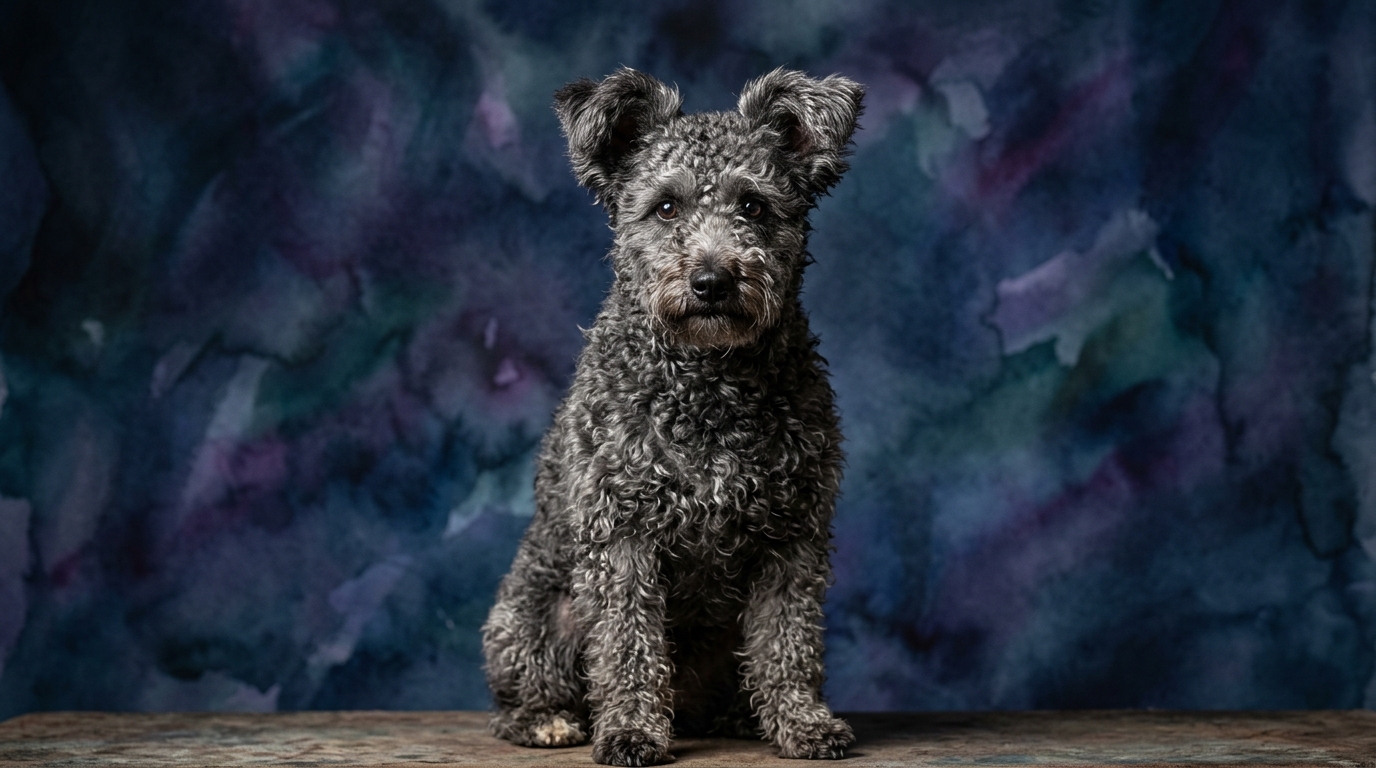
Pumi at a glance
| IQ Rank / Score | 17/25 |
|---|---|
| Trainability | ★★★★☆ (4/5) |
| Social Intelligence | ★★★☆☆ (3/5) |
| Lifespan | 11-14 years |
| Shedding | Low to moderate |
| Exercise Needs | High (60+ min/day + training) |
| Origin | Hungary |
The Pumi Mind: Agile & Articulate Problem-Solvers
The Pumi's intelligence isn't merely about raw brainpower; it's about a specific, highly adapted form of cognition: rapid, adaptable problem-solving within fluid, dynamic environments, profoundly integrated with exceptional physical dexterity and a distinctive vocal communication system. Unlike herding breeds that rely on an intense 'eye' or silent movements, the Pumi operates with a vibrant, almost balletic energy, making split-second decisions to manage livestock. Their cognitive strength lies in their ability to quickly assess changing situations – a sheep breaking from the flock, an unexpected obstacle – and execute immediate, precise maneuvers, often employing their unique vocalizations to direct or intimidate.
This dynamic intelligence means a Pumi isn't just learning commands; it's learning to *think* on its feet, to anticipate and react. Their problem-solving isn't theoretical; it's intensely practical and always in motion. This translates into a dog that thrives on challenge, needing not just physical exercise but constant mental engagement. Their ability to process complex visual and auditory cues, combine them with spatial awareness, and then act decisively, is the hallmark of the Pumi's cognitive uniqueness. They are essentially canine strategists, but their battlefield is ever-shifting and requires constant, fluid adaptation.
Beyond the Barks: A History of Hungarian Ingenuity
The Pumi’s distinctive 'singing bark,' often described as a 'Pumi-yip' or a melodic, almost yodel-like vocalization, is far more than a charming quirk; it is a sophisticated, cognitively integrated communication tool that has been historically vital to its herding strategy. Unlike breeds that rely on silent stalking or physical nudges, the Pumi developed this unique vocal repertoire as a primary means of controlling livestock. This nuanced communication allows them to issue precise directional cues, gather stragglers, or even intimidate larger animals without needing direct physical contact, thereby minimizing stress on the flock and potential injury to themselves. This adaptation highlights a cognitive process where sound production is not just expressive, but deeply strategic and instrumental to their working capabilities.
Originating in Hungary in the 17th-18th centuries, Pumis emerged from a cross between the older Hungarian Puli and various German and French herding dogs. This fusion created a breed known for its spirited demeanor, agility, and keen intellect, perfectly suited to the challenging, varied terrain of the Hungarian plains. Their 'yip' became a signature of their working style, reflecting a cognitive design focused on vocal leadership and agile, proactive management rather than passive observation. The evolution of this particular vocal behavior demonstrates a remarkable cognitive specialization, allowing the Pumi to effectively manage flocks across open landscapes where subtle visual cues might be missed, underscoring a deliberate, intelligent development unique to the breed.
The Pumi IQ Breakdown: Agility Meets Astuteness
**Problem-Solving (4/5):** Pumis excel at solving practical problems, especially those involving movement, navigation, and strategy. Their herding background demands quick assessment of situations and innovative solutions to redirect livestock or overcome obstacles. This score reflects their ability to think independently and adapt rapidly in fluid environments, rather than relying solely on rote learned commands.
**Training Speed (4/5):** These dogs are exceptionally quick learners, absorbing new commands and complex routines with remarkable speed. Their eagerness to please, combined with high intelligence and athleticism, makes them stars in obedience and agility sports. They thrive on mental stimulation, making training not just a task but a rewarding cognitive exercise.
**Social Intelligence (3/5):** Pumis form deep, devoted bonds with their immediate families, exhibiting excellent social awareness within their trusted circle. They are adept at reading human emotions and intentions. However, they can be reserved or wary with strangers, a trait stemming from their protective herding instincts, which means their social intelligence is selective rather than universally outgoing.
**Instinctive Drive (5/5):** The Pumi possesses an exceptionally high instinctive drive, particularly for herding, activity, and mental engagement. This powerful innate motivation is the engine of their intelligence, pushing them to constantly seek purpose and application for their cognitive abilities. This drive necessitates ample mental and physical outlets to prevent boredom and redirected energy.
**Memory (4/5):** Pumis demonstrate excellent memory, recalling commands, routines, and past experiences with precision. This strong memory is crucial for their herding work, allowing them to remember flock patterns, terrain features, and previously learned strategies. They are also adept at remembering individuals and past interactions, contributing to their loyalty and selective social tendencies.
Training a Pumi: Harnessing Their Brilliance
Training a Pumi is a deeply rewarding experience, but one that requires consistency, creativity, and an understanding of their unique cognitive makeup. Their high intelligence and instinctive drive mean they bore easily with repetitive drills. To truly harness their brilliance, training sessions should be kept short, engaging, and varied, incorporating elements of problem-solving and agility. Positive reinforcement is paramount; Pumis respond best to praise, treats, and play, thriving on the mental satisfaction of a challenge overcome. Early socialization is also critical to channel their inherent wariness of strangers into appropriate caution, rather than shyness or reactivity.
Beyond basic obedience, Pumis excel in dog sports such as agility, flyball, and competitive obedience, which perfectly tap into their rapid decision-making, physical dexterity, and desire for purposeful work. These activities not only provide physical exercise but, more importantly, offer the intense mental stimulation that a Pumi’s intelligent mind craves. Puzzle toys, interactive games, and even 'brain games' that require them to figure things out are also excellent ways to keep their cognitive gears turning, ensuring a well-adjusted and mentally fulfilled Pumi companion.
Pumi in Play: Cognitive Enrichment Strategies
For a Pumi, play is not just recreation; it's a vital component of cognitive enrichment. Their active, problem-solving minds demand engagement that goes beyond a simple walk in the park. Incorporate games that mimic their herding instincts, such as 'fetch and retrieve' with multiple toys that require them to gather items, or hide-and-seek with a favorite person or object. Flirt poles are excellent for tapping into their prey drive in a controlled, safe manner, enhancing their focus and agility.
Puzzle feeders and interactive toys that require manipulation to dispense treats are essential for solo enrichment, challenging their problem-solving skills when you can't actively engage. Regularly introducing new toys or rotating old ones can maintain novelty, preventing boredom. Moreover, providing opportunities for 'free shaping' – allowing them to offer behaviors and rewarding desirable ones – encourages independent thinking and creativity. A mentally stimulated Pumi is a happy Pumi, and cognitive play is the cornerstone of their well-being.
Dispelling the Myth of the 'Hyper Barker'
The most common misconception about Pumi intelligence is that they are merely 'hyperactive nuisance barkers' with uncontrollable energy, suggesting their vocalizations and high activity levels are undirected or disruptive. This myth often arises from an incomplete understanding of their innate herding purpose and their unique cognitive integration of vocal communication.
This myth persists because Pumis *are* energetic and *are* vocal. Their distinct 'singing bark' is indeed frequent when they are working, excited, or alerting. However, onlookers often misinterpret this purposeful communication as incessant noise, failing to recognize its cognitive function in herding or as a natural expression of their alert, intelligent nature. Without proper outlets, a Pumi's energy and vocalizations can indeed become problematic, leading owners to mistakenly label them as 'hyper' or 'untrainable.'
The truth is that a Pumi's vocalizations are a hallmark of their intelligence, serving as a critical communication tool in their herding strategy. Their high energy is not chaotic but purposeful, driven by an inherent desire to work and problem-solve. When provided with sufficient mental stimulation, structured training, and appropriate physical exercise that caters to their specific cognitive needs, a Pumi's energy is channeled productively, and their vocalizations become a controllable and expressive part of their personality, rather than an unmanageable nuisance. They are not 'hyper barkers,' but rather highly intelligent, articulate, and driven working dogs who thrive when their cognitive abilities are properly engaged.
3 At-Home Tests to Measure Your Pumi's IQ
These tests are adapted from peer-reviewed ethology research. No equipment is needed beyond items you have at home. Run each test 5–10 times for reliable results.
The Myth: "Pumis are just hyperactive nuisance barkers with uncontrollable energy."
✅ The Pumi's energy and vocalizations are driven by their innate herding intelligence; they are highly articulate and purposeful, thriving when their cognitive abilities and physical drives are channeled through structured training and mentally stimulating activities.
Pumi vs. Similar Breeds
🧠 What's Your Dog's IQ Score?
Our full Pet IQ Lab assessment includes 12+ tests across 5 cognitive dimensions, calibrated for Pumis specifically.
Take the Full IQ Test →Frequently Asked Questions
How smart is a Pumi?
Our Pet IQ Lab framework scores cognition across five dimensions (max 25). The Pumi totals 17/25 — high for a domestic dog. The full article breaks down each dimension with at-home tests.
Are Pumis easy to train?
Pumis are generally easy to train when you use consistent, reward-based sessions. They score 4/5 on Training Speed in our breed profile.
Are Pumis good with children and other pets?
Pumis can live well with families when socialized early. Their Social Intelligence scores 3/5, so supervise interactions with small children and introduce new pets gradually.
Do Pumis need a lot of mental stimulation?
Absolutely. With Problem Solving 3/5 and Instinctive Drive 5/5, Pumis need daily mental work — puzzle feeders, scent games, training sessions, or nose-work — to avoid boredom.
How much exercise does a Pumi need?
Pumis need active engagement. Plan for 45-60 minutes of exercise and training per day, plus mental stimulation.
How good is a Pumi's memory?
Pumis score 2/5 on memory. They remember high-value associations well; less-used cues fade without refresher sessions.
What is the typical lifespan of a Pumi?
Expect a lifespan of 11-14 years for a healthy Pumi.
The Pumi is a remarkable testament to specialized canine intelligence, perfectly blending agile problem-solving with articulate communication. Understanding and nurturing their unique cognitive profile is key to unlocking their full potential as brilliant and devoted companions.