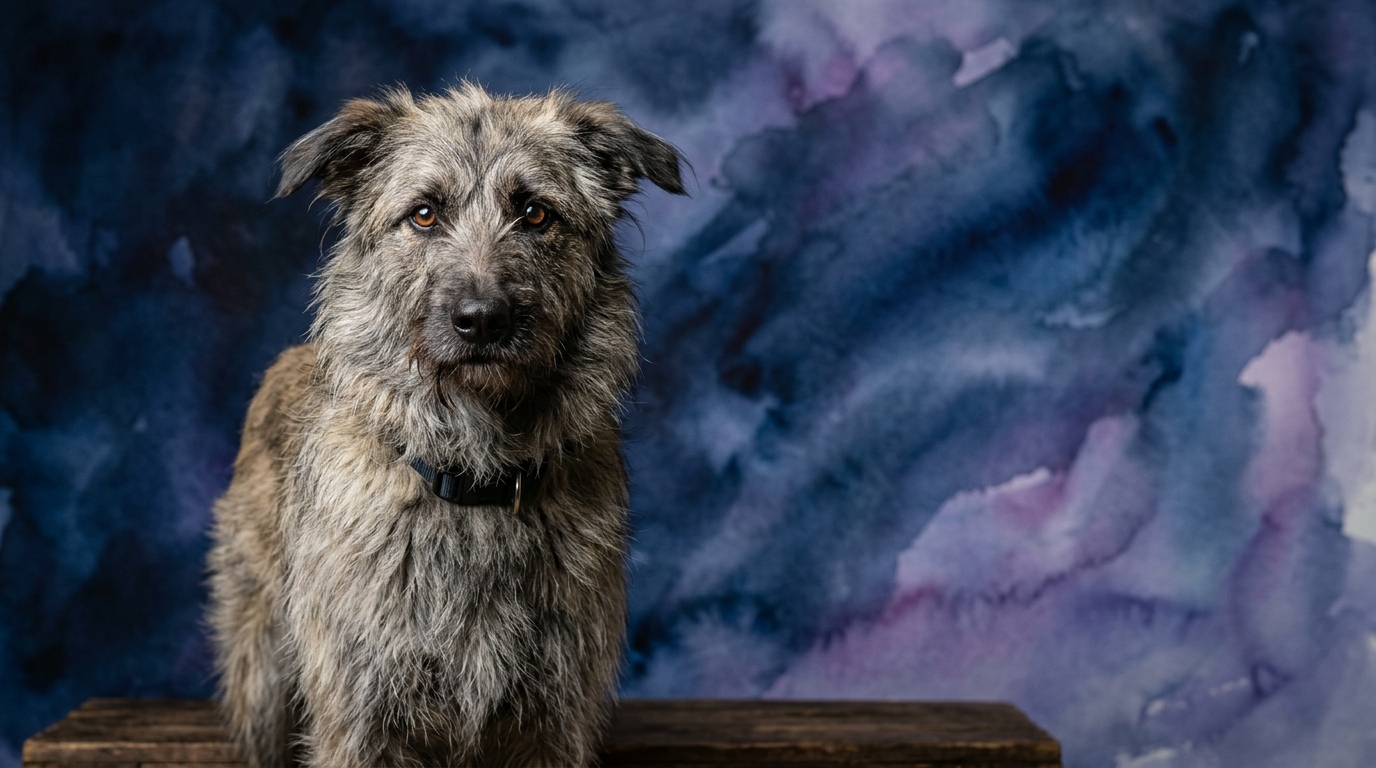
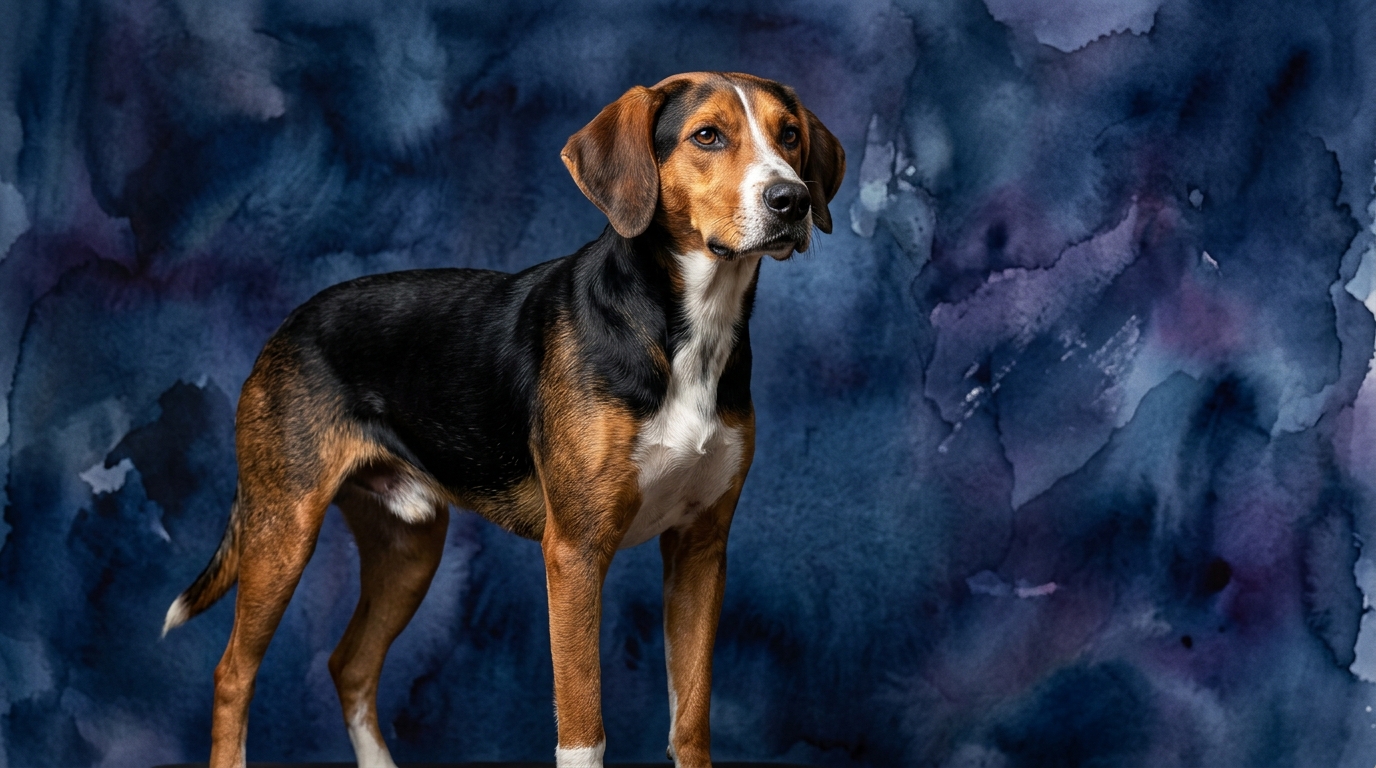
Side-by-Side IQ Profile
The Pyrenean Shepherd, a herding breed, demonstrates a functional and adaptable intellect. Their Problem Solving at 3/5 often manifests in strategic thinking for livestock management, such as anticipating herd movements or finding lost sheep, rather than abstract puzzles. Training Speed, also 3/5, reflects their capacity for learning complex command sequences quickly, particularly those related to herding tasks, though they possess an independent streak. Social Intelligence, rated 3/5, is geared towards understanding handler cues and maintaining a working relationship, recognizing subtle shifts in human body language. Their Instinctive Drive, 3/5, is powerfully directed towards herding and vigilance, a constant internal motivation to gather and protect. Memory, at 3/5, is strong for spatial awareness within their territory and recalling specific handler signals and routines vital for their work.
The American Foxhound, a quintessential hound, exhibits an intelligence deeply rooted in sensory perception and endurance. Their Problem Solving, a 3/5, is largely focused on scent-based challenges—discerning and following complex trails, bypassing obstacles to maintain pursuit, and often requires persistent, independent thought. Training Speed, also 3/5, can be moderate; while capable of learning, their powerful drive to follow a scent can sometimes override immediate obedience, requiring consistent and patient reinforcement. Social Intelligence, at 3/5, often revolves around pack dynamics, understanding the roles within a group of hounds and communicating effectively through vocalizations, though they are generally affable with humans. Their Instinctive Drive, 3/5, is overwhelmingly dedicated to tracking and hunting, an intrinsic motivation to pursue a scent over long distances. Memory, rated 3/5, is exceptional for recalling scent patterns and geographical layouts of hunting grounds, crucial for their historical role.
Where Pyrenean Shepherd Wins Cognitively
The Pyrenean Shepherd's cognitive strengths shine particularly in scenarios demanding quick, adaptive decision-making in partnership with a human. Their herding background fosters a proactive problem-solving approach where they must anticipate and react to the unpredictable movements of livestock, often requiring split-second judgments without direct commands. This translates to a superior ability in agility sports or tasks that require fluid, responsive teamwork. While both breeds score 3/5 in problem-solving, the Shepherd's application is more about real-time, dynamic control, whereas the Foxhound's is more about sustained, focused pursuit. Their social intelligence, though numerically equal, often presents as a more direct and eager engagement with a single handler, making them highly attuned to subtle human directives and intentions in a collaborative setting.
Where American Foxhound Wins Cognitively
The American Foxhound excels in cognitive domains centered around sustained, independent work driven by an extraordinary sense of smell. Their problem-solving, while also 3/5, is unmatched in its application to scent discrimination and tracking, allowing them to follow a faint trail over varied terrains for hours, piecing together complex olfactory information. This specific cognitive skill set means they are superior in tasks requiring deep focus on sensory input and an unwavering commitment to a goal, even when faced with distractions. Their memory, similarly rated 3/5, is particularly robust for scent recall, enabling them to remember specific trails or even the scent signature of particular animals, a feat of cognitive mapping distinct from the Shepherd's spatial memory for territory. The Foxhound's instinctive drive, while equal in intensity, is channeled into an unparalleled tenacity for pursuit, making them relentless in their chosen task.
Which is Easier to Train and Why
Evaluating ease of training between these breeds, despite identical 3/5 Training Speed scores, reveals distinct challenges and rewards. The Pyrenean Shepherd, with its herding heritage, possesses an inherent desire to work closely with a human, often seeking direction and approval. This drive for partnership makes them generally more receptive to formal obedience training and quicker to generalize commands across different situations. Their problem-solving, oriented towards dynamic control, means they grasp complex sequences and adapt to changing commands efficiently, especially in structured training environments.
Conversely, the American Foxhound's training experience is heavily influenced by its profound instinctive drive for scent. While capable of learning, their attention can be powerfully diverted by an intriguing smell, making consistent recall or focus on non-scent-related tasks more challenging. Their problem-solving is often self-directed towards the pursuit of scent, which, while beneficial in their working role, can be perceived as stubbornness in a domestic training context. Successful training with a Foxhound often requires immense patience, creativity, and a deep understanding of positive reinforcement to compete with their natural urges, often integrating scent work into their routine to leverage their strengths. Therefore, for general obedience and adaptability to various household demands, the Pyrenean Shepherd is typically considered the more straightforward trainee, due to its intrinsic motivation to cooperate with a handler.
Which Suits Active Owners vs Relaxed Owners
For active owners seeking a dynamic companion, both breeds offer considerable energy, but with different expressions. The Pyrenean Shepherd thrives with owners who can provide consistent mental and physical challenges, such as agility, herding trials, or fast-paced interactive games. Their need for a "job" and close handler interaction makes them ideal for individuals or families committed to engaging them daily in structured activities and providing plenty of space to run. They are not content to be couch potatoes and will invent their own (potentially destructive) activities if under-stimulated.
The American Foxhound also requires significant activity, but their preference leans towards long, meandering expeditions where they can indulge their powerful sense of smell. Owners who enjoy hiking, trail running, or have secure, expansive properties where a dog can safely follow a scent trail will find a compatible partner. While they appreciate companionship, their independent nature means they can be content to explore on their own, provided they have a safe, fenced environment. They are less suited for "relaxed" owners who prefer minimal engagement, as their energy and drive, if not properly channeled, can lead to restless behavior and vocalizations. Neither breed is truly suited for a "relaxed" owner in the sense of a sedentary lifestyle; however, the Foxhound might tolerate periods of less structured interaction better than the Shepherd, provided its exercise needs are met through independent exploration.
The Verdict
Opt for a Pyrenean Shepherd if you desire a highly engaged, cooperative working companion for sports, herding, or a structured, active lifestyle where close partnership is valued. Their intuitive understanding of human cues and eagerness to participate in joint activities make them an ideal choice for dedicated, experienced owners ready to channel their keen intellect.
Select an American Foxhound if you are an owner who appreciates independence, possesses a love for long outdoor adventures, and can provide a secure environment for a dog driven by an extraordinary sense of smell. They thrive with patient individuals who understand their deep-seated instincts and can integrate scent-based activities into their routine.
🧠 Find Your Pet's IQ Score
Our Pet IQ Lab assessment covers 25+ tests across 5 cognitive dimensions — personalized to your breed.
Take the Full IQ Test →Frequently Asked Questions
Do Pyrenean Shepherds bark a lot?
Pyrenean Shepherds are historically vigilant guardians of their flocks and territory, which means they can be prone to barking at perceived threats or unusual occurrences. Consistent training and early socialization are essential to manage their natural vocal tendencies and teach them appropriate barking behavior.
Are American Foxhounds good family pets?
American Foxhounds can be affectionate and tolerant family pets, especially with older children who understand how to interact respectfully with dogs. Their independent nature means they might not be as constantly demanding of attention as some breeds, but they are generally good-natured and enjoy being part of a pack, which includes their human family.
How much exercise does each breed need daily?
Both breeds require substantial daily exercise, typically an hour or more of vigorous activity. The Pyrenean Shepherd benefits from structured activities like agility or active play, while the American Foxhound thrives on long walks, runs, or secure off-leash opportunities where they can follow scent trails and expend their considerable stamina.