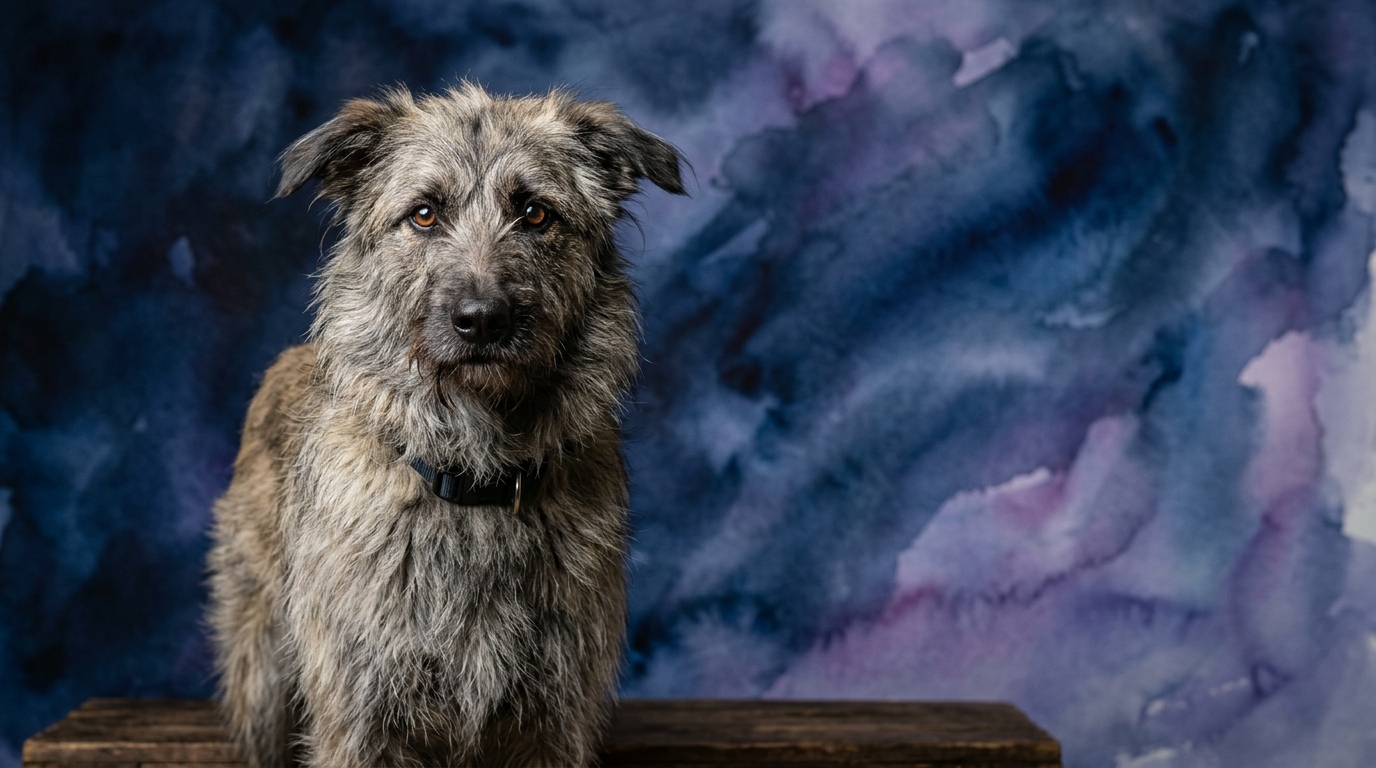
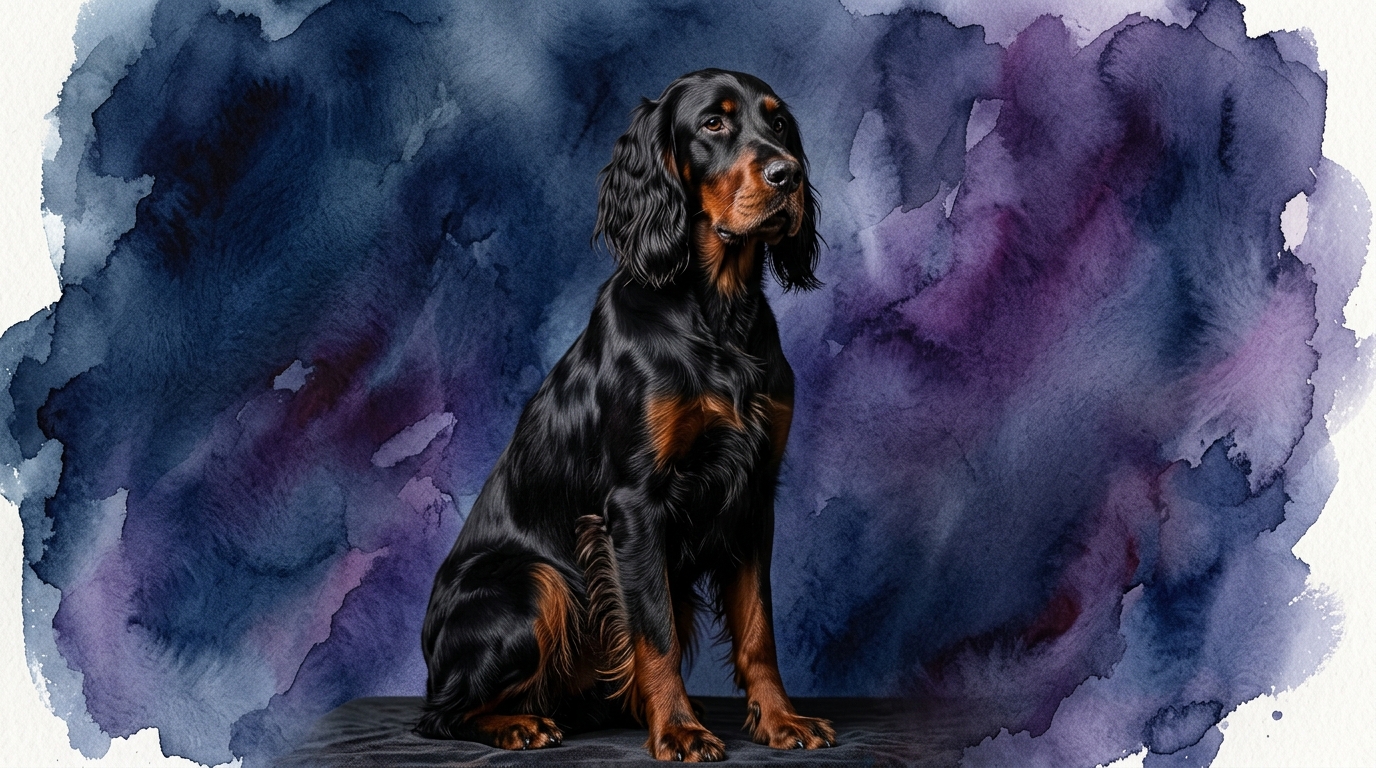
Side-by-Side IQ Profile: Pyrenean Shepherd vs. Gordon Setter
At The Cosmic Pet Pet IQ Lab, we evaluate canine intelligence across five critical dimensions: Problem Solving, Training Speed, Social Intelligence, Instinctive Drive, and Memory. These metrics offer a granular view of a breed's cognitive strengths, moving beyond broad generalizations to understand how their minds work.
The Pyrenean Shepherd, a spirited herding dog not listed on the Coren ranking, scores 3/5 across all five dimensions: Problem Solving, Training Speed, Social Intelligence, Instinctive Drive, and Memory. This indicates a consistent, moderate capacity across the board, reflecting a pragmatic and adaptable working mind.
In contrast, the Gordon Setter, a distinguished sporting breed ranked #39 by Coren, exhibits a different cognitive profile. It scores 4/5 in Problem Solving, Training Speed, and Memory, while matching the Pyrenean Shepherd with 3/5 in Social Intelligence and Instinctive Drive. This suggests a dog with a greater aptitude for structured learning and retention.
Breaking down these scores further: Problem Solving assesses a dog's ability to navigate novel situations or overcome obstacles. Training Speed measures how quickly a dog grasps and retains new commands. Social Intelligence reflects their understanding of communication cues from humans and other animals. Instinctive Drive quantifies their innate motivation for breed-specific tasks. Lastly, Memory evaluates their capacity to recall learned behaviors and experiences over time.
Where the Pyrenean Shepherd Wins Cognitively
While the Pyrenean Shepherd doesn't outscore the Gordon Setter in raw metrics, its cognitive strengths lie in a distinct blend of independence and adaptability, forged by centuries of herding work in challenging mountain terrain. Its 3/5 in Problem Solving, combined with its strong herding instincts, translates into a remarkable ability to make real-time decisions without constant human intervention. Imagine a flock scattering unexpectedly; the Pyr Shep doesn't wait for a command, but quickly assesses the situation and acts to regroup the sheep, often employing inventive tactics specific to the moment. This self-reliant processing and quick, practical decision-making in fluid, unpredictable environments is a unique cognitive advantage.
Their social intelligence, rated 3/5, is finely tuned to the subtle cues of livestock and the nuanced intentions of a distant shepherd, allowing for complex, non-verbal communication and anticipation of needs within a working partnership. This isn't about the speed of learning a new trick, but the depth of understanding an evolving situation and acting autonomously with purpose. The Pyrenean Shepherd's instinctive drive, also 3/5, is a powerful engine for this independent problem-solving, providing the intrinsic motivation to engage with complex herding tasks and persist until the job is done, demonstrating a resilient and self-directed cognitive approach that thrives on dynamic engagement.
Where the Gordon Setter Wins Cognitively
The Gordon Setter exhibits clear cognitive advantages in several key areas, making it a particularly adept learner and cooperative partner. Its 4/5 score in Problem Solving indicates a superior capacity for abstract thought and structured task completion compared to the Pyrenean Shepherd. This means a Gordon can more readily understand and apply new concepts, dissecting a novel training scenario and figuring out the appropriate response with greater ease. They are often quicker to generalize learned behaviors to new situations, showcasing flexible cognitive application.
Furthermore, the Gordon Setter's 4/5 in Training Speed is a significant differentiator. They absorb new commands and routines with remarkable alacrity, often requiring fewer repetitions to achieve proficiency. This quick uptake is supported by their robust Memory, also rated 4/5, which allows them to retain a vast repertoire of commands and learned sequences over extended periods. For an owner, this translates into a dog that not only learns fast but remembers what it has learned, building a strong foundation for advanced training. Their instinctive drive, while similar at 3/5, is channeled through a desire for partnership in the hunt, fostering a cooperative cognitive style that values handler input and shared goals, making them excellent partners in field work and structured activities.
Which is Easier to Train and Why?
Based on their cognitive profiles, the Gordon Setter is generally easier to train for obedience and structured tasks. Their 4/5 Training Speed and 4/5 Memory mean they grasp and retain commands with greater efficiency. Gordon Setters typically possess a strong desire to please their handlers and excel at cooperative tasks, stemming from their history as hunting partners. This intrinsic motivation to work *with* a person, coupled with their capacity for quick learning, makes them more responsive to traditional training methods. They are less likely to question a command or attempt to find an alternative solution, preferring instead to comply and earn approval, which streamlines the training process significantly.
The Pyrenean Shepherd, with its 3/5 Training Speed and Memory, presents a different training dynamic. While capable of learning, their herding background fosters a degree of independent decision-making and self-reliance that can sometimes be perceived as cautious or discerning. They might analyze a command and, if they don't see its immediate purpose or if it conflicts with their own assessment of a situation, they may hesitate or offer an alternative behavior. Training a Pyrenean Shepherd requires patience, creativity, and a deep understanding of their herding instincts, channeling their independent spirit rather than trying to suppress it. They respond best to positive reinforcement and methods that engage their problem-solving abilities within a framework of cooperation, requiring a more nuanced approach from their handler.
Suitability for Active vs. Relaxed Owners
Neither the Pyrenean Shepherd nor the Gordon Setter are suited for truly 'relaxed' owners, as both breeds possess significant energy levels and require substantial mental and physical engagement. However, their cognitive profiles suggest different types of activity that fulfill their specific needs. The Pyrenean Shepherd thrives with active owners who appreciate and can channel its intense focus and independent spirit. Owners who enjoy dog sports like agility, herding trials, or flyball, where the dog can utilize its quick decision-making and physical prowess, would find a strong partner. They need a job, often one that allows them to think for themselves, making them ideal for individuals who can provide consistent, varied mental challenges beyond mere physical exercise. Their cognitive satisfaction comes from engaging with complex, dynamic tasks and figuring things out on their own.
The Gordon Setter also requires active owners, but ones who can capitalize on its cooperative nature and strong desire to work alongside its human. They excel in activities like field trials, obedience, rally, and scent work, where their focused attention, impressive memory, and willingness to follow direction are assets. For owners who enjoy structured training, consistent engagement, and activities that involve close partnership, the Gordon Setter is an excellent match. Their cognitive fulfillment often comes from mastering complex sequences and performing tasks in unison with their handler, making them suitable for individuals who enjoy a highly collaborative training journey where the dog is a willing and capable participant in shared goals.
The Verdict
Choose the Pyrenean Shepherd if you are an experienced owner seeking a self-reliant, quick-thinking partner for dynamic activities like herding or agility, valuing a dog that thinks independently and adapts creatively.
Choose the Gordon Setter if you desire a cooperative, eager-to-please companion for structured training and activities like hunting or advanced obedience, appreciating a dog that learns quickly and remembers well.
🧠 Find Your Pet's IQ Score
Our Pet IQ Lab assessment covers 25+ tests across 5 cognitive dimensions — personalized to your breed.
Take the Full IQ Test →Frequently Asked Questions
Are Pyrenean Shepherds difficult to train?
Pyrenean Shepherds are not inherently difficult, but their independent nature and strong herding instincts mean they require patient, consistent, and engaging training methods. They may analyze commands and thrive when their problem-solving abilities are channeled positively, rather than just being told what to do, which can require a creative approach from the handler.
What kind of activities do Gordon Setters excel at?
Gordon Setters excel in activities that leverage their keen scenting abilities, cooperative nature, and strong memory, such as field trials, hunting, obedience, rally, and scent work. They enjoy tasks that involve working closely with their handler and mastering complex sequences, demonstrating their capacity for structured learning and partnership.
How do their social intelligences compare?
Both breeds score 3/5 in social intelligence, indicating a solid understanding of social cues, but they manifest differently based on their historical roles. The Pyrenean Shepherd uses its social intelligence for nuanced communication with livestock and handlers in dynamic working scenarios, while the Gordon Setter applies it to cooperative hunting dynamics and close partnership with its human companions, valuing shared engagement.