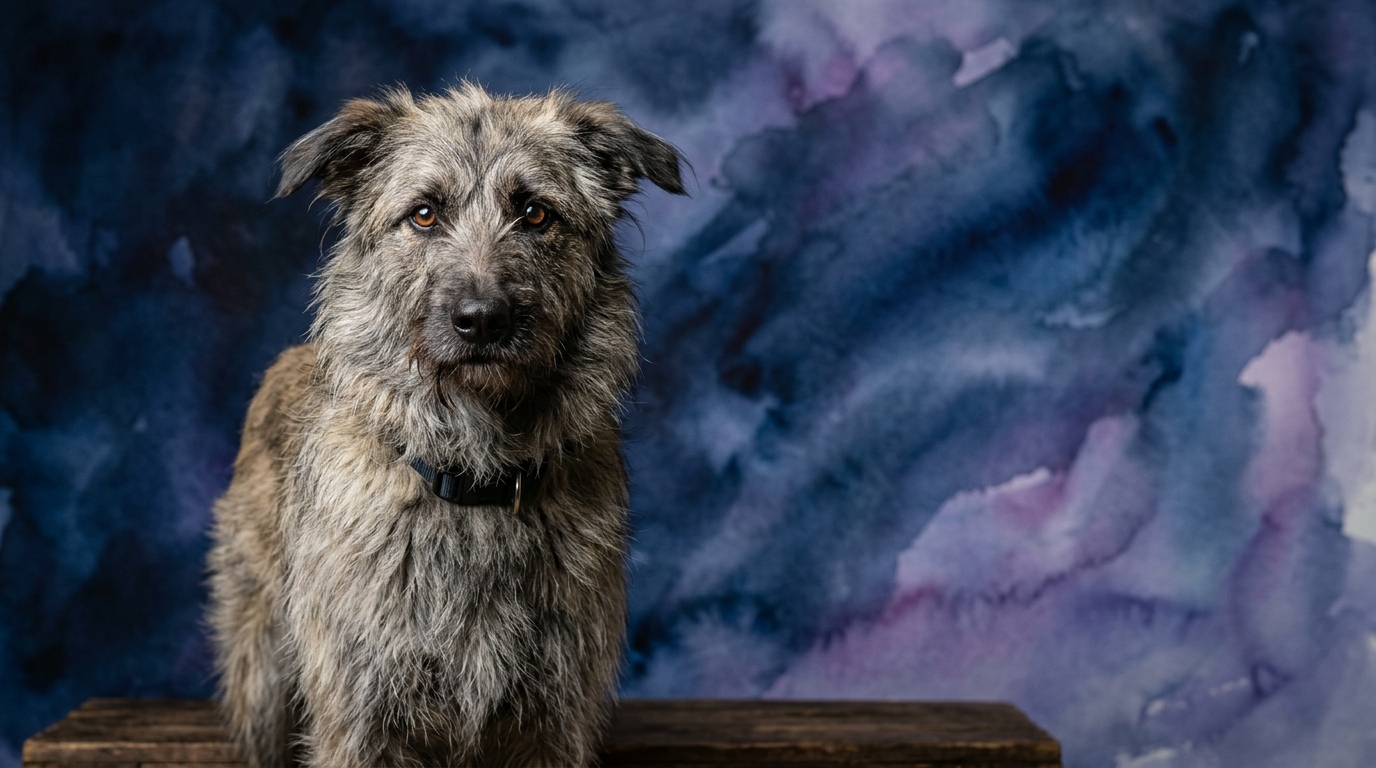
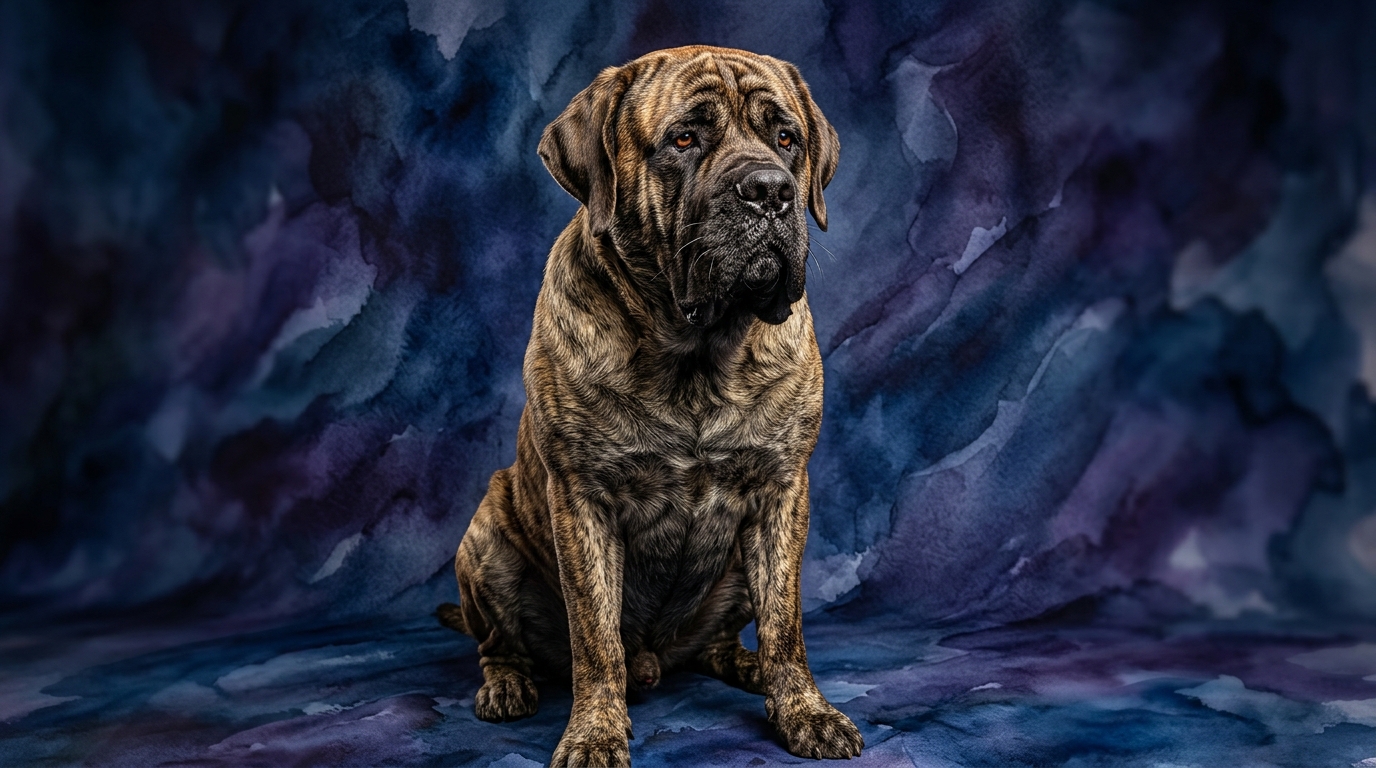
Side-by-Side Cognitive Profile
For the Pyrenean Shepherd, a Problem Solving score of 3/5 manifests as quick, independent decision-making when managing livestock, adapting rapidly to unpredictable flock movements or environmental changes. Their Training Speed, also 3/5, reflects a capacity for swift learning, though their independent streak means they learn what they perceive as valuable quickly, sometimes challenging rote obedience. Social Intelligence at 3/5 involves a keen awareness of their handler's subtle cues and the dynamics of their flock, often reserved with strangers but deeply perceptive. An Instinctive Drive of 3/5 is strongly rooted in their herding heritage, a compelling urge to gather and control, translating to a high need for purposeful activity. Finally, Memory at 3/5 allows them to recall complex herding patterns, intricate commands, and the layout of their working environment with remarkable detail.
The Mastiff, sharing a Problem Solving score of 3/5, expresses this through calm, deliberate assessment of situations, particularly concerning their family and territory, often choosing a measured, non-confrontational approach when possible, but decisive when necessary. Their Training Speed, also 3/5, indicates a steady learning pace; they absorb information and commands reliably, though their sheer size and late maturity mean patience is key, and they often require consistent, positive reinforcement rather than quick drills. Social Intelligence at 3/5 centers on deep familial bonds, an innate ability to discern friend from foe, and a nuanced understanding of household dynamics, often exhibiting a quiet protectiveness. An Instinctive Drive of 3/5 is powerfully channeled into their guardian role, a fundamental impulse to protect their loved ones and territory, manifesting as vigilance and a formidable presence. Memory at 3/5 allows them to retain a vast database of people, places, and routines, remembering commands and boundaries over long periods, contributing to their reliable and predictable nature within their established comfort zone.
Where the Pyrenean Shepherd Excels Cognitively
The Pyrenean Shepherd's cognitive strengths lie in their dynamic adaptability and rapid processing of information, a direct result of their demanding herding duties. Their problem-solving at 3/5, while numerically matching the Mastiff, is characterized by an agile, on-the-fly decision-making ability crucial for managing a scattered flock across varied terrain. They excel in scenarios requiring quick shifts in strategy, such as anticipating a sheep's next move or navigating obstacles with speed and precision. This breed demonstrates a superior capacity for multi-tasking and quick transitions between tasks, moving from a full sprint to a nuanced gather command in moments. Their instinctive drive, also rated 3/5, is a powerful engine for this cognitive agility, motivating them to engage with complex, ever-changing challenges rather than relying on rote patterns. This translates to an inherent ability to 'read' situations and react with spontaneity, often surprising their handlers with creative solutions to novel problems.
Where the Mastiff Excels Cognitively
The Mastiff, while sharing a 3/5 rating in problem-solving, exhibits a distinct cognitive advantage in deliberate, discerning analysis and a profound understanding of their environment's stability and security. Their intelligence excels in situations demanding calm, thoughtful assessment rather than immediate, reactive speed. They possess an exceptional capacity for identifying subtle changes in their surroundings or the demeanor of strangers, processing this information with a steady, unhurried focus. This allows them to make incredibly sound judgments regarding potential threats, often choosing a deterrent presence over overt action. Their social intelligence, also rated 3/5, is particularly acute within their family unit, allowing them to sense emotional nuances and provide comforting stability. Furthermore, their memory (3/5) is robust for routines, territorial boundaries, and long-term associations, making them incredibly reliable in their established roles as home guardians, rarely forgetting a face or a learned rule within their domain. They demonstrate a patient, spatial awareness, understanding how their large body interacts with their environment.
Training Dynamics: Pyrenean Shepherd vs. Mastiff
Training a Pyrenean Shepherd often presents a unique challenge due to their independent thinking and sensitive nature, despite their 3/5 training speed. They learn quickly, but their strong herding drive means they are often more interested in pursuing their own interpretation of a task than strictly adhering to human commands if the latter seems less efficient or engaging. This independence can manifest as "selective hearing" or attempting to outsmart their handler, requiring a trainer who is patient, consistent, and creative, using positive reinforcement to make training feel like a collaborative problem-solving game. They are highly attuned to tone and body language, and harsh methods can quickly shut them down, making them resistant. Their herding instincts can also lead to nipping or "gathering" behaviors towards children or other pets if not properly channeled without appropriate outlets.
In contrast, the Mastiff, with the same 3/5 training speed, is generally considered easier to train for basic obedience in a home environment, primarily due to their strong desire to please their family and their deliberate, less reactive temperament. While they may take longer to mature and can be prone to stubbornness, their learning style is more straightforward, responding well to calm, consistent, and reward-based methods. Their impressive physical presence means early socialization and obedience are crucial, but their inherent good nature and lower energy levels make them less likely to invent their own "jobs" during training sessions. They are not easily flustered and can tolerate repetition, making them suitable for owners who appreciate a slower, more methodical approach. Their protective instincts, while powerful, are generally manageable through consistent guidance and clear boundaries, as they seek to understand and fulfill their role within the family structure.
Matching Canine Cognition to Owner Lifestyles
For active owners, the Pyrenean Shepherd is an ideal match, thriving on a lifestyle that mirrors their historical working role. Their 3/5 instinctive drive translates into an almost insatiable need for mental and physical engagement, making them excellent companions for hiking, running, dog sports like agility or flyball, and even actual herding. Owners who can provide daily vigorous exercise, coupled with challenging training sessions and opportunities for independent problem-solving, will see this breed flourish. They require an owner who understands their need for purpose and is prepared to channel their boundless energy and sharp mind into constructive activities, preventing boredom-induced destructive behaviors or excessive barking. A relaxed owner, unable to meet these demands, would likely find themselves with a frustrated and potentially unruly Pyrenean Shepherd, as their intelligence and drive demand an outlet.
Conversely, the Mastiff is supremely suited for more relaxed owners who appreciate a calm, dignified presence in their home. While they benefit from regular walks and gentle play, their energy levels are considerably lower than a Pyrenean Shepherd's. Their 3/5 instinctive drive is satisfied by their guardian role, which primarily involves observation and presence rather than constant physical exertion. They are content with lounging near their family, enjoying quiet companionship, and serving as a formidable, yet often gentle, deterrent. Owners who enjoy a slower pace of life, have ample space for a large dog to stretch out, and prioritize a loyal, protective companion over an athletic partner will find the Mastiff a perfect fit. While they do require consistent training and socialization, the intensity of their daily activity needs is much lower, making them excellent for families seeking a large, affectionate, and relatively placid companion.
The Verdict
Choose the Pyrenean Shepherd if you are an experienced, active owner seeking a quick-witted, independent canine partner for demanding sports, complex training, or an adventurous lifestyle.
Opt for the Mastiff if you desire a serene, deeply loyal, and protective companion with a calm demeanor, valuing steadfast presence and deliberate actions over high-octane engagement.
🧠 Find Your Pet's IQ Score
Our Pet IQ Lab assessment covers 25+ tests across 5 cognitive dimensions — personalized to your breed.
Take the Full IQ Test →Frequently Asked Questions
Do Pyrenean Shepherds bark a lot?
Yes, Pyrenean Shepherds are vocal dogs, often using their bark to communicate, alert, or express their herding instincts. Proper training can manage excessive barking, but their natural inclination is to be quite communicative.
Are Mastiffs good with children?
Mastiffs are generally known for being gentle giants with children, exhibiting patience and a protective nature. Supervision is always recommended due to their sheer size, but their calm demeanor often makes them excellent family companions.
How much exercise does a Pyrenean Shepherd need daily?
A Pyrenean Shepherd requires significant daily exercise, typically 60-90 minutes of vigorous activity, including running, fetch, or dog sports, in addition to mental stimulation to keep their active minds engaged.