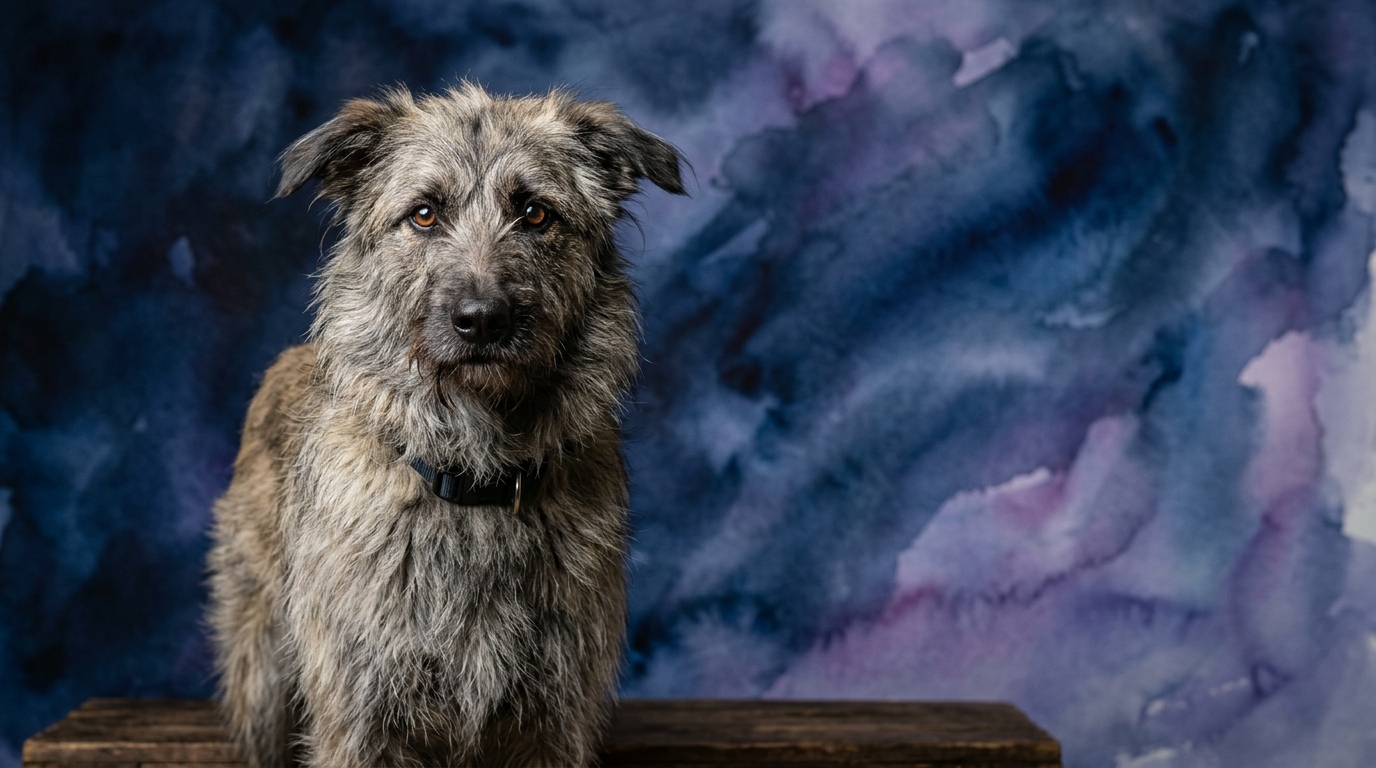
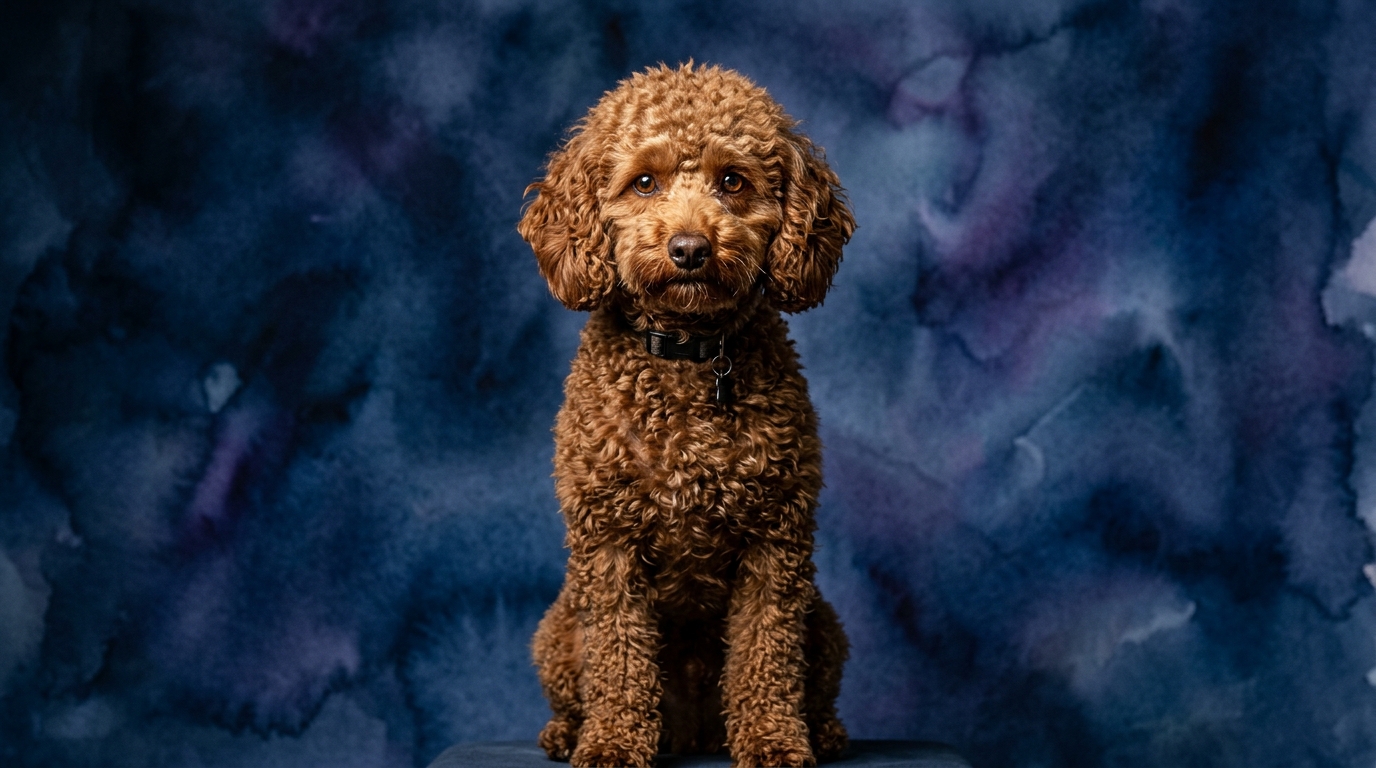
Side-by-Side Cognitive Profiles
At The Cosmic Pet Pet IQ Lab, we evaluate canine intelligence across five key dimensions, offering a nuanced look at each breed's mental makeup. For the Pyrenean Shepherd, a breed originating from the rugged Pyrenees mountains, its profile is notably balanced across the board, reflecting its heritage as an independent working dog. In contrast, the Miniature Poodle, often celebrated for its sharp mind, demonstrates significant strengths in specific cognitive areas.
**Problem Solving:** This dimension measures a dog's capacity to analyze novel situations and devise effective solutions. The Pyrenean Shepherd scores 3/5, indicating a practical, task-oriented approach to challenges, often relying on learned patterns and independent judgment within its working context. The Miniature Poodle, with a remarkable 5/5, demonstrates exceptional aptitude for complex puzzles, strategic thinking, and adapting rapidly to new problems, often showing a keen ability to reason through obstacles.
**Training Speed:** This metric reflects how quickly a dog learns and retains new commands or behaviors. The Pyrenean Shepherd's 3/5 suggests a moderate learning curve, requiring consistency and engaging methods to maintain focus, typical of breeds bred for independent decision-making rather than strict obedience. The Miniature Poodle's 5/5 signifies remarkable speed in acquiring new skills, often needing fewer repetitions and showing a strong eagerness to please during training sessions, making it a joy to teach.
**Social Intelligence:** This refers to the ability to understand and respond appropriately to human and animal cues, navigating social dynamics. Both breeds score 3/5, indicating a competent understanding of social signals. They are capable of forming bonds and interacting effectively within their established social circles, though perhaps not exhibiting the same nuanced sensitivity as some highly people-focused breeds.
**Instinctive Drive:** This dimension measures the innate compulsion to perform breed-specific behaviors, such as herding, retrieving, or guarding. Both breeds score 3/5, suggesting a moderate, manageable level of inherent drives. For the Pyrenean Shepherd, this translates to a persistent urge to herd or control movement, while for the Miniature Poodle, it might manifest as a desire for interaction or a moderate prey drive, but neither is overwhelmingly dominant.
**Memory:** This assesses the ability to recall past experiences, learned commands, and locations. The Pyrenean Shepherd's 3/5 indicates a solid working memory sufficient for its tasks, remembering routines and familiar environments reliably. The Miniature Poodle's 5/5 highlights an impressive capacity for long-term recall, retaining a vast repertoire of commands, associations, and experiences with exceptional clarity, which greatly aids in its trainability and adaptability.
Where the Pyrenean Shepherd Excels Cognitively
While the Pyrenean Shepherd may not outscore the Miniature Poodle in raw cognitive metrics, its distinct strengths lie in the practical application of its balanced intelligence, particularly in its working context. Its consistent 3/5 scores across Problem Solving and Instinctive Drive, combined with its herding heritage, mean it excels in situations demanding independent judgment and self-directed action. Unlike a dog bred for strict obedience, the Pyrenean Shepherd often needs to assess and react to dynamic livestock movements without constant human instruction, making swift, on-the-spot decisions.
This breed's cognitive 'win' is its capacity for resourceful, autonomous decision-making in a live, unpredictable environment, where waiting for a human cue could lead to inefficiency or error. Its moderate training speed suggests a dog that learns by doing and observing, internalizing lessons through practical experience rather than sheer rote memorization. This fosters a deep, functional understanding of its world and its role within it, making it a highly capable and reliable partner in demanding, real-world scenarios.
Where the Miniature Poodle Excels Cognitively
The Miniature Poodle demonstrates a clear cognitive advantage in areas demanding rapid acquisition, complex understanding, and exceptional recall. Its 5/5 in Problem Solving indicates a dog that thrives on intellectual challenges, capable of dissecting intricate puzzles, learning multi-step sequences, and adapting strategies with impressive agility. This translates into a profound capacity for understanding abstract concepts and executing sophisticated tasks that require more than simple rote learning.
Furthermore, its 5/5 Training Speed means the Miniature Poodle forms associations with remarkable quickness, mastering new commands and routines with minimal repetition. This rapid learning is powerfully supported by its 5/5 Memory, allowing it to build an extensive behavioral repertoire and retain information over long periods. This combination makes it an outstanding candidate for advanced obedience, intricate dog sports like agility or freestyle, and even specialized roles where complex learning and reliable recall are paramount.
Training Dynamics: Which is Easier?
Based on their respective IQ profiles, the Miniature Poodle is demonstrably easier to train for most owners aiming for traditional obedience or complex tricks. Its 5/5 Training Speed means it picks up new commands and behaviors with remarkable alacrity, often eager to engage and please its handler. This rapid associative learning allows for quick progression through various levels of obedience or dog sports, as the Poodle readily connects actions with desired outcomes and rewards, thriving on positive reinforcement and mental stimulation.
Conversely, the Pyrenean Shepherd, with a 3/5 Training Speed, presents a more nuanced training experience. This breed was historically valued for its independent thought and ability to make decisions without constant human oversight when managing livestock. This inherent self-reliance means a Pyrenean Shepherd might question a command or prioritize its own assessment of a situation, especially if it perceives a task as illogical or unnecessary from its perspective. Training a Pyrenean Shepherd requires patience, creativity, and a deep understanding of its working dog mindset, employing methods that engage its intellect and provide a clear purpose rather than relying solely on repetitive drills.
Lifestyle Fit: Active vs. Engaged Owners
For owners seeking an active, purpose-driven canine partner, the Pyrenean Shepherd is an ideal match. Its background as a herding dog imbues it with a substantial need for physical exertion and mental engagement. Its Instinctive Drive (3/5) translates into a desire for 'work,' whether that involves herding, participating in dog sports like agility or flyball, or engaging in long, challenging hikes. A Pyrenean Shepherd thrives when its cognitive abilities are consistently stimulated through problem-solving activities that mimic its ancestral tasks, making it less suitable for a relaxed, sedentary lifestyle that doesn't offer outlets for its innate drives.
In contrast, the Miniature Poodle, while certainly capable of excelling in high-energy activities due to its intelligence and athleticism, can also adapt to a more relaxed owner, provided its significant cognitive needs are met. Its 5/5 Problem Solving and Memory mean it requires consistent mental stimulation through training, puzzle toys, and interactive games, preventing boredom and potential behavioral issues. A Poodle can be content with daily walks and indoor play, but its sharp mind demands regular engagement, making it suitable for owners who are committed to mental enrichment, even if their lifestyle isn't overtly 'active' in a physically demanding sense.
The Verdict
Choose the Pyrenean Shepherd if you are an experienced, active owner seeking an independent, resourceful companion for demanding outdoor activities or dog sports, appreciating a dog that thinks for itself.
Choose the Miniature Poodle if you desire a highly trainable, cognitively agile companion for advanced obedience, dog sports, or a family pet that thrives on consistent mental engagement and interaction.
🧠 Find Your Pet's IQ Score
Our Pet IQ Lab assessment covers 25+ tests across 5 cognitive dimensions — personalized to your breed.
Take the Full IQ Test →Frequently Asked Questions
Is the Pyrenean Shepherd difficult to train?
The Pyrenean Shepherd's independent nature, stemming from its herding background, means it requires consistent, engaging training methods. While not as quick to learn as some breeds, its moderate training speed means patience and creative approaches yield a well-rounded companion.
Do Miniature Poodles need a lot of exercise?
Miniature Poodles do require regular physical activity, but their primary need is for mental stimulation. Their high problem-solving and memory scores mean they thrive on learning new tricks, puzzle toys, and interactive games to keep their keen minds occupied.
How do their social intelligences compare?
Both breeds score 3/5 in social intelligence, indicating a competent ability to understand and respond to social cues. They are capable of forming strong bonds and interacting appropriately within their family, though neither is noted for exceptional sensitivity to subtle human emotions.