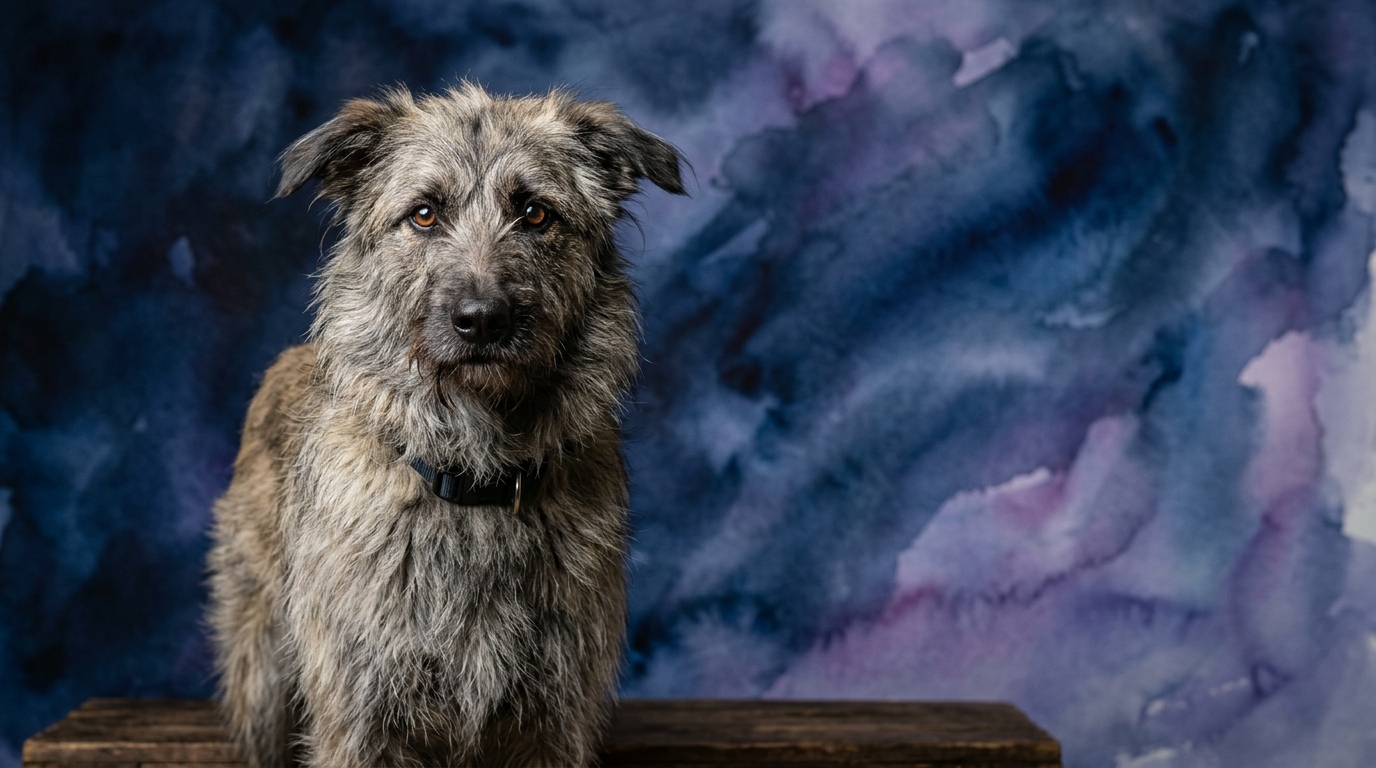
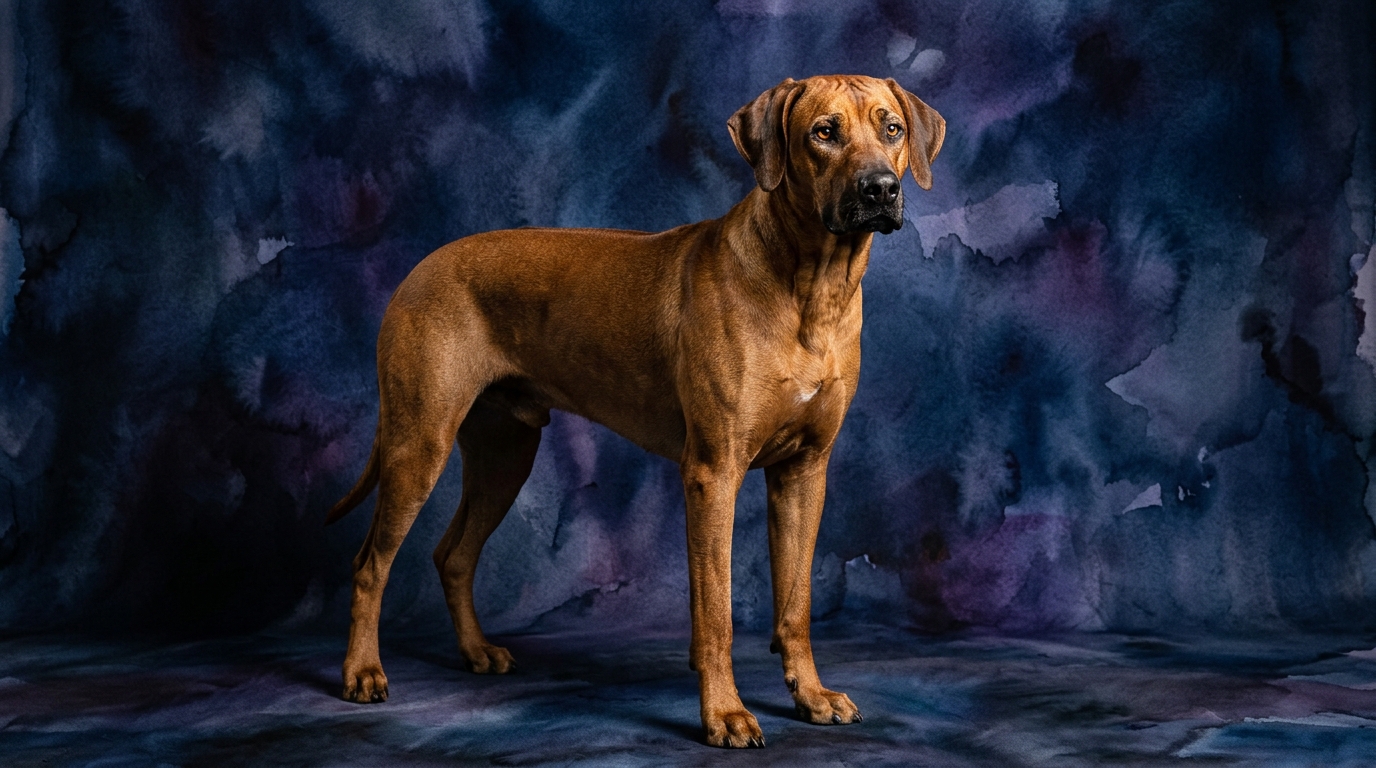
Side-by-Side Cognitive Profiles: Herder vs. Hunter
The Pyrenean Shepherd, a spirited herding dog from the Pyrenees mountains, and the Rhodesian Ridgeback, a powerful hound from Southern Africa, present an intriguing study in comparative cognition. Both breeds register a 3/5 in Problem Solving, indicating a moderate capacity to devise solutions to novel challenges. For the Pyrenean, this often manifests as strategic thinking in managing livestock, anticipating movements and adjusting tactics on the fly. For the Ridgeback, it translates to independent decision-making during a hunt, navigating complex environments or outsmarting difficult quarry.
In Training Speed, both breeds again land at 3/5. This suggests a moderate pace for acquiring new commands and behaviors. The Pyrenean Shepherd's natural desire to work in partnership with a handler might make them seem more eager to learn, while the Ridgeback's independent nature as a hound means they might require more consistent motivation and proof of the task's value. Social Intelligence, at 3/5 for both, indicates a moderate ability to interpret and respond to social cues. A Pyrenean might excel at understanding subtle handler signals and flock dynamics, whereas a Ridgeback might be attuned to the hierarchies within their human family and interactions with other canines, often displaying a nuanced understanding of their environment's social fabric.
Instinctive Drive, also 3/5 for both, highlights their inherent motivations. The Pyrenean Shepherd possesses a robust drive for herding, exhibiting vigilance, quick reactions, and a strong desire to gather and control. The Rhodesian Ridgeback's drive is rooted in their tracking and protective heritage, demonstrating persistence in following scents and a natural inclination to guard their territory and family. Finally, Memory, at 3/5 for both, signifies a moderate capacity to retain learned information and experiences. Both breeds will remember complex routes, learned commands, and social interactions, with the Pyrenean recalling specific livestock patterns and the Ridgeback remembering intricate scent trails or territorial boundaries.
Where the Pyrenean Shepherd's Cognition Shines
The Pyrenean Shepherd's cognitive strengths are deeply intertwined with their herding lineage, allowing them to excel in environments demanding dynamic interaction and rapid adaptability. Their 3/5 problem-solving ability is particularly evident in their fluid, intuitive approach to livestock management; they don't just react but often pre-empt, positioning themselves strategically to guide a flock with minimal fuss. This proactive problem-solving, combined with their sharp observational skills, allows them to quickly assess changing situations and adjust their tactics, a critical asset in a working capacity.
Their social intelligence, while rated 3/5, is finely tuned to human-dog collaboration, making them highly responsive to subtle cues from their handler. This translates into an exceptional ability to work as a team, understanding not just commands but also the handler's intent and mood. This attunement fosters a strong working partnership, making them adept at complex tasks requiring synchronized effort. Furthermore, their instinctive drive for herding provides a powerful internal motivation that channels their cognitive abilities towards productive, directed work, making them exceptionally focused on tasks that engage this inherent purpose.
Where the Rhodesian Ridgeback's Cognition Excels
The Rhodesian Ridgeback's cognitive prowess, while sharing the same 3/5 scores, is uniquely shaped by their history as independent hunters and guardians. Their 3/5 problem-solving ability often manifests as a self-reliant approach to challenges, particularly those involving navigation or overcoming physical obstacles without constant human direction. This breed is adept at figuring out how to achieve a goal on their own, whether it's finding a dropped toy in a complex environment or discerning the safest path during a long hike.
Their 3/5 instinctive drive, focused on tracking and protection, fuels a persistent and determined mindset. This means they can maintain focus on a task, such as following a scent, for extended periods, demonstrating a remarkable stamina in their cognitive effort. Their social intelligence, though similar in score to the Pyrenean, is often geared towards understanding pack dynamics and establishing clear boundaries within their family unit, making them astute observers of human behavior and household routines. This allows them to integrate smoothly into a family structure, often choosing to observe and learn before fully engaging, showcasing a thoughtful approach to social integration.
Training Dynamics: A Question of Motivation and Partnership
While both breeds hold a 3/5 in training speed, the perceived ease of training can differ significantly due to their behavioral predispositions. The Pyrenean Shepherd, with their strong herding drive, often possesses an inherent eagerness to work collaboratively with a human. Their historical role demanded close partnership and responsiveness, which can translate into a higher willingness to engage in training sessions and a desire to please their handler. This foundational eagerness can make the training process feel more fluid and rewarding, as they are naturally inclined to follow direction and find purpose in working alongside their person.
The Rhodesian Ridgeback, conversely, brings the independent spirit of a hound to the training arena. Their 3/5 training speed means they are capable learners, but their self-sufficient nature often requires a more compelling reason to comply. They may question commands or require higher-value rewards and consistent, positive reinforcement to maintain engagement. Training a Ridgeback often involves convincing them that the task is worthwhile, appealing to their problem-solving mind rather than solely relying on a desire to please. This doesn't make them less capable, but rather necessitates a trainer who understands how to motivate a dog bred for independent decision-making rather than constant human direction. Early socialization and consistent, fair leadership are paramount for both breeds, but particularly so for the Ridgeback to channel their independent streak productively.
Matching Breeds to Lifestyles: Active Explorers vs. Dedicated Companions
When considering which breed aligns with an owner's lifestyle, the nuances of their physical and cognitive energy become crucial. The Pyrenean Shepherd is a high-energy dog, both physically and mentally. They thrive with active owners who can provide ample opportunities for physical exercise like running, hiking, or dog sports such as agility or herding. Their cognitive needs are equally demanding; they require mental challenges that engage their problem-solving and instinctive drives, making them ideal for owners who enjoy teaching complex tricks, puzzle toys, or participating in advanced obedience. A Pyrenean Shepherd is not a breed for a relaxed owner; they need a job or a consistent outlet for their considerable vigor, otherwise, they can become bored and develop undesirable behaviors. They are best suited for individuals or families who embrace an active, outdoor-oriented lifestyle and are prepared to engage their dog in daily, structured activities.
The Rhodesian Ridgeback, while also requiring significant exercise, often exhibits a more 'off-switch' indoors after their needs are met. They are excellent companions for active owners who enjoy long walks, jogs, hiking, or scent work. Their endurance makes them superb partners for extended outdoor adventures. However, unlike the constant 'on' switch of some herding breeds, a well-exercised Ridgeback can be a relatively calm and composed presence within the home, enjoying quiet time with their family. This makes them suitable for active owners who also appreciate periods of relaxation and a dignified companion. They are less suited for owners who cannot commit to their daily exercise requirements, as pent-up energy can lead to destructive behaviors. While not ideal for truly relaxed owners, they offer a balance of robust outdoor activity and serene indoor companionship, provided their physical and mental stimulation needs are consistently met.
The Verdict
Choose the Pyrenean Shepherd if you are an exceptionally active owner seeking an intensely engaged, highly responsive partner for dog sports, herding, or complex training, valuing their inherent desire for collaborative work.
Opt for the Rhodesian Ridgeback if you are an active owner who appreciates an independent yet devoted companion for long outdoor adventures, valuing their calm demeanor indoors after sufficient exercise and their thoughtful approach to problem-solving.
🧠 Find Your Pet's IQ Score
Our Pet IQ Lab assessment covers 25+ tests across 5 cognitive dimensions — personalized to your breed.
Take the Full IQ Test →Frequently Asked Questions
Do Pyrenean Shepherds bark a lot?
Pyrenean Shepherds, due to their herding and guardian instincts, can be quite vocal. They use barking to communicate, alert, and manage their environment, which requires consistent training to manage appropriately in a domestic setting.
Are Rhodesian Ridgebacks good with children?
Rhodesian Ridgebacks can be excellent family dogs and are often very protective of children within their family. However, their size and strength mean that supervision is always recommended, and early socialization is crucial for them to learn appropriate interactions.
Which breed is better for first-time dog owners?
Neither breed is typically recommended for first-time dog owners due to their strong drives, energy levels, and independent natures. Both require experienced handling, consistent training, and significant commitment to socialization and exercise to thrive.