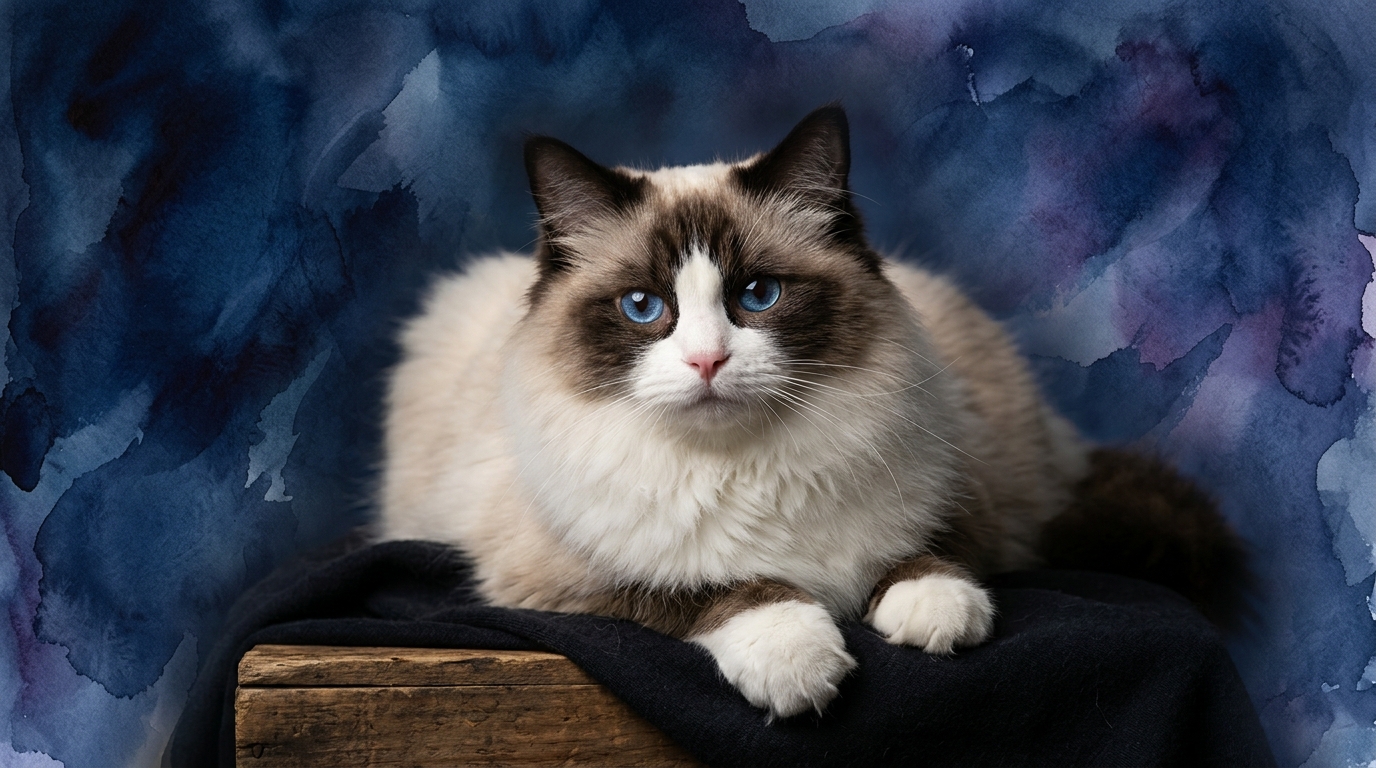
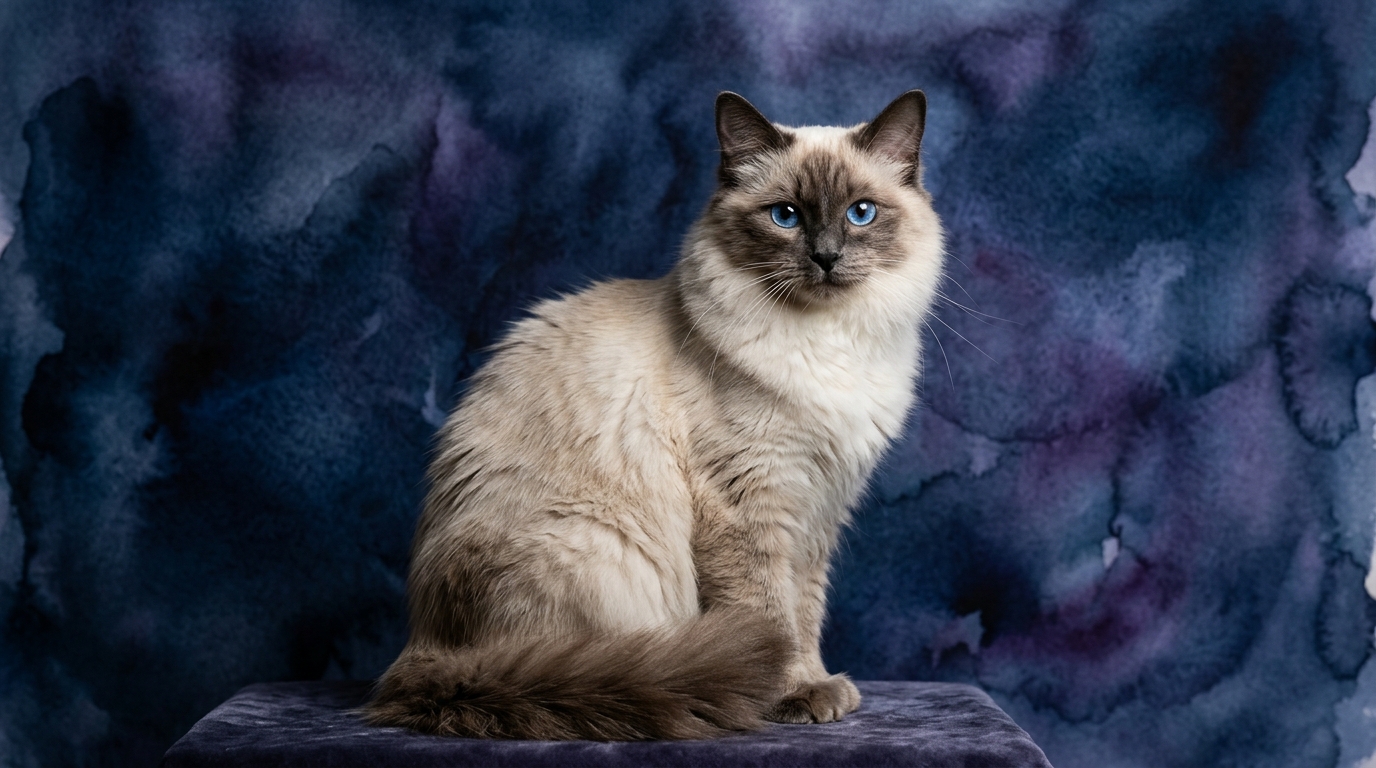
Side-by-Side Cognitive Profiles: Ragdoll vs. Balinese
At The Cosmic Pet Pet IQ Lab, we analyze feline cognition across five crucial dimensions, offering a nuanced understanding of each breed's mental makeup. For the Ragdoll, their cognitive profile paints a picture of a deeply social and adaptable companion, while the Balinese emerges as a quick-witted, highly interactive learner.
The Ragdoll's Problem Solving ability scores a 3 out of 5, indicating a practical approach to challenges. They’ll understand straightforward routines and simple cause-and-effect, but might not independently devise novel solutions to complex environmental puzzles, such as figuring out a multi-step cat feeder or opening a tricky cabinet latch without prior demonstration. Their Training Speed is also 3 out of 5, meaning learning new behaviors requires patience and consistent positive reinforcement. While they will eventually master basic commands or litter training, the acquisition process is steady rather than rapid, building on their desire for human approval rather than quick cognitive leaps. Where Ragdolls truly shine is in Social Intelligence, earning a perfect 5 out of 5. They demonstrate an exceptional capacity to read human emotions, respond to subtle vocal tones, and seamlessly integrate into family dynamics, often mirroring their owners' moods and forming profound, empathetic bonds. Their Instinctive Drive is a low 2 out of 5; their predatory instincts are notably subdued, preferring gentle batting at toys over elaborate stalking or high-energy 'hunt-and-kill' games. Finally, their Memory scores a 3 out of 5, reflecting good recall for daily routines, the location of favorite napping spots, and family members, but perhaps less for intricate sequences of learned tricks.
In contrast, the Balinese presents a more dynamic cognitive profile. Their Problem Solving ability scores a 4 out of 5, showcasing a more pronounced cognitive curiosity and persistence in navigating their environment. They are more likely to experiment with different approaches to open doors, retrieve hidden toys, or manipulate objects to achieve a desired outcome, demonstrating a higher degree of adaptive reasoning. Their Training Speed is an impressive 5 out of 5, indicating a remarkably steep learning curve. They grasp complex commands and multi-step tricks with minimal repetition, stemming from a combination of focused attention and a keen understanding of cause-and-effect, making them highly responsive to clicker training. Like the Ragdoll, the Balinese also earns a 5 out of 5 in Social Intelligence, forming deep, communicative bonds and often using a distinct vocal repertoire to express their needs and desires. They are highly attuned to their human companions, participating actively in household activities. Their Instinctive Drive is a moderate 3 out of 5; they enjoy interactive toys that simulate prey, engaging in stalking, pouncing, and chasing with focused intensity. Their Memory scores a 4 out of 5, reflecting a robust recall for both learned behaviors and specific events, enabling them to remember intricate trick sequences over long periods and learn from past experiences.
Where the Ragdoll's Cognition Excels
While both breeds achieve a perfect 5/5 in Social Intelligence, the Ragdoll's unique cognitive strength lies in how this intelligence manifests alongside their lower Instinctive Drive (2/5). This combination means their social engagement is less often intertwined with demands for high-energy play or complex interactive sessions. Instead, Ragdolls excel in passive companionship, demonstrating a profound understanding of subtle human cues for comfort and presence without needing constant stimulation. Their famous 'floppy' nature, a willingness to relax completely in human arms, is a testament to their exceptional social trust and cognitive adaptability to gentle human handling, making them unparalleled in their capacity for calm, empathetic bonding.
Their cognitive wins are therefore centered on their ability to be an emotionally attuned presence. A Ragdoll often seems to anticipate an owner's need for quiet company, settling nearby during a stressful moment or offering a gentle head-nuzzle without being prompted. This profound social intuition, coupled with their less demanding play drive, positions them as masters of harmonious, low-key cohabitation, a cognitive triumph for those seeking a deeply comforting and understanding feline companion.
Where the Balinese's Cognition Shines Brighter
The Balinese cat unequivocally demonstrates a cognitive advantage in several key areas: Problem Solving (4/5 vs. Ragdoll's 3/5), Training Speed (5/5 vs. Ragdoll's 3/5), and Memory (4/5 vs. Ragdoll's 3/5). This superior cognitive toolkit translates into a feline companion more adept at actively manipulating its environment, learning complex tasks rapidly, and retaining those lessons over extended periods. Owners will observe a Balinese more frequently engaging in behaviors like figuring out how to open specific cabinets, mastering multi-step agility courses, or remembering intricate sequences of interactive games.
Their moderate Instinctive Drive (3/5) further supports their cognitive prowess, providing a healthy motivation for engaging with puzzle toys and interactive hunting simulations. This allows them to apply their problem-solving skills to real-world (or toy-world) challenges, making them particularly satisfying for owners who enjoy providing mental enrichment. The Balinese's cognitive strengths make them natural candidates for learning advanced tricks and exhibiting a highly interactive, intellectually engaged presence in the home.
Ease of Training: Behavioral Differences Unpacked
When it comes to ease of training, the Balinese clearly holds an advantage, primarily due to their stellar 5/5 Training Speed and robust 4/5 Memory. These scores indicate that Balinese cats grasp new concepts and commands with remarkable swiftness and retain that knowledge effectively over time. Their higher Problem Solving score (4/5) further enhances their trainability, as they are more likely to understand the 'why' behind an action, making them exceptionally responsive to consistent positive reinforcement. For instance, a Balinese might quickly learn to fetch a specific toy, navigate a simple agility course, or even respond to complex verbal cues, showing a keen interest in active learning.
Ragdolls, with their 3/5 Training Speed and 3/5 Memory, are certainly trainable for basic commands and household routines, but they typically require more patience and repetition. Their strong 5/5 Social Intelligence means they possess an inherent desire to please their human companions, which is a powerful motivator. However, their cognitive processing speed for entirely new or complex tasks is not as rapid as the Balinese. A Ragdoll excels at learning household rules and routines through social cues and gentle guidance, such as understanding where they are allowed to scratch or where their litter box is, but they are generally less inclined toward or adept at mastering a repertoire of complex tricks or intricate behavioral sequences.
Matching Feline Minds to Lifestyles: Active vs. Relaxed Owners
The distinct cognitive profiles of the Ragdoll and Balinese lend themselves to different owner lifestyles. For active owners who thrive on engagement and mental stimulation, the Balinese is an ideal match. Their superior Problem Solving (4/5) and rapid Training Speed (5/5), combined with a moderate Instinctive Drive (3/5), mean they flourish when provided with consistent mental and physical challenges. Owners who enjoy teaching tricks, utilizing interactive puzzle feeders, engaging in regular fetching games, or even exploring leash training will find the Balinese a highly rewarding and participatory companion. They require outlets for their active minds and bodies, making them suitable for households that can dedicate time to enriching their environment and interaction.
Conversely, for relaxed owners seeking a calm, affectionate, and low-maintenance companion, the Ragdoll is an excellent choice. Their exceptional Social Intelligence (5/5) and notably lower Instinctive Drive (2/5) make them perfect for individuals or families who appreciate quiet presence and gentle interaction over constant activity. Ragdolls are content with lounging nearby, following their humans from room to room, and receiving affection without demanding complex activities or rigorous play sessions. Their cognitive strengths lie in their ability to provide a deeply comforting and emotionally supportive presence, making them well-suited for a serene household environment where they can simply 'be' with their people.
The Verdict
If your priority is a deeply affectionate, adaptable companion who excels in social bonding and provides a calming presence, the Ragdoll is an excellent choice, thriving on gentle interaction and shared quiet moments.
If you seek a cognitively agile, interactive cat eager to learn tricks, engage in puzzle play, and participate actively in household life, the Balinese will be a more stimulating match, requiring an owner willing to provide consistent mental enrichment.
🧠 Find Your Pet's IQ Score
Our Pet IQ Lab assessment covers 25+ tests across 5 cognitive dimensions — personalized to your breed.
Take the Full IQ Test →Frequently Asked Questions
Are Ragdolls or Balinese cats more affectionate?
Both breeds score 5/5 in Social Intelligence, indicating deep affection and strong bonds with their human companions. The difference lies in how they express it: Ragdolls often seek gentle closeness and quiet presence, while Balinese may combine affection with more vocal communication and playful interaction.
Can Balinese cats be left alone for long periods?
Balinese cats, with their high Social Intelligence and need for mental engagement, generally prefer companionship and interaction. While they can tolerate some alone time, prolonged solitude without enrichment may lead to boredom or anxiety, making them better suited for households where they receive consistent attention.
Do Ragdolls make good pets for first-time cat owners?
Yes, Ragdolls are often recommended for first-time cat owners due to their adaptable nature, high social intelligence, and relatively low instinctive drive. Their gentle demeanor and eagerness for companionship make them forgiving and easy to integrate into a new home environment.