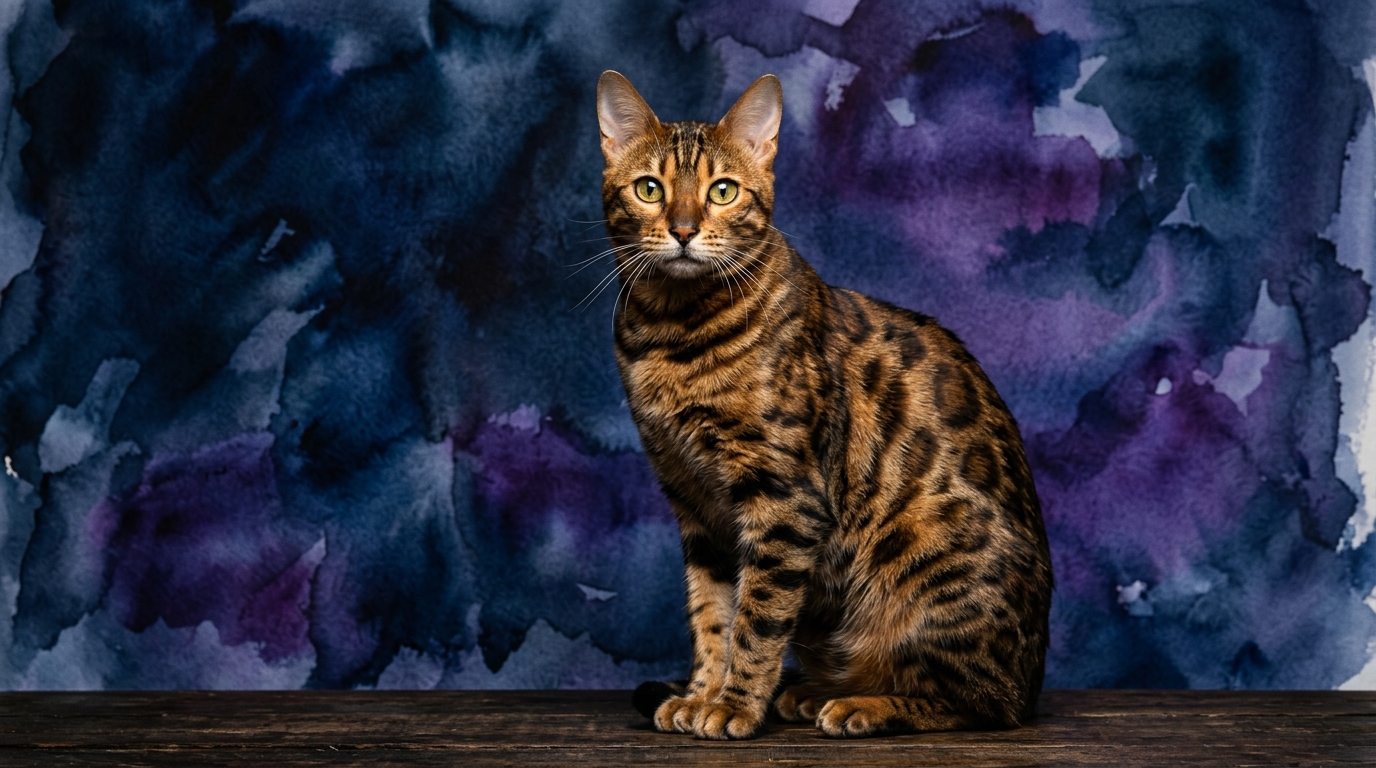
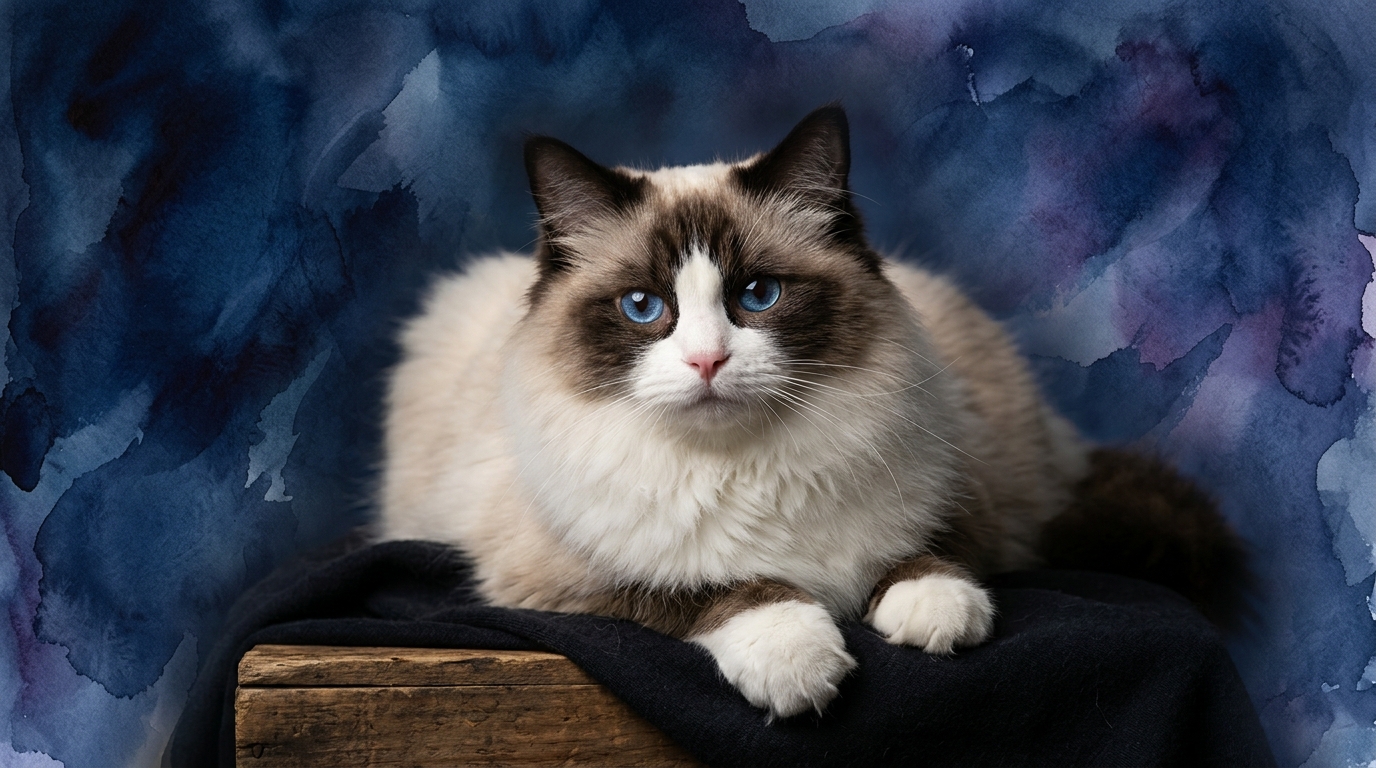
Side-by-Side IQ Profile: Bengal vs. Ragdoll
The Cosmic Pet Pet IQ Lab provides a unique lens through which to compare the cognitive strengths of the Bengal and Ragdoll, revealing their distinct capacities across five key dimensions. Understanding these profiles is crucial for appreciating each breed's unique approach to the world and their human interactions.
Problem Solving: The Bengal, with a perfect 5/5, excels at navigating complex environmental challenges, often manipulating objects or figuring out mechanisms with persistent, analytical effort. The Ragdoll, scoring 3/5, approaches problem-solving more casually, preferring simpler tasks and often relying on human assistance rather than intense independent exploration of puzzles.
Training Speed: Bengals achieve 4/5, quickly grasping new commands and routines thanks to their eagerness and sharp focus, often learning tricks with fewer repetitions. Ragdolls, at 3/5, learn at a moderate pace, responding well to consistent, positive reinforcement but requiring more time and patience for new behaviors to solidify.
Social Intelligence: The Ragdoll truly shines with a 5/5, exhibiting a profound ability to interpret and respond to human emotions, forming deep, empathetic bonds. The Bengal, scoring 4/5, also forms affectionate attachments and understands household dynamics, though their social interactions often maintain a more independent streak.
Instinctive Drive: With a dominant 5/5, the Bengal's drive manifests as a powerful urge to hunt, explore, and engage in vigorous, prey-mimicking play, making them highly active. The Ragdoll, scoring a low 2/5, has a considerably muted instinctive drive, leading to a placid, less predatory nature content with gentle play.
Memory: The Bengal's robust memory earns a 5/5; they retain information about routines, hidden objects, and learned commands with impressive longevity, recalling complex sequences over time. The Ragdoll's memory, at 3/5, is sufficient for familiar faces and daily schedules, but less for intricate details or complex sequences.
Where the Bengal Wins Cognitively
The Bengal's cognitive strengths distinctly lie in their exceptional problem-solving abilities and robust memory. Their perfect 5/5 in problem-solving means they actively engage with their environment, seeking solutions to challenges like opening cupboards or manipulating puzzle feeders. This is fueled by their high instinctive drive (5/5), which pushes them to investigate and understand their surroundings with relentless curiosity. They are constantly observing, learning, and adapting, often surprising their owners with their ingenuity. Combined with a 5/5 memory, they retain complex information over time, remembering pathways to forbidden areas, the precise location of hidden toys, or intricate action sequences required for desired outcomes. A Bengal might recall a multi-step game learned weeks prior, demonstrating their impressive recall and ability to connect past experiences with current opportunities for engagement.
Where the Ragdoll Wins Cognitively
The Ragdoll’s primary cognitive triumph is their unparalleled social intelligence, earning a perfect 5/5. This involves a deep, nuanced understanding of social dynamics and emotional states, extending far beyond simple friendliness. Ragdolls possess an uncanny ability to sense subtle shifts in human mood, often responding with comforting purrs or gentle nudges when their owner is distressed. They adeptly integrate into diverse households, quickly discerning social hierarchy and adapting their behavior for harmonious interaction with other pets or children. Their social acumen fosters extraordinarily strong, almost therapeutic bonds, making them intuitive and responsive companions. Their low instinctive drive (2/5) further enhances this, allowing them to focus more intently on interaction and companionship, solidifying their role as empathetic and attentive family members who prioritize connection above all else.
Which is Easier to Train and Why
For ease of training complex tasks, the Bengal generally has an edge. Their 4/5 training speed, coupled with superior problem-solving (5/5) and memory (5/5), makes them remarkably receptive to learning intricate commands and behaviors. They often relish the mental challenge of training sessions, quickly grasping concepts like 'fetch' or navigating agility courses. Their high instinctive drive can be effectively channeled into structured play and trick training, transforming learning into a rewarding engagement. For instance, a Bengal might be clicker-trained to perform a specific sequence for a treat, showcasing their quick uptake and retention of multi-step processes.
The Ragdoll, with a 3/5 training speed, requires more patience and a softer approach. While eager to please due to their high social intelligence (5/5), their lower problem-solving (3/5) means complex tricks take longer to embed. They excel with basic manners and routines through gentle, consistent positive reinforcement, such as coming when called or using a scratching post. Their placid nature means they are less likely to be rebellious during training, but their focus may wander if sessions are too long or demanding. While a Bengal might learn to open a specific drawer, a Ragdoll is more likely to learn that a gentle nudge against your leg will consistently get them attention.
Which Suits Active Owners vs. Relaxed Owners
The choice between these breeds often aligns directly with an owner's lifestyle and desired level of feline interaction. For active owners seeking a dynamic, mentally engaging companion, the Bengal is an ideal match. Their perfect 5/5 instinctive drive demands vigorous play, hunting simulations, and opportunities for exploration, whether on a harness walk or within a stimulating home environment filled with puzzle toys and climbing structures. These cats need their problem-solving (5/5) and memory (5/5) continually challenged, requiring significant owner dedication to interactive play and enrichment to prevent boredom. They are not content to simply lounge; they actively participate in their surroundings and thrive on engagement.
In contrast, relaxed owners desiring a calm, affectionate, low-maintenance presence will find the Ragdoll to be a perfect fit. Their low instinctive drive (2/5) means they are generally content with gentle play sessions and extended periods of lounging, often preferring to be a lap cat rather than an adventurer. Their exceptional social intelligence (5/5) thrives on close companionship and quiet interaction, seeking out cuddles and gentle petting. They are less demanding of constant mental stimulation or physical exertion, making them well-suited for quieter households or individuals who enjoy a more serene feline presence. A Ragdoll is happy to observe the world from a comfortable perch beside you, offering comfort without needing constant engagement.
The Verdict
If you are an active individual seeking a mentally agile, highly interactive companion who thrives on challenges and structured play, the Bengal will be an endlessly fascinating and rewarding addition to your home.
Conversely, if you desire a tranquil, deeply affectionate, and empathetic presence that thrives on gentle companionship and quiet moments, the Ragdoll offers an unparalleled bond without demanding constant stimulation.
🧠 Find Your Pet's IQ Score
Our Pet IQ Lab assessment covers 25+ tests across 5 cognitive dimensions — personalized to your breed.
Take the Full IQ Test →Frequently Asked Questions
Can Ragdolls be trained to do tricks?
Yes, Ragdolls can certainly be trained to perform basic tricks and commands, especially with consistent positive reinforcement and patience. While their problem-solving score of 3/5 means they may not grasp complex sequences as quickly as some breeds, their high social intelligence makes them eager to please their human companions.
Do Bengals get along with other pets?
Bengals, with a social intelligence of 4/5, can generally get along well with other pets, particularly if introduced properly and socialized from a young age. However, their strong instinctive drive (5/5) means that interactions with smaller prey-like animals, such as hamsters or birds, should always be closely supervised or avoided.
How much daily interaction do Bengals need?
Bengals require substantial daily interaction and mental stimulation to satisfy their high instinctive drive and problem-solving abilities. Owners should plan for multiple extended play sessions, puzzle feeders, and opportunities for exploration to keep these cats engaged and prevent boredom, often totaling an hour or more of dedicated interaction.