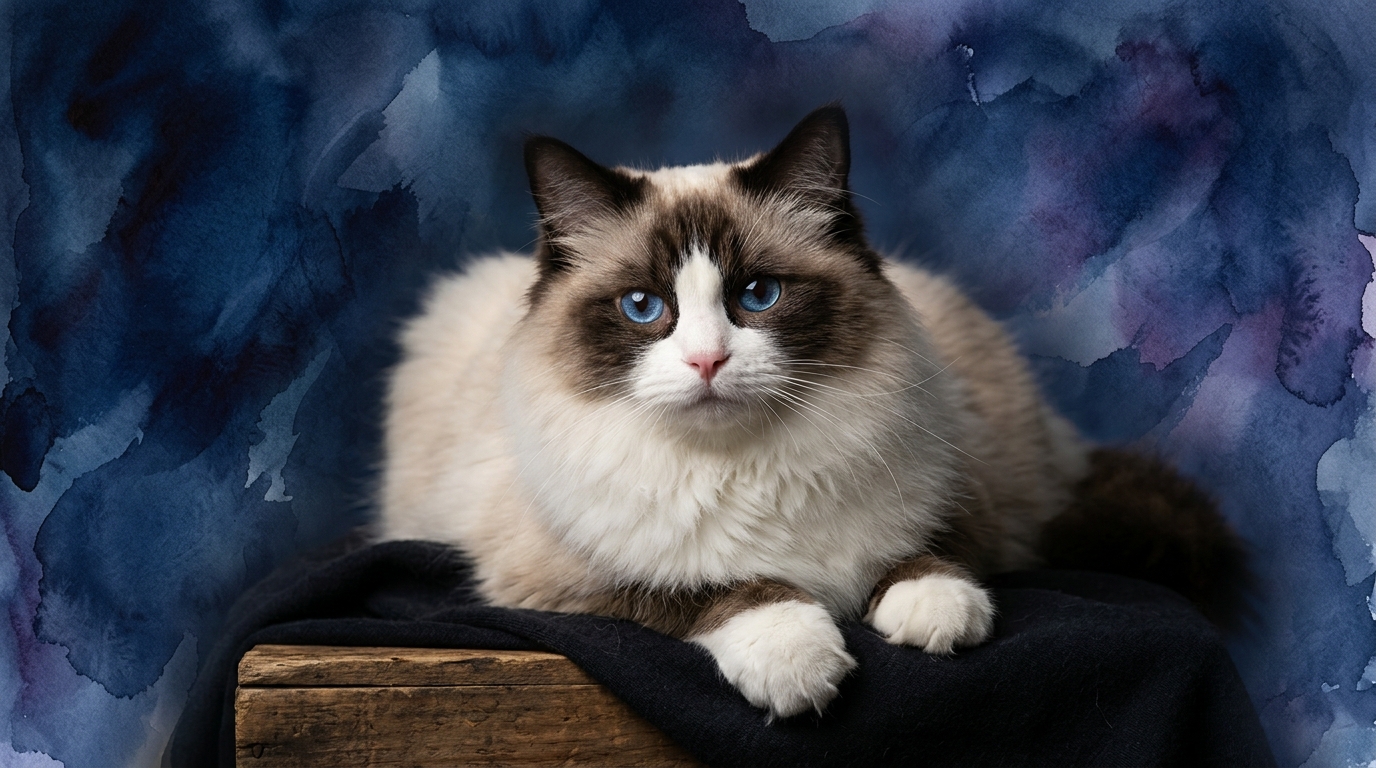
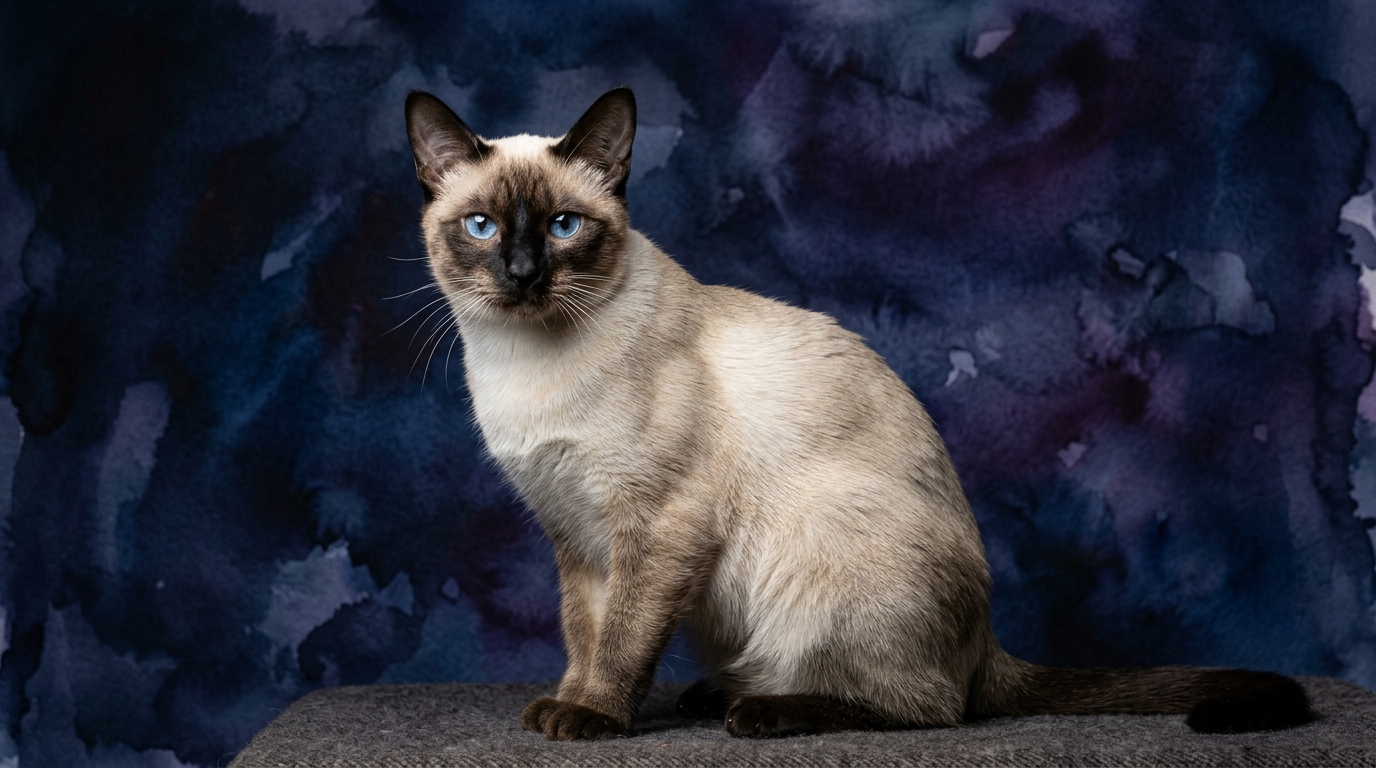
Side-by-Side Cognitive Profiles
The Ragdoll presents a unique cognitive blueprint, starting with its exceptional Social Intelligence, rated 5 out of 5. This means a Ragdoll is profoundly attuned to human emotions and interactions, often seeking out companionship and forming deep, almost dog-like bonds with their guardians. Their Problem Solving and Training Speed both register at 3 out of 5, indicating a moderate capacity to learn new commands and navigate simple challenges, provided the motivation is rooted in connection. Memory, also at 3 out of 5, allows them to recall routines and familiar faces with ease, while their Instinctive Drive is notably low at 2 out of 5, suggesting a reduced inclination towards hunting or intense independent exploration.
In contrast, the Colorpoint Shorthair exhibits a more balanced, though equally engaging, cognitive profile. Its Social Intelligence stands at 3 out of 5, signifying a desire for human interaction that is present but often on its own terms, perhaps less overtly demonstrative than a Ragdoll. Like the Ragdoll, the Colorpoint Shorthair also scores 3 out of 5 in Problem Solving and Training Speed, making them capable learners who respond well to consistent, reward-based methods. Their Memory is also a consistent 3 out of 5, ensuring they remember important routines and individuals. Distinctively, their Instinctive Drive is rated 3 out of 5, reflecting a moderate prey drive and a greater enthusiasm for active play, chasing, and exploring their surroundings.
Where the Ragdoll Excels Cognitively
The Ragdoll's most striking cognitive strength lies in its profound Social Intelligence, scoring a perfect 5 out of 5. This isn't just about being affectionate; it's about an innate ability to read and respond to human cues, often anticipating needs for comfort or companionship. A Ragdoll’s tendency to "go limp" when held, a hallmark of the breed, isn't merely a physical trait but a behavioral manifestation of their deep trust and comfort in human hands, indicating a cognitive understanding of safe social bonding. This exceptional social awareness means they actively seek out and thrive on consistent human interaction, making them highly integrated family members rather than aloof observers.
Furthermore, the Ragdoll's lower Instinctive Drive (2/5) complements its high social intelligence by reducing distractions from independent pursuits like hunting or extensive solo exploration. While other cats might be more driven by environmental stimuli, the Ragdoll's focus remains predominantly on its human companions. This cognitive prioritization of social connection over primal urges allows them to be exceptionally docile and patient, often content to spend hours in proximity to their people. Their intelligence is channeled into understanding and maintaining social harmony within the household, making them adept at fitting into various family dynamics with grace.
Where the Colorpoint Shorthair Shines Cognitively
The Colorpoint Shorthair's cognitive strengths are rooted in its balanced blend of social engagement and a more pronounced Instinctive Drive, rated 3 out of 5. This moderate drive means they possess a greater natural inclination for active play, chasing, and engaging with their environment in a hands-on manner. Unlike the more placid Ragdoll, a Colorpoint Shorthair often initiates play, demonstrating a keen interest in toys that mimic prey and a desire to explore nooks and crannies. Their problem-solving abilities (3/5) are frequently applied to figuring out how to retrieve a toy from under furniture or navigating complex home layouts during their spirited explorations.
While their Social Intelligence (3/5) is not as outwardly intense as the Ragdoll’s, it manifests as a lively and interactive companionship rather than constant physical closeness. Colorpoint Shorthairs are conversational cats, often using a range of vocalizations to communicate their desires or observations, a clear sign of their cognitive engagement with their human environment. This expressive nature reflects their ability to connect and convey intent, making them highly communicative partners. Their memory (3/5) ensures they remember favored play routines and the people associated with them, reinforcing their interactive approach to family life.
Which is Easier to Train and Why
When considering ease of training, both the Ragdoll and Colorpoint Shorthair share a Training Speed score of 3 out of 5, suggesting neither breed is inherently faster to learn commands. However, the *nature* of their training experience diverges significantly due to their other cognitive traits. Ragdolls, with their unparalleled Social Intelligence (5/5), are often more motivated by the desire to please their human companions and the reward of affection and attention. Their low Instinctive Drive (2/5) means fewer distractions from external stimuli, making them highly receptive to training focused on companionship, such as leash walking, coming when called for cuddles, or even tolerating grooming sessions with remarkable patience.
Colorpoint Shorthairs, while equally capable learners, approach training from a different cognitive angle. Their moderate Instinctive Drive (3/5) means they respond well to training that incorporates play, chasing, or puzzle-solving. They might be more motivated by the game itself or a tangible reward rather than purely human approval. Their 3/5 Social Intelligence means they enjoy interaction during training but might also assert their independence or curiosity more readily, potentially requiring more creative and engaging methods to maintain focus. Training a Colorpoint Shorthair can be highly rewarding, but often benefits from a playful, consistent approach that taps into their natural curiosity and drive for activity.
Suitability for Active vs. Relaxed Owners
For owners seeking a profoundly relaxed and affectionate companion, the Ragdoll is an ideal match. Their exceptional Social Intelligence and remarkably low Instinctive Drive mean they thrive in calm home environments, prioritizing consistent, gentle human interaction over vigorous physical activity or independent exploration. A Ragdoll is often content to lounge nearby, follow their guardians from room to room, and accept extensive petting or lap time. They require minimal prompting for engagement, making them perfect for individuals or families who value a tranquil, deeply bonded feline presence and can offer ample passive companionship.
Conversely, the Colorpoint Shorthair's cognitive profile makes it a better fit for more active owners. Their moderate Instinctive Drive and balanced Social Intelligence mean they appreciate and often initiate interactive play sessions, enjoy puzzle toys, and are more inclined to explore their surroundings with enthusiasm. These cats benefit from structured playtime that taps into their hunting instincts and intellectual curiosity. An owner who enjoys engaging their cat in games, providing environmental enrichment like climbing structures, and perhaps even supervised outdoor adventures on a leash will find the Colorpoint Shorthair to be a responsive and energetic partner, balancing their need for companionship with a zest for activity.
The Verdict
Choose a Ragdoll if you seek a profoundly social, affectionate companion that thrives on close human interaction and a calm home environment, prioritizing cuddles over complex play.
Opt for a Colorpoint Shorthair if you enjoy an interactive, playful cat with a moderate drive for exploration and engagement, appreciating a balance of affection and independent activity.
🧠 Find Your Pet's IQ Score
Our Pet IQ Lab assessment covers 25+ tests across 5 cognitive dimensions — personalized to your breed.
Take the Full IQ Test →Frequently Asked Questions
Are Ragdolls truly 'lap cats'?
Yes, their exceptional social intelligence and low instinctive drive mean they genuinely seek out human companionship and enjoy being close, often adopting a relaxed, 'floppy' posture when held. They are content to spend significant time in their owner's lap or nearby, making them quintessential lap companions.
Do Colorpoint Shorthairs get along with other pets?
Their social intelligence of 3/5 suggests they can adapt to other pets and often integrate well into multi-pet households, though their interactions might be more on their own terms. Early socialization and careful introductions are key to fostering harmonious relationships with other animals.
How much daily interaction do these breeds need?
Ragdolls, with their 5/5 social intelligence, thrive on frequent, gentle human interaction throughout the day, often following their owners and seeking attention. Colorpoint Shorthairs, at 3/5 social intelligence, also appreciate attention, but might be more content with dedicated, active play sessions rather than constant physical closeness, balancing their social needs with independent exploration.