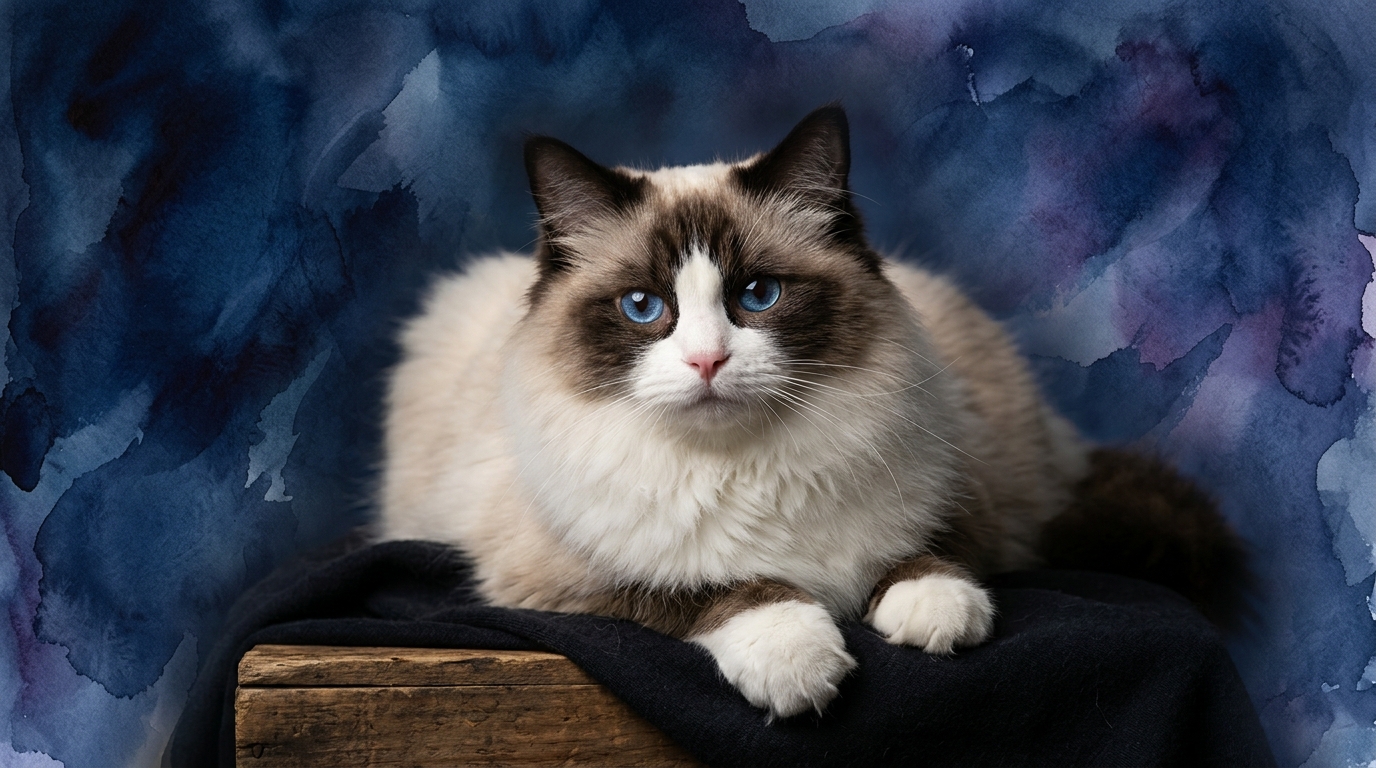
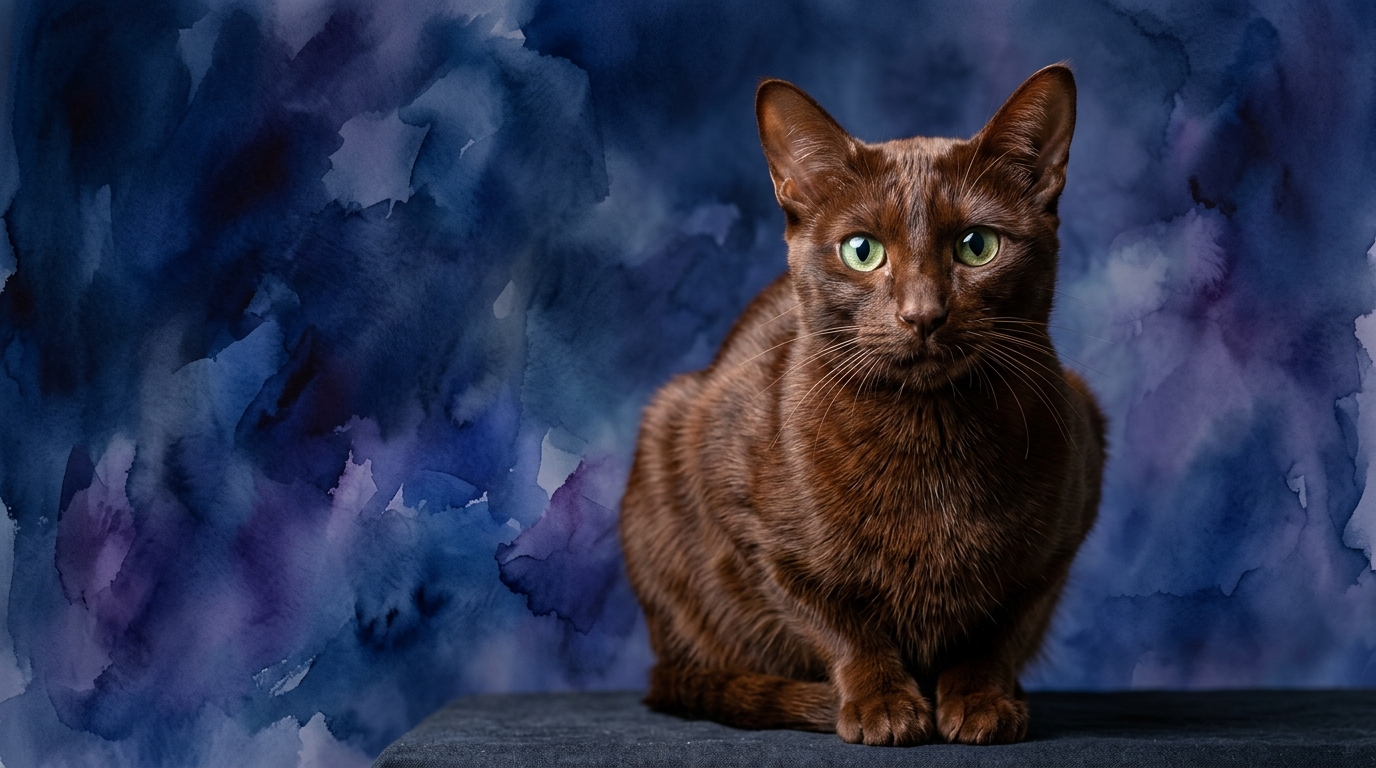
Side-by-Side IQ Profile: Ragdoll vs. Havana Brown
The Cosmic Pet's IQ Lab provides a unique framework for understanding feline cognition across five key dimensions. For the Ragdoll, we observe a Problem Solving score of 3/5, indicating a moderate ability to navigate novel challenges and figure out simple puzzles. Their Training Speed, also at 3/5, suggests they pick up new commands and routines at an average pace, responsive but not exceptionally quick to master complex sequences. Where the Ragdoll truly shines is in Social Intelligence, scoring a remarkable 5/5; this signifies an exceptional capacity for understanding human emotions, forming deep bonds, and adapting their behavior to social cues. Their Instinctive Drive is rated at 2/5, reflecting a relatively low innate urge for hunting, exploring, or marking territory, which contributes to their calm demeanor. Finally, their Memory sits at 3/5, meaning they retain learned information and recall experiences with a standard level of proficiency.
Shifting our focus to the Havana Brown, we find a similar Problem Solving score of 3/5, suggesting an equivalent aptitude for tackling environmental conundrums. Their Training Speed also matches the Ragdoll at 3/5, indicating a comparable rate of learning new behaviors and responding to consistent reinforcement. In contrast to the Ragdoll, the Havana Brown registers a Social Intelligence of 3/5, showing a solid, though not extraordinary, ability to connect with humans and navigate social dynamics. Their Instinctive Drive, at 3/5, is a point higher than the Ragdoll, suggesting a more pronounced natural inclination for curiosity, play, and engaging with their environment in a more primal way. Lastly, their Memory is identical to the Ragdoll's at 3/5, reflecting a steady capacity for recall.
Where the Ragdoll Wins Cognitively
The Ragdoll's cognitive advantage lies squarely in its superior Social Intelligence, scoring a perfect 5/5 compared to the Havana Brown's 3/5. This isn't merely about being friendly; it reflects a profound capacity for emotional attunement and complex social understanding. A Ragdoll is more likely to actively seek out and interpret human moods, responding with comforting purrs or gentle nudges when sensing distress, or engaging in interactive play when detecting an invitation. This heightened social awareness means they are exceptionally adept at forming deep, intuitive bonds, often anticipating their owner's movements or desires. Their ability to integrate seamlessly into a household's social fabric, adapting their behavior to family routines and emotional states, truly sets them apart, making them exceptionally empathetic companions rather than just pets.
Where the Havana Brown Wins Cognitively
The Havana Brown demonstrates a distinct cognitive edge in its Instinctive Drive, registering a 3/5 compared to the Ragdoll's 2/5. While neither breed exhibits an overwhelming predatory drive, the Havana Brown's slightly higher score translates into a more pronounced natural curiosity and a greater inclination for interactive play that mimics hunting behaviors. This means a Havana Brown is more likely to be independently motivated to explore new spaces, stalk toys with focused intensity, or engage in lively chase games. Their inherent drive fuels a more active engagement with their surroundings, often manifesting as a keen interest in exploring cupboards, investigating rustling sounds, or batting at dangling objects. This innate curiosity and drive for environmental interaction offer a different kind of cognitive engagement, suggesting a cat that might initiate play or investigation more frequently on its own accord.
Which Is Easier to Train and Why
Both the Ragdoll and the Havana Brown share an identical Training Speed of 3/5, suggesting they both learn at a moderate pace. However, the nuances in their other cognitive dimensions can subtly influence their overall trainability. The Ragdoll's exceptional Social Intelligence (5/5) makes them highly receptive to human cues and eager to please, which can translate into a cooperative attitude during training sessions. Their strong bond with their owners means they are often more motivated by praise and positive interaction, making them amenable to learning tricks or walking on a leash, provided the training is gentle and consistent. Their lower Instinctive Drive (2/5) also means they are less likely to be distracted by primal urges during training, focusing instead on the human interaction.
Conversely, the Havana Brown's slightly higher Instinctive Drive (3/5) means they might be more independently motivated during training, potentially more interested in the 'game' of the training itself (e.g., chasing a lure for a 'stay') than purely pleasing their owner. While their Social Intelligence (3/5) is solid, it may not provide the same level of intrinsic motivation for cooperation as the Ragdoll's profound social connection. Training a Havana Brown might require more emphasis on making the activity engaging and stimulating their natural curiosity, potentially leveraging food rewards or interactive toys more heavily. Ultimately, both breeds are trainable, but the Ragdoll's social aptitude might make the training process feel more like a collaborative effort, while the Havana Brown might respond best to training that taps into their innate exploratory and play drives.
Which Suits Active Owners vs. Relaxed Owners
Considering their cognitive profiles, the Ragdoll is generally a better fit for relaxed owners seeking a deeply connected and calm companion. Their high Social Intelligence (5/5) means they thrive on close human interaction and are content to be involved in the quiet aspects of home life, often preferring to lounge nearby or engage in gentle play. Their low Instinctive Drive (2/5) means they have less inherent need for intense physical activity or constant environmental stimulation, making them ideal for households that appreciate a placid presence. They are less likely to climb curtains or demand rigorous play sessions, instead finding contentment in shared presence and affectionate exchanges.
The Havana Brown, with its slightly higher Instinctive Drive (3/5) and solid Problem Solving abilities (3/5), aligns well with more active owners who appreciate a cat with a bit more zest for exploration and interactive play. While not hyperactive, they possess a greater innate curiosity and drive to engage with their environment. They would appreciate owners who provide regular opportunities for interactive games, puzzle toys, or even supervised outdoor exploration on a leash. Their moderate Social Intelligence (3/5) means they enjoy human company but might also be happy entertaining themselves with independent play, making them suitable for owners who enjoy engaging with their pet's playful side without necessarily needing constant physical contact.
The Verdict
Choose the Ragdoll if your priority is a profoundly empathetic and socially attuned companion who thrives on deep emotional bonds and a calm home environment, offering unparalleled companionship and a placid presence.
Opt for the Havana Brown if you seek a curious and playful partner with a keen interest in exploring its surroundings, enjoying interactive games, and bringing a lively, engaging energy to your household.
🧠 Find Your Pet's IQ Score
Our Pet IQ Lab assessment covers 25+ tests across 5 cognitive dimensions — personalized to your breed.
Take the Full IQ Test →Frequently Asked Questions
Do Ragdolls get bored easily due to their lower instinctive drive?
Ragdolls, with their 2/5 Instinctive Drive, generally have a lower need for intense stimulation, making them less prone to boredom in a calm household. They find contentment in social interaction and gentle play, thriving on companionship rather than constant activity, which suits their placid nature.
How does the Havana Brown's problem-solving ability compare to its playfulness?
The Havana Brown's Problem Solving at 3/5 is moderate, often manifesting in how they approach puzzle toys or navigate their environment. This combines well with their 3/5 Instinctive Drive, meaning they often apply their problem-solving skills to interactive play, figuring out how to retrieve toys or access interesting spaces.
Can a Havana Brown be as affectionate as a Ragdoll despite the social intelligence difference?
While the Havana Brown's Social Intelligence is 3/5 compared to the Ragdoll's 5/5, they are still affectionate and enjoy human company. Their affection might manifest differently, perhaps through playful interactions or quiet companionship, rather than the Ragdoll's more overt and constant seeking of physical closeness and emotional attunement.