Side-by-Side IQ Profile: Unpacking Identical Scores
The Cosmic Pet Pet IQ Lab rates both the Redbone Coonhound and the Harrier identically across five core cognitive dimensions: Problem Solving (3/5), Training Speed (3/5), Social Intelligence (3/5), Instinctive Drive (3/5), and Memory (3/5). These scores suggest a moderate baseline for intelligence, indicating that neither breed is a push-button automaton nor an impenetrable enigma. Instead, they represent capable working animals whose cognitive strengths are deeply intertwined with their historical purposes as scent hounds. For the Redbone Coonhound, a '3/5' in Problem Solving signifies an ability to navigate complex scent trails, adapt to changing environmental conditions, and make independent decisions while pursuing game, often away from direct human guidance. Its Training Speed at '3/5' indicates that while it learns, consistency and motivational strategies are key, as its strong independent streak can sometimes overshadow a desire to comply. Social Intelligence at '3/5' points to an ability to interact effectively with its primary human companions and, if applicable, a small hunting party, understanding social cues within a focused working context. The '3/5' for Instinctive Drive highlights its robust scenting and tracking capabilities, a primary motivator for its existence. Finally, Memory at '3/5' underscores its capacity to recall complex scent patterns, terrain, and past experiences relevant to its hunting endeavors.
Similarly, the Harrier's '3/5' in Problem Solving reflects its aptitude for collaborative hunting, where navigating terrain and deciphering scent are often collective efforts within a pack. Its Training Speed, also at '3/5', suggests that Harriers, like Redbones, require patient and consistent training, though their pack-oriented nature might make them slightly more inclined to respond to a perceived 'leader'. Social Intelligence at '3/5' is particularly crucial for Harriers, as their traditional role demands seamless interaction and cooperation within a large pack, understanding hierarchy and shared goals. The '3/5' for Instinctive Drive, much like the Redbone, speaks to their powerful scenting abilities and relentless pursuit of quarry. Memory at '3/5' for the Harrier implies an ability to recall pack strategies, familiar hunting grounds, and the nuances of group dynamics, all vital for successful collective hunts. While the numerical scores are identical, the context and application of these cognitive traits are where the fascinating differences truly emerge, shaped by centuries of selective breeding for distinct hunting methodologies.
Where the Redbone Coonhound Excels Cognitively
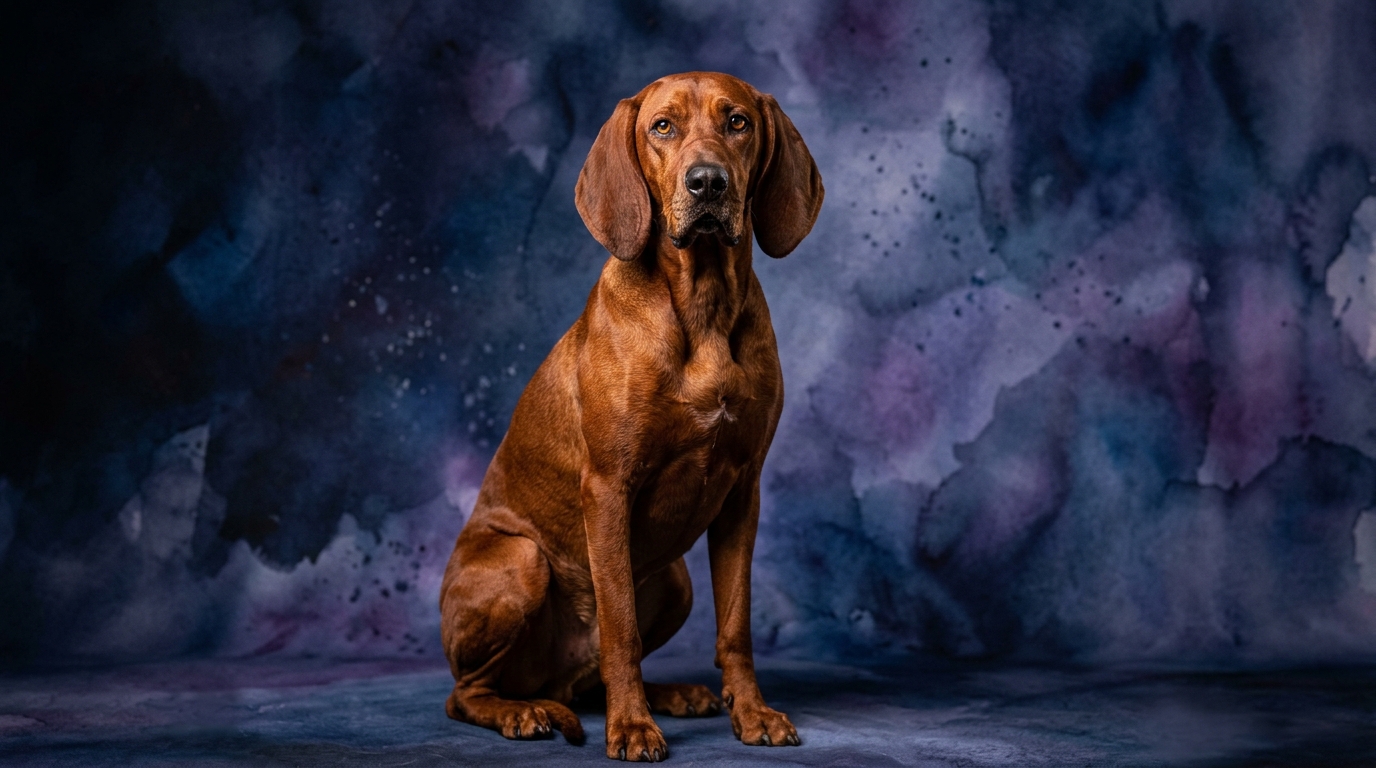
The Redbone Coonhound's cognitive strengths are particularly evident in its capacity for independent, sustained problem-solving in challenging environments. Bred to track individual raccoons through varied terrains – swamps, dense forests, rocky hills – often at night, this breed developed a specialized form of intelligence. Its '3/5' in problem-solving shines when faced with a broken scent trail or a cunning animal attempting to evade capture. A Redbone won't simply follow; it will actively 'puzzle out' the trajectory, using its memory of past similar scenarios and its keen analytical scenting abilities to re-establish the path. This requires a profound level of individual initiative and confidence, as it often operates out of sight and direct command of its handler. The Redbone's memory, also rated '3/5', is finely tuned for recalling intricate landscape features and the specific scent signatures of its quarry, allowing it to build a mental map of its hunting grounds and anticipate prey behavior. This tenacious independence, coupled with a deep-seated drive, means a Redbone's cognitive efforts are largely self-directed, making it an exceptional solo tracker or a key player in a very small, specialized team where individual contributions are paramount.
Where the Harrier Excels Cognitively
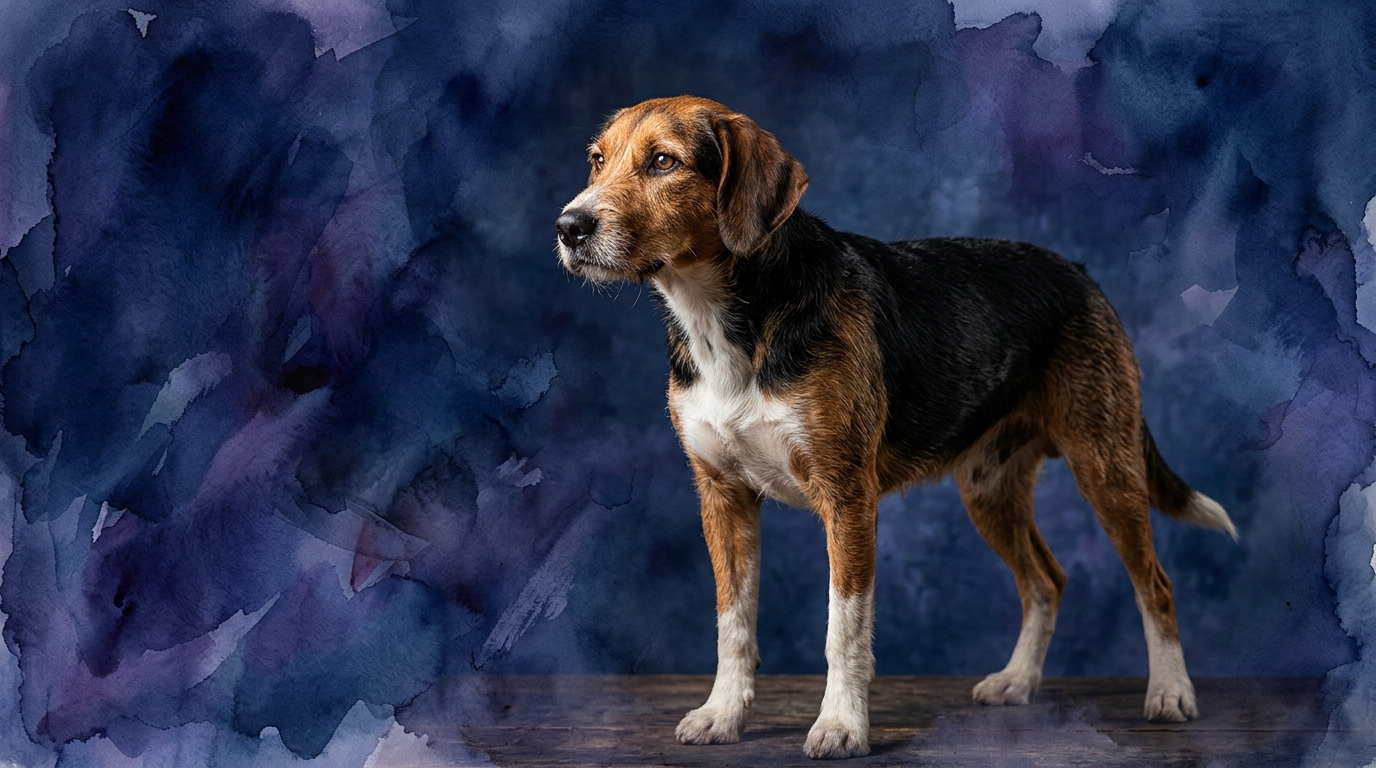
In contrast, the Harrier's cognitive prowess is deeply rooted in its pack hunting heritage. While also scoring '3/5' in problem-solving, the Harrier's application of this trait is distinctly communal. Bred to hunt hare in large groups, their intelligence is geared towards seamless cooperation and collective action. A Harrier's problem-solving isn't about individual tenacity against a single quarry, but rather about contributing effectively to a synchronized effort. This involves understanding and responding to the collective movements of the pack, anticipating the actions of fellow hounds, and maintaining formation while simultaneously processing scent information. Their '3/5' in social intelligence is a cornerstone of their cognitive strength, allowing them to navigate complex pack hierarchies, communicate through subtle cues, and work harmoniously without constant human intervention. Their memory, also '3/5', is adept at recalling established pack strategies, the shared topography of their hunting grounds, and the learned behaviors of their fellow hounds. A Harrier's cognitive focus is less on solitary initiative and more on being an integral, responsive component of a highly efficient, scent-driven unit, making collective success its primary cognitive goal.
Training Ease: Redbone Coonhound vs. Harrier
Both breeds score '3/5' in training speed, indicating that neither is exceptionally easy nor particularly difficult to train, but their underlying behavioral tendencies create different training landscapes. The Redbone Coonhound, with its strong independent streak and single-minded focus on scent, often presents a challenge in recall and obedience training. Its cognitive processing is heavily biased towards following a trail, and once locked onto a scent, diverting its attention requires significant effort and consistent, high-value motivation. Training a Redbone necessitates patience, creativity, and a deep understanding of its innate drives. Owners often find success by making training feel like a collaborative game or by incorporating scent work, leveraging its natural inclination rather than fighting against it. Building a strong bond and establishing clear, consistent expectations from a young age are critical to channeling its independent problem-solving into desired behaviors.
The Harrier, while equally driven by scent, often exhibits a greater willingness to work with a human 'pack leader' due to its inherent social intelligence and desire for group cohesion. This doesn't mean it's without its challenges; its prey drive is just as potent. However, Harriers can be more responsive to consistent, positive reinforcement methods, especially if training is framed within a structured, social context. Their '3/5' in training speed might manifest as quicker uptake of commands when they perceive their human as part of their 'pack' and the training as a shared activity. Challenges typically arise from their enthusiasm and potential for distraction in stimulating environments. For both breeds, early socialization is paramount, but for the Harrier, this extends to learning how to interact appropriately within a diverse social landscape, further honing its pack-oriented cognitive skills. Ultimately, while both require dedication, the Redbone's training often focuses on managing its strong individual will, whereas the Harrier's training often centers on harnessing its social energy and integrating it into a human-led structure.
Lifestyle Match: Active vs. Relaxed Owners
Neither the Redbone Coonhound nor the Harrier are suitable companions for truly relaxed or sedentary owners. Both are energetic scent hounds with a '3/5' instinctive drive, meaning they possess a profound need for physical activity and mental engagement. However, the nature of that activity differs significantly. A Redbone Coonhound thrives with owners who can provide extensive opportunities for independent exploration and scent work. Their cognitive makeup demands more than just a walk around the block; they need long, stimulating hikes in varied terrain where their problem-solving and memory can be engaged in deciphering the world through scent. Owners who enjoy hunting, tracking, or competitive scent sports will find a Redbone to be an incredibly rewarding partner. They require a secure yard and diligent supervision, as their independent drive can lead them to follow a compelling scent over fences and far from home. A Redbone will appreciate a home environment that respects its need for both vigorous outdoor activity and quiet, comfortable downtime indoors, often curling up with its human companions after a day of exploration.
The Harrier, while equally active, often prefers to channel its energy into structured group activities. Its '3/5' social intelligence means it thrives in a household where it feels part of a vibrant 'pack,' whether that includes other dogs or a very engaged human family. Harriers excel in activities like dog sports (e.g., agility, obedience, rally), group play sessions, or long, brisk runs with their owners. They benefit immensely from consistent routines and ample social interaction, which helps to satisfy their inherent need for collective engagement. An owner who can commit to daily, vigorous exercise, provide opportunities for socialization with other dogs, and engage in consistent training will find a Harrier to be a loyal and enthusiastic companion. While they can adapt to various living situations, they are not suited for prolonged solitude; their pack-oriented minds crave companionship and a sense of belonging. Both breeds require significant time commitment, but the Redbone leans towards individual, exploratory activity, while the Harrier thrives on communal, structured engagement.
The Verdict: When to Choose Each Breed
Choosing between a Redbone Coonhound and a Harrier boils down to understanding the subtle yet significant differences in how their similar cognitive profiles manifest in daily life. If you are an owner who values an independent, tenacious partner for nuanced tracking and problem-solving in challenging environments, and you are prepared to manage a strong individual will with patience and creative training, the Redbone Coonhound is an ideal match. They thrive with individuals who appreciate their self-directed nature and can provide ample opportunities for scent-driven exploration and outdoor adventure, forming a deep, respectful bond.
Conversely, if your lifestyle leans towards consistent, structured activity, and you seek a highly social, cooperative companion that thrives within a 'pack' dynamic, the Harrier may be your perfect fit. They excel in active households that can provide regular group engagement, dog sports, and a strong sense of belonging, responding well to a human 'leader' who can channel their collective intelligence and enthusiastic energy into shared pursuits. Ultimately, both breeds offer rich companionship to owners willing to meet their distinct cognitive and physical needs.
The Verdict
Choose a Redbone Coonhound if you seek an independent, tenacious scenting partner for nuanced tracking and problem-solving, appreciating a dog with strong individual drive for outdoor exploration.
Opt for a Harrier if you desire a highly social, cooperative pack animal that thrives on consistent group activities, structured engagement, and a vibrant, active household environment.
🧠 Find Your Pet's IQ Score
Our Pet IQ Lab assessment covers 25+ tests across 5 cognitive dimensions — personalized to your breed.
Take the Full IQ Test →Frequently Asked Questions
Are Redbone Coonhounds good family dogs?
Redbone Coonhounds can be affectionate and loyal family dogs, especially if well-socialized from a young age. Their independent nature means they might not always be 'velcro dogs,' but they are generally gentle with children and can coexist peacefully with other pets if properly introduced.
Are Harriers prone to wanderlust?
Yes, Harriers possess a strong instinctive drive and an exceptional nose, making them highly prone to wanderlust. If they catch an interesting scent, they are likely to follow it, potentially ignoring calls to return, necessitating secure fencing and diligent leash training.
Which breed is better for apartment living?
Neither the Redbone Coonhound nor the Harrier are ideal for apartment living due to their high energy levels and strong instinctive drives. Both require significant daily exercise and mental stimulation to prevent boredom and destructive behaviors, which are difficult to provide adequately in a small living space.