
Side-by-Side IQ Profile: Understanding Similar Scores
Despite their vast differences in size and breed group, both the Rhodesian Ridgeback and the Silky Terrier are assessed with a 3/5 across all five intelligence dimensions within The Cosmic Pet Pet IQ Lab framework. This identical scoring doesn't imply identical cognitive expression, but rather a comparable aptitude that manifests uniquely in each breed.
For the **Rhodesian Ridgeback**, their **Problem Solving (3/5)** involves a methodical approach to challenges, often relying on keen observation and a powerful sense of smell to navigate complex outdoor environments or locate hidden items. Their solutions tend to be practical and self-directed, reflecting their heritage as independent trackers. Their **Training Speed (3/5)** indicates they absorb new commands at a moderate pace, often requiring consistent repetition and clear, positive reinforcement, learning best when they perceive a purpose. **Social Intelligence (3/5)** in a Ridgeback means forming deep, intuitive bonds with their immediate family, adept at reading human emotions within their trusted circle, while maintaining a reserved demeanor with strangers. Their **Instinctive Drive (3/5)** manifests as a strong prey drive and an exceptional ability to focus on scents or moving targets, fueling persistence. Finally, their **Memory (3/5)** is robust, recalling routines, commands, and past experiences that influence future responses.
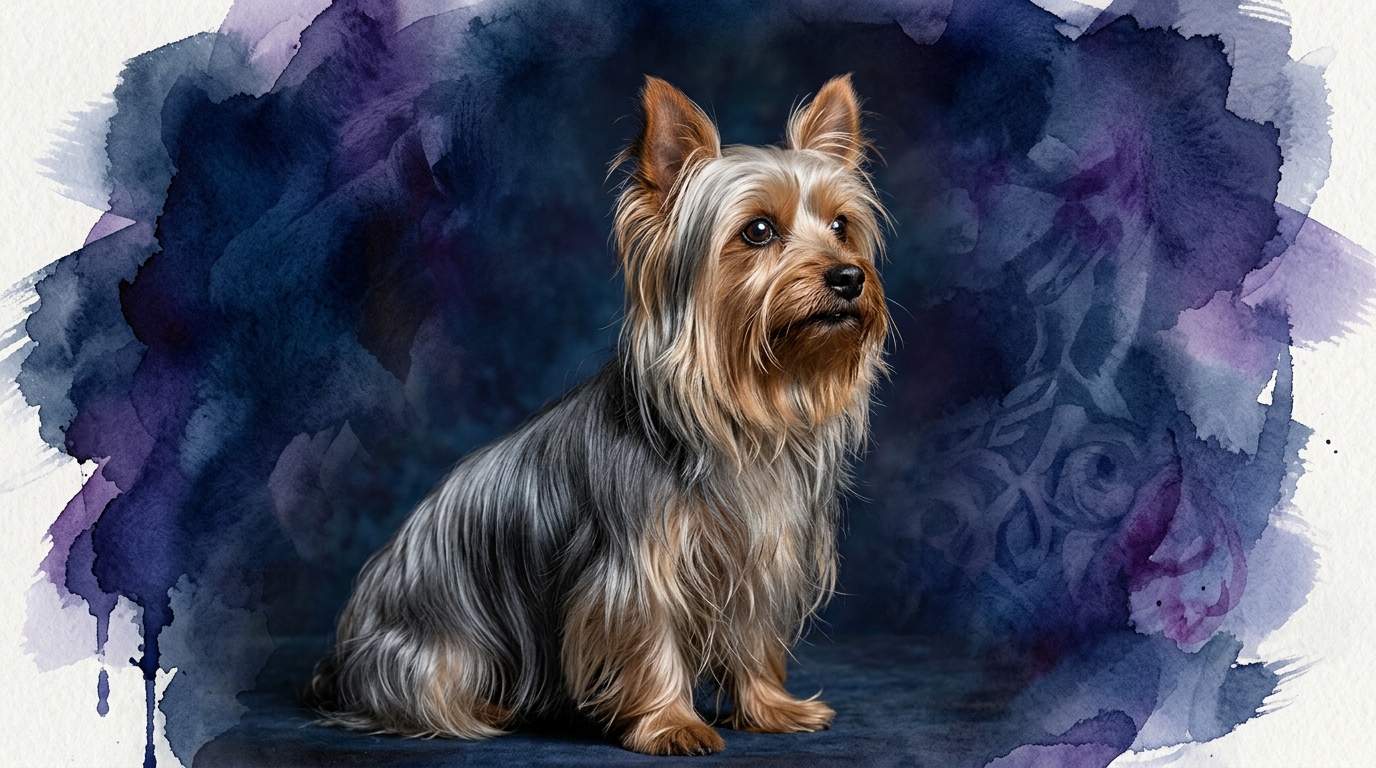
The **Silky Terrier**, in contrast, approaches **Problem Solving (3/5)** with terrier tenacity and cleverness, often finding inventive ways to achieve goals within a home environment, such as manipulating objects or seeking human assistance. Their solutions are often quick and based on immediate surroundings. Their **Training Speed (3/5)** suggests they learn new commands at a moderate rate, thriving on engaging, short sessions; their eagerness to interact, combined with a potential for distraction, makes consistency key. **Social Intelligence (3/5)** for a Silky means being highly attuned to human companions, keenly observing and responding to an owner's moods and intentions, often protective of their family. Their **Instinctive Drive (3/5)** is evident in their energetic pursuit of small moving objects, fueling alertness and playful curiosity. Their **Memory (3/5)** demonstrates good recall for commands, routines, and frequently encountered people and places, quickly associating specific sounds or situations with previous outcomes.
Where the Rhodesian Ridgeback Wins Cognitively
The Rhodesian Ridgeback's cognitive strengths often manifest in scenarios demanding sustained focus and physical prowess over larger scales. Their problem-solving (3/5) truly shines when navigating complex outdoor environments or engaging in scent work, where they must track, strategize, and adapt over considerable distances. This isn't about quick tricks, but about methodical, independent thought applied to a larger, more physically demanding canvas. Their instinctive drive (3/5) fuels a remarkable ability to process and react to subtle environmental cues, a legacy of their hunting ancestry that translates into a nuanced understanding of their surroundings, particularly concerning changes in scent or distant movement. They excel in tasks requiring endurance and a self-reliant approach to problem-solving in varied terrains.
Where the Silky Terrier Wins Cognitively
Conversely, the Silky Terrier's cognitive advantages often appear in their acute awareness of their immediate human environment and their quick, adaptable responses. Their problem-solving (3/5) tends to be directed towards navigating household intricacies or figuring out how to achieve a desired outcome within a domestic setting – perhaps opening a cabinet or getting attention from a specific family member. Their social intelligence (3/5) allows them to be remarkably astute at reading human body language and moods, often anticipating needs or reacting to emotional shifts with surprising accuracy. This makes them highly responsive and engaging companions in close quarters, excelling at understanding and manipulating the social dynamics of their human family.
Training Dynamics: Independence vs. Tenacity
Despite both breeds having a training speed score of 3/5, the path to a well-behaved companion differs significantly. The Rhodesian Ridgeback's inherent independence, a hallmark of its hound lineage, means training often requires a patient, consistent handler who can establish clear boundaries and provide strong, positive motivation. They aren't inherently driven to please purely for the sake of it; they need to understand the 'why' behind a command and respect their trainer. Their physical strength necessitates early and thorough training to ensure they are manageable, especially on a leash. A Ridgeback might learn a command at a moderate pace but could choose not to perform it if unconvinced or if a more compelling instinct takes over.
The Silky Terrier, while equally rated at 3/5 for training speed, presents a different set of considerations. Their spirited, tenacious terrier nature means they can be quick to learn but also quick to lose focus or become stubborn if not consistently engaged. They respond well to positive reinforcement and short, fun training sessions that prevent boredom, as their attention span can be shorter. While their smaller size makes minor behavioral lapses less physically challenging, their potential for vocalization or bossiness requires consistent guidance from an early age to prevent undesirable habits from forming. They learn moderately but might test boundaries more frequently, requiring a firm but gentle hand to shape behavior.
Matching Lifestyles: Active Explorers vs. Engaged Companions
For the genuinely active owner seeking a canine partner for adventures, the Rhodesian Ridgeback stands out. Their instinctive drive (3/5) and robust physicality demand significant daily exercise – long runs, hikes, or engaging in scent work or dog sports are essential to their well-being. A Ridgeback thrives with an owner who understands their need to explore and engage their powerful senses, preventing boredom that could lead to destructive behaviors. Their problem-solving abilities are best utilized when given opportunities to navigate challenging environments or solve practical tasks that tap into their independent nature.
The Silky Terrier, while possessing a vibrant energy, is generally better suited for moderately active or even relaxed owners who can commit to regular, but not extreme, exercise. Daily walks, vigorous indoor play sessions, and interactive toys can satisfy their need for activity. Their social intelligence (3/5) makes them excellent companions for owners who enjoy a close bond and can provide consistent attention and mental enrichment through games and training. While they are not content to be total couch potatoes, their exercise requirements are more manageable for those who might not embark on multi-mile treks daily, thriving instead on consistent engagement and mental stimulation within a home environment.
The Verdict
Choose the Rhodesian Ridgeback if you seek an independent, physically robust companion for an active lifestyle, capable of engaging in extensive outdoor activities and benefiting from consistent, patient training.
Choose the Silky Terrier if you desire a spirited, highly social, and adaptable small companion for moderate activity levels, thriving on consistent attention and engaging mental stimulation within a home setting.
🧠 Find Your Pet's IQ Score
Our Pet IQ Lab assessment covers 25+ tests across 5 cognitive dimensions — personalized to your breed.
Take the Full IQ Test →Frequently Asked Questions
Do Rhodesian Ridgebacks have a stubborn streak?
Ridgebacks are often described as independent rather than purely stubborn. Their 3/5 training speed and problem-solving reflect a thoughtful approach; they will comply when they understand the purpose and respect the handler, but may hesitate if they deem a command illogical or if their instincts suggest otherwise. This isn't defiance, but a strong sense of self-preservation and reasoning.
Are Silky Terriers prone to excessive barking?
Silky Terriers, with their 3/5 instinctive drive and social intelligence, are alert and vocal by nature. They often use barking to communicate, alert their owners to perceived threats, or demand attention. Consistent training from an early age can help manage this tendency, but owners should expect a certain level of vocal expression from this breed.
How do their identical IQ scores manifest differently in daily life?
While both score 3/5 across dimensions, their intelligence manifests differently in scale and focus. The Ridgeback's problem-solving and instinctive drive are geared towards large-scale environmental navigation and independent action, whereas the Silky Terrier applies similar cognitive abilities to detailed interactions within a domestic setting and nuanced social engagement with humans.