
Side-by-Side IQ Profile: Rottweiler vs. Australian Terrier
The Cosmic Pet Pet IQ Lab assesses canine intelligence across five key dimensions, revealing a clear divergence between these breeds. The Rottweiler, a breed recognized for its working capabilities and ranked #9 by Coren for its understanding of new commands, demonstrates exceptional cognitive prowess across the board. Its Problem Solving is rated 5/5, indicating an outstanding ability to navigate complex situations and adapt strategies. Training Speed is 4/5, meaning these dogs grasp new commands and routines with remarkable efficiency. Social Intelligence scores 4/5, reflecting their strong capacity to understand human cues and integrate into family dynamics. An Instinctive Drive of 5/5 highlights their profound natural aptitudes for tasks like guarding and protection, while their Memory, also 5/5, ensures long-term retention of learned behaviors and experiences.
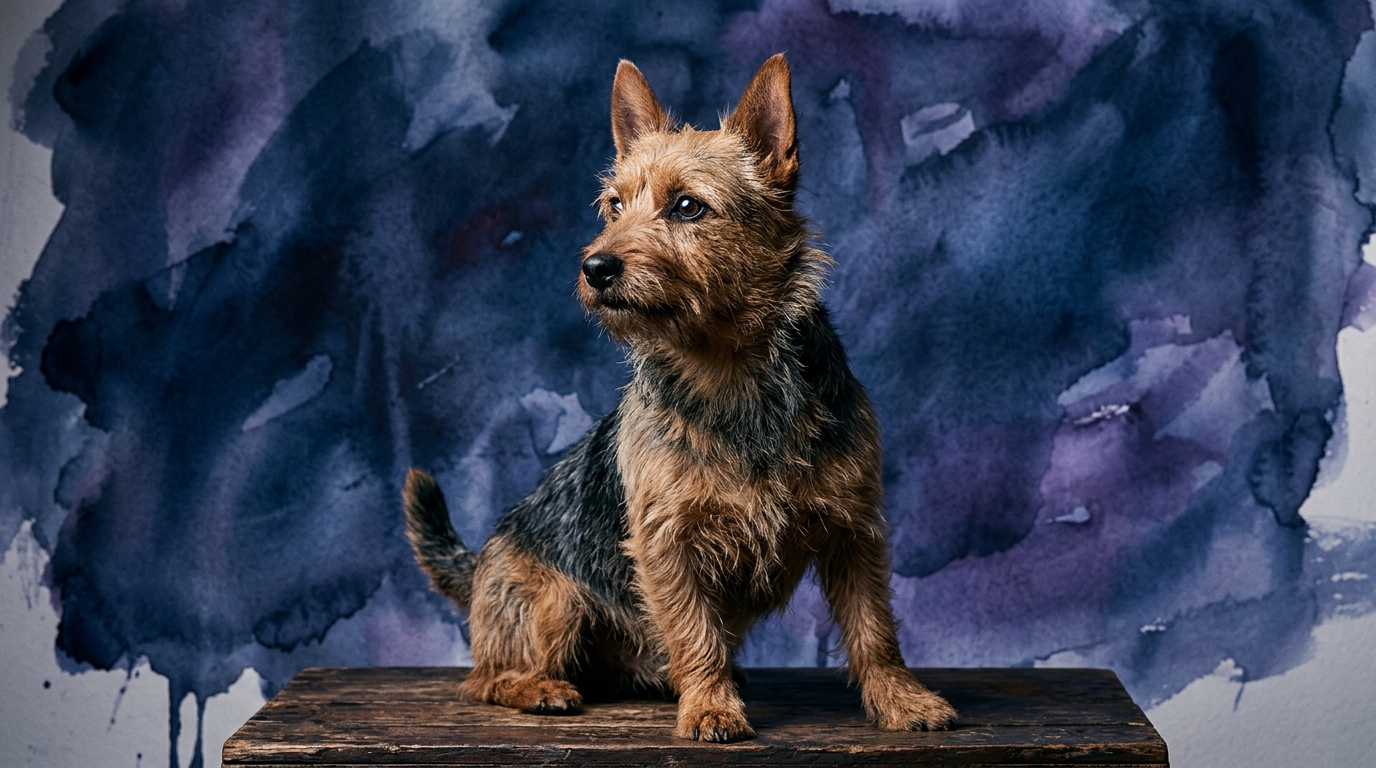
In contrast, the Australian Terrier, a tenacious terrier breed not individually ranked by Coren, presents a different cognitive blueprint. Its Problem Solving is rated 3/5, suggesting competence with straightforward challenges but less inclination for intricate, multi-step tasks. Training Speed is 3/5, indicating a moderate learning pace that often requires more consistent repetition and creative motivation to maintain focus. Social Intelligence also stands at 3/5, showing an ability to bond with its family but potentially a more selective or reserved approach to strangers and complex social cues. Its Instinctive Drive is 3/5, primarily manifesting as a strong prey drive and curiosity rather than a generalized working aptitude. Finally, its Memory is 3/5, capable of recalling routines and basic commands, but perhaps less adept at retaining a vast repertoire of less frequently used instructions.
Where the Rottweiler Wins Cognitively
The Rottweiler’s cognitive strengths are evident in its capacity for complex, purposeful work. Its 5/5 problem-solving ability allows it to excel in roles requiring strategic thinking, such as protection work, search and rescue, or advanced obedience, where it can interpret and execute multi-step commands. This breed’s superior memory (5/5) means it retains an extensive vocabulary of commands and experiences, making consistent performance across various scenarios a hallmark. The Rottweiler’s potent instinctive drive (5/5) for guarding and working, combined with high social intelligence, translates into a dog that not only understands what is asked of it but also possesses a deep desire to fulfill those expectations, integrating seamlessly into structured human environments and tasks. Their ability to quickly process and act upon instructions, reflected in their training speed, makes them highly responsive to well-defined roles.
Where the Australian Terrier Wins Cognitively
The Australian Terrier’s cognitive victories lie in its independent resourcefulness and tenacity, qualities inherent to its terrier heritage. While its problem-solving (3/5) may not match the Rottweiler's for complex, abstract tasks, it shines in practical, self-directed challenges, such as outsmarting small prey or navigating tricky terrain to achieve a goal. Its instinctive drive (3/5), though not as broadly applicable as the Rottweiler's, is acutely focused on hunting and exploring, providing a mental resilience and persistence often underestimated. This breed’s cognitive profile supports an agile, adaptable nature in less structured environments, where individual initiative and persistence in pursuing a perceived 'mission' (like digging for a scent) are paramount. Their intelligence is less about adherence to commands and more about clever self-reliance within their immediate world.
Which is Easier to Train and Why
Based on their respective IQ profiles, the Rottweiler is generally easier to train for obedience and complex tasks. Their 4/5 training speed, coupled with a 4/5 social intelligence, means they are quick to understand and eager to comply with human direction. Rottweilers possess a strong desire to work and please, making them highly receptive to consistent, firm, and fair training methods. Their exceptional memory ensures that once a command is learned, it is retained, leading to reliable long-term performance. This breed thrives on structure and clear leadership, making the training process a cooperative effort.
Conversely, the Australian Terrier, with a 3/5 training speed and 3/5 social intelligence, presents a more challenging training experience. Their independent terrier spirit and strong instinctive drive, primarily focused on self-directed activities like chasing, can make them less inclined to follow commands immediately. Training an Australian Terrier requires immense patience, positive reinforcement, and creative engagement to counteract their natural stubbornness and distractibility. While they can learn, their attention span for repetitive drills may be shorter, and their memory, while sufficient for routines, might not hold intricate command sequences as readily as a Rottweiler's.
Which Suits Active Owners vs. Relaxed Owners
The Rottweiler is an ideal match for active, experienced owners who can provide consistent mental stimulation and robust physical activity. Their high instinctive drive and need for purpose mean they flourish when given a job, whether it's advanced obedience, protection training, or agility. Owners must be prepared for daily, vigorous exercise and engagement to channel their substantial energy and cognitive capacity constructively. A sedentary lifestyle would be detrimental to a Rottweiler’s well-being, potentially leading to boredom and undesirable behaviors.
The Australian Terrier, while spirited, can suit owners with a more moderately active lifestyle, provided their mental and physical needs are met with focused activities. They require regular exercise to burn off energy, but this might involve shorter, intense play sessions, brisk walks, or engaging in scent games rather than continuous, endurance-based activities. Owners who appreciate an independent companion and can provide consistent mental challenges, like puzzle toys or supervised digging opportunities, will find the Australian Terrier a rewarding fit. They can adapt well to indoor living as long as their intellectual curiosity and physical needs are addressed daily without necessarily demanding intense, long-duration outings.
The Verdict
Choose the Rottweiler if you are an experienced owner seeking a dedicated, highly trainable companion for protection, service work, or advanced obedience, prepared to commit to rigorous training and substantial daily exercise.
Opt for the Australian Terrier if you desire a spirited, independent smaller companion who thrives on focused engagement and consistent, patient guidance, and you appreciate their tenacious character without expecting immediate, flawless obedience.
🧠 Find Your Pet's IQ Score
Our Pet IQ Lab assessment covers 25+ tests across 5 cognitive dimensions — personalized to your breed.
Take the Full IQ Test →Frequently Asked Questions
Are Australian Terriers good family dogs?
Yes, with proper socialization from a young age, Australian Terriers are loyal and affectionate family members. They can be spirited and sometimes feisty, so careful introductions and supervision are key, especially with very young children or other small pets.
What kind of mental stimulation do Rottweilers need?
Rottweilers require substantial mental stimulation beyond basic obedience, including complex puzzle toys, advanced training in obedience or protection sports, scent work, and agility. Engaging their problem-solving and memory skills is crucial for their overall well-being and prevents boredom.
How do their 'instinctive drives' differ in daily life?
A Rottweiler's instinctive drive often manifests as a strong desire to guard, protect, and work alongside its owner, often seen in their vigilance and eagerness to perform tasks. An Australian Terrier's drive is typically focused on chasing, digging, and exploring, reflecting their history as vermin hunters, which means they might be more inclined to follow a scent or dig in the yard.