
Side-by-Side IQ Profile: Unpacking Cognitive Dimensions
The Cosmic Pet Pet IQ Lab employs five critical dimensions to assess canine intelligence, providing a nuanced view beyond simple obedience. For the Rottweiler, a formidable Working breed ranking #9 on the Coren scale, its profile paints a picture of robust, cooperative intellect. Its Problem Solving is rated 5/5, indicating an exceptional capacity to analyze situations and devise effective solutions. Training Speed stands at 4/5, reflecting a quick grasp of commands and a desire to learn. Social Intelligence, at 4/5, denotes a strong ability to interpret human cues and form deep, understanding bonds. An Instinctive Drive of 5/5 speaks to powerful innate behaviors, often geared towards protection and purpose-driven tasks. Finally, its Memory is 5/5, suggesting a remarkable retention of learned information and experiences, contributing to consistent performance.
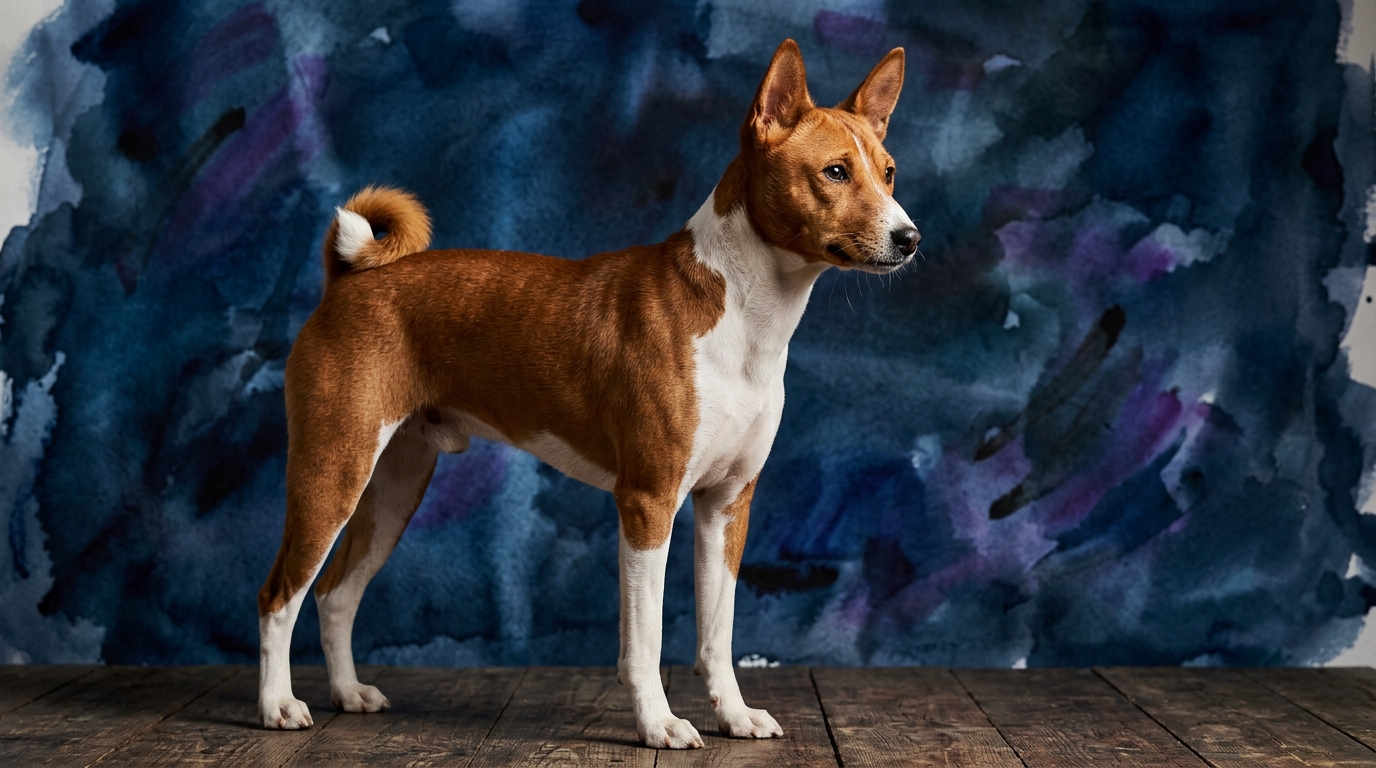
In stark contrast, the Basenji, a Hound breed with a Coren rank of #78, presents a unique cognitive blueprint that emphasizes independence. While also scoring an impressive 5/5 in Problem Solving, this faculty often manifests in self-serving ingenuity rather than cooperative efforts. Its Training Speed is notably low at 1/5, indicating a significant challenge in traditional obedience training due to its independent spirit. Social Intelligence is 3/5, suggesting a more reserved and selective approach to human interaction, often forming bonds on its own terms. An Instinctive Drive of 5/5 highlights a potent prey drive and an inherent inclination towards exploration and independent action. The Basenji’s Memory, rated 4/5, is solid, but this recall often serves its own agenda, remembering what benefits it rather than what was commanded.
Where the Rottweiler Wins Cognitively
The Rottweiler’s cognitive strengths lie profoundly in its capacity for structured learning and cooperative application of intelligence. With a perfect 5/5 in Problem Solving and Memory, paired with a 4/5 in Training Speed and Social Intelligence, Rottweilers excel at understanding and executing complex multi-step commands. They don't just solve problems; they solve them *with* their human partners, demonstrating a remarkable ability to process instructions, recall past training, and adapt their behavior to achieve a shared goal. Their instinctive drive is readily channeled into productive tasks, making them adept at roles requiring precision, consistency, and a strong work ethic, such as protection, search and rescue, or competitive obedience. This breed’s cognitive prowess is a testament to its ability to integrate learned behaviors into practical, real-world scenarios, often anticipating human needs or environmental changes to act appropriately.
Where the Basenji Wins Cognitively
The Basenji’s cognitive victories are rooted in its profound independence and self-directed ingenuity. Scoring 5/5 in Problem Solving, the Basenji is a master of navigating its environment and devising creative solutions to satisfy its own curiosity or desires. This isn't about following a human's lead; it's about figuring out how to open a cabinet, scale a fence, or outsmart a puzzle toy on its own terms. Their 5/5 Instinctive Drive fuels this autonomous problem-solving, making them highly resourceful and persistent in pursuing their interests, whether it’s tracking a scent or exploring new territories. While their training speed is low, their problem-solving intelligence allows them to adapt and learn from experiences, even if those lessons aren't always what a human intended to teach. They demonstrate a unique form of street smarts, often appearing to think several steps ahead to achieve their objectives without direct human guidance, making them exceptional at independent exploration and self-sufficiency.
Training Dynamics: Compliance vs. Coaxing
When it comes to ease of training, the Rottweiler presents a significantly more straightforward path due to its cognitive makeup, particularly its high Training Speed (4/5) and Social Intelligence (4/5). These dogs possess a strong desire to please their handlers and are exceptionally attuned to human body language and vocal cues. Their excellent Memory (5/5) means they retain commands and routines quickly and consistently, allowing for rapid progression through various levels of obedience and specialized tasks. A Rottweiler thrives on structure, clear communication, and positive reinforcement, viewing training as a collaborative effort and a way to strengthen the bond with their human companion. Their instinctive drive, which is also very high, can be effectively channeled through training into productive and desirable behaviors, rather than becoming a source of conflict.
The Basenji, on the other hand, is notoriously challenging to train, largely because its Problem Solving (5/5) and Instinctive Drive (5/5) are predominantly self-oriented, coupled with a very low Training Speed (1/5). Their intelligence is geared towards independent thought and action, making them less inclined to readily accept or follow human directives if they don't perceive an immediate benefit or if it conflicts with their own objectives. A Basenji might understand a command perfectly well but choose to ignore it if they are engrossed in a scent or a personal mission. This requires a training approach that is less about command and more about motivation and making tasks appear to be the dog's own idea. Patience, creativity, and a deep understanding of Basenji psychology are crucial, as traditional obedience methods often prove frustrating. Their social intelligence, while present, doesn't translate into the same eager-to-please compliance seen in the Rottweiler, meaning owners must work harder to build a compelling reason for cooperation.
Matching Owners: Active Engagement vs. Independent Exploration
Choosing between a Rottweiler and a Basenji also comes down to the owner's lifestyle and temperament. The Rottweiler is best suited for active owners who are prepared to provide consistent, structured engagement and mental stimulation. These dogs thrive with a purpose, whether it's advanced obedience, protection work, or participating in dog sports. Their high instinctive drive and problem-solving skills mean they require regular challenges to prevent boredom and destructive behaviors. An ideal owner is someone who enjoys training, can provide strong leadership, and wants a highly integrated, cooperative companion that is deeply involved in family activities. They need an owner who is not just active physically but also mentally, willing to invest significant time in their dog's education and social development.
The Basenji, while also requiring an active owner, demands a different kind of engagement. Their activity needs stem from their strong instinctive drive for exploration and their independent problem-solving nature. They are not necessarily looking for structured tasks from their human but need outlets for their curiosity, scent tracking, and running. An owner who appreciates a dog's independence, has a good sense of humor for their mischievous antics, and is patient with their selective obedience will thrive with a Basenji. They suit owners who are active outdoors, enjoy long walks or runs in secure areas, and can provide a stimulating environment without expecting constant, eager participation in human-led activities. While they form strong bonds, they are not typically 'velcro' dogs and are comfortable entertaining themselves, making them suitable for owners who value a companion that is present but not constantly demanding direct interaction.
The Verdict
Choose a Rottweiler if you seek a highly trainable, cooperative, and deeply loyal partner eager to engage in structured activities and work closely with you. They excel in environments where their robust intelligence and eager-to-please nature can be consistently channeled.
Opt for a Basenji if you admire independent, cunning intelligence and are prepared for a dog that marches to the beat of its own drum, offering unique companionship for an active, patient owner who appreciates self-sufficiency and a touch of mischief.
🧠 Find Your Pet's IQ Score
Our Pet IQ Lab assessment covers 25+ tests across 5 cognitive dimensions — personalized to your breed.
Take the Full IQ Test →Frequently Asked Questions
Why is the Basenji so hard to train despite its high problem-solving score?
The Basenji's high problem-solving ability is often directed towards its own interests and independent goals, rather than seeking human approval or direction. Coupled with a low training speed and strong self-reliance, they may understand commands but choose not to comply if it doesn't align with their current agenda, making traditional training challenging.
Does a Rottweiler's high instinctive drive make it difficult to manage?
While Rottweilers possess a powerful instinctive drive, their high social intelligence and training speed mean this drive is readily channeled through consistent training and clear leadership. With proper guidance, their instincts for protection and work become assets, making them highly manageable and purposeful companions rather than difficult.
How do their social intelligences differ in a home environment?
A Rottweiler's 4/5 social intelligence translates to a highly cooperative and family-integrated presence, often seeking interaction and understanding human emotional cues. A Basenji's 3/5 social intelligence means they are more reserved and selective, forming strong bonds but often preferring to interact on their own terms and not always seeking constant engagement.