
Side-by-Side Cognitive Profile
The Rottweiler, a breed historically tasked with demanding roles, exhibits a robust cognitive profile. Their Problem Solving score of 5/5 indicates a profound capability to analyze new situations, strategize, and adapt solutions, making them remarkably versatile in various tasks. A Training Speed of 4/5 means they grasp new commands and routines with efficiency, often requiring fewer repetitions to achieve mastery. Their Social Intelligence, rated 4/5, allows them to keenly interpret human emotions and social cues, fostering deeply understanding and responsive relationships. The breed’s Instinctive Drive, a perfect 5/5, is channeled into purposeful work such as guarding, protection, or herding, reflecting a strong innate desire for utility. Finally, their Memory, also 5/5, ensures exceptional recall of learned information and past experiences, contributing to their consistent and reliable performance.
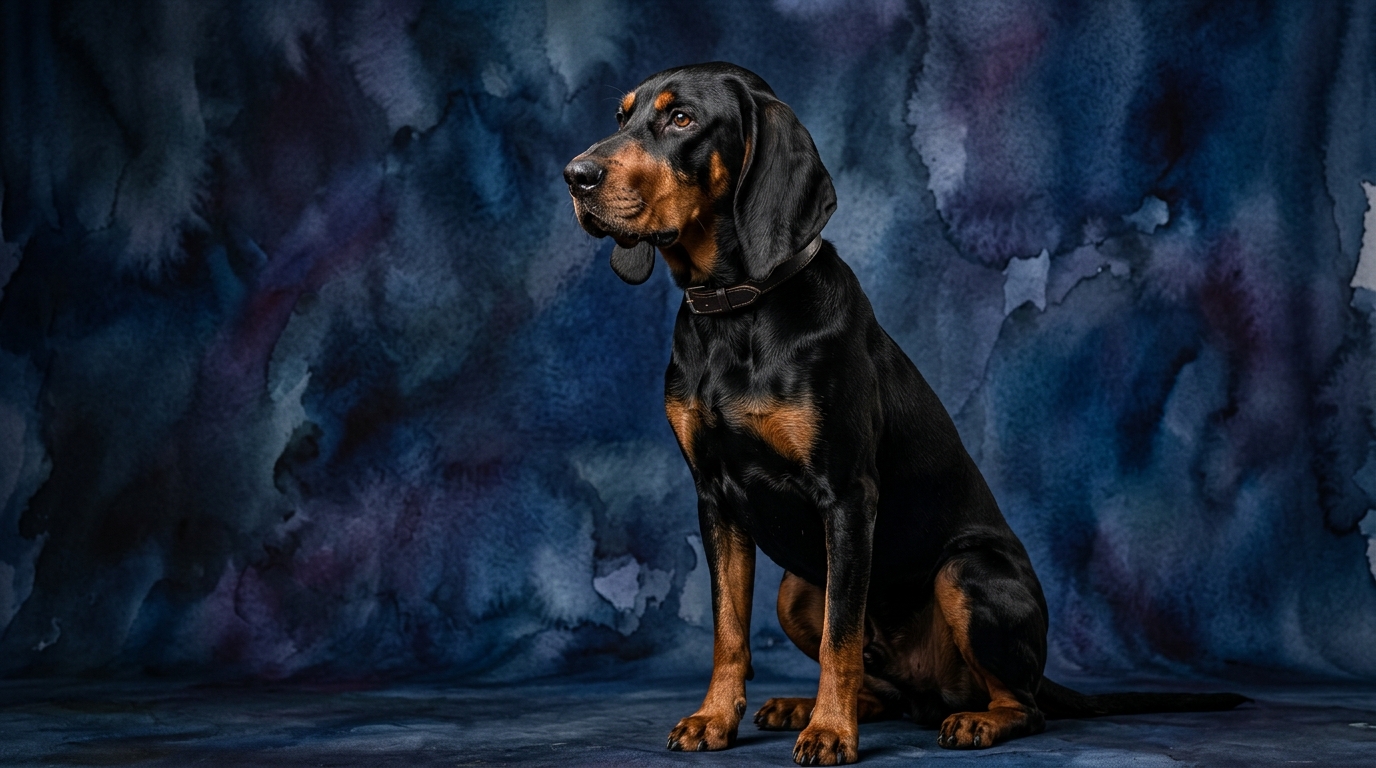
In contrast, the Black and Tan Coonhound, bred for the relentless pursuit of game via scent, presents a distinct cognitive makeup. Their Problem Solving, at 3/5, is often applied in a more direct, trial-and-error fashion, particularly when focused on navigating terrain or obstacles to maintain a scent trail rather than abstract reasoning. A Training Speed of 3/5 signifies that while trainable, they typically require more patience, consistent reinforcement, and repetition to solidify commands, as their focus can be easily diverted by olfactory stimuli. Social Intelligence at 3/5 means they form affectionate bonds but often display a more independent demeanor, sometimes appearing less concerned with direct human approval compared to other breeds. Their Instinctive Drive, rated 3/5, is intensely specialized: an unwavering, powerful compulsion to track scents, which can often override all other external stimuli. Their Memory, also 3/5, is particularly strong for recalling intricate scent patterns and geographical layouts encountered during a hunt, though general obedience commands might require more frequent refreshing.
Where the Rottweiler Excels Cognitively
The Rottweiler's cognitive strengths are most apparent in their comprehensive problem-solving capabilities and their capacity for broad, adaptable learning. A 5/5 score in Problem Solving signifies an ability to not only understand complex multi-step commands but also to independently assess novel situations and formulate appropriate responses, whether it's navigating an intricate obedience course or discerning a potential threat. This strong cognitive function, combined with an exceptional 5/5 Memory, means they rapidly assimilate new information and retain it over long periods, leading to remarkably consistent performance in various roles. They excel in scenarios demanding quick comprehension, precise execution, and a wide application of learned behaviors, making them exceptional candidates for advanced obedience, protection work, or service dog roles. Their high social intelligence further enhances their collaborative potential, enabling them to interpret nuanced human intentions and cues, which fosters a more cohesive and responsive partnership in structured activities.
Where the Black and Tan Coonhound's Cognitive Specialization Shines
While the Black and Tan Coonhound’s general cognitive scores are moderate, their undeniable genius lies in a highly specialized domain: olfactory intelligence and sustained, independent pursuit. Their Instinctive Drive, rated 3/5, is almost entirely channeled into an unwavering desire to track scents, endowing them with a profound focus and determination when following a trail that few breeds can match. This isn't about solving abstract puzzles; it's about a specific, incredibly complex cognitive process involving the discrimination of countless scent molecules, the recall of intricate scent patterns over vast distances, and the tireless perseverance to locate quarry. Their Problem Solving (3/5) is exquisitely geared towards overcoming environmental obstacles specifically to maintain a scent trail, such as figuring out how to navigate dense underbrush or cross a stream without losing the target odor. This unique cognitive architecture makes them relentless trackers, capable of independent decision-making in the field that would be counterproductive in a more handler-dependent role, yet is crucial for their historical purpose. Their Memory, while rated 3/5 generally, is phenomenal for recalling intricate scent maps and geographical routes pertinent to their hunting expeditions, demonstrating a specialized form of cognitive recall.
Which is Easier to Train and Why
When comparing training ease, the Rottweiler generally offers a more straightforward and rewarding experience for most owners. Their 4/5 training speed, coupled with their superior 5/5 problem-solving and memory, means they typically learn new commands, routines, and boundaries with remarkable efficiency and retention. They thrive on clear structure, consistent positive reinforcement, and enjoy the mental engagement of mastering complex tasks, often eager to please their handler and demonstrate their capabilities. This makes them highly adaptable to various training methodologies and advanced disciplines. In stark contrast, the Black and Tan Coonhound, with a 3/5 training speed, demands significantly more patience, creativity, and consistency from their owners. Their formidable instinctive drive for scenting can make them appear incredibly stubborn or easily distracted; once a compelling scent is detected, their singular focus on that trail often overrides any immediate desire to comply with a handler's command. Effective training for a Coonhound often involves leveraging their natural drives, such as incorporating extensive scent games and tracking exercises, and accepting that their independent nature means they might not always execute commands with the same precision or enthusiasm as a Rottweiler. Their motivation is often internal and scent-driven, rather than primarily handler-focused.
Suitability for Active vs. Relaxed Owners
For owners seeking a highly engaged, mentally stimulated, and collaborative companion, the Rottweiler is often the more suitable choice. Their high instinctive drive, combined with broad cognitive capacity, demands consistent mental challenges, rigorous structured training, and ample physical activity to prevent boredom, frustration, and potential destructive behaviors. They thrive with owners who enjoy active outdoor pursuits, advanced obedience training, canine sports like agility or protection work, and can provide consistent leadership and intellectual engagement. Conversely, the Black and Tan Coonhound, while requiring regular, vigorous exercise to satisfy their physical needs and, crucially, their intense scenting instincts, can appear more relaxed and mellow indoors once their specific drives are met. They suit owners who appreciate a dog with a strong independent streak, are prepared for long, investigative walks where the dog can follow its nose, and perhaps enjoy engaging in scent work, tracking activities, or even competitive nose work. They might not demand constant interactive play or human-centric mental games in the same way a Rottweiler does but still need significant and specific outlets for their primary cognitive function – their nose.
The Verdict
Opt for a Rottweiler if you desire a highly trainable, versatile companion capable of complex learning and eager participation in structured activities, and you're prepared to provide consistent mental and physical challenges.
Select a Black and Tan Coonhound if you value an independent, scent-driven companion, are patient with training, and can provide ample opportunities for their powerful nose to explore.
🧠 Find Your Pet's IQ Score
Our Pet IQ Lab assessment covers 25+ tests across 5 cognitive dimensions — personalized to your breed.
Take the Full IQ Test →Frequently Asked Questions
Does Coren rank apply to all breeds?
Stanley Coren's intelligence rankings primarily focus on obedience and working intelligence, which measures a dog's ability to learn and follow commands. Breeds like the Black and Tan Coonhound, specialized for independent work like scent tracking, are often not included or ranked lower because their cognitive strengths lie outside these specific metrics.
Can a Black and Tan Coonhound be trained for protection work?
While any dog can exhibit protective instincts, the Black and Tan Coonhound's cognitive profile and primary drives are not suited for the precise, handler-dependent nature of protection work. Their independent problem-solving and focus on scent make them less reliable for the controlled aggression and obedience required compared to a Rottweiler.
How can I mentally stimulate a Black and Tan Coonhound?
To mentally stimulate a Black and Tan Coonhound, focus on activities that engage their powerful sense of smell. Scent work, tracking games, hide-and-seek with treats, and long walks allowing them to 'read the newspaper' of scents are excellent ways to satisfy their primary cognitive drive.