
Side-by-Side Cognitive Profiles: Rottweiler vs. Cardigan Welsh Corgi
The Cosmic Pet Pet IQ Lab employs a five-dimensional framework to assess canine intelligence, providing a nuanced understanding of each breed's mental strengths. For the Rottweiler, a Working group dog with a Coren rank of #9, their profile is robust: Problem Solving scores 5/5, Training Speed 4/5, Social Intelligence 4/5, Instinctive Drive 5/5, and Memory 5/5. This suggests a dog capable of complex thought, quick learning, strong social awareness, profound natural urges, and excellent retention.
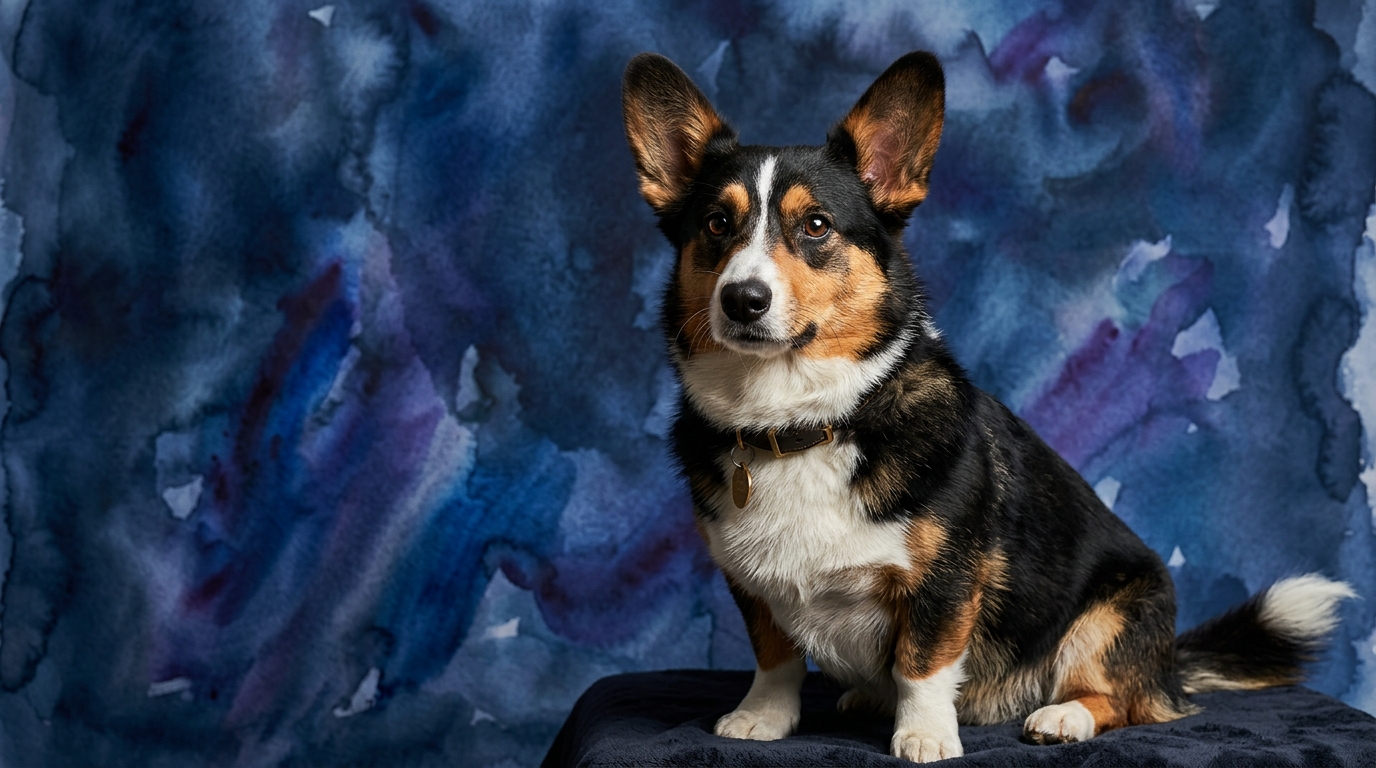
In contrast, the Cardigan Welsh Corgi, a Herding group dog with a Coren rank of #26, presents a different, yet still capable, cognitive blueprint. Their IQ scores are: Problem Solving 4/5, Training Speed 4/5, Social Intelligence 3/5, Instinctive Drive 3/5, and Memory 4/5. This indicates a clever dog, able to learn efficiently and recall information well, with a moderate social understanding and a defined, though less intense, set of natural drives compared to the Rottweiler.
Where the Rottweiler Excels Cognitively
The Rottweiler’s cognitive strengths are particularly evident in their top-tier Problem Solving (5/5), Instinctive Drive (5/5), and Memory (5/5) scores. Their superior problem-solving ability means they can quickly assess novel situations, devise solutions, and navigate complex environments, making them adept at tasks requiring critical thinking, such as protection work or advanced obedience. This isn't just about following commands; it's about understanding the underlying task and adapting.
Their powerful Instinctive Drive, scoring a perfect 5/5, reflects a deep-seated desire to work, protect, and fulfill a purpose. This drive, when channeled appropriately through training, becomes a tremendous asset, motivating them through challenging tasks and maintaining focus over extended periods. Coupled with their exceptional Memory (5/5), Rottweilers demonstrate a capacity for long-term retention of commands, experiences, and learned behaviors, allowing them to build upon past lessons and perform consistently even after breaks in training. This combination of strong problem-solving, inherent drive, and robust memory truly defines the Rottweiler's cognitive prowess, placing them among the top tier of working breeds.
Where the Cardigan Welsh Corgi Shines Cognitively
While the Cardigan Welsh Corgi's scores might appear slightly lower in some dimensions, their cognitive profile reveals distinct advantages, particularly in their Problem Solving (4/5) and Training Speed (4/5). Their problem-solving capacity, while not quite as formidable as a Rottweiler's, is still excellent, enabling them to figure out puzzles, navigate obstacles, and adapt to new routines with considerable resourcefulness. This often manifests as cleverness and an ability to 'think on their feet,' a valuable trait for a herding dog managing livestock.
Their 4/5 Training Speed indicates a rapid assimilation of new commands and concepts, suggesting they are eager and capable learners. This, combined with their 4/5 Memory, means that once a Corgi learns something, they tend to retain it well. Their Instinctive Drive, at 3/5, is specifically geared towards herding, which, while less broad than a Rottweiler's general working drive, is a highly focused and effective cognitive function within its niche. This drive allows them to understand and execute complex herding patterns, demonstrating a specific type of working intelligence that is both persistent and independent, often using their wits and low stature to manage animals much larger than themselves.
Which is Easier to Train and Why?
Determining which breed is 'easier' to train is complex, as it depends on the trainer's approach and the specific behavioral nuances of each dog. The Rottweiler, with a Training Speed of 4/5 and a Memory of 5/5, certainly learns quickly and retains information exceptionally well. Their high Instinctive Drive (5/5) means they thrive on having a purpose and are often eager to please a confident handler, making them highly receptive to structured training. However, their strong problem-solving can lead to them testing boundaries or finding loopholes if training isn't consistent and clear, requiring an experienced hand to guide their formidable intellect.
The Cardigan Welsh Corgi also boasts a 4/5 Training Speed and a 4/5 Memory, indicating they are very capable learners who pick up commands efficiently and recall them effectively. Their herding background, however, instills a degree of independent thinking and persistence that can sometimes be perceived as stubbornness. They are not as driven by a broad desire to please as a Rottweiler might be, often requiring more engaging, game-based motivation to maintain their interest. While they learn quickly, their independent streak means a trainer must be patient, creative, and consistent to harness their cognitive abilities effectively, rather than relying solely on a strong desire to comply.
Suitability for Active vs. Relaxed Owners
For owners seeking an active, purposeful companion, the Rottweiler is an ideal match. Their 5/5 Instinctive Drive and 5/5 Problem Solving capabilities demand significant mental and physical stimulation. They thrive with owners who can provide consistent, challenging training, engage them in dog sports like obedience, protection work, or tracking, and offer ample opportunities for vigorous exercise. A Rottweiler benefits immensely from having a 'job' and requires an owner dedicated to channeling their powerful cognitive and physical energy into constructive outlets to prevent boredom and potential behavioral issues.
The Cardigan Welsh Corgi, while a herding dog, can adapt to a slightly less intense lifestyle than a Rottweiler, making them suitable for active owners who may not be seeking a high-octane working partner, but still appreciate consistent engagement. Their 4/5 Problem Solving and 3/5 Instinctive Drive mean they need regular walks, puzzle toys, and consistent training sessions to keep their minds sharp and bodies fit. While they enjoy activity, they are also content with quality time indoors with their family, making them a good fit for owners who enjoy daily adventures but also appreciate periods of relaxation at home. They are best suited for owners who can provide mental enrichment and moderate physical exercise without necessarily needing a 'working dog' level of commitment.
The Verdict: When to Choose Each Breed
The Verdict
Choose the Rottweiler if you are an experienced, dedicated owner prepared to provide extensive training, consistent mental challenges, and a clear purpose for a powerful, deeply loyal, and highly capable working companion. Their profound memory and problem-solving skills thrive under confident leadership.
Opt for the Cardigan Welsh Corgi if you appreciate a clever, persistent, and charming companion who enjoys moderate activity, mental games, and consistent, engaging training, and you are prepared for their independent herding spirit in a smaller, adaptable package.
🧠 Find Your Pet's IQ Score
Our Pet IQ Lab assessment covers 25+ tests across 5 cognitive dimensions — personalized to your breed.
Take the Full IQ Test →Frequently Asked Questions
Are Rottweilers difficult to manage for first-time dog owners?
Rottweilers possess significant physical strength and a powerful working drive, requiring an owner who is confident, consistent, and committed to extensive training and socialization. While not inherently 'difficult,' their cognitive and physical needs often make them better suited for owners with prior dog experience.
Do Cardigan Welsh Corgis require a lot of exercise despite their size?
Despite their smaller stature, Cardigan Welsh Corgis are herding dogs with considerable energy and mental acuity, meaning they do require regular exercise. Daily walks, engaging play, and mental challenges like puzzle toys are essential to keep them stimulated and prevent boredom.
Which breed is more adaptable to apartment living?
The Cardigan Welsh Corgi is generally more adaptable to apartment living due to their smaller size and slightly lower, though still significant, exercise requirements. A Rottweiler can adapt to an apartment if they receive extensive daily exercise, mental stimulation, and consistent outdoor training, but it requires a very dedicated owner.