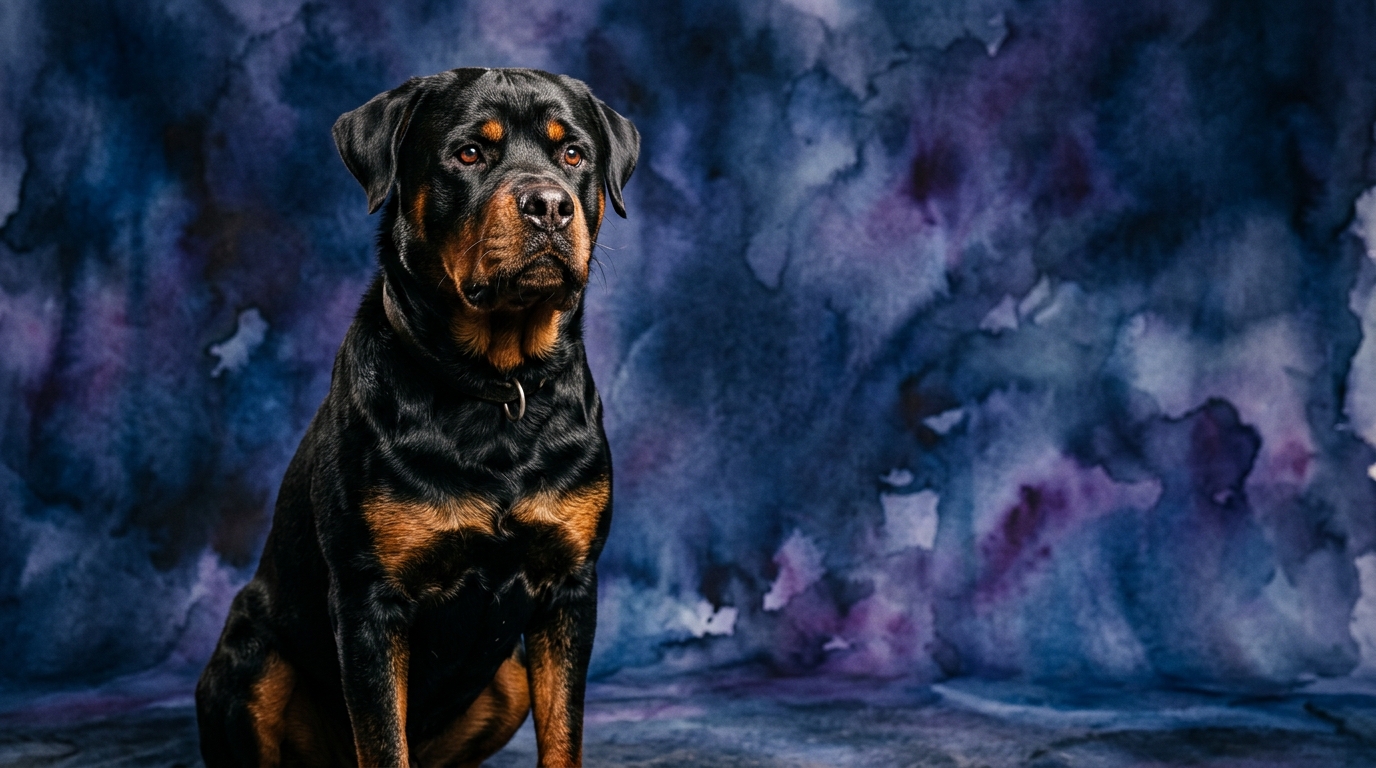
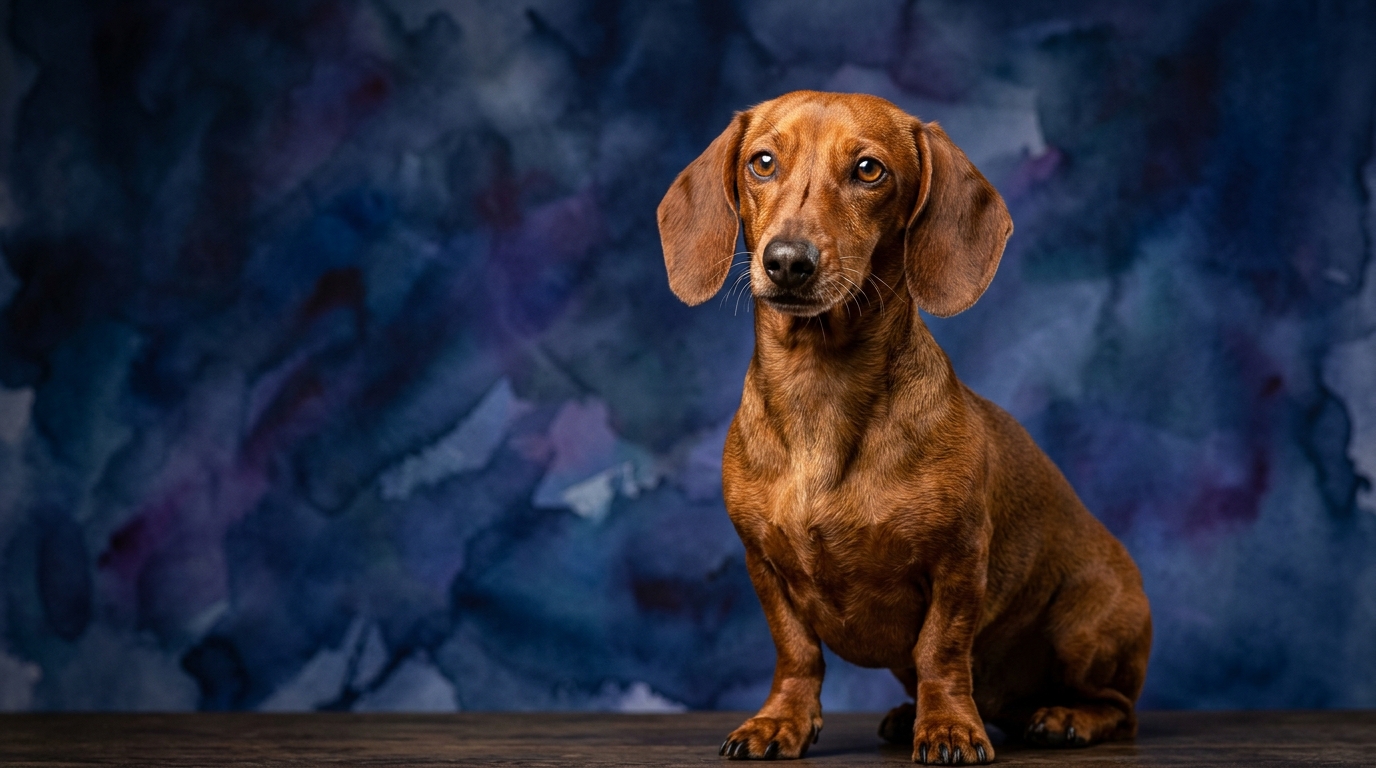
Side-by-Side IQ Profile: Rottweiler vs. Dachshund
The Cosmic Pet Pet IQ Lab employs a five-dimensional framework to assess canine intelligence, offering a granular view beyond simple obedience. For the Rottweiler, classified in the Working group with a Coren rank of #9, their profile is robust: Problem Solving 5/5, Training Speed 4/5, Social Intelligence 4/5, Instinctive Drive 5/5, and Memory 5/5. This paints a picture of a capable, perceptive, and highly retentive breed.
In contrast, the Dachshund, a Hound group member with a Coren rank of #49, presents a different cognitive landscape: Problem Solving 4/5, Training Speed 2/5, Social Intelligence 3/5, Instinctive Drive 5/5, and Memory 3/5. This profile suggests a resourceful yet independent thinker, driven by ancient instincts, whose learning style differs significantly from their larger counterpart.
Breaking down the Rottweiler's scores, their 5/5 in Problem Solving reflects an exceptional capacity to analyze complex situations, adapt to new challenges, and formulate effective solutions. They aren't just reacting; they're strategizing, whether it's figuring out how to open a childproof gate or navigating an intricate obstacle course. Their 4/5 Training Speed indicates rapid assimilation of new commands, while 4/5 Social Intelligence highlights their ability to interpret human cues. A perfect 5/5 for Instinctive Drive underscores their strong inherent motivations for protection and guarding, and a 5/5 Memory ensures outstanding long-term retention of learned information and experiences.
For the Dachshund, a 4/5 in Problem Solving signifies their adeptness at practical, often independent problem-solving, particularly when it involves navigating their environment or pursuing a goal, such as finding a hidden treat or burrowing under an obstacle. Their solutions are often tenacious and creative, driven by inherent curiosity. Their 2/5 Training Speed indicates they may require more patience and repetition, often appearing stubborn due to their independent spirit. A 3/5 in Social Intelligence means they form deep bonds but can be more self-directed in social settings, sometimes prioritizing their own comfort. A perfect 5/5 in Instinctive Drive reflects their incredibly strong prey drive and innate urge to track and burrow, while a 3/5 Memory suggests good retention for established routines but less for complex or less personally relevant sequences.
Where the Rottweiler Wins Cognitively
The Rottweiler’s superior problem-solving score (5/5) means they can consistently analyze complex situations and devise effective strategies, whether it's navigating an intricate agility course or understanding multi-step tasks. This translates into a dog that can learn to perform sophisticated functions and adapt quickly to novel scenarios.
Their rapid training speed (4/5) allows them to internalize new commands and routines with impressive efficiency, often requiring minimal repetition to achieve proficiency. This makes them highly adaptable to diverse training disciplines, from advanced obedience to protection work, where quick learning and precise execution are paramount.
The Rottweiler's elevated social intelligence (4/5) enables a more profound understanding of human intentions and emotional states, fostering a deeper, more responsive partnership. They are adept at reading subtle cues and adjusting their behavior accordingly, making them excellent candidates for roles requiring nuanced interaction, such as service or therapy work.
Their perfect memory score (5/5) ensures exceptional long-term retention of learned information, boundaries, and experiences. This cognitive strength underpins their reliability and consistency, making them trustworthy companions who remember their training and their role within the family structure, even after extended periods.
Where the Dachshund Wins Cognitively
The Dachshund's instinctive drive (5/5), while matching the Rottweiler's score, manifests as an unparalleled tenacity and single-minded focus on scent-driven tasks. This specialized cognitive strength allows them to pursue a trail with relentless determination, often ignoring distractions that would deter other breeds. Their ability to 'tunnel vision' on a scent is a remarkable feat of sustained attention, crucial for their original purpose as hunters.
While their overall problem-solving is rated 4/5, it is acutely specialized for overcoming physical obstacles in pursuit of their instincts. This translates into exceptional spatial reasoning within confined or complex environments, enabling them to ingeniously dig under fences, squeeze through tight spaces, or navigate intricate tunnels to reach a perceived goal. This specific application of problem-solving is a distinct advantage in their original working context and demonstrates a unique form of cleverness.
Which is Easier to Train and Why?
Based on their respective IQ profiles, the Rottweiler is generally easier to train. Their 4/5 Training Speed indicates a quick grasp of commands, coupled with a 4/5 Social Intelligence that makes them more attuned to human instruction and eager to please. Rottweilers thrive on clear, consistent leadership and respond well to positive reinforcement, quickly forming strong associations between actions and desired outcomes. Their strong memory further cements learned behaviors, making them reliable in retaining complex routines.
Conversely, the Dachshund's 2/5 Training Speed and 3/5 Social Intelligence present more significant training challenges. Their strong instinctive drive (5/5) often means they are more compelled by their own nose or perceived mission than by human directives. This independence can be interpreted as stubbornness; they may require significantly more patience, repetition, and highly motivating rewards to engage in structured training. While they can learn, their problem-solving often leans towards achieving their own objectives rather than strictly adhering to human commands, necessitating creative and persistent training approaches.
Suitability for Active vs. Relaxed Owners
Active owners seeking a dedicated partner for structured activities will find the Rottweiler's robust physical and mental capabilities a perfect match. Their high scores in problem-solving, training speed, and instinctive drive mean they thrive on consistent engagement in activities like obedience trials, protection sports, hiking, or even service work. These dogs require an owner who can provide firm yet fair leadership, channel their formidable drives, and ensure ample physical and mental stimulation to prevent boredom and destructive behaviors. A Rottweiler is not a breed for a sedentary lifestyle; they need a purpose and consistent interaction to flourish.
For owners seeking a companion that can adapt to a more relaxed pace, the Dachshund might seem like a natural fit due to their smaller size. However, 'relaxed' doesn't equate to 'inactive' for a Dachshund. While they can be content with indoor living and moderate daily walks, their intense 5/5 instinctive drive and 4/5 problem-solving capabilities demand mental engagement. Owners must provide outlets for their hunting instincts through scent games, puzzle toys, or supervised digging, lest they find their own (potentially destructive) entertainment. A Dachshund suits an owner who understands and respects their tenacious, independent spirit, providing mental stimulation tailored to their breed-specific drives rather than expecting constant obedience or intense physical exertion.
The Verdict: When to Choose Each Breed
The Verdict
Choose a Rottweiler if you are an experienced, active owner ready to commit to rigorous training and socialization, seeking a highly capable, protective, and responsive companion for demanding tasks or sports.
Opt for a Dachshund if you appreciate an independent, tenacious personality in a smaller package, are patient with training, and can provide creative outlets for their strong hunting instincts without requiring constant obedience.
🧠 Find Your Pet's IQ Score
Our Pet IQ Lab assessment covers 25+ tests across 5 cognitive dimensions — personalized to your breed.
Take the Full IQ Test →Frequently Asked Questions
Do Rottweilers require a lot of mental stimulation?
Absolutely. With a 5/5 problem-solving score and high memory, Rottweilers thrive on consistent mental challenges like puzzle toys, advanced obedience, and learning new tricks to prevent boredom and destructive behaviors.
Are Dachshunds good family dogs despite their independent nature?
Dachshunds can be affectionate family dogs, especially with proper socialization from a young age. Their social intelligence, while lower than a Rottweiler's, allows them to form strong bonds with their immediate family, though they might be wary of strangers.
How does the 'instinctive drive' score differ between these two breeds?
Both breeds score 5/5 for instinctive drive, but its manifestation varies; the Rottweiler's drive often centers on protection and guarding, while the Dachshund's is intensely focused on scent tracking and burrowing, reflecting their specific historical working roles.