
Side-by-Side Cognitive Profile
At The Cosmic Pet Pet IQ Lab, we evaluate canine cognition across five key dimensions, providing a granular view of each breed's mental landscape. For the Rottweiler, classified in the Working group with a Coren rank of #9, its profile is marked by exceptional problem-solving (5/5), strong training speed (4/5), solid social intelligence (4/5), a powerful instinctive drive (5/5), and outstanding memory (5/5). This combination points to a breed engineered for complex tasks and dedicated partnership.
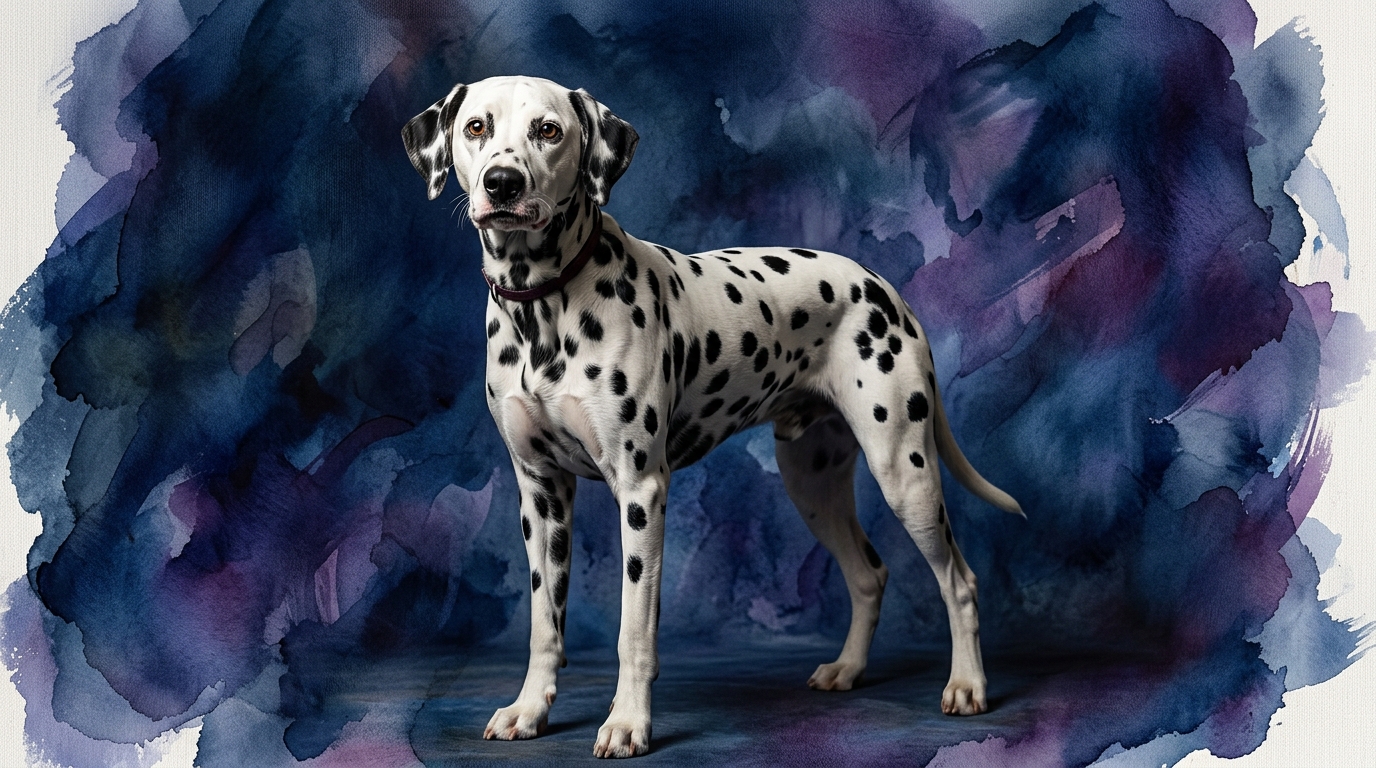
In contrast, the Dalmatian, from the Non-Sporting group and holding a Coren rank of #39, presents a different cognitive signature. Its problem-solving ability scores a (3/5), training speed is moderate at (3/5), social intelligence matches the Rottweiler at (4/5), instinctive drive is robust at (4/5), and memory is good at (4/5). This profile suggests a companion animal with endurance and a keen social awareness, though perhaps less inclined towards intricate mental challenges or rapid acquisition of complex commands.
Delving deeper, a Rottweiler's 5/5 in Problem Solving signifies a dog that excels at navigating novel situations, understanding cause-and-effect, and devising solutions to abstract obstacles without constant human guidance. Their 5/5 Memory means they retain these solutions and learned behaviors over extended periods, making advanced training cumulative and efficient. The Dalmatian's 3/5 in Problem Solving and Training Speed indicates a dog that learns best through consistent repetition and clear, concrete instructions, potentially struggling with highly abstract concepts or rapidly changing task demands. However, both breeds share a 4/5 in Social Intelligence, highlighting their capacity to read and respond to human emotions and social cues, albeit often expressed through different behavioral lenses—the Rottweiler's often being protective, the Dalmatian's more companion-focused. Finally, the Rottweiler's 5/5 Instinctive Drive points to an inherent motivation for purposeful work, while the Dalmatian’s 4/5 drive is more geared towards sustained physical activity and companionship.
Where the Rottweiler Excels Cognitively
The Rottweiler's cognitive strengths are particularly evident in its remarkable capacity for Problem Solving (5/5). This breed doesn't merely follow commands; it actively processes information, assesses situations, and formulates solutions. For example, when faced with a barrier in an obedience course, a Rottweiler is more likely to analyze the structure and attempt different strategies to overcome it, rather than simply waiting for handler intervention. This analytical aptitude makes them exceptional candidates for roles requiring independent thought, such as search and rescue or service work where adapting to unforeseen circumstances is paramount.
Beyond problem-solving, the Rottweiler's Instinctive Drive (5/5) is a significant cognitive asset. This isn't just about physical energy, but a profound internal motivation to engage in purposeful activities. This drive fuels their focus and persistence during demanding training sessions, allowing them to sustain effort on complex tasks that might overwhelm breeds with lower drive. Their historical role as herders and guardians has ingrained a deep desire for utility, meaning they thrive when given a 'job' to do, translating into a readiness to learn and execute intricate commands with precision.
Furthermore, the Rottweiler's Memory (5/5) is a cornerstone of its cognitive prowess. They demonstrate an exceptional ability to recall intricate command sequences, remember specific routines, and retain past experiences with impressive accuracy. This means that once a Rottweiler learns a skill, it is likely to be ingrained for life, requiring minimal refreshers. This robust memory facilitates advanced training progression, allowing handlers to build upon a vast repertoire of previously mastered behaviors, making the path to complex demonstrations or working roles smoother and more efficient.
Where the Dalmatian Excels Cognitively
While the Dalmatian's cognitive profile differs from the Rottweiler's, it possesses unique strengths that make it a distinctively capable companion. Its Social Intelligence (4/5), matching the Rottweiler, often manifests as a keen sensitivity to human emotional states and a strong desire for companionship. Dalmatians excel at forming deep emotional bonds with their families, reading subtle cues in body language and tone to understand their human counterparts, making them highly attuned and responsive to their inner circle.
The Dalmatian's Instinctive Drive (4/5), while not as focused on specific 'work' as the Rottweiler's, is exceptionally high for endurance and sustained activity. This mental hardiness allows them to maintain focus and stamina over long periods of physical exertion, which is a cognitive feat in itself, requiring sustained attention to their environment and their pace. This makes them ideal partners for long-distance running, hiking, or cycling, where their mental and physical fortitude shines.
Furthermore, their Memory (4/5) is solid and reliable, allowing them to consistently remember routines, learned behaviors, and familiar individuals. While perhaps not as precise for complex, multi-stage tasks as a Rottweiler's, a Dalmatian's memory ensures they are predictable and well-adjusted within their established environment, quickly recognizing and adhering to household rules and schedules. This reliable recall of everyday patterns contributes to their adaptability as family companions, especially when combined with their good social intelligence to navigate domestic interactions smoothly. Their strengths lie in consistent, companion-oriented engagement rather than highly specialized problem-solving.
Training: Which is Easier and Why
When considering ease of training, the Rottweiler generally offers a more streamlined experience for those aiming for complex obedience or working roles. Their Problem Solving (5/5) and Training Speed (4/5) mean they grasp new commands quickly, often requiring fewer repetitions to solidify a behavior. A Rottweiler’s powerful Instinctive Drive (5/5) provides an inherent motivation to engage in purposeful work, making them highly responsive to task-oriented training. For instance, teaching a Rottweiler a multi-stage retrieve or a nuanced protection exercise often progresses rapidly because they are mentally equipped to understand and retain intricate instructions, thriving on clear structure and consistent expectations.
The Dalmatian, by contrast, typically requires more patience and creative consistency in training. Their Training Speed (3/5) indicates they need a greater number of repetitions to fully internalize new behaviors, and their Problem Solving (3/5) suggests they may struggle more with abstract commands or novel situations. Handlers often need to break down tasks into smaller, more manageable steps to ensure success. While their Instinctive Drive (4/5) is high for activity, it's less geared towards traditional obedience 'work' and more towards sustained physical engagement. This means motivation needs to be carefully managed, often through positive reinforcement, making training feel like an engaging game to maintain their focus. Dalmatians can be prone to distraction if not consistently engaged, demanding varied and stimulating training sessions to prevent boredom and maintain their attention.
Suitability for Active vs. Relaxed Owners
Both the Rottweiler and the Dalmatian are breeds that demand active engagement from their owners, making neither an ideal choice for a truly relaxed, sedentary lifestyle. However, the *type* of activity they require differs significantly. A Rottweiler, with its 5/5 Problem Solving and 5/5 Instinctive Drive, thrives with owners who are active in structured training, demanding dog sports like obedience, protection work, or tracking. They need a consistent 'job' to do that engages both their powerful body and sharp mind. An owner who can provide rigorous mental challenges alongside physical exercise will find a Rottweiler to be a highly fulfilled and cooperative companion, channeling their intense drive into productive outlets.
The Dalmatian, conversely, suits owners who enjoy long, sustained physical activities where the dog can accompany them. Their 4/5 Instinctive Drive for endurance means they need extensive daily exercise—think long runs, hikes, or cycling excursions—to prevent boredom and the development of undesirable behaviors. While they appreciate mental stimulation, their primary need is for sustained physical output. An owner who can provide consistent, high-energy physical outlets will find a Dalmatian to be a joyful and tireless partner, happy to be an integral part of outdoor adventures.
For owners seeking a more 'relaxed' companion in terms of less formal, task-oriented training, neither breed is a perfect fit. However, if 'relaxed' implies less intensity in *structured* mental work and more general companionship, the Dalmatian might be slightly more adaptable, provided its extensive exercise needs are met through informal activities. A Rottweiler, with its profound drive and problem-solving capacity, would likely become bored, anxious, or potentially destructive without consistent mental and physical engagement tailored to its working heritage, making it unsuitable for a truly low-activity household.
The Verdict
Select a Rottweiler if you are an experienced owner seeking a highly capable, driven companion for advanced training, protection work, or demanding dog sports, valuing a dog that excels at complex problem-solving and retains information exceptionally well.
Opt for a Dalmatian if you are an active individual or family who can provide extensive daily exercise, preferring a companion with good social awareness and endurance that thrives on consistent routines and engaging, positive reinforcement training.
🧠 Find Your Pet's IQ Score
Our Pet IQ Lab assessment covers 25+ tests across 5 cognitive dimensions — personalized to your breed.
Take the Full IQ Test →Frequently Asked Questions
Are Rottweilers good family dogs?
Yes, Rottweilers can be wonderful family dogs when properly socialized and trained from a young age. Their social intelligence (4/5) means they bond deeply with their family, often displaying a protective yet affectionate nature towards children and other family members. Consistent boundaries and early exposure to various people and situations are crucial for them to integrate well into a family setting.
Do Dalmatians bark a lot?
Dalmatians can be vocal, particularly if they are bored, under-exercised, or left alone for extended periods. Their high energy and instinctive drive (4/5) for endurance mean they need ample physical and mental stimulation to prevent them from developing undesirable behaviors like excessive barking. Providing consistent training and meeting their activity requirements can help manage their vocal tendencies.
How much exercise does a Rottweiler need daily?
A Rottweiler requires significant daily exercise, typically 60-90 minutes, including structured walks, playtime, and mental stimulation through training or puzzle toys. Their high instinctive drive (5/5) and problem-solving abilities (5/5) mean they thrive on purposeful activities that engage both their body and mind, preventing boredom and potential behavioral issues.