
Side-by-Side Cognitive Profiles
At The Cosmic Pet Pet IQ Lab, we evaluate canine intelligence across five key dimensions, offering a nuanced view beyond simple obedience. This framework allows us to appreciate the specialized cognitive strengths each breed brings.
The Rottweiler, a formidable member of the Working Group and ranked #9 in Coren's hierarchy, demonstrates broad cognitive versatility. They score 5/5 in Problem Solving, showcasing an exceptional ability to analyze situations and devise solutions, reflecting their history in guarding and herding. Their Training Speed is rated 4/5, indicating a quick grasp of new commands and routines, driven by a strong desire to learn and work alongside their handler. Social Intelligence also scores 4/5, as Rottweilers are highly attuned to human cues and social dynamics, capable of forming deep bonds and understanding family structures. Their Instinctive Drive is a powerful 5/5, encompassing strong natural urges for protection, guarding, and varied work, which requires appropriate channeling. Finally, their Memory is an outstanding 5/5, contributing to their reliability and consistency through excellent retention of learned behaviors and experiences.
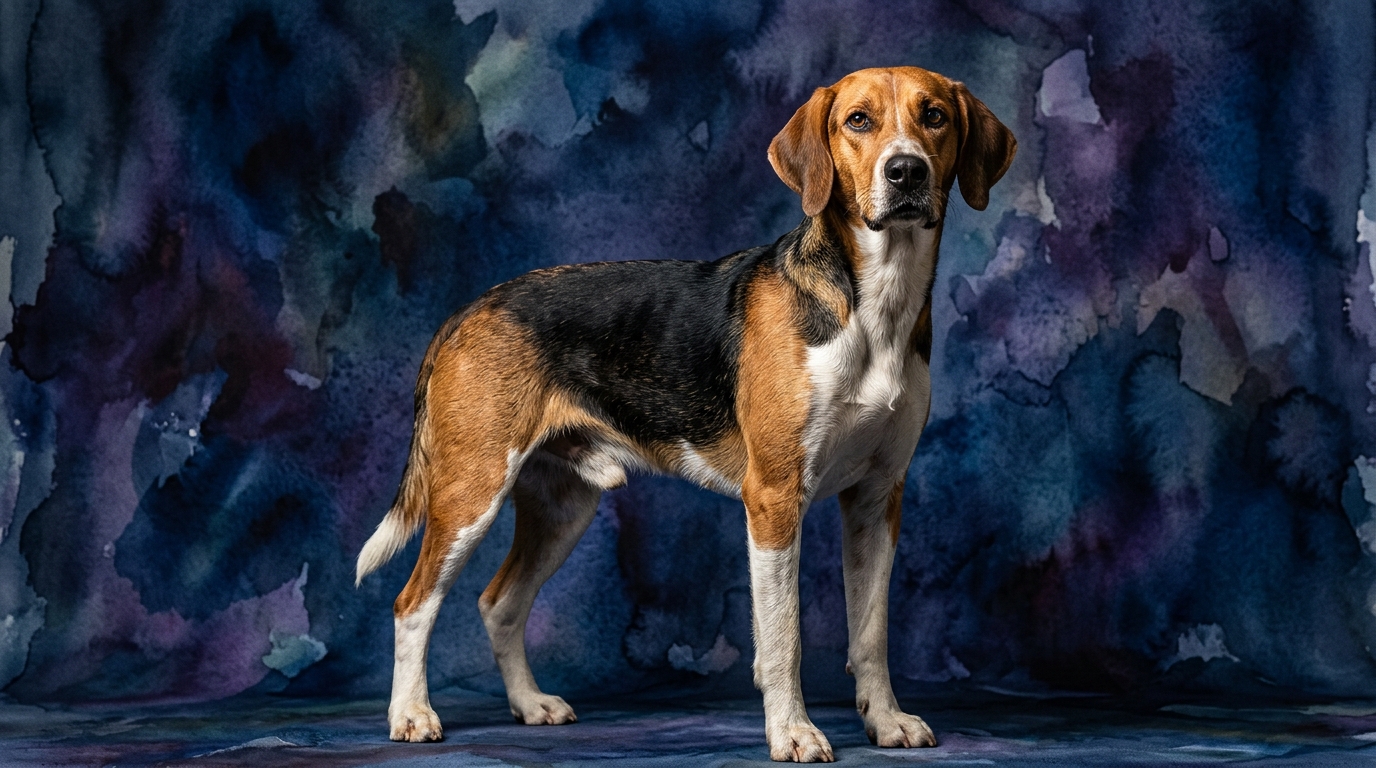
In contrast, the English Foxhound, a dedicated member of the Hound Group and not specifically ranked by Coren, presents a more specialized cognitive profile. Their Problem Solving is rated 3/5; while they excel at challenges related to scent tracking, their ability to solve abstract or human-centric puzzles is less pronounced. Training Speed also stands at 3/5; they can learn commands but often require more repetition and motivation, as their focus is frequently drawn to environmental scents rather than handler direction. Social Intelligence is 3/5; they are generally amiable with humans and other dogs, but their interactions are often driven by pack dynamics and a degree of independence rather than deep human-centric understanding. Their Instinctive Drive, rated 3/5, is predominantly focused on their powerful scenting ability and the thrill of the chase, making it potent but narrower in scope compared to the Rottweiler's varied drives. Their Memory, at 3/5, is good for trails and familiar hunting grounds but perhaps less for complex sequences of commands or human-specific routines.
Where the Rottweiler Excels Cognitively
The Rottweiler's cognitive strengths lie in its remarkable versatility and adaptability. Their 5/5 Problem Solving score signifies an ability to process diverse information and apply solutions across various contexts, from navigating complex environments to understanding intricate commands. This adaptability allows them to excel in roles requiring more than just instinct, such as advanced obedience, protection work, or service dog tasks.
Their superior human-oriented social intelligence (4/5) means they are highly perceptive of human intentions, moods, and subtle cues. This fosters a deeper working partnership and makes them exceptionally responsive to their handlers, allowing for nuanced communication and a strong bond. Coupled with their outstanding memory (5/5), Rottweilers retain a vast repertoire of learned behaviors and experiences, ensuring consistent performance over time and making them reliable companions and working dogs. Their multifaceted instinctive drives, encompassing protection, herding, and companionship, allow for varied and deep cognitive engagement, making them receptive to a wide range of training and mental stimulation.
Where the English Foxhound Shows Unique Cognitive Strengths
The English Foxhound's cognitive prowess is deeply rooted in its specialized purpose: scent tracking. Their true cognitive brilliance is found in their unparalleled olfactory intelligence and scent discrimination. This isn't merely a physical ability; it's a profound mental capacity to identify, follow, and differentiate specific scent trails amidst countless environmental distractions, showcasing a unique form of problem-solving (3/5) perfectly tailored to their historical role.
Their instinctive drive (3/5) for the chase, combined with their mental endurance, allows for sustained perseverance in pursuit. Once on a trail, their focus is absolute, demonstrating a cognitive tenacity that is difficult to disrupt. Furthermore, English Foxhounds exhibit a distinct form of independent decision-making when working a scent. They are bred to interpret the environment and make choices on the trail with minimal human intervention, relying on their internal compass and olfactory data rather than constantly seeking handler direction. This autonomy, while sometimes challenging in a pet setting, is a testament to their specialized cognitive framework for navigating complex scent puzzles in the field.
Ease of Training: Rottweiler vs. English Foxhound
When it comes to training, the Rottweiler generally presents as the more amenable student. Their higher Training Speed (4/5), coupled with strong social intelligence and memory, means they typically grasp new commands quickly and retain them effectively. Rottweilers possess a strong desire to work collaboratively with humans and often find satisfaction in pleasing their handlers, making positive reinforcement highly effective. However, their powerful physical presence and strong protective instincts (Instinctive Drive 5/5) necessitate consistent, firm, and positive training from a young age to channel their considerable drives constructively. Without proper guidance, their problem-solving abilities could be misdirected towards undesirable behaviors, underscoring the importance of early and ongoing education.
The English Foxhound, by contrast, can be more challenging to train in traditional obedience. Their primary motivation is overwhelmingly scent-driven, often overriding human-initiated commands. While they are capable of learning, their attention span for human-centric tasks is frequently shorter, especially when competing with the allure of a captivating environmental scent. Their instinctive drive to follow a trail can make commands like recall particularly difficult to master in open spaces. Training an English Foxhound requires immense patience, creativity, and the use of high-value rewards that can effectively compete with their powerful olfactory distractions. They are not 'disobedient' in a malicious sense, but rather 'distracted' by their genetically encoded purpose, making consistent focus on the handler a significant hurdle.
Matching Breeds to Owner Lifestyles
The cognitive and physical demands of these two breeds necessitate specific owner lifestyles. The Rottweiler thrives with active owners who are prepared for significant mental and physical engagement. Their high instinctive drive and superior problem-solving abilities mean they need a 'job' to do, whether it's advanced obedience, protection sports, agility, or competitive nose work. Owners must be committed to consistent, structured training and provide ample exercise, ideally 1-2 hours of vigorous activity daily. A Rottweiler is not suited for owners who cannot provide this level of structured activity, mental stimulation, and consistent guidance, as boredom can lead to destructive behaviors.
The English Foxhound also requires active owners, but their activity needs are distinctly different. They need vast, secure spaces where they can run freely and indulge their powerful scenting instincts, or structured scent work activities that allow them to utilize their unique cognitive strengths. A relaxed, sedentary owner will struggle immensely with their boundless energy and single-minded pursuit of scent. While they can be affectionate, their deep-seated drive means they are not content with a quiet, indoor life. Owners must be prepared for their sustained endurance and the potential for their hallmark baying, which is a natural vocalization of their breed. They are best suited for owners who understand and embrace the unique demands of a dedicated scent hound, ideally with experience in managing a dog driven by an all-consuming instinct.
The Verdict: When to Choose Each Breed
The Verdict
Choose the Rottweiler if you seek a highly trainable, versatile working companion capable of complex learning and deep social connection, and are committed to consistent training and providing a 'job'.
Choose the English Foxhound if you are an experienced owner passionate about scent work, enjoy a dog with strong independent drive, and can provide ample opportunities for them to follow their nose in a secure environment.
🧠 Find Your Pet's IQ Score
Our Pet IQ Lab assessment covers 25+ tests across 5 cognitive dimensions — personalized to your breed.
Take the Full IQ Test →Frequently Asked Questions
Do English Foxhounds make good family pets despite their independent nature?
English Foxhounds can be affectionate with their families, especially if raised with consistent socialization. However, their strong prey drive and need for extensive exercise mean they thrive best in homes that understand and cater to their unique hound instincts, often requiring secure outdoor spaces.
How much exercise does a Rottweiler need to stay mentally stimulated?
Rottweilers require at least 1-2 hours of vigorous exercise daily, combined with regular mental challenges like obedience training, puzzle toys, or engaging in dog sports. This consistent stimulation helps channel their powerful cognitive and physical drives constructively, preventing boredom and potential behavioral issues.
Can an English Foxhound be trained for tasks other than scent tracking?
While their primary cognitive strength lies in scent tracking, English Foxhounds can certainly learn basic obedience and even participate in other dog sports. However, training will often require more patience and creativity due to their strong independent streak and a tendency for their nose to lead them astray, making consistent focus a challenge.