The Cosmic Pet Pet IQ Lab: Side-by-Side Cognitive Profiles
The Cosmic Pet Pet IQ Lab assesses canine intelligence across five crucial dimensions: Problem Solving, Training Speed, Social Intelligence, Instinctive Drive, and Memory. These metrics offer a comprehensive view of a breed's cognitive strengths, moving beyond simplistic notions of 'smartness' to appreciate the specialized intellect each dog possesses.
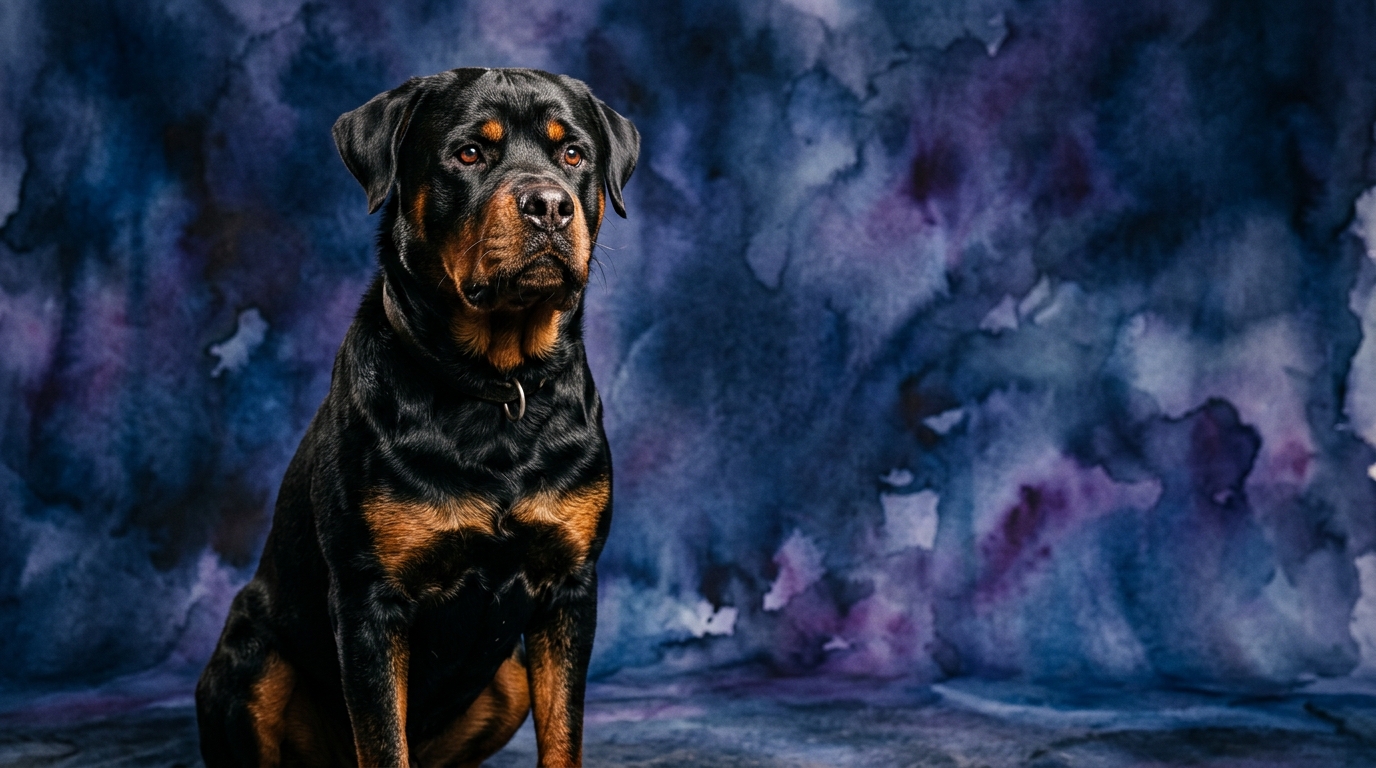
The Rottweiler, a breed from the Working Group, consistently demonstrates a formidable intellectual capacity. Its Problem Solving score of 5/5 reflects a profound ability to analyze situations and devise effective solutions, a trait honed by centuries of guarding and herding. Training Speed registers at 4/5, indicating a quick grasp of commands and concepts, though requiring consistent, purposeful engagement. Social Intelligence, at 4/5, highlights its nuanced understanding of human cues and strong bond formation, while its Instinctive Drive is a robust 5/5, channeled into protection and service. Memory, also at 5/5, underpins its reliability and ability to retain complex sequences and experiences.
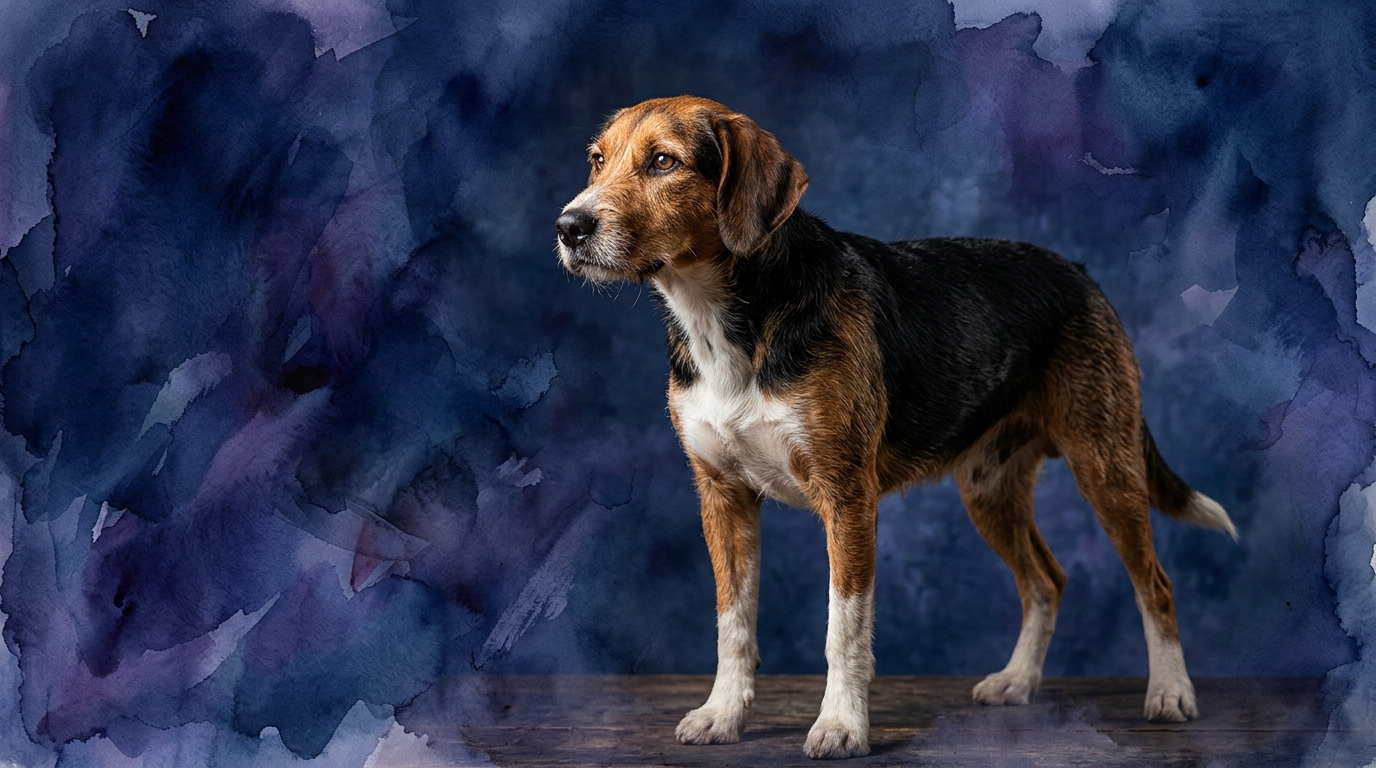
The Harrier, a member of the Hound Group, presents a distinct cognitive profile, deeply rooted in its heritage as a pack hunter. Across all five categories – Problem Solving, Training Speed, Social Intelligence, Instinctive Drive, and Memory – the Harrier consistently scores 3/5. This does not imply a lack of intellect, but rather a specialized focus. Its Problem Solving revolves around tracking and scent interpretation, while its Training Speed can be influenced by its strong, independent pursuit of scent. Social Intelligence primarily centers on pack dynamics, and its Instinctive Drive is overwhelmingly directed towards the chase. Memory is strong for scent trails and locations, less so for human-designed sequences.
Where the Rottweiler Cognitively Excels
The Rottweiler’s cognitive strengths are evident in its exceptional Problem Solving (5/5) and Memory (5/5). This breed exhibits a remarkable capacity for independent thought and decision-making in real-world scenarios, a trait crucial for its historical roles as a drover and guard dog. When faced with an unfamiliar barrier or a complex task, a Rottweiler is inclined to assess the situation and work through it, rather than relying solely on human direction. This innate ability to strategize and adapt makes them adept at various working roles, from protection to service dog tasks.
Furthermore, the Rottweiler's robust memory ensures that lessons learned, whether in training or through experience, are retained with remarkable fidelity. This high memory score translates into consistent performance and reliability, as they recall commands, routines, and past interactions effectively. Their Instinctive Drive (5/5) is not merely high but also highly adaptable; it can be channeled into specific, structured tasks, making them highly trainable for diverse purposes. Their Social Intelligence (4/5) allows them to understand human intent and subtle cues, forming deep, discerning bonds that facilitate effective communication and cooperation in complex environments.
Where the Harrier's Cognitive Strengths Lie
While the Harrier's scores are consistently 3/5 across the board, it's crucial to understand these scores in the context of its evolutionary purpose: the pursuit of scent. The Harrier's Instinctive Drive (3/5) is not low, but rather singularly focused on scenting and tracking, a drive so profound it often overrides other stimuli. This highly specialized instinct is its supreme cognitive strength, allowing it to interpret a complex world of odors that is imperceptible to humans, and to navigate vast territories based on these elusive trails.
Its Problem Solving (3/5) is deeply integrated with this drive. A Harrier solves problems by navigating complex terrain, identifying breaks in a scent trail, and overcoming obstacles, all with the singular goal of maintaining the pursuit. This is a form of practical, sensory-driven problem-solving that is incredibly sophisticated within its domain. Similarly, its Memory (3/5) is exceptional for recalling scent patterns, specific animal trails, and geographical features associated with a hunt. Its Social Intelligence (3/5) is finely tuned for pack cooperation, understanding the dynamics of group hunting rather than intricate human social cues, making it a cooperative partner in a canine hunting unit. The Harrier demonstrates a persistent, unwavering focus on its primary sensory input, a testament to its specialized cognitive architecture.
Ease of Training: Rottweiler vs. Harrier
When considering ease of training, the Rottweiler (Training Speed 4/5) generally presents a more straightforward path for handlers. Their substantial Problem Solving and Memory scores, combined with a strong Social Intelligence, mean they are often eager to understand and comply with commands. Rottweilers thrive on purpose and structure, and their working drive makes them responsive to consistent, positive reinforcement training. However, their strong will and inherent protective instincts mean that training must be firm, fair, and consistent from a young age to channel their drives appropriately and prevent them from making independent, potentially undesirable decisions.
The Harrier (Training Speed 3/5) offers a different training challenge. Their powerful instinctive drive for scenting can make them appear distracted or stubborn in traditional obedience settings. A Rottweiler is more likely to maintain eye contact and await a handler's cue, whereas a Harrier's nose will frequently be glued to the ground, its attention captivated by an invisible world of odors. Training a Harrier requires immense patience, creativity, and a deep understanding of their motivations. Handlers often find success by integrating scent work and engaging their natural prey drive into training, making it a game rather than a rigid command structure. Their capacity to learn is present, but their priorities are fundamentally different, necessitating a tailored approach that respects their ancient hunting heritage.
Matching Breeds to Lifestyles: Active vs. Relaxed Owners
For owners seeking a dog that integrates seamlessly into a structured lifestyle and thrives on purposeful activity, the Rottweiler is an excellent match. They suit active owners who can provide consistent training, mental enrichment, and a clear role within the family unit. This might involve advanced obedience, protection work, agility, or simply being a diligent companion on long, brisk walks. A Rottweiler needs more than just physical exercise; it requires cognitive engagement to prevent boredom and channel its considerable intellect and drive. Owners who are actively involved in their dog's development and provide clear leadership will find a loyal, capable, and rewarding companion. They are not suited for truly 'relaxed' owners who prefer a hands-off approach, as their strong drives require direction.
The Harrier, conversely, suits owners with a deeply active, outdoor-oriented lifestyle, particularly those who appreciate a dog driven by ancient instincts. These dogs require extensive daily physical activity, ideally in secure areas where they can explore scents off-leash. Owners who enjoy hiking, trail running, or engaging in scent work activities will find a Harrier to be an enthusiastic partner. A 'relaxed' owner for a Harrier doesn't mean sedentary; it means someone who understands and embraces the breed's independent, scent-driven nature, providing ample opportunity for them to fulfill their innate urges. Without sufficient outlets for their instinctive drive, Harriers can become restless and challenging, making them less suitable for owners primarily seeking a calm, indoor companion without dedicated outdoor adventures.
The Verdict: When to Choose Each Breed
The Verdict
Choose the Rottweiler if you seek a partner for complex tasks, protection, and thrive on consistent training and a clear purpose, valuing a dog that learns quickly and forms deep, discerning bonds.
Choose the Harrier if you embrace a dog driven by ancient instincts, relish outdoor adventures, and are patient with a companion whose primary focus is the world of scent, requiring creative engagement.
🧠 Find Your Pet's IQ Score
Our Pet IQ Lab assessment covers 25+ tests across 5 cognitive dimensions — personalized to your breed.
Take the Full IQ Test →Frequently Asked Questions
Is a Rottweiler suitable for a first-time dog owner?
A Rottweiler can be, but requires significant commitment to early socialization, consistent training, and understanding its strong drives. Their capacity to learn means they respond well to clear guidance, making them manageable for dedicated novices willing to invest time and effort into their development.
Do Harriers make good family pets?
Harriers can be affectionate and playful family members, especially with active children who understand their energy levels. However, their strong prey drive and need for mental and physical stimulation mean they thrive in homes that can accommodate their energetic nature and provide outlets for their scenting instincts.
How do the exercise needs of a Rottweiler compare to a Harrier?
Rottweilers need regular, structured exercise combined with mental challenges, such as obedience work or agility, to satisfy their working drive. Harriers require extensive daily physical activity, ideally off-leash in secure areas, allowing them to follow scents and burn off their boundless energy, often more focused on endurance than short bursts of activity.