
Side-by-Side Cognitive Profiles
The Cosmic Pet Pet IQ Lab provides a nuanced look at canine intelligence, moving beyond simple rankings to assess five crucial dimensions. For the Rottweiler, ranked #9 by Coren, its profile is marked by exceptional Problem Solving (5/5), indicating an outstanding capacity to independently strategize and overcome obstacles. Training Speed is rated 4/5, showing a quick grasp of commands, while Social Intelligence stands at 4/5, suggesting a good, albeit sometimes reserved, understanding of human cues. Its Instinctive Drive is a powerful 5/5, reflecting strong innate urges for work or protection, complemented by a perfect Memory score of 5/5, ensuring excellent recall of experiences and learned behaviors.
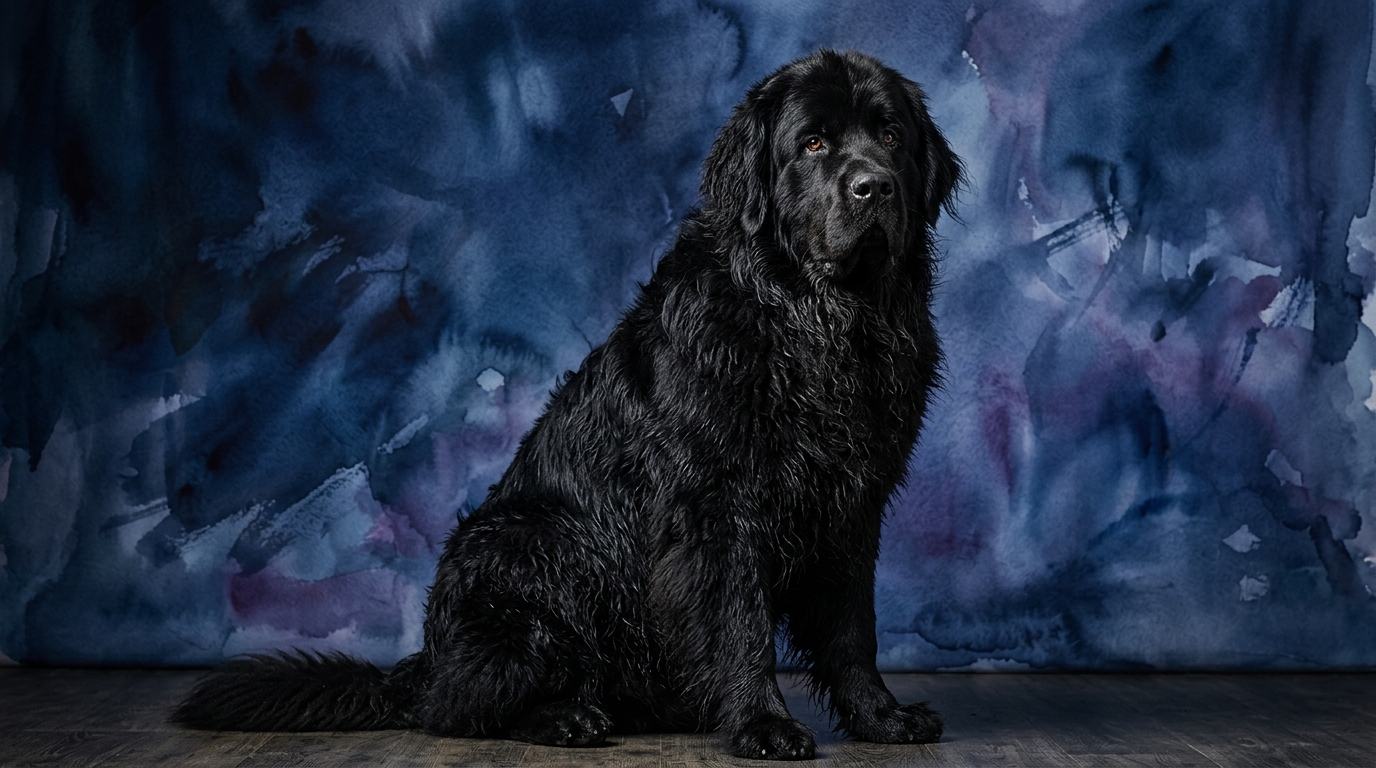
In contrast, the Newfoundland, holding a Coren rank of #34, presents a different cognitive landscape. Its Problem Solving is rated 3/5, indicating a solid but perhaps less independent approach to challenges compared to the Rottweiler. Training Speed matches at 4/5, demonstrating a similar pace in acquiring new skills. Where the Newfoundland truly shines is in Social Intelligence, earning a top score of 5/5, reflecting profound empathy and an intuitive understanding of emotional nuances. Its Instinctive Drive is also 5/5, particularly evident in its legendary water rescue capabilities, while its Memory is a robust 4/5, ensuring good retention of information and experiences.
Where the Rottweiler Excels Cognitively
The Rottweiler’s cognitive prowess is most apparent in its superior Problem Solving and Memory. A perfect 5/5 in Problem Solving means these dogs are exceptionally adept at figuring out complex situations on their own, whether it’s navigating an intricate obstacle course, understanding multi-step commands, or adapting to novel environments with minimal guidance. This capacity for independent thought makes them excellent candidates for advanced obedience, protection work, or roles requiring quick, logical decision-making under pressure. They don't just follow instructions; they often understand the underlying goal and can improvise to achieve it.
Furthermore, the Rottweiler's impeccable 5/5 Memory contributes significantly to its cognitive advantage. This isn't just about remembering a few commands; it encompasses a comprehensive recall of past experiences, learned routines, and the consequences of actions. This sharp memory allows them to build a deep database of knowledge, making them remarkably consistent in their performance once a behavior is established. Their Coren rank of #9 further underscores their consistent ability to comprehend and execute instructions, often with fewer repetitions required to solidify complex tasks.
Where the Newfoundland Shines Cognitively
The Newfoundland’s cognitive strengths are profoundly rooted in its exceptional Social Intelligence and powerful Instinctive Drive. With a perfect 5/5 in Social Intelligence, the Newfoundland possesses an unparalleled ability to read and respond to human emotions and social cues. This translates into an intuitive understanding of distress, a gentle demeanor with vulnerable individuals, and a remarkable capacity for empathetic interaction. They often seem to anticipate needs or moods, offering comfort or support without explicit instruction, making them outstanding therapy or service animals in roles requiring deep emotional connection.
Their 5/5 Instinctive Drive, particularly for water rescue, is not merely a physical attribute but a sophisticated cognitive application of innate behavior. This drive involves complex problem-solving in dynamic environments—assessing currents, locating individuals, and executing a rescue plan—all driven by an intrinsic motivation to help. While their general problem-solving is 3/5, when aligned with this powerful instinct, their cognitive abilities in specific life-saving scenarios are truly remarkable, showcasing a specialized intelligence focused on care and protection rather than abstract tasks.
Ease of Training: A Nuanced Perspective
Both the Rottweiler and the Newfoundland share a Training Speed score of 4/5, suggesting they both acquire new commands at a relatively quick pace. However, the 'ease' of training extends beyond initial acquisition and touches upon motivation and temperament. The Rottweiler’s superior Problem Solving and Memory mean that once a command is understood, it is likely to be retained and executed with high reliability, even in complex sequences. Their strong Instinctive Drive can be effectively channeled into obedience and working tasks, thriving on clear structure and consistent leadership. Training a Rottweiler often involves harnessing their independent thinking and strong will, requiring an owner who can establish themselves as a confident, fair leader to guide their considerable cognitive abilities.
The Newfoundland, while equally quick to learn, often responds best to positive reinforcement and training methods that foster cooperation and connection, leveraging its high Social Intelligence. Their desire to please and their empathetic nature mean they are highly receptive to gentle guidance. While they may not independently strategize solutions as readily as a Rottweiler, their willingness to engage and their strong drive for tasks like water rescue make them eager participants in activities that align with their inherent nature. Training a Newfoundland might require more patience and understanding of their sensitive disposition, focusing on building a trusting relationship rather than simply enforcing commands.
Matching Breeds to Lifestyles: Active vs. Relaxed Owners
For active owners seeking a canine partner for demanding tasks, the Rottweiler is an exceptional choice. Their combination of high Problem Solving, Memory, and Instinctive Drive means they thrive on consistent mental and physical challenges. Owners who enjoy advanced obedience, protection sports, or a dog that can learn complex routines will find the Rottweiler's cognitive profile highly rewarding. They require engagement that stimulates their independent thought and provides a sense of purpose, making them ideal for individuals committed to structured training and an active, goal-oriented lifestyle. Their need for a "job" means they are not suited for purely sedentary companionship.
The Newfoundland, while a large and powerful breed, might appeal more to owners who value companionship and a gentle presence, though 'relaxed' doesn't mean inactive for these giants. Their exceptional Social Intelligence makes them wonderful family dogs, particularly empathetic with children or the elderly. Owners who appreciate a dog with a strong, inherent desire to care and protect through presence rather than aggressive assertion will find a Newfoundland fulfilling. While they need regular exercise, including opportunities to swim if possible, their cognitive needs lean towards social engagement and tasks that reinforce their natural caretaking instincts, making them suitable for owners who enjoy a loving, attentive companion and are prepared for their considerable size and grooming requirements.
The Verdict
Choose the Rottweiler if you seek a highly capable working partner, a diligent protector, or a dog for advanced obedience and problem-solving tasks, and are committed to consistent, firm training.
Opt for the Newfoundland if you desire a gentle, empathetic companion with a strong desire to connect, appreciating a dog's natural protective instincts channeled into caretaking, and can accommodate a large, loving presence.
🧠 Find Your Pet's IQ Score
Our Pet IQ Lab assessment covers 25+ tests across 5 cognitive dimensions — personalized to your breed.
Take the Full IQ Test →Frequently Asked Questions
Are Rottweilers good family dogs?
Rottweilers can be excellent family dogs when properly socialized and trained from a young age. Their protective instincts make them devoted to their family, but their strong will requires consistent, fair leadership to ensure they are well-behaved and integrate safely into the household.
Do Newfoundlands require a lot of exercise?
Newfoundlands require moderate, consistent exercise to maintain their health and well-being, though not as intensely as some high-drive breeds. Daily walks and opportunities for swimming, which they adore, are ideal for keeping them physically fit and mentally stimulated without overexertion.
Which breed is better for first-time dog owners?
Neither breed is typically recommended for entirely novice owners due to their size, strength, and specific training needs. However, a Newfoundland's more amenable and socially intelligent nature might be slightly more forgiving for a committed first-timer willing to invest in professional guidance, compared to the Rottweiler's assertive independence.