
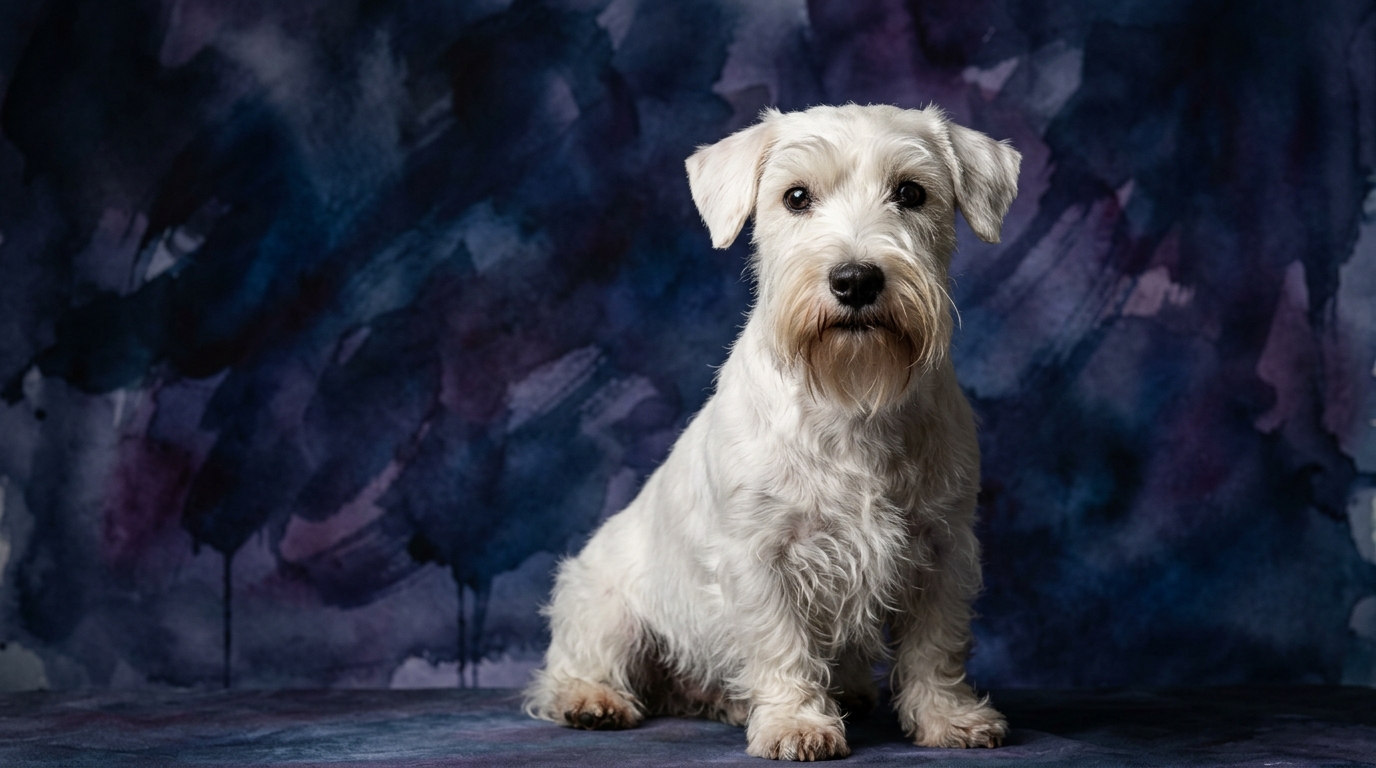
Side-by-Side Cognitive Profile: Rottweiler vs. Sealyham Terrier
**Rottweiler (Working Group)**: The Rottweiler, holding Coren's rank #9, demonstrates a strong capacity for complex task learning and obedience. Their Problem Solving is rated 5/5, indicating an exceptional aptitude for navigating intricate situations and devising solutions, whether it's figuring out a complex puzzle or understanding environmental cues. Training Speed is 4/5, reflecting their rapid acquisition of new skills, making them adept at learning extensive command sets. Social Intelligence at 4/5 highlights their keen awareness of human emotional states and cues, fostering deep, responsive bonds. An Instinctive Drive of 5/5 underscores their powerful intrinsic motivation for purpose-driven work, such as guarding or protection. Finally, their Memory at 5/5 ensures reliable retention of learned behaviors and experiences over extended periods, contributing to their consistency and dependability.
**Sealyham Terrier (Terrier Group)**: The Sealyham Terrier, while not Coren-ranked, embodies a distinct terrier intelligence characterized by independence and determination. Their Problem Solving is rated 3/5; they approach challenges with tenacity, often relying on persistence and physical attributes to achieve goals, even if not always the most direct route. Training Speed is 3/5, suggesting that learning new commands may require more repetitions and compelling motivation due to their self-reliant nature. Social Intelligence at 3/5 indicates they are attentive to their human companions but often interpret cues through their strong-willed terrier personality, sometimes selectively. Their Instinctive Drive of 3/5 is primarily rooted in their heritage of hunting small prey, manifesting as a strong urge to dig, explore, and pursue, rather than a drive for collaborative work. Memory at 3/5 means they possess functional recall for routines and familiar individuals, remembering what serves their immediate interests, such as the location of favored toys.
Where the Rottweiler Excels Cognitively
The Rottweiler clearly excels in areas demanding structured learning, complex obedience, and a strong partnership with a human handler. Their superior problem-solving capacity and rapid training speed mean they can master a wide array of commands and tasks, adapting quickly to new instructions and understanding intricate sequences of actions. The Rottweiler's heightened social intelligence allows for nuanced communication and a deep understanding of human intentions, fostering a highly responsive working relationship where they are keenly attuned to their handler's directives. Furthermore, their powerful instinctive drive for purpose-driven work, combined with exceptional memory, enables them to perform intricate sequences of behaviors reliably and consistently over time, making them formidable in roles requiring precision and dedicated focus.
Where the Sealyham Terrier Shows Unique Cognitive Strengths
While not demonstrating the same type of compliant intelligence, the Sealyham Terrier possesses distinct cognitive strengths rooted in its independent, tenacious nature. Their problem-solving, though rated lower in terms of efficiency, is characterized by sheer persistence and a willingness to try multiple approaches until a goal is achieved, particularly if it involves their prey drive. This breed excels in self-directed tasks and independent exploration, leveraging their senses to navigate environments and pursue interests without constant human direction. Their social intelligence, while perhaps not as focused on eager compliance, allows them to forge strong, albeit sometimes selective, bonds, often interpreting situations through their own determined lens, a form of cognitive autonomy that prevents them from being easily deterred from their objectives once they set their mind to something.
Trainability: Rottweiler vs. Sealyham Terrier
The Rottweiler is generally much easier to train due to several inherent cognitive advantages. Their high training speed (4/5) means they grasp new concepts with fewer repetitions, and their strong memory (5/5) ensures these lessons are retained effectively. Critically, their elevated social intelligence (4/5) makes them highly attuned to human directives and eager to please, translating into a willing and responsive student. Rottweilers thrive on structure and purpose, making them receptive to consistent guidance and complex training regimens. In contrast, the Sealyham Terrier’s independent nature and moderate training speed (3/5) mean they often require more patience, creativity, and compelling motivation. Their instinctive drive (3/5) is less about partnership work and more about self-directed exploration or prey pursuit, which can sometimes override human commands if not carefully managed. Training a Sealyham often involves harnessing their tenacity and channeling it productively rather than expecting immediate, eager compliance, demanding a different pedagogical approach focused on making training fun and rewarding for their unique personality.
Matching Canine Cognition to Owner Lifestyles
For active owners seeking a canine partner for demanding activities, the Rottweiler is an exceptional match. Their high instinctive drive (5/5) and problem-solving capacity (5/5) make them ideal for advanced obedience, protection sports, agility, or even search and rescue, where consistent engagement and mental stimulation are paramount. They thrive when given a 'job' and require owners who can dedicate time to structured training and rigorous physical exercise to fulfill their cognitive needs. A relaxed owner might find a Rottweiler's need for mental and physical exertion overwhelming, potentially leading to boredom-driven behaviors. Conversely, the Sealyham Terrier, while possessing a moderate instinctive drive (3/5) for exploration and terrier-specific activities, is more adaptable to varied lifestyles. They appreciate walks and playtime but do not require the same intensity of structured work as a Rottweiler. A relaxed owner who enjoys casual walks, puzzle toys, and managing a determined, sometimes stubborn, personality will find a Sealyham a charming companion, though their independent streak means they are never truly 'low maintenance' in terms of consistent mental engagement and boundary setting.
The Verdict
Opt for a Rottweiler if you are an experienced, active owner seeking a highly trainable, purpose-driven companion for advanced obedience, protection, or demanding roles, and can provide consistent mental and physical challenges.
Select a Sealyham Terrier if you appreciate an independent, tenacious personality, are prepared for consistent, patient training, and desire a charming companion adaptable to a moderately active lifestyle.
🧠 Find Your Pet's IQ Score
Our Pet IQ Lab assessment covers 25+ tests across 5 cognitive dimensions — personalized to your breed.
Take the Full IQ Test →Frequently Asked Questions
Are Rottweilers good family dogs?
With their high social intelligence and strong memory, Rottweilers often form deep bonds with their families, demonstrating loyalty and a protective instinct. Early socialization and consistent training are crucial to channel their capabilities into being well-adjusted and reliable family members, especially given their powerful physical and mental attributes.
Do Sealyham Terriers require a lot of exercise?
Sealyham Terriers benefit from regular moderate exercise, including daily walks and opportunities for off-leash play in a secure area. While not requiring the intense physical demands of some working breeds, their instinctive drive for exploration means they appreciate mental stimulation and varied activities that engage their senses, like scent work or digging in a designated area.
How does a Coren rank relate to a dog's real-world intelligence?
Coren's ranking primarily assesses 'working and obedience intelligence,' focusing on a dog's ability to learn and obey human commands efficiently. It doesn't encompass all facets of canine cognition, such as independent problem-solving, creative thinking, or adaptive ingenuity in novel situations, which breeds like the Sealyham Terrier might excel at in different, less human-directed ways.