
Side-by-Side IQ Profile: Rottweiler vs. Sussex Spaniel
The Cosmic Pet Pet IQ Lab employs a multi-dimensional framework to assess canine intelligence, moving beyond simple obedience scores to evaluate problem-solving, training speed, social intelligence, instinctive drive, and memory. For the Rottweiler, a breed deeply rooted in working roles, their profile reflects a robust and highly capable mind. Their Problem Solving score of 5/5 signifies an exceptional capacity for strategic thinking, enabling them to decipher complex situations and devise effective solutions. Training Speed at 4/5 indicates a rapid assimilation of new information and commands, making them quick studies. Social Intelligence, also at 4/5, highlights their nuanced understanding of human communication, fostering strong, responsive partnerships. A perfect 5/5 in Instinctive Drive underscores their powerful inherent motivations for purpose-driven tasks, guiding their focus and determination. Finally, their Memory score of 5/5 means they retain learned behaviors, routines, and experiences with remarkable longevity and precision.
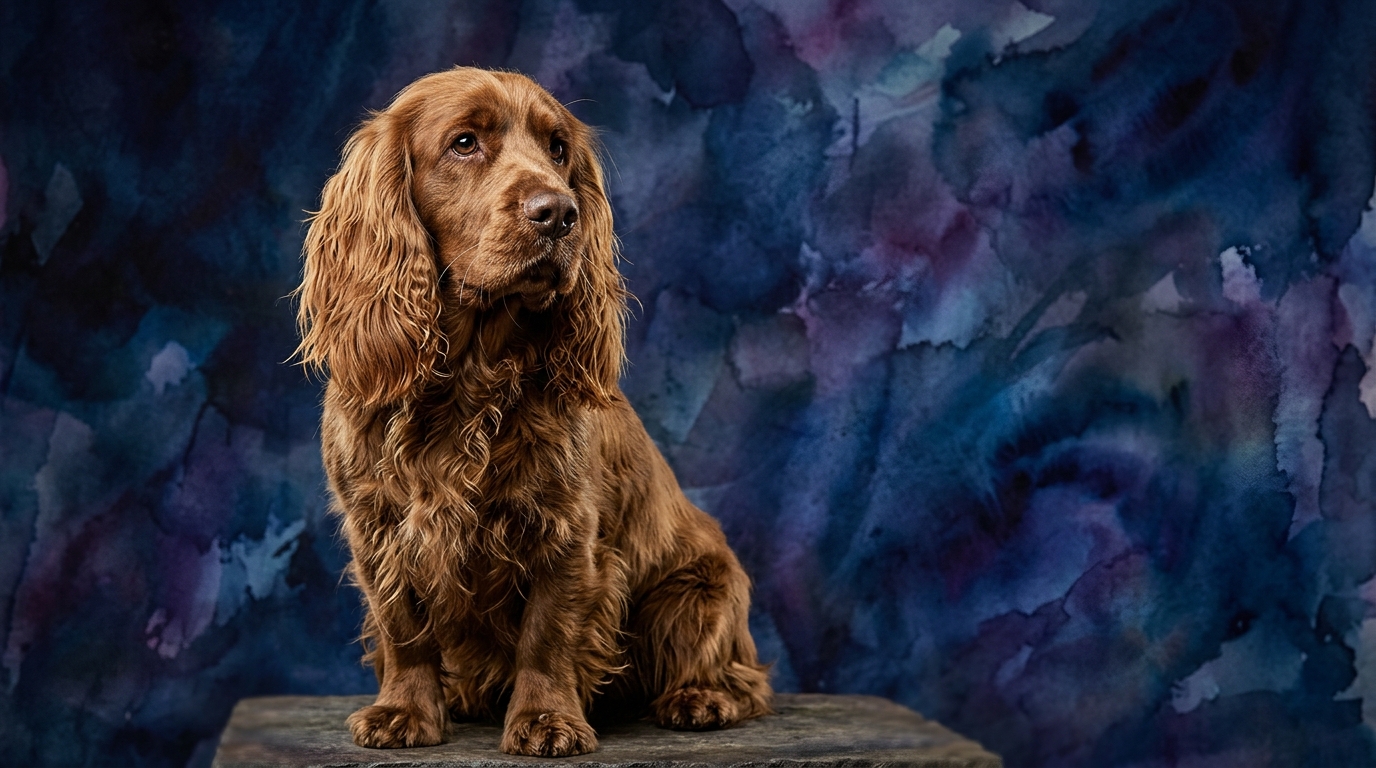
In contrast, the Sussex Spaniel presents a profile suited to a different pace of life, reflecting their heritage as a dedicated, methodical gundog. Their Problem Solving score of 3/5 suggests they can competently tackle straightforward challenges, but may require more structured guidance for novel puzzles, preferring established patterns. Training Speed, also at 3/5, indicates a moderate learning pace; they benefit significantly from consistent, positive reinforcement and repetition. Social Intelligence at 3/5 points to an affectionate nature with their inner circle, though they can be more reserved with strangers. Their Instinctive Drive, rated 3/5, is geared towards their sporting heritage, manifesting as a keen nose for scent work and a desire to explore. Lastly, their Memory score of 3/5 means they reliably recall familiar commands and routines, though less frequently practiced skills might require occasional refreshers.
Where the Rottweiler Wins Cognitively
The Rottweiler's cognitive strengths truly shine in scenarios demanding independent thought, strategic planning, and sustained focus under pressure. Their superior Problem Solving (5/5) allows them to not just follow instructions but to creatively adapt and overcome unforeseen obstacles, a crucial trait in roles like protection work or search and rescue. A Rottweiler can analyze a new problem and often figure out a solution independently, leveraging their strong Memory (5/5) to recall past experiences or training. This robust memory also means complex, multi-step commands become deeply ingrained, enabling them to execute elaborate tasks with reliability. Furthermore, their powerful Instinctive Drive (5/5) provides an unwavering internal motivation that fuels their determination to complete tasks, even when faced with distractions. This translates to an exceptional work ethic and a profound capacity for sustained mental engagement, making them adept at mastering challenging disciplines like competitive obedience, agility, or advanced protection sports.
Where the Sussex Spaniel Wins Cognitively
While the Sussex Spaniel’s cognitive profile differs significantly from the Rottweiler’s, their unique blend of mental traits offers distinct advantages, particularly for a companion role that values steadiness and a less demanding intellectual presence. Their moderate Instinctive Drive (3/5) means they aren't constantly seeking intense mental challenges, which can be a win for owners desiring a relaxed home environment where the dog isn't perpetually 'on duty.' This disposition contributes to a generally calm demeanor, reducing anxiety stemming from unmet cognitive stimulation needs that higher-drive breeds might exhibit. Their Social Intelligence (3/5), while not as broad, allows them to form deep, affectionate bonds within their immediate family, offering a steady, predictable emotional connection without the complexity of constantly interpreting nuanced group dynamics. This focused social capacity can make them wonderfully stable family members, less prone to the hyper-vigilance some higher-social-intelligence breeds can display. Moreover, their moderate Problem Solving (3/5) means they are content with routine and don't feel a constant compulsion to 'outsmart' their environment, leading to a more placid and easygoing mental state for both dog and owner.
Which is Easier to Train and Why
Evaluating ease of training requires considering both the dog's intrinsic learning capabilities and the owner's commitment. Based on their Pet IQ Lab scores, the Rottweiler (Training Speed 4/5, Problem Solving 5/5, Memory 5/5) generally presents as the easier breed to train for a wide range of commands and complex tasks. They grasp new concepts quickly, often requiring fewer repetitions to solidify a behavior, and their exceptional memory ensures long-term retention of learned skills. Their strong instinctive drive, when channeled appropriately, translates into a focused eagerness to work and please their handler, provided the training is engaging and consistent. They thrive on mental challenges and are quick to understand cause-and-effect, making them highly responsive to well-structured training programs.
The Sussex Spaniel (Training Speed 3/5, Problem Solving 3/5, Memory 3/5), while certainly trainable, will typically require more patience, consistency, and positive reinforcement. Their moderate training speed means they may take longer to assimilate new commands, and their more moderate memory might necessitate frequent refreshers. Their instinctive drive, while present, is more geared towards scent work, which can sometimes lead to distraction during training sessions. Owners will find success with the Sussex Spaniel by employing gentle, encouraging methods, breaking down tasks into smaller steps, and making training a positive, rewarding experience without intense pressure.
Active Owners vs. Relaxed Owners: A Cognitive Match
The choice between a Rottweiler and a Sussex Spaniel largely hinges on an owner's lifestyle and their capacity to meet a dog's cognitive and physical needs. Active owners who thrive on challenges, enjoy structured activities, and are prepared to engage deeply with their dog's mental landscape will find the Rottweiler a profoundly rewarding companion. Their high Instinctive Drive (5/5) and exceptional Problem Solving (5/5) demand consistent mental stimulation through advanced training, dog sports, or roles that give them purpose. Without adequate engagement, a Rottweiler's formidable intellect and drive can lead to boredom and potentially undesirable behaviors. They are built for partnership in demanding activities, requiring owners who can match their intensity and provide clear, confident guidance.
Conversely, relaxed owners who appreciate a more self-contained, less mentally demanding canine presence will find the Sussex Spaniel a wonderful fit. Their moderate IQ profile across all dimensions means they are content with a more leisurely pace of life. While they enjoy walks and opportunities for scent exploration, their cognitive needs don't involve constant problem-solving or intricate tasks. They are happy to be a steady, affectionate presence, enjoying routine and the comfort of their family without requiring an owner to be a full-time dog trainer or sports enthusiast. Their lower instinctive drive translates to a dog that generally doesn't seek out complex 'jobs' and is more inclined to relax alongside their human companions, making them ideal for those seeking a tranquil, devoted friend.
The Verdict
Choose a Rottweiler if you are an engaged, experienced owner seeking a highly capable partner for advanced training, dog sports, or a working role, and are prepared to consistently meet their significant mental and physical stimulation needs.
Opt for a Sussex Spaniel if you desire a calm, affectionate companion for a relaxed home environment, appreciating a dog with moderate cognitive demands and a steady, predictable temperament.
🧠 Find Your Pet's IQ Score
Our Pet IQ Lab assessment covers 25+ tests across 5 cognitive dimensions — personalized to your breed.
Take the Full IQ Test →Frequently Asked Questions
Does a Rottweiler's high instinctive drive make them difficult to manage?
A Rottweiler's powerful instinctive drive (5/5) means they possess strong inherent motivations, which, if not channeled through consistent training and purposeful activities, can manifest as challenging behaviors. However, with proper guidance and outlets for their drive, it becomes a tremendous asset for focus and task completion.
Are Sussex Spaniels prone to being stubborn during training due to their moderate scores?
Sussex Spaniels aren't necessarily stubborn, but their moderate training speed (3/5) means they learn at a steadier pace and can be easily distracted by their keen sense of smell. Effective training involves patience, positive reinforcement, and making sessions engaging, rather than assuming resistance.
How important is early socialization for both breeds given their social intelligence scores?
Early socialization is crucial for both breeds, albeit for different reasons. For the Rottweiler (Social Intelligence 4/5), it helps them develop appropriate discernment and responsiveness to various social cues, preventing over-reactivity. For the Sussex Spaniel (Social Intelligence 3/5), it encourages confidence and adaptability in novel situations, helping them be more comfortable beyond their immediate family circle.