
Side-by-Side Cognitive Profile
The Rottweiler, ranking #9 on Coren's scale, demonstrates formidable cognitive prowess. Their problem-solving capacity registers at a top-tier 5/5, indicating an exceptional ability to analyze situations and devise solutions. Training speed is a solid 4/5, suggesting quick uptake of new commands and routines. Social intelligence, at 4/5, points to a strong awareness of human cues and social structures, while an instinctive drive of 5/5 underscores their inherent motivation for tasks like guarding or protection. Their memory is also outstanding, scoring 5/5, enabling robust retention of experiences and learned behaviors.
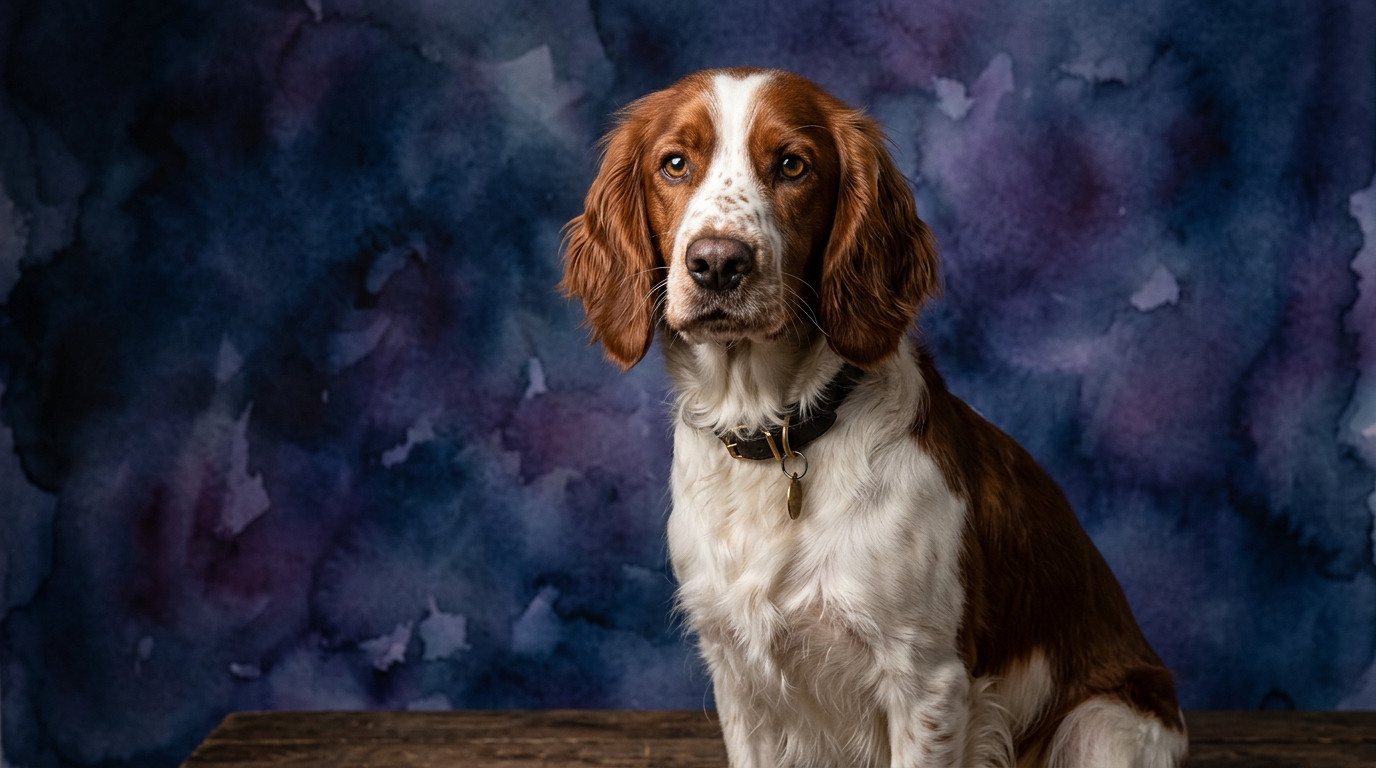
Occupying Coren's #31 spot, the Welsh Springer Spaniel presents a profile optimized for its sporting heritage. Their problem-solving score is a commendable 4/5, showing competence in navigating challenges relevant to their work. Training speed matches the Rottweiler at 4/5, indicating a similar efficiency in learning new tasks. Social intelligence, at 3/5, suggests a cooperative but perhaps less intensely perceptive social engagement compared to the Rottweiler. An instinctive drive of 3/5 reflects their motivation for flushing and retrieving, but without the intense guarding instincts. Their memory is strong at 4/5, crucial for remembering scent trails and retrieve locations.
Where the Rottweiler Excels Cognitively
The Rottweiler's cognitive profile showcases several standout areas. Their 5/5 problem-solving ability means they don't just follow instructions; they can assess novel situations and independently figure out solutions, a trait invaluable in protection or assistance roles. This is markedly different from the Welsh Springer's 4/5, where problem-solving is proficient but perhaps less inclined towards abstract or self-initiated solutions outside of immediate tasks. Furthermore, the Rottweiler's 5/5 instinctive drive translates into an unwavering focus and intensity when engaged in a task, be it guarding a property or learning complex obedience routines. This deep-seated drive, coupled with a perfect 5/5 memory, allows them to master and retain intricate sequences of commands and environmental details, making them highly reliable in demanding situations where precision and recall are paramount.
Where the Welsh Springer Spaniel Shines Cognitively
While the Rottweiler often presents a more robust cognitive profile in raw scores, the Welsh Springer Spaniel's strengths lie in its specialized application of intellect. Its 4/5 problem-solving, while lower than the Rottweiler's, is acutely geared towards navigating varied terrain, tracking scents, and executing complex retrieves in diverse environments — a very different kind of “problem.” The Welsh Springer's 3/5 instinctive drive, though lower, is a significant advantage for owners seeking a less intense, less “driven” companion. This means their natural impulses are more aligned with cooperative hunting or family life rather than protection, resulting in a more adaptable and less demanding inherent temperament for many households. Their 4/5 memory is perfectly adequate for retaining vast amounts of information related to their sporting tasks, remembering multiple retrieve locations or complex field patterns, showcasing a focused and enduring recall.
Which is Easier to Train and Why
Both breeds share an identical 4/5 training speed, suggesting they are equally capable of quickly grasping new commands. However, the *ease* of training can diverge significantly due to their other cognitive traits. The Rottweiler's 5/5 problem-solving and 5/5 instinctive drive mean they learn rapidly and apply that learning with formidable determination. This can translate to a dog that, if not consistently guided, might problem-solve ways to circumvent commands or assert its own will, requiring a firm, experienced hand and clear boundaries. Their 4/5 social intelligence makes them receptive to human leadership but also keenly aware of any inconsistencies.
The Welsh Springer Spaniel, with its 4/5 training speed, also learns efficiently. However, its lower 3/5 instinctive drive means it's less prone to challenging authority with the same intensity as a Rottweiler. While still possessing a strong work ethic typical of a sporting breed, their motivation is often more about partnership and performing a shared task rather than asserting dominance. Their 3/5 social intelligence means they are responsive, but perhaps less prone to overthinking or independently strategizing within the training context, often making them more straightforward to guide for a novice trainer who provides positive reinforcement and clear directives.
Which Suits Active Owners vs. Relaxed Owners
For active owners seeking a true working partner or a dog for intense sports, the Rottweiler's cognitive profile is a strong match. Their 5/5 instinctive drive, coupled with 5/5 problem-solving and memory, means they thrive on consistent mental and physical challenges. They need engaging activities that tap into their guarding instincts, their capacity for complex learning, and their robust physical stamina. A “relaxed” owner who cannot provide this level of engagement will find a Rottweiler quickly becomes bored and potentially destructive, as their powerful cognitive engine seeks an outlet.
The Welsh Springer Spaniel, while also a sporting breed and requiring regular activity, offers a slightly different experience. Its 3/5 instinctive drive means it's less intensely driven by guarding or protection, making it a better fit for active owners who enjoy field work, agility, or long hikes, but without the same level of inherent intensity. While still needing significant exercise and mental stimulation (its 4/5 problem-solving and memory aren't to be ignored), its cognitive demands are generally more focused on task-oriented engagement rather than complex, independent decision-making in a high-stakes environment. They can adapt better to an active family life where their “work” is often play and companionship, rather than a serious duty.
The Verdict
Choose the Rottweiler if you are an experienced owner prepared to engage a powerful intellect and unwavering drive in consistent training and challenging activities, seeking a dedicated guardian and companion.
Opt for the Welsh Springer Spaniel if you are an active individual or family looking for an eager, cooperative sporting companion that thrives on shared activities and positive reinforcement, offering a less intense but equally rewarding partnership.
🧠 Find Your Pet's IQ Score
Our Pet IQ Lab assessment covers 25+ tests across 5 cognitive dimensions — personalized to your breed.
Take the Full IQ Test →Frequently Asked Questions
Are Rottweilers difficult to train due to their strong will?
Rottweilers possess a high training speed (4/5) and are receptive learners, but their exceptional problem-solving (5/5) and strong instinctive drive (5/5) mean they require consistent, firm, and fair leadership. Without clear guidance, they might independently 'problem-solve' situations in ways not aligned with owner expectations, making them more challenging for inexperienced handlers.
How does the Welsh Springer Spaniel's social intelligence impact its family life?
With a social intelligence score of 3/5, Welsh Springer Spaniels are cooperative and generally good-natured companions, but they might not be as keenly attuned to subtle human emotional shifts as breeds with higher scores. They thrive in active family environments where they are included in activities, responding well to clear communication and positive social interactions.
Does a Rottweiler's superior memory mean they hold grudges?
A Rottweiler's 5/5 memory indicates an exceptional ability to retain learned experiences and associations, both positive and negative. While they don't 'hold grudges' in a human sense, they will remember negative interactions or inconsistent training, which underscores the importance of positive reinforcement and building trust from an early age for this highly retentive breed.