
Side-by-Side IQ Profile: Unpacking Canine Cognition
The Cosmic Pet Pet IQ Lab employs a five-dimensional framework to assess canine intelligence, moving beyond simple obedience to reveal a breed's full cognitive blueprint. For the Rottweiler and the West Highland White Terrier, these scores paint a clear picture of their predispositions and capabilities.
Rottweiler's Cognitive Landscape: Problem Solving (5/5): Rottweilers demonstrate exceptional capacity for navigating complex scenarios and devising solutions. This extends to understanding multi-step commands, adapting to novel environments, and even strategizing in protection work, making them adept at tasks requiring logical deduction and environmental manipulation. Training Speed (4/5): Their ability to rapidly grasp new commands and routines is a hallmark of the breed. Rottweilers connect actions with consequences swiftly, making the learning curve for obedience, advanced tasks, and specialized roles remarkably efficient. Social Intelligence (4/5): Rottweilers possess a developed understanding of human cues, intentions, and social hierarchies. They can read body language, interpret vocalizations, and respond appropriately to various social contexts, which is crucial for their historical roles as guardians and companions requiring close human cooperation. Instinctive Drive (5/5): This breed exhibits a profoundly strong intrinsic motivation to perform tasks rooted in their heritage, such as guarding, herding, and working. This drive translates into sustained focus, resilience, and a powerful desire to fulfill a purpose, making them highly engaged in structured activities. Memory (5/5): Rottweilers showcase an outstanding capacity for retaining information over extended periods. This includes not only commands and routines but also spatial memory, recognition of individuals, and recall of past experiences, which contributes significantly to their reliability and consistency.
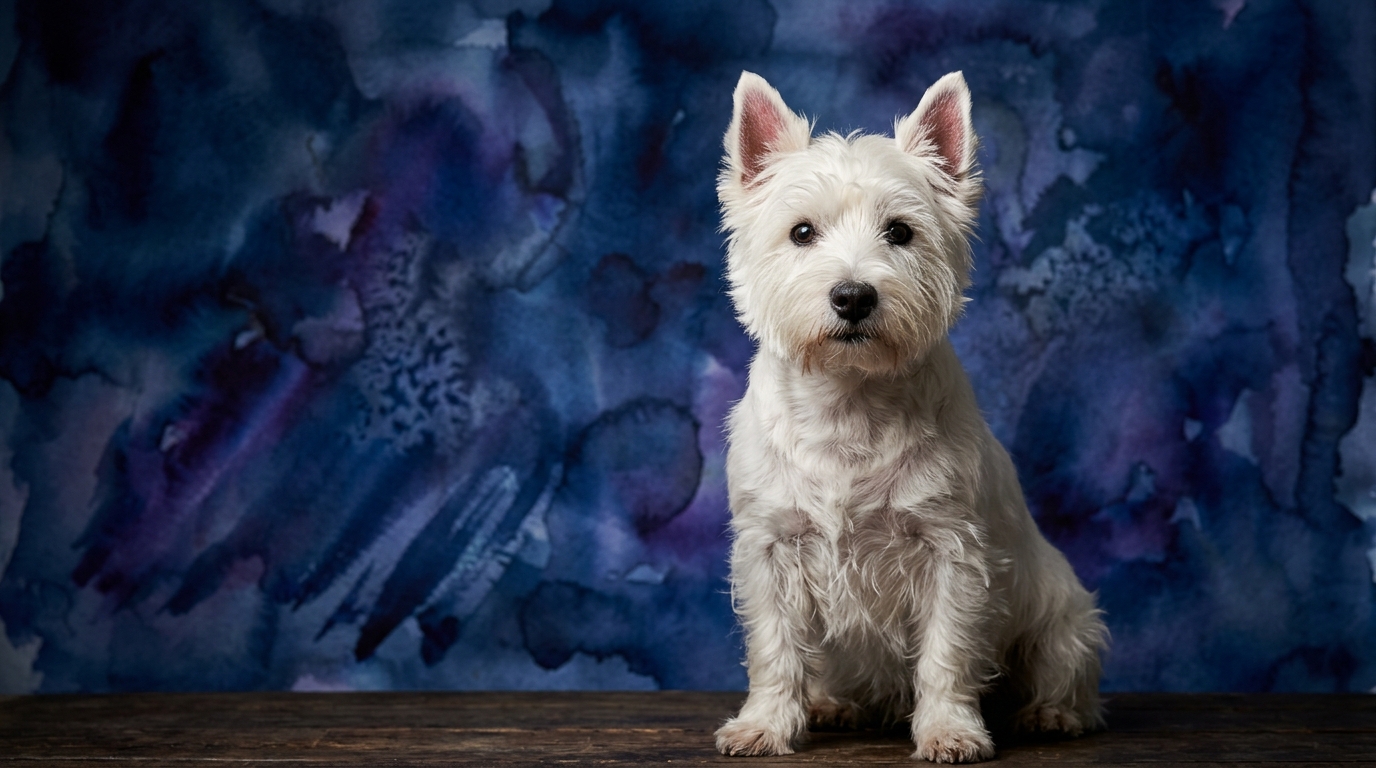
West Highland White Terrier's Cognitive Landscape: Problem Solving (3/5): Westies exhibit a moderate level of problem-solving ability, often focused on their independent terrier tasks. They can figure out how to access desired objects or navigate obstacles, but their approach is typically more trial-and-error and less strategic than a Rottweiler's, driven by immediate gratification rather than complex planning. Training Speed (3/5): Their training speed is moderate. While capable of learning, Westies often require more repetition and consistent motivation than breeds bred for eager cooperation. Their independent nature means they process commands on their own terms, often requiring an engaging approach to maintain focus. Social Intelligence (3/5): Westies have a moderate understanding of social cues. They can form strong bonds with their human families and interpret basic interactions, but they are less inclined to defer or seek constant guidance than highly cooperative breeds. Their social interactions are often characterized by a confident, sometimes assertive, independence. Instinctive Drive (3/5): While they possess a strong terrier drive for hunting small prey and digging, their overall instinctive drive score reflects a more selective application. This drive is powerful within its specific context but doesn't translate as broadly into a general eagerness for human-directed work or complex tasks as seen in a working breed. Memory (4/5): Westies demonstrate a good memory, particularly for things that benefit them or pertain to their routines and environment. They recall people, places, and learned behaviors effectively, though perhaps with less breadth and depth for purely abstract concepts compared to breeds with higher memory scores.
Where the Rottweiler Wins Cognitively
The Rottweiler's distinct advantage lies in its capacity for complex, multi-faceted cognitive engagement, particularly in collaboration with humans. Their perfect 5/5 score in Problem Solving means they don't just react to situations; they often anticipate and strategize, evident in their ability to learn intricate protection routines, assess threats, and execute precise actions. Coupled with a 5/5 in Memory, they can build vast libraries of learned behaviors and environmental knowledge, making them incredibly dependable in roles requiring consistent performance over time. Their 5/5 Instinctive Drive further fuels this cognitive prowess, providing an intrinsic motivation to engage deeply with tasks that require sustained mental effort, whether it's competitive obedience, advanced agility, or service work. This pervasive drive ensures they remain focused and resilient through challenging mental exercises, unlike breeds whose motivation might wane without immediate, tangible rewards.
Where the West Highland White Terrier Wins Cognitively
While the Westie’s overall scores might appear lower, their cognitive strengths are perfectly tailored to their historical purpose, demonstrating a unique form of specialized intelligence. Their 3/5 in Problem Solving, though moderate, is often expressed as tenacious, independent resourcefulness, excelling at figuring out how to get to a perceived “prey” or retrieve a hidden toy through sheer persistence rather than elaborate planning. Their 4/5 Memory, while not as broad as a Rottweiler's, is highly effective for remembering routines, favorite people, and the locations of interesting smells or buried treasures, supporting their independent hunting instincts. Furthermore, their moderate Instinctive Drive (3/5) is intensely focused on their terrier heritage; this means they possess a deep-seated, unwavering determination to pursue scent or dig, a form of cognitive tenacity that allows them to overcome obstacles that might deter a less focused breed. This isn't about human-directed tasks, but about achieving their own, often instinctual, goals.
Which is Easier to Train and Why
When considering ease of training in a conventional sense—meaning teaching obedience commands, complex routines, and consistent compliance—the Rottweiler generally presents a smoother path. Their 4/5 Training Speed indicates a quick uptake of new information, meaning fewer repetitions are needed for them to understand what's expected. This is significantly bolstered by their 4/5 Social Intelligence, which makes them highly attuned to human communication and eager to cooperate, understanding their role within a human-led team and often finding intrinsic satisfaction in pleasing their handler.
In contrast, the West Highland White Terrier’s 3/5 Training Speed means they require more patience and creative motivation. Their independence, a hallmark of the Terrier group, means they are less inherently inclined to defer to human instruction if it conflicts with their own objectives, such as investigating a fascinating scent. Their 3/5 Social Intelligence means they might not be as finely tuned to subtle human cues, often requiring clearer, more direct communication. Training a Westie often involves harnessing their tenacious nature and strong prey drive through positive reinforcement, making the “game” of training more appealing than the act of compliance itself. While capable learners, their self-directed cognitive style means they are generally less “easy” to train in traditional obedience compared to the more biddable Rottweiler.
Which Suits Active Owners vs Relaxed Owners
The cognitive profiles of these breeds directly influence their suitability for different owner lifestyles. The Rottweiler, with its 5/5 Instinctive Drive and 5/5 Problem Solving, thrives with active owners who can provide consistent mental and physical challenges. These dogs require more than just daily walks; they need structured training, engagement in dog sports, or meaningful “work” to channel their profound drive and cognitive abilities. An owner who enjoys teaching complex commands, participating in protection sports, or even just long, engaging hikes that involve problem-solving will find a Rottweiler a deeply rewarding companion. A relaxed owner who cannot commit to this level of engagement may find a Rottweiler becomes bored, leading to undesirable behaviors stemming from an underutilized mind.
The West Highland White Terrier, conversely, with its moderate 3/5 Instinctive Drive and 3/5 Problem Solving, can suit a more relaxed owner, provided that owner understands and respects the breed's specific terrier instincts. While they are not couch potatoes and do require regular exercise and mental stimulation to prevent boredom, their needs are different. A Westie appreciates an owner who enjoys short, spirited walks, engaging in interactive games that tap into their prey drive (like fetch or flirt poles), and providing puzzle toys. A relaxed owner who enjoys a dog with a spirited, independent personality, and who is prepared for the occasional burst of terrier tenacity (like a sudden chase after a squirrel or an insistent digging session) will find a Westie a delightful companion. They don't demand the same intense, structured “work” as a Rottweiler, but they do require consistent boundaries and outlets for their specific cognitive drives.
The Verdict
Opt for a Rottweiler if you are an experienced, active owner committed to consistent, structured training and providing ample mental stimulation through advanced obedience, dog sports, or a working role. You value a dog with exceptional problem-solving abilities, powerful memory, and a strong drive to collaborate on complex tasks, seeking a deeply bonded, highly capable partner.
Select a West Highland White Terrier if you appreciate an independent, spirited companion with a good memory and tenacious spirit, suitable for moderate activity and engaging in games that tap into their specific terrier instincts. You are prepared for a dog that learns at a moderate pace, requires consistent positive reinforcement, and thrives with an owner who understands and respects their self-directed nature.
🧠 Find Your Pet's IQ Score
Our Pet IQ Lab assessment covers 25+ tests across 5 cognitive dimensions — personalized to your breed.
Take the Full IQ Test →Frequently Asked Questions
Can a Westie learn complex tasks despite its moderate problem-solving score?
Yes, Westies can certainly learn complex tasks, but their approach differs. They might require more repetition and motivation tailored to their independent nature, often excelling when the task feels like a game or satisfies their innate terrier drives, rather than purely human-directed obedience.
Do Rottweilers truly require constant mental stimulation, given their high cognitive scores?
Rottweilers, with their exceptional problem-solving and instinctive drive, absolutely thrive on consistent mental stimulation. Without regular engagement through training, puzzle toys, or structured activities, their powerful minds can become bored, potentially leading to destructive behaviors or excessive guarding tendencies.
How does instinctive drive impact trainability for these breeds?
For Rottweilers, their high instinctive drive translates into an eager desire for purposeful work, making them highly motivated for tasks like protection or advanced obedience. For Westies, their moderate, but focused, instinctive drive means they excel in activities related to their terrier heritage, such as scent work or "hunting" games, but may require more persuasive techniques for tasks outside these innate interests.