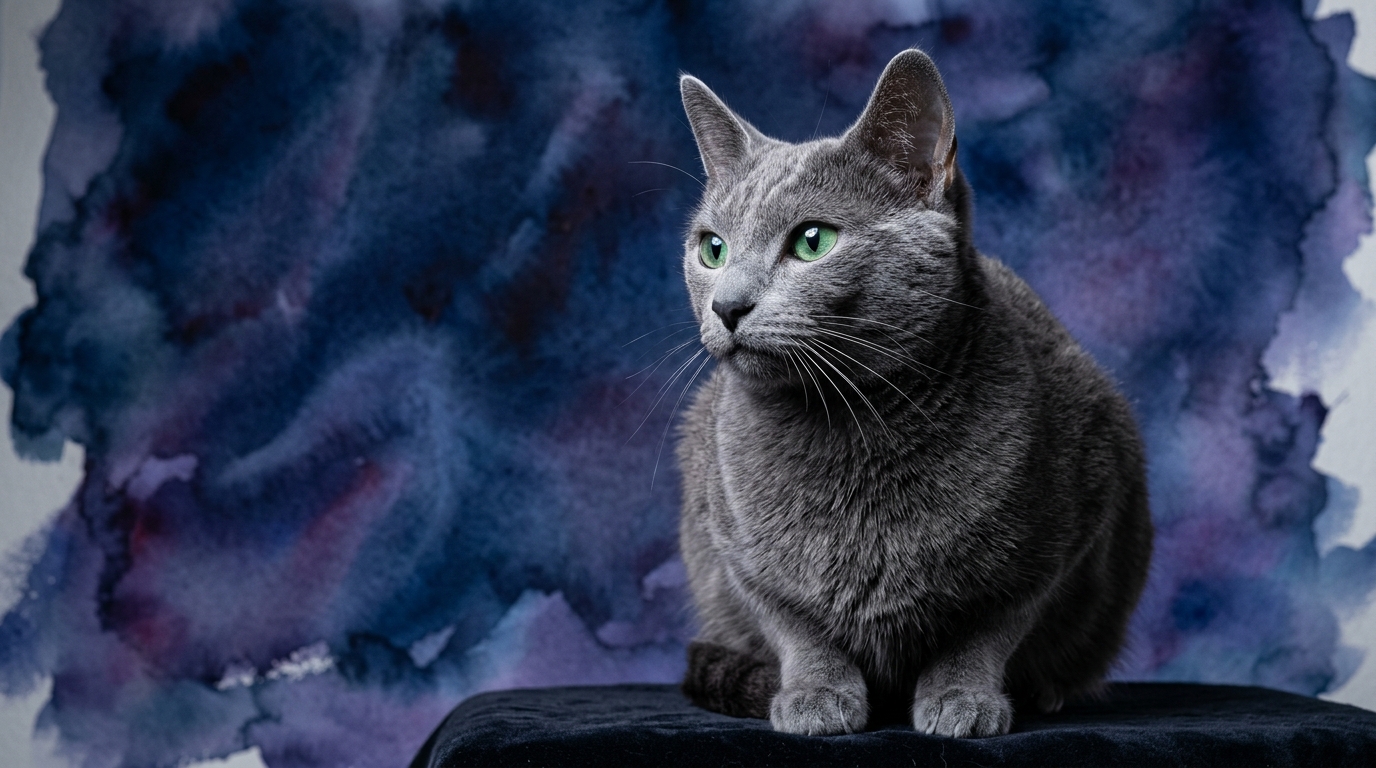
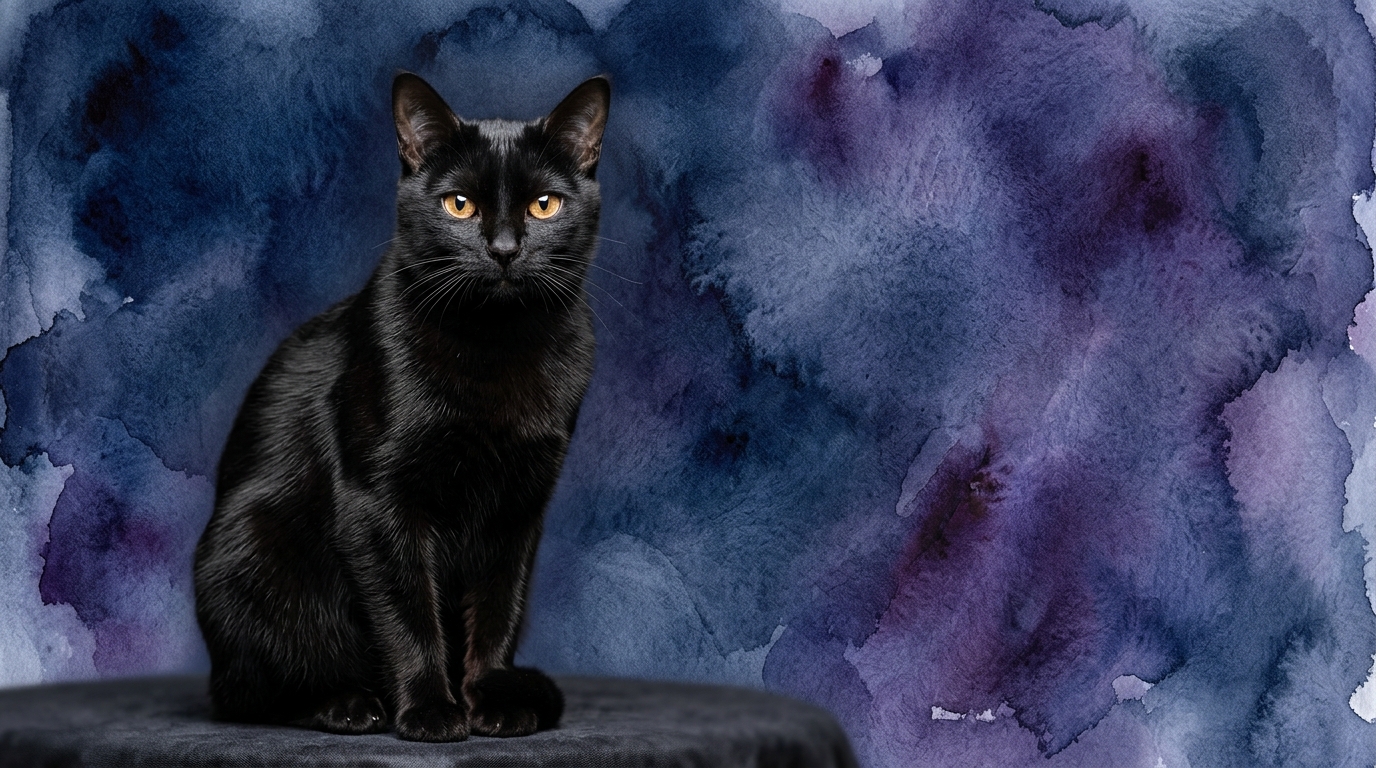
Side-by-Side IQ Profile: Russian Blue vs. Bombay
**The Russian Blue: A Profile in Keenness**
The Russian Blue showcases a refined cognitive architecture, excelling in several intellectual dimensions. Their **Problem Solving (4/5)** is notable; these cats often display ingenuity in navigating complex scenarios, such as figuring out how to manipulate a cabinet latch or master a multi-stage puzzle toy. This reflects a capacity for analytical thought and adaptive learning.
Their **Training Speed (3/5)** is moderate, meaning they absorb new commands and behaviors at a steady, consistent pace. While not instantaneous learners, they respond well to patient, positive reinforcement, building skills over time.
In **Social Intelligence (4/5)**, Russian Blues are particularly adept. They possess a keen understanding of social cues, both from humans and other pets, interpreting moods and intentions with remarkable accuracy. This allows for deep, nuanced bonds and smooth integration into diverse household dynamics, often showing an almost intuitive grasp of unspoken communication.
Their **Instinctive Drive (3/5)** is balanced. While they enjoy play that mimics hunting, like chasing laser pointers or toy mice, their predatory instincts are present but not overwhelming. This drive is sufficient to keep them engaged in active play and exploration without being excessively intense.
A standout trait is their **Memory (5/5)**. Russian Blues boast an exceptional long-term recall, remembering specific events, learned behaviors, and routines over significant periods. This robust memory underpins their problem-solving prowess and their ability to retain complex sequences, contributing significantly to their overall cognitive strength.
**The Bombay: A Profile in Consistent Affection**
The Bombay cat presents a well-rounded and consistent cognitive profile across all dimensions, making them a predictable and endearing companion. Their **Problem Solving (3/5)** is practical and efficient; they capably learn cause-and-effect relationships and navigate their environment effectively to meet daily needs, though they might opt for more direct solutions than the Russian Blue.
Like the Russian Blue, their **Training Speed (3/5)** is moderate. Bombay cats are receptive to training with consistent, positive reinforcement, enjoying interactive learning sessions and gradually picking up new behaviors. Their willingness to engage often makes the training process enjoyable.
In **Social Intelligence (3/5)**, Bombay cats are generally amiable and enjoy interacting with their human families. They form strong attachments and appreciate companionship, often seeking out attention and comfort. While they interpret cues, their social awareness is primarily focused on direct interaction and affection rather than the more subtle discernment of the Russian Blue.
Their **Instinctive Drive (3/5)** is also moderate. Bombay cats are playful and active, enjoying games that simulate hunting. Their predatory instincts are well-managed and typically expressed through engaging with toys, providing a fun and energetic presence without being overly demanding for hunting outlets.
The Bombay's **Memory (3/5)** is functional and reliable. They remember routines, familiar faces, and the layout of their home, recognizing their owners and adhering to established schedules. While perfectly adequate for daily life and bonding, their memory isn't as acutely detailed or long-lasting as breeds scoring higher in this dimension, meaning occasional reinforcement for less common commands can be beneficial.
Where Russian Blue Wins Cognitively
The Russian Blue distinctly shines in several cognitive areas where its scores surpass those of the Bombay. Its superior **Problem Solving (4/5)** means a Russian Blue is more likely to independently devise creative solutions to environmental puzzles, such as manipulating door handles or understanding the mechanics of a complex feeder toy. This isn't merely about persistence; it reflects a higher capacity for strategic thought and adaptive learning that allows them to grasp intricate relationships.
Furthermore, their exceptional **Memory (5/5)** provides a significant cognitive advantage. A Russian Blue can retain a vast array of learned behaviors, routines, and specific experiences over extended periods, minimizing the need for repetitive training and reinforcing their capacity for complex learning. This robust long-term recall also underpins their advanced **Social Intelligence (4/5)**, enabling them to remember specific interactions and individual personalities, leading to more nuanced social navigation and the formation of deeper, more discerning bonds. For instance, a Russian Blue might remember a particular playful interaction with a specific family member from weeks ago, influencing their future engagement in a way less pronounced in breeds with a more average memory.
Where Bombay Shines in Its Own Right
While the Bombay's cognitive profile doesn't feature higher scores than the Russian Blue in any specific dimension, its unique strength lies in its balanced and consistent performance across the board. With a steady 3/5 in Problem Solving, Training Speed, Social Intelligence, Instinctive Drive, and Memory, the Bombay offers a highly predictable and agreeable cognitive experience. This consistency means owners can expect a cat that is reliably engaged, trainable, and socially aware without the potential for the higher demands that can accompany exceptional cognitive peaks.
A Bombay's practical problem-solving is efficient for everyday needs, its training speed is perfectly adequate for foundational commands, and its social intelligence fosters strong, straightforward affectionate bonds. This even distribution of cognitive attributes results in a cat that is generally adaptable and easygoing, excelling in its dependable temperament and making it a stable, comforting presence in the home. The Bombay's cognitive profile ensures a harmonious and predictable companion, a quality many owners deeply appreciate.
Which Is Easier to Train and Why
Despite both breeds scoring a 3/5 in Training Speed, the Russian Blue is likely to *feel* easier to train for more complex tasks due to its superior Problem Solving and exceptional Memory. A Russian Blue's higher problem-solving aptitude means it can more quickly grasp the underlying logic of a command or a sequence of actions, such as learning to fetch a specific toy or navigate an agility course. They don't just memorize the action; they often understand the objective, leading to more consistent and adaptable responses.
Coupled with their 5/5 Memory, once a Russian Blue learns a trick or a routine, they are far more likely to retain it with minimal refreshing, making advanced training a more rewarding and lasting endeavor. In contrast, while the Bombay is willing and learns at a good pace, its 3/5 Memory might necessitate more frequent review sessions for less commonly practiced commands. For basic commands like using a litter box or coming when called, both breeds are equally receptive, but for teaching elaborate sequences or nuanced behaviors, the Russian Blue’s cognitive architecture provides a distinct advantage in consistency and retention.
Which Suits Active Owners vs. Relaxed Owners
The Russian Blue, with its higher Problem Solving (4/5) and exceptional Memory (5/5), often thrives with owners who enjoy intellectual engagement and can provide consistent mental stimulation. These cats appreciate puzzle toys, complex interactive games, and learning new tricks, suggesting they suit active owners who are keen to participate in their cat's cognitive development. Their refined Social Intelligence (4/5) also means they appreciate nuanced interaction, making them excellent companions for owners who enjoy deep, communicative bonds and can engage with their cat on a more sophisticated level.
Conversely, the Bombay's balanced 3/5 scores across all dimensions make it an ideal fit for more relaxed owners. While playful, their needs for cognitive stimulation are well-met by standard interactive play and companionship, without requiring the same level of intellectual challenge as a Russian Blue. Their consistent social intelligence fosters a straightforward, affectionate relationship, making them a comforting and predictable presence for those seeking a less demanding, yet still engaging, feline companion who integrates smoothly into a calmer household rhythm.
The Verdict
Opt for a Russian Blue if you seek a feline companion who thrives on intellectual challenges, remembers complex routines, and forms deep, discerning social bonds. This breed suits owners who enjoy actively engaging their pet's mind with puzzle toys and advanced training.
Select a Bombay if you desire a consistently affectionate, adaptable cat with a balanced temperament, offering reliable companionship without requiring exceptional levels of cognitive stimulation. This breed is ideal for owners seeking a straightforward, loving, and predictable feline friend.
🧠 Find Your Pet's IQ Score
Our Pet IQ Lab assessment covers 25+ tests across 5 cognitive dimensions — personalized to your breed.
Take the Full IQ Test →Frequently Asked Questions
Are Russian Blues and Bombay cats good with children?
Yes, both breeds generally exhibit good temperaments with children, though their social intelligence differs. Russian Blues, with their 4/5 social intelligence, are often discerning and may form strong bonds with specific family members, including gentle children, while Bombay cats (3/5 social intelligence) are typically more universally amiable and tolerant of various family interactions.
Do these breeds require a lot of grooming?
Neither the Russian Blue nor the Bombay requires extensive grooming, making them relatively low-maintenance in this regard. The Russian Blue has a dense, plush double coat that benefits from weekly brushing to remove loose hair, while the Bombay's short, sleek, single coat needs only occasional brushing to maintain its luster.
What are the typical vocalization habits of Russian Blues vs Bombay cats?
Russian Blues are generally known for their quiet and soft voices, often communicating with gentle meows or chirps, reflecting their discerning social intelligence. Bombay cats tend to be more vocal and expressive, often using a wider range of meows and purrs to communicate their desires and affection, aligning with their direct social engagement.